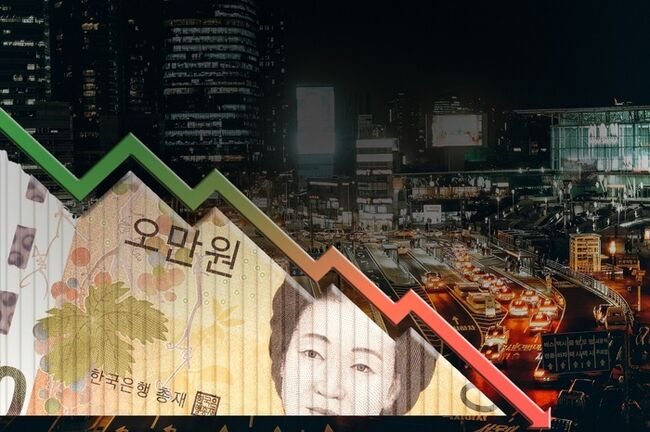
Recently, the tariff negotiations with the United States, which had dragged on for months, seemed to have reached a tentative conclusion with the U.S. government's fact sheet, offering a sense of relief to the public. Following the Gyeongju brouhaha, which included gift exchanges and the sudden mention of a "nuclear-powered submarine," polls also indicated a slight increase in approval ratings for the current administration, particularly among supporters of the left-leaning government. However, what is the reality behind the government's self-congratulatory remarks? South Korea is currently facing storm clouds of a Great Depression, more severe than during the International Monetary Fund (IMF) foreign exchange crisis.
Oil prices have hit 1,800 won per liter, and a bowl of kalguksu now costs 11,000 won. Gukbap has surpassed 10,000 won, and even a cup of coffee is soaring in price. People going on overseas trips are shocked when exchanging currency, and students studying abroad are in distress due to the unaffordability of living expenses.
Petrochemical companies are seeing billions of won in net profit evaporate for every 10% increase in the exchange rate. LG Chem loses 390 billion won for every 10% rise in the exchange rate. The South Korean economy is collapsing across the board. Yet, MBC attributes this to Japanese Prime Minister Sanae Takaichi's weak yen policy. In their rush to protect Lee Jae-myung, they are blaming Japan. This is a truly pathetic excuse and a ridiculous attempt to play mind games.
As the won-dollar exchange rate recently surged, the government formed a formal consultative body (Ministry of Economy and Finance, Ministry of Health and Welfare, Bank of Korea, National Pension Service) to defend the exchange rate and held its first meeting on the 24th. The meeting primarily focused on discussions regarding "strategic currency hedging" and extending/expanding the foreign exchange swap agreement with the Bank of Korea.
Currency hedging refers to fixing the future exchange rate at the present time and agreeing to buy and sell foreign currency at that rate. The "strategic currency hedging" currently under discussion involves increasing the proportion of currency hedged assets within the National Pension's overseas assets to up to 10%. In essence, the strategic currency hedging envisioned by the government is a method of increasing the supply of dollars in the foreign exchange market by selling the foreign currency (dollars) held by the National Pension.
However, this method presents two major problems.
First, it could lead to a decrease in returns and thus reduce the retirement funds for citizens, as the National Pension forgoes potential currency exchange gains in the future.
Second, this method cannot be a fundamental solution. Exchange rate stability will remain elusive as long as fundamental issues causing high exchange rates, such as domestic demand stagnation and slowing growth rates, are not improved.
Simply put, the fundamental reason for the rising exchange rate is the depreciation of the Korean won. This is due to a decrease in demand for the won and an increase in demand for dollars. Yet, something strange is happening. South Korea is reportedly enjoying a current account surplus. This means exports are doing well, and dollars are being earned. If this were normal, the exchange rate should be stable. However, the exchange rate is skyrocketing. Does this make sense? Does it make sense that dollar inflows are decreasing when dollars are being earned?
The answer is obvious. The companies earning dollars are not converting them into won. Fearing ruin under the Lee Jae-myung administration, they are transferring everything to the United States. Individual investors are in the same boat. Real estate is blocked by Lee Jae-myung, and the KOSPI fluctuates with the AI bubble craze, leading individual investors to convert won to dollars to buy U.S. stocks. This is an abnormal phenomenon created by the Lee Jae-myung risk.
The dollar outflow trap created by Lee Jae-myung has four components.
First, currency oversupply. This administration is injecting money faster than any previous administration. With so much won in circulation, how can its value be guaranteed? It's not for nothing that South Korea ranks first in fiscal deficit among non-reserve currency countries.
Second, the influx of low-priced Chinese goods. Platforms like Ali, Temu, and XiCi are entering the market and decimating our businesses. Half of the companies applying for bailout have cited low-priced Chinese goods as the reason. As companies collapse, the entities that earn dollars disappear.
Third, anti-business regulations, including the Yellow Envelope Act. It's becoming difficult to do business in Korea, so companies are moving to the U.S., leading to dollar outflow.
Fourth, a disastrous trade agreement with the U.S. mandates forced investment of $20 billion annually in the United States. With only $6.5 billion in usable foreign reserves, how can we afford $20 billion? Printing money is the only option.
These four traps are operating simultaneously, causing the exchange rate to skyrocket.
There are also external factors. It is true that the U.S. dollar is strong due to the interest rate differential between South Korea and the U.S. It is also true that the yen and yuan are weakening, causing the won to follow suit. However, this alone cannot explain the situation. Compared to other countries, South Korea's exchange rate increase is overwhelming. This is different from the brief surge during martial law, which quickly recovered. Currently, the exchange rate is maintained at a consistently high level. It has been steadily rising since the launch of the Lee Jae-myung administration. Is this a coincidence?
This is all due to the Lee Jae-myung risk. U.S. President Donald Trump is pressuring Lee Jae-myung, who adheres to pro-China policies. The U.S. provided currency swap facilities to Javier Milei's administration in Argentina. When Japanese Prime Minister Shigeru Ishiba rejected a trade agreement, his administration was changed. Lee Jae-myung is being pressured through financial and trade measures. Trump knows that when the exchange rate rises, the public suffers, and when the public suffers, they will blame Lee Jae-myung.
The consequences of the exchange rate surge are dire. Prices are rising, import costs are increasing, and oil prices are escalating in a chain reaction. Self-employed individuals are struggling as raw material costs rise. Delivery fees are increasing, eroding profit margins. Rising construction costs are also freezing the real estate market. Inflation is leading to economic recession. In short, it is stagflation.
It is historically proven that inflation is most dangerous when coupled with security crises. The hyperinflation in Germany that led to Adolf Hitler is a prime example. We are currently heading down that path.
Lee Jae-myung will be remembered in textbooks, not as a great leader, but as the worst kind of politician. He will be recorded as a case study of how adopting left-leaning policies can simultaneously destroy the stock market, foreign exchange market, real estate market, and trade market.
Real estate has been driven up by wealthy individuals with cash, reaching its highest point in five years. Individual investors are fleeing to the dollar market, the exchange rate is soaring, businesses are leaving due to a disastrous trade agreement, and the KOSPI is trapped in a range, with the constant threat of a crash. This is an unprecedented economic catastrophe with all four markets collapsing simultaneously.
Lee Jae-myung is blaming President Yoon for all of this and even invoking martial law. He is pointing fingers, claiming the rising exchange rate is due to Yoon Suk-yeol. But how can he explain that the current situation is far more severe than during martial law? How can he explain that the real effective exchange rate index is at its lowest since 2009? How can he explain that the exchange rate has been steadily soaring since Lee Jae-myung took office?
The answer is the Lee Jae-myung risk. It is a disaster created by Lee Jae-myung's pro-China policies, anti-business policies, and currency oversupply policies. Trump's pressure through financial and trade measures is also aimed at replacing Lee Jae-myung. The breach of 1500 won per dollar is just the beginning. The longer Lee Jae-myung persists, the greater the suffering of the people. The upcoming local elections are the last chance. If Lee Jae-myung is not judged, a Great Depression more severe than the IMF crisis will befall us.
Editorial Department of Hanmi Ilbo

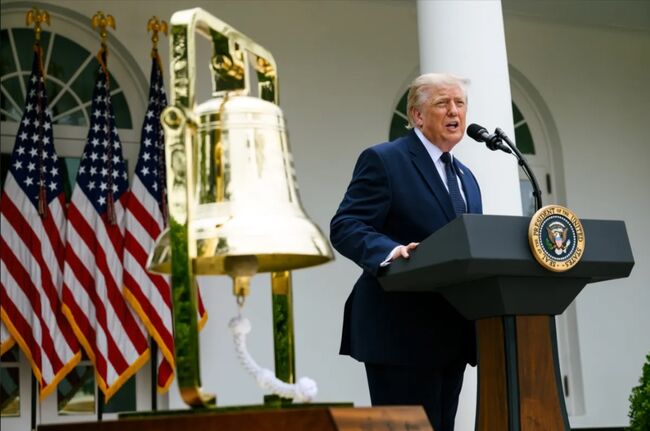 Trump pressures for rate cut again ahead of FOMC... "Should be the lowest in the world"
U.S. President Donald Trump. [Photo = The White House] U.S. President Donald Trump once again pressured the Federal Reserve, the U.S. central bank, to lower interest rates on the 27th (local time
Trump pressures for rate cut again ahead of FOMC... "Should be the lowest in the world"
U.S. President Donald Trump. [Photo = The White House] U.S. President Donald Trump once again pressured the Federal Reserve, the U.S. central bank, to lower interest rates on the 27th (local time
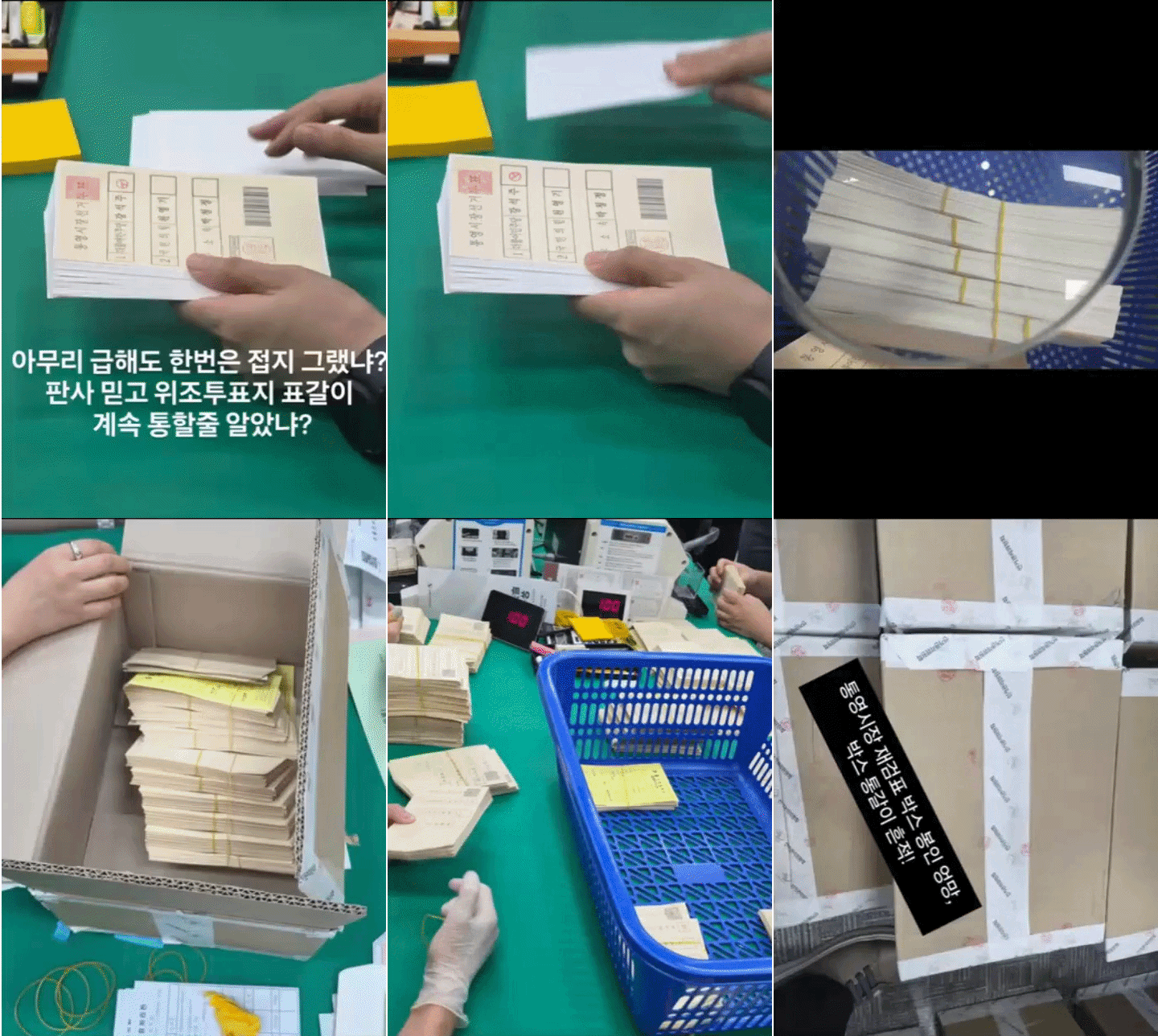 “Ignoring crisp ballots and damaged seals”… Tongyeong mayoral recount concludes with ‘no change in outcome,’ leaving suspicions and public outrage behind
Suspected counterfeit ballots discovered in Tongyeong [GIF from social media of Representative Hwang Kyo-ahn / Attorney Park Joo-hyun]During a recount of the Tongyeong mayoral election in South Gyeong
“Ignoring crisp ballots and damaged seals”… Tongyeong mayoral recount concludes with ‘no change in outcome,’ leaving suspicions and public outrage behind
Suspected counterfeit ballots discovered in Tongyeong [GIF from social media of Representative Hwang Kyo-ahn / Attorney Park Joo-hyun]During a recount of the Tongyeong mayoral election in South Gyeong
 President Yoon, regarding the first-instance ruling on the Public Official Election Act: “An excessive political verdict that distorts the facts… We will appeal immediately.”
The first-instance sentencing hearing for President Yoon Suk Yeol regarding violations of the Public Official Election Act is being broadcast live at Seoul Station on the 27th. [Photo=Yonhap News]Pres
President Yoon, regarding the first-instance ruling on the Public Official Election Act: “An excessive political verdict that distorts the facts… We will appeal immediately.”
The first-instance sentencing hearing for President Yoon Suk Yeol regarding violations of the Public Official Election Act is being broadcast live at Seoul Station on the 27th. [Photo=Yonhap News]Pres
 WSJ: "SK Hynix ADR Premium Is a Sign of AI Trading Overheat"
Advertisement for SK Hynix ADR listing in New York's Times Square [Reuters=Yonhap News file photo]The Wall Street Journal (WSJ) has pointed out that the price of SK Hynix’s American Depositary Recei
WSJ: "SK Hynix ADR Premium Is a Sign of AI Trading Overheat"
Advertisement for SK Hynix ADR listing in New York's Times Square [Reuters=Yonhap News file photo]The Wall Street Journal (WSJ) has pointed out that the price of SK Hynix’s American Depositary Recei
 'Godfather of Japanese Mystery Novels' Keigo Higashino Passes Away After Battle with Cancer at 68
Famous Japanese mystery novelist Keigo Higashino [AFP=Yonhap News]It has been belatedly reported that Keigo Higashino, the "godfather of Japanese mystery novels" and author of bestsellers such as "The
'Godfather of Japanese Mystery Novels' Keigo Higashino Passes Away After Battle with Cancer at 68
Famous Japanese mystery novelist Keigo Higashino [AFP=Yonhap News]It has been belatedly reported that Keigo Higashino, the "godfather of Japanese mystery novels" and author of bestsellers such as "The
 [Park Pil-kyu Security Column] To the Ignorant Trying to Clothe a Beast in Sheep's Clothing
Rep. Kim Byung-joo of the Democratic Party of Korea [Photo=Yonhap News]“The Air Force Academy doesn't teach you how to fly a plane!” “The Army, Navy, and Air Force academies are exactly the
[Park Pil-kyu Security Column] To the Ignorant Trying to Clothe a Beast in Sheep's Clothing
Rep. Kim Byung-joo of the Democratic Party of Korea [Photo=Yonhap News]“The Air Force Academy doesn't teach you how to fly a plane!” “The Army, Navy, and Air Force academies are exactly the
 [Issue Diagnosis] Two Effects of the Election Petition Review
 [Photo] Evidence of Election Fraud Flooding U.S. Media… Trump Had 2.7 Million Votes Stolen
 [Video] U.S. Semiquincentennial Air Show... 'Art in the Sky' streaks across New York
 [Editorial Cartoon] A Draconian Law That Undermines Freedom of Expression

 List
List