- Investigator with a lawyer background joins Kim Keon-hee special counsel... Files lawsuit after being denied public pension enrollment
- Despite filing a preliminary injunction, the court dismissed the case, stating, "Public officials are not recognized, and the claim lacks merit."
 Kim Keon-hee Special Prosecutor Team Inauguration Ceremony Signboard. Yonhap News
It was learned on the 25th that a lawyer hired as a special investigator for the Min Jung-ki Special Prosecutor's team, which is investigating allegations related to First Lady Kim Keon-hee, has filed a lawsuit against the Public Officials Pension Service seeking to be enrolled in the public officials' pension.
According to legal circles, lawyer A applied for enrollment in the public officials' pension in July, but was rejected on the grounds that they are not a public official. Consequently, a lawsuit was filed at the Seoul Administrative Court at the end of August seeking the cancellation of the disposition.
It is understood that A, who was appointed as a special investigator on July 14, argued that they are eligible for enrollment as they hold public official status.
The Kim Keon-hee Special Prosecutor Act stipulates that the treatment and duties of special investigators are based on those of public officials, implying that public official status should be recognized for the period of service at the special prosecutor's team.
A minimum of 10 years of contribution is required to receive public officials' pension. If A had previous public service experience, eligibility for pension payments could depend on the total contribution period, including the time spent with the special prosecutor's team. For investigative personnel dispatched to special prosecutor's teams from their original agencies, such as prosecutors or police officers, their dispatch period is added to their public officials' pension contribution period.
However, legal circles believe that the possibility of a special investigator, who is a former lawyer, being recognized for public officials' pension eligibility is not high. This is because relevant laws such as the National Public Officials Act, the Local Public Officials Act, and the Public Officials Pension Act do not have explicit provisions regarding the public official status of special investigators for special prosecutor's teams.
In fact, A also filed a motion for provisional disposition to temporarily recognize their public official status to prevent irreparable damage before the final judgment, but it was dismissed.
The court stated that public official status could not be recognized and ruled that "the claim is without merit and requires no further consideration."
The judge explained, "Special investigators appointed under the Special Prosecutor Act are merely treated in accordance with designated national public officials regarding remuneration or penalties, or are deemed public officials, but there are no provisions implying they are to be considered national public officials."
National and local public officials are categorized into career public officials and special career public officials. The ruling concluded that special investigators do not fall into either category and do not meet the criteria for public officials under the Public Officials Pension Act.
Furthermore, the court added, "Denying public official status does not mean that the legislative intent of the special prosecutor system is undermined or that essential areas of national function are infringed upon," and stated, "They cannot be considered essentially the same group as other dispatched public officials, thus it does not violate the principle of equality."
Yonhap News
What do you think of this article?

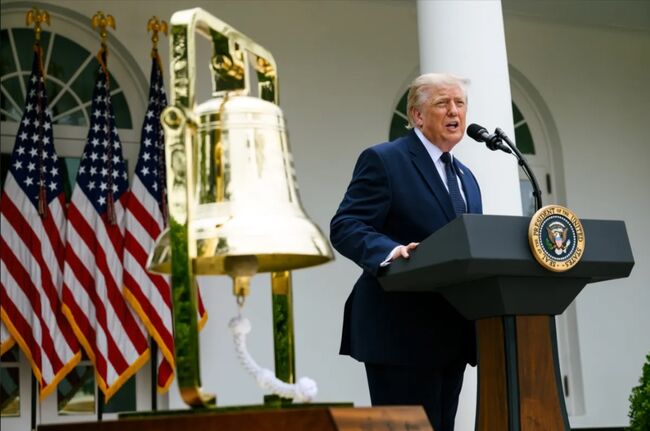 Trump pressures for rate cut again ahead of FOMC... "Should be the lowest in the world"
U.S. President Donald Trump. [Photo = The White House] U.S. President Donald Trump once again pressured the Federal Reserve, the U.S. central bank, to lower interest rates on the 27th (local time
Trump pressures for rate cut again ahead of FOMC... "Should be the lowest in the world"
U.S. President Donald Trump. [Photo = The White House] U.S. President Donald Trump once again pressured the Federal Reserve, the U.S. central bank, to lower interest rates on the 27th (local time
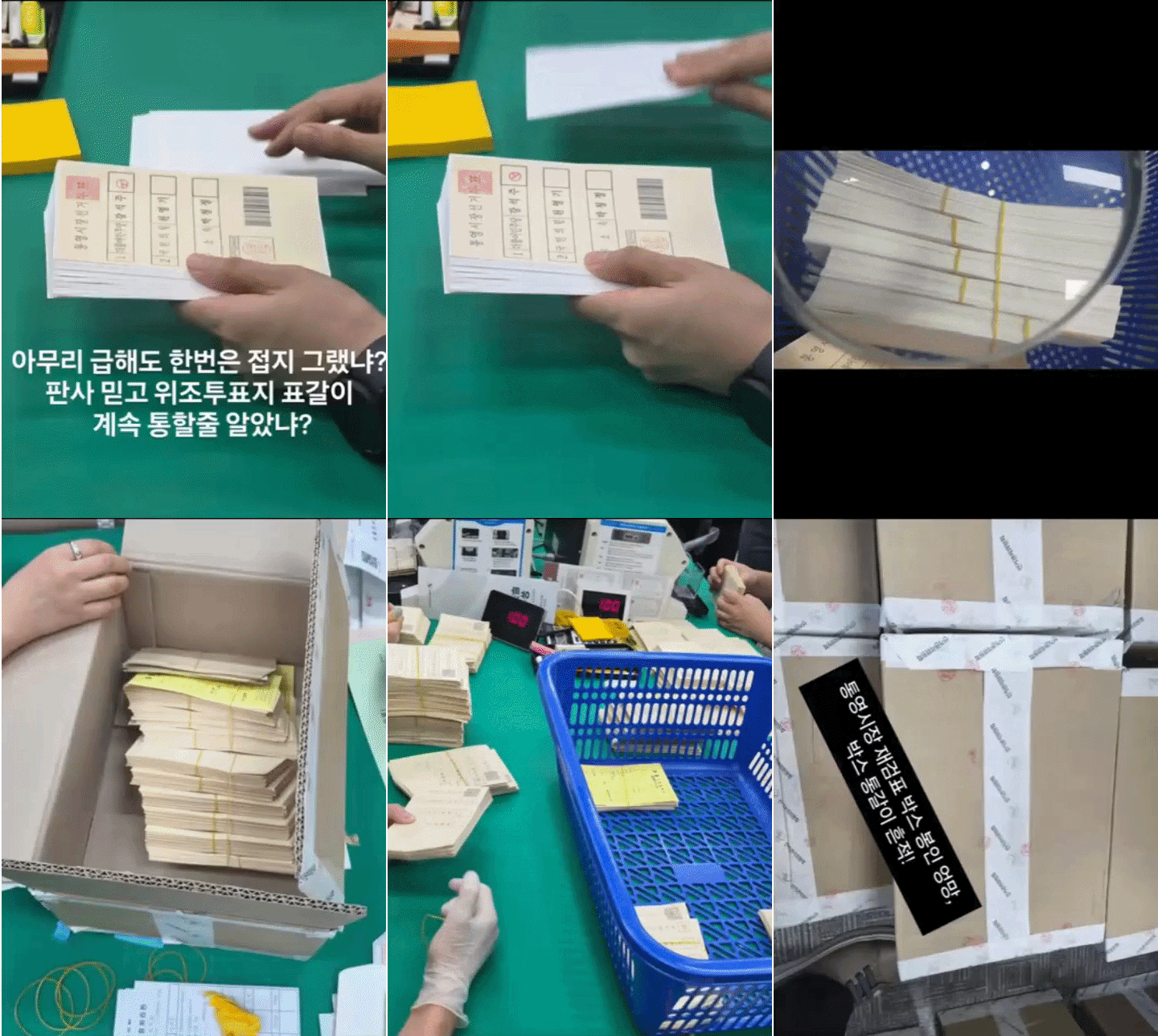 “Ignoring crisp ballots and damaged seals”… Tongyeong mayoral recount concludes with ‘no change in outcome,’ leaving suspicions and public outrage behind
Suspected counterfeit ballots discovered in Tongyeong [GIF from social media of Representative Hwang Kyo-ahn / Attorney Park Joo-hyun]During a recount of the Tongyeong mayoral election in South Gyeong
“Ignoring crisp ballots and damaged seals”… Tongyeong mayoral recount concludes with ‘no change in outcome,’ leaving suspicions and public outrage behind
Suspected counterfeit ballots discovered in Tongyeong [GIF from social media of Representative Hwang Kyo-ahn / Attorney Park Joo-hyun]During a recount of the Tongyeong mayoral election in South Gyeong
 President Yoon, regarding the first-instance ruling on the Public Official Election Act: “An excessive political verdict that distorts the facts… We will appeal immediately.”
The first-instance sentencing hearing for President Yoon Suk Yeol regarding violations of the Public Official Election Act is being broadcast live at Seoul Station on the 27th. [Photo=Yonhap News]Pres
President Yoon, regarding the first-instance ruling on the Public Official Election Act: “An excessive political verdict that distorts the facts… We will appeal immediately.”
The first-instance sentencing hearing for President Yoon Suk Yeol regarding violations of the Public Official Election Act is being broadcast live at Seoul Station on the 27th. [Photo=Yonhap News]Pres
 WSJ: "SK Hynix ADR Premium Is a Sign of AI Trading Overheat"
Advertisement for SK Hynix ADR listing in New York's Times Square [Reuters=Yonhap News file photo]The Wall Street Journal (WSJ) has pointed out that the price of SK Hynix’s American Depositary Recei
WSJ: "SK Hynix ADR Premium Is a Sign of AI Trading Overheat"
Advertisement for SK Hynix ADR listing in New York's Times Square [Reuters=Yonhap News file photo]The Wall Street Journal (WSJ) has pointed out that the price of SK Hynix’s American Depositary Recei
 'Godfather of Japanese Mystery Novels' Keigo Higashino Passes Away After Battle with Cancer at 68
Famous Japanese mystery novelist Keigo Higashino [AFP=Yonhap News]It has been belatedly reported that Keigo Higashino, the "godfather of Japanese mystery novels" and author of bestsellers such as "The
'Godfather of Japanese Mystery Novels' Keigo Higashino Passes Away After Battle with Cancer at 68
Famous Japanese mystery novelist Keigo Higashino [AFP=Yonhap News]It has been belatedly reported that Keigo Higashino, the "godfather of Japanese mystery novels" and author of bestsellers such as "The
 [Park Pil-kyu Security Column] To the Ignorant Trying to Clothe a Beast in Sheep's Clothing
Rep. Kim Byung-joo of the Democratic Party of Korea [Photo=Yonhap News]“The Air Force Academy doesn't teach you how to fly a plane!” “The Army, Navy, and Air Force academies are exactly the
[Park Pil-kyu Security Column] To the Ignorant Trying to Clothe a Beast in Sheep's Clothing
Rep. Kim Byung-joo of the Democratic Party of Korea [Photo=Yonhap News]“The Air Force Academy doesn't teach you how to fly a plane!” “The Army, Navy, and Air Force academies are exactly the
 [Issue Diagnosis] Two Effects of the Election Petition Review
 [Photo] Evidence of Election Fraud Flooding U.S. Media… Trump Had 2.7 Million Votes Stolen
 [Video] U.S. Semiquincentennial Air Show... 'Art in the Sky' streaks across New York
 [Editorial Cartoon] A Draconian Law That Undermines Freedom of Expression

 List
List