U.S. President Donald Trump (left) and Japanese Prime Minister Sanae Takaichi. Yonhap News
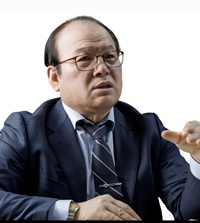 Joo Eun-sik, Director of the Korea Strategic Research InstituteJapanese Prime Minister Sanae Takaichi's statement that "Japan would have no choice but to intervene if China invades Taiwan" is causing significant tremors in the East Asian strategic landscape. This remark, made amidst Japan's assertive foreign and security policy under the banner of a "strong Japan," has drawn fierce backlash from China and simultaneously elevated Takaichi to the ranks of "resolute leaders" in Japanese politics. The core of her statement is the formalization of a broad framework: "Taiwan contingency = Japan's existential crisis = potential for US-Japan joint war." This can be summarized from political, geopolitical, and military perspectives as follows:
Why Now: Political Intent and Acceleration of "Becoming a Normal Country"
Immediately after taking office, Prime Minister Takaichi stated in her first policy speech that "an event where China uses force against Taiwan would threaten Japan's existence." This is the first time a prime minister has directly and publicly mentioned the exercise of collective self-defense rights, meaning the actual intervention of the Self-Defense Forces, since the security legislation of 2015.
While the Abe and Kishida administrations had also hinted at "Taiwan contingency = Japan contingency," Takaichi's statement intentionally removes strategic ambiguity and serves as a powerful message to politically justify Japan's transformation into a "normal country." She had already declared the early achievement of a 2% defense budget and the acquisition of long-range strike capabilities (such as Tomahawks). This recent statement serves as a means to instill a sense of crisis in the Japanese public, urging them to "face the security reality" and build "political consensus."
China's Expansion and Escalating Taiwan Strait Crisis: Japan's Survival Strategy
In recent years, China has significantly intensified its military activities around Taiwan and in the East China Sea, and has also repeatedly infringed upon Japan's territorial waters near the Senkaku Islands. While China is building military bases by constructing artificial islands in the South China Sea, it exhibits "double standards" by overreacting to Japan's defensive measures. The reasons why Japan perceives the threat as real are clear.
If Taiwan falls to China, the U.S. military's First Island Chain will collapse, the Nansaei Islands and Okinawa will be exposed as frontline areas, and Japan's maritime transport routes (Malacca–East China Sea–Pacific) will come under the control of the Chinese navy. This would undermine the core of Japan's economic and energy security. Therefore, Japan's leadership has reached a consensus that "passively intervening in a war unprepared is the most dangerous," and Takaichi's statement is understood as a political preemptive signal to engrain this strategic reality domestically.
Coordinated Role-Sharing with the U.S.: A Signal of Strengthened US-Japan Alliance
The United States has continuously urged Japan to expand its role in East Asia to deter China. Japan's security strategy revisions in 2022, its 2% defense spending plan, and its acquisition of long-range strike capabilities are all aligned with America's strategic demands. Takaichi's recent statement is a message to Washington. Japan is legally and politically prepared. In the event of a Taiwan contingency, a US-Japan joint deterrence system will be maintained, rather than a unilateral U.S. intervention. In return, Japan expects a strengthened nuclear umbrella, integrated missile defense, and expanded information sharing. In essence, Japan is designing a new alliance structure that demands "certain protection" from the U.S. in exchange for demonstrating its "willingness to shed blood." It has declared its intention to fight by concretizing the exercise of collective self-defense rights.
China's Economic Retaliation and Its Counterproductive Effects
China immediately responded with economic retaliation, including summoning the Japanese ambassador, banning imports of Japanese seafood, canceling flight refunds, issuing travel advisories, and prohibiting the screening of Japanese films. It also launched diplomatic attacks, such as questioning Japan's eligibility for a permanent seat on the UN Security Council. This is a recurrence of "wallet diplomacy," similar to what occurred during the nationalization of the Senkaku Islands in 2012. However, Japan has already reduced its reliance on Chinese tourism, and the frequent economic retaliation from China has instead strengthened anti-China sentiment and calls for a hardline response within Japan, leading to a counterproductive effect. China's overreaction is re-disseminating the perception that "China is a country that retaliates with economics when displeased," ironically aiding Japan's pursuit of becoming a normal country.
Geopolitical Impact: Taiwan Strait Crisis → Expansion of the East China Sea "Theater of Operations"
By officially declaring "Taiwan contingency = Japan's existential crisis," Japan has automatically expanded the war scenario. The theater of operations extends from the Taiwan Strait (Marine Corps/Air Force) to the Senkaku Islands, Miyako Strait, and Okinawa. China must now prepare for a simultaneous confrontation with both the United States and Japan. This makes China's military and naval deployments even more difficult. In particular, Japan's introduction of long-range missiles and the expansion of bases jointly operated with the U.S. military will strengthen the blockade of the Island Chain, centered around the First Island Chain, and solidify a structure that blocks the Chinese navy's advance into the Western Pacific. This is the strategic scenario that China fears the most.
International Political Repercussions: The "Remilitarizing Japan" Frame and Its Impact on Korea and Asia
China and Russia are characterizing Japan's recent moves as "the revival of militarism" and "breaking free from post-war constraints," issuing warnings to neighboring countries. Meanwhile, South Korea, Australia, the Philippines, and ASEAN are displaying a complex stance, caught between the practical judgment that Japan's expanded role could help contain China and concerns about the unknown extent of Japan's normalization.
In the case of South Korea, the operation of U.S. military assets through Japanese bases and the expansion of the Self-Defense Forces' operational scope around North Korea could create new strategic variables in the future, within the framework of ROK-U.S.-Japan security cooperation.
Militarily, this could lead to discussions about the overseas deployment of the Self-Defense Forces and the issue of nuclear-powered submarines. Japan's intervention in a Taiwan contingency would fundamentally alter the SDF's mission structure. That is, it would expand from defending Japanese territory to potentially engaging in actual combat in the waters and airspace around Taiwan. This would require integrated capabilities across all domains, including landing, transport, cyber, and space, effectively transforming Japan into a medium-sized overseas combat force. During this process, debates within Japan are likely to resurface regarding the possession of nuclear-powered submarines, the expansion of long-range strike capabilities, and NATO-style nuclear sharing.
In conclusion, this is a deliberate historical statement intended to accelerate Japan's normalization. It is unlikely that the statement was made without considering its political repercussions. Prime Minister Takaichi's remarks are not a mere diplomatic outburst but a full-fledged political declaration of Japan's move toward becoming a normal country and a war-capable nation. Legally, it has concretized the conditions for collective self-defense, defining "Taiwan contingency = existential crisis," and strategically, it sends a powerful deterrence signal that dramatically increases the cost of war for China. Politically, it will strengthen public opinion within Japan for normalization and constitutional revision. Of course, this process represents a high-risk strategy for Japan, involving significant economic burdens and security risks.
However, with this statement as a turning point, Japan's strategic trajectory has moved one step further from the post-war order, and it is being reorganized as a core axis of the new East Asian security order.
Joo Eun-sik, Director of the Korea Strategic Research Institute

 Iranian Foreign Ministry: "Continuing Message Exchanges with the U.S. and Activities of Mediating Countries"
Esmaeil Baghaei, Spokesperson for the Iranian Ministry of Foreign Affairs [Xinhua, Yonhap News file photo]Esmaeil Baghaei, spokesperson for the Iranian Ministry of Foreign Affairs, stated on the 26th
Iranian Foreign Ministry: "Continuing Message Exchanges with the U.S. and Activities of Mediating Countries"
Esmaeil Baghaei, Spokesperson for the Iranian Ministry of Foreign Affairs [Xinhua, Yonhap News file photo]Esmaeil Baghaei, spokesperson for the Iranian Ministry of Foreign Affairs, stated on the 26th
 President Yoon: "Do You Think You Are Safe from the Special Counsel?"... Final Statement Video Released
President Yoon Suk Yeol rebuking the special prosecutor on the 24th. [Court video / @birds_justice X account subtitle GIF] A video of President Yoon Suk Yeol's closing statement at his trial rega
President Yoon: "Do You Think You Are Safe from the Special Counsel?"... Final Statement Video Released
President Yoon Suk Yeol rebuking the special prosecutor on the 24th. [Court video / @birds_justice X account subtitle GIF] A video of President Yoon Suk Yeol's closing statement at his trial rega
 President Yoon, regarding the first-instance ruling on the Public Official Election Act: “An excessive political verdict that distorts the facts… We will appeal immediately.”
The first-instance sentencing hearing for President Yoon Suk Yeol regarding violations of the Public Official Election Act is being broadcast live at Seoul Station on the 27th. [Photo=Yonhap News]Pres
President Yoon, regarding the first-instance ruling on the Public Official Election Act: “An excessive political verdict that distorts the facts… We will appeal immediately.”
The first-instance sentencing hearing for President Yoon Suk Yeol regarding violations of the Public Official Election Act is being broadcast live at Seoul Station on the 27th. [Photo=Yonhap News]Pres
 WSJ: "SK Hynix ADR Premium Is a Sign of AI Trading Overheat"
Advertisement for SK Hynix ADR listing in New York's Times Square [Reuters=Yonhap News file photo]The Wall Street Journal (WSJ) has pointed out that the price of SK Hynix’s American Depositary Recei
WSJ: "SK Hynix ADR Premium Is a Sign of AI Trading Overheat"
Advertisement for SK Hynix ADR listing in New York's Times Square [Reuters=Yonhap News file photo]The Wall Street Journal (WSJ) has pointed out that the price of SK Hynix’s American Depositary Recei
 'Godfather of Japanese Mystery Novels' Keigo Higashino Passes Away After Battle with Cancer at 68
Famous Japanese mystery novelist Keigo Higashino [AFP=Yonhap News]It has been belatedly reported that Keigo Higashino, the "godfather of Japanese mystery novels" and author of bestsellers such as "The
'Godfather of Japanese Mystery Novels' Keigo Higashino Passes Away After Battle with Cancer at 68
Famous Japanese mystery novelist Keigo Higashino [AFP=Yonhap News]It has been belatedly reported that Keigo Higashino, the "godfather of Japanese mystery novels" and author of bestsellers such as "The
 [Park Pil-kyu Security Column] To the Ignorant Trying to Clothe a Beast in Sheep's Clothing
Rep. Kim Byung-joo of the Democratic Party of Korea [Photo=Yonhap News]“The Air Force Academy doesn't teach you how to fly a plane!” “The Army, Navy, and Air Force academies are exactly the
[Park Pil-kyu Security Column] To the Ignorant Trying to Clothe a Beast in Sheep's Clothing
Rep. Kim Byung-joo of the Democratic Party of Korea [Photo=Yonhap News]“The Air Force Academy doesn't teach you how to fly a plane!” “The Army, Navy, and Air Force academies are exactly the
 [Issue Diagnosis] Two Effects of the Election Petition Review
 [Photo] Evidence of Election Fraud Flooding U.S. Media… Trump Had 2.7 Million Votes Stolen
 [Video] U.S. Semiquincentennial Air Show... 'Art in the Sky' streaks across New York
 [Editorial Cartoon] A Draconian Law That Undermines Freedom of Expression

 List
List