
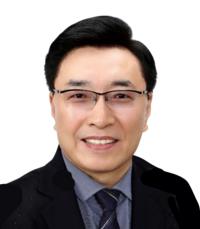
 Emeritus Professor at Pukyong National University and Director of the UN Research InstituteThe shock I received 40 years ago upon encountering advanced democracy in Germany (West Germany) was profound. It was a society of order, cleanliness, and trust, imbued with the "image of a society of trust and integrity" described in the book "Let's Learn from Germany" written by a Japanese author.
Although the specter of the Holocaust and Hitler had vanished, the integrity and scientific thinking that overcame its status as a developing nation and late unification, forming the foundation of a European powerhouse, never faded. Above all, post-war Germany (West Germany) was a nation that re-established the fundamental principles of liberal democracy.
Post-war German-American jurists, including Karl Loewenstein, strove to embody the fundamental principles of liberal democracy into the constitutional order: the combination of disparate elements such as autonomy and discipline, rights and responsibilities, intellect and industry. This is reflected in Article 2, Paragraph 1, regarding fundamental rights, and Article 18, concerning defensive democracy.
The former states that "an individual's freedom is guaranteed as long as it does not infringe upon the legal interests of others or contradict the constitutional order," while the latter mandates that "fundamental rights are revoked for ideologies that deny the free order." These principles have become international standards for post-war liberal democracy.
For instance, Singapore, often called a "fearful city," is a free country but is known for its remarkably strict law enforcement. Expelled from the Malaysian Federation due to chaos and disorder, Singapore, under the leadership of Lee Kuan Yew, aimed to become the "Switzerland of Asia." Switzerland is also famous for having embodied the spirit of John Calvin's Puritans early on (as the Duchy of Geneva). Today, both nations are among the wealthiest in the world.
Historically and theoretically, democracy is fragile. In particular, democracy lacking leadership has permeated Athens, Rome (the Republic), Germany (the Weimar Republic), and South American empires. The prophetic leadership of Presidents Syngman Rhee and Park Chung-hee was ultimately a resolution to overcome division and underdevelopment.
The profound longing for both presidents is not merely nostalgia for "the good old days (die gute alte Zeit)" but stems from the difficulty in finding national leaders who possess vision, charisma, and the ability to govern the nation since democratization. This Saturday (the 29th) marks the 100th anniversary of the birth of Madam Yuk Young-soo, our eternal mother of the nation.
Ha Bong-gyu, Emeritus Professor at Pukyong National University and Director of the UN Research Institute
- 관련기사
-
What do you think of this article?

 Iranian Foreign Ministry: "Continuing Message Exchanges with the U.S. and Activities of Mediating Countries"
Esmaeil Baghaei, Spokesperson for the Iranian Ministry of Foreign Affairs [Xinhua, Yonhap News file photo]Esmaeil Baghaei, spokesperson for the Iranian Ministry of Foreign Affairs, stated on the 26th
Iranian Foreign Ministry: "Continuing Message Exchanges with the U.S. and Activities of Mediating Countries"
Esmaeil Baghaei, Spokesperson for the Iranian Ministry of Foreign Affairs [Xinhua, Yonhap News file photo]Esmaeil Baghaei, spokesperson for the Iranian Ministry of Foreign Affairs, stated on the 26th
 President Yoon: "Do You Think You Are Safe from the Special Counsel?"... Final Statement Video Released
President Yoon Suk Yeol rebuking the special prosecutor on the 24th. [Court video / @birds_justice X account subtitle GIF] A video of President Yoon Suk Yeol's closing statement at his trial rega
President Yoon: "Do You Think You Are Safe from the Special Counsel?"... Final Statement Video Released
President Yoon Suk Yeol rebuking the special prosecutor on the 24th. [Court video / @birds_justice X account subtitle GIF] A video of President Yoon Suk Yeol's closing statement at his trial rega
 President Yoon, regarding the first-instance ruling on the Public Official Election Act: “An excessive political verdict that distorts the facts… We will appeal immediately.”
The first-instance sentencing hearing for President Yoon Suk Yeol regarding violations of the Public Official Election Act is being broadcast live at Seoul Station on the 27th. [Photo=Yonhap News]Pres
President Yoon, regarding the first-instance ruling on the Public Official Election Act: “An excessive political verdict that distorts the facts… We will appeal immediately.”
The first-instance sentencing hearing for President Yoon Suk Yeol regarding violations of the Public Official Election Act is being broadcast live at Seoul Station on the 27th. [Photo=Yonhap News]Pres
 WSJ: "SK Hynix ADR Premium Is a Sign of AI Trading Overheat"
Advertisement for SK Hynix ADR listing in New York's Times Square [Reuters=Yonhap News file photo]The Wall Street Journal (WSJ) has pointed out that the price of SK Hynix’s American Depositary Recei
WSJ: "SK Hynix ADR Premium Is a Sign of AI Trading Overheat"
Advertisement for SK Hynix ADR listing in New York's Times Square [Reuters=Yonhap News file photo]The Wall Street Journal (WSJ) has pointed out that the price of SK Hynix’s American Depositary Recei
 'Godfather of Japanese Mystery Novels' Keigo Higashino Passes Away After Battle with Cancer at 68
Famous Japanese mystery novelist Keigo Higashino [AFP=Yonhap News]It has been belatedly reported that Keigo Higashino, the "godfather of Japanese mystery novels" and author of bestsellers such as "The
'Godfather of Japanese Mystery Novels' Keigo Higashino Passes Away After Battle with Cancer at 68
Famous Japanese mystery novelist Keigo Higashino [AFP=Yonhap News]It has been belatedly reported that Keigo Higashino, the "godfather of Japanese mystery novels" and author of bestsellers such as "The
 [Park Pil-kyu Security Column] To the Ignorant Trying to Clothe a Beast in Sheep's Clothing
Rep. Kim Byung-joo of the Democratic Party of Korea [Photo=Yonhap News]“The Air Force Academy doesn't teach you how to fly a plane!” “The Army, Navy, and Air Force academies are exactly the
[Park Pil-kyu Security Column] To the Ignorant Trying to Clothe a Beast in Sheep's Clothing
Rep. Kim Byung-joo of the Democratic Party of Korea [Photo=Yonhap News]“The Air Force Academy doesn't teach you how to fly a plane!” “The Army, Navy, and Air Force academies are exactly the
 [Issue Diagnosis] Two Effects of the Election Petition Review
 [Photo] Evidence of Election Fraud Flooding U.S. Media… Trump Had 2.7 Million Votes Stolen
 [Video] U.S. Semiquincentennial Air Show... 'Art in the Sky' streaks across New York
 [Editorial Cartoon] A Draconian Law That Undermines Freedom of Expression

 List
List









