 Budget season: Structure matters more than policy name. The Ministry of Economy and Finance is the starting point. [Graphic=Hanmi Ilbo]
While the government emphasizes that the National Growth Fund, expanded to 150 trillion won, will "build national highways for the AI era," the National Assembly and the financial sector are raising fundamental questions: "How does it differ from existing policy finance?" and "Who will be responsible if losses occur?"
The plan announced by the Lee Jae-myung administration is the largest in history, but its core design has not yet been revealed, leading to criticism that "the scale is the largest, but the blueprint is empty."
The National Growth Fund is designed with an umbrella structure, with contributions from the Korea Development Bank, Korea Growth Investment Corporation, and policy finance institutions, joined by pension funds and private investors.
The government's proposal is to leverage private capital through "seed money" such as contributions, guarantees, and interest subsidies. However, it remains unclear which industries, such as semiconductors, AI, and biotechnology, will receive how much funding, how private investment incentives will be designed, and how to avoid duplicate investments with existing innovation funds and ministry-specific AI budgets.
The biggest issue is whether this fund will have structural differences from existing industry and innovation funds.
While the government describes it as a "new national investment platform," the Korea Development Bank and Korea Growth Investment Corporation are already making large-scale investments in cutting-edge industries and AI. There is also considerable functional overlap with public AI transformation, ministry-specific innovation funds, and AI budgets.
Ultimately, the opposition party's claim of "rehash of policy finance" can be seen not just as a political attack, but as an issue raised in the context of structural verification.
Identifying who will be responsible for losses is also considered a key risk.
Long-term investments in high-risk industries such as semiconductors, AI, and biotechnology make it difficult to reach the break-even point. If government contributions, policy finance institution guarantees, and participation from public enterprises and pension funds are combined, there is a high possibility that losses could be transferred to taxpayer money or pension assets.
The National Pension Fund's investment principle is "appropriate returns for risk," but concerns are growing about "pension socialism," where participation could be forced in strategic industries due to political pressure, potentially overriding investment principles.
To attract large-scale private capital, the government will inevitably have to offer "stabilizers" such as expanded guarantees, increased contributions, and enhanced interest subsidies. This, in turn, leads to a structure where the government and policy finance institutions bear more risk. The Korean economy already faces vulnerabilities, including rapidly increasing national debt and a high private credit gap, making the absorption of additional risk by policy finance a direct issue for fiscal and financial stability.
Structural differences are also evident when compared to cases in major developed countries.
While the U.S. CHIPS Act and the EU's IPCEI focus on tax credits, subsidies, and public infrastructure support, largely avoiding direct government investment, Korea's National Growth Fund is structured for the government to be a direct player, combining government contributions, mobilization of policy finance institutions, and the potential participation of pension funds. While this allows for speed, the most significant risk is that any failure will directly impact the national treasury and pension funds.
Ultimately, the success or failure of the 150 trillion won National Growth Fund hinges not on "where it invests," but on "how the risk is designed to be borne." Key factors include: △ whether a command structure is in place to coordinate with existing funds and avoid overlap, △ whether transparent risk allocation is possible to prevent losses from being passed on to the public or pension funds, and △ whether structural mechanisms are in place for the private sector to bear losses.
Based on the information disclosed so far, the scale has been set, but the design remains unreleased. The fundamental risk lies not in the number "150 trillion won," but in its structure.
's conclusion is clear: Increased investment, but no control. Increased scale, but an empty blueprint.
#NationalGrowthFund #AIInnovationFund #LeeJaeMyungBudget #FiscalSustainabilityRisk #PoliticalPorkBarrel #BudgetDesignPolitics #NationalStrategicInvestment #FiscalRules #HanmiIlbo #SpecialFeature

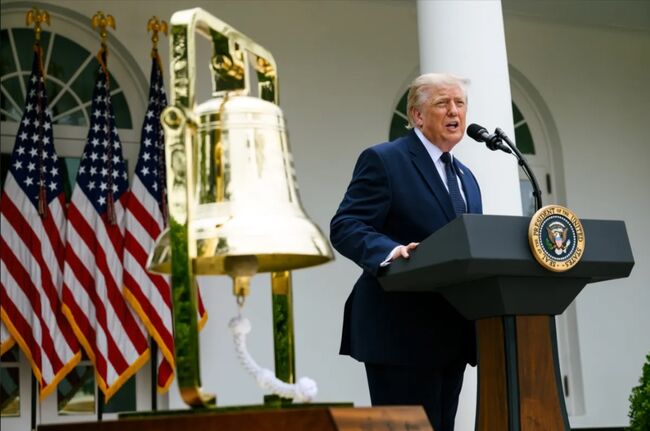 Trump pressures for rate cut again ahead of FOMC... "Should be the lowest in the world"
U.S. President Donald Trump. [Photo = The White House] U.S. President Donald Trump once again pressured the Federal Reserve, the U.S. central bank, to lower interest rates on the 27th (local time
Trump pressures for rate cut again ahead of FOMC... "Should be the lowest in the world"
U.S. President Donald Trump. [Photo = The White House] U.S. President Donald Trump once again pressured the Federal Reserve, the U.S. central bank, to lower interest rates on the 27th (local time
 “Ignoring crisp ballots and damaged seals”… Tongyeong mayoral recount concludes with ‘no change in outcome,’ leaving suspicions and public outrage behind
Suspected counterfeit ballots discovered in Tongyeong [GIF from social media of Representative Hwang Kyo-ahn / Attorney Park Joo-hyun]During a recount of the Tongyeong mayoral election in South Gyeong
“Ignoring crisp ballots and damaged seals”… Tongyeong mayoral recount concludes with ‘no change in outcome,’ leaving suspicions and public outrage behind
Suspected counterfeit ballots discovered in Tongyeong [GIF from social media of Representative Hwang Kyo-ahn / Attorney Park Joo-hyun]During a recount of the Tongyeong mayoral election in South Gyeong
 President Yoon, regarding the first-instance ruling on the Public Official Election Act: “An excessive political verdict that distorts the facts… We will appeal immediately.”
The first-instance sentencing hearing for President Yoon Suk Yeol regarding violations of the Public Official Election Act is being broadcast live at Seoul Station on the 27th. [Photo=Yonhap News]Pres
President Yoon, regarding the first-instance ruling on the Public Official Election Act: “An excessive political verdict that distorts the facts… We will appeal immediately.”
The first-instance sentencing hearing for President Yoon Suk Yeol regarding violations of the Public Official Election Act is being broadcast live at Seoul Station on the 27th. [Photo=Yonhap News]Pres
 WSJ: "SK Hynix ADR Premium Is a Sign of AI Trading Overheat"
Advertisement for SK Hynix ADR listing in New York's Times Square [Reuters=Yonhap News file photo]The Wall Street Journal (WSJ) has pointed out that the price of SK Hynix’s American Depositary Recei
WSJ: "SK Hynix ADR Premium Is a Sign of AI Trading Overheat"
Advertisement for SK Hynix ADR listing in New York's Times Square [Reuters=Yonhap News file photo]The Wall Street Journal (WSJ) has pointed out that the price of SK Hynix’s American Depositary Recei
 'Godfather of Japanese Mystery Novels' Keigo Higashino Passes Away After Battle with Cancer at 68
Famous Japanese mystery novelist Keigo Higashino [AFP=Yonhap News]It has been belatedly reported that Keigo Higashino, the "godfather of Japanese mystery novels" and author of bestsellers such as "The
'Godfather of Japanese Mystery Novels' Keigo Higashino Passes Away After Battle with Cancer at 68
Famous Japanese mystery novelist Keigo Higashino [AFP=Yonhap News]It has been belatedly reported that Keigo Higashino, the "godfather of Japanese mystery novels" and author of bestsellers such as "The
 [Park Pil-kyu Security Column] To the Ignorant Trying to Clothe a Beast in Sheep's Clothing
Rep. Kim Byung-joo of the Democratic Party of Korea [Photo=Yonhap News]“The Air Force Academy doesn't teach you how to fly a plane!” “The Army, Navy, and Air Force academies are exactly the
[Park Pil-kyu Security Column] To the Ignorant Trying to Clothe a Beast in Sheep's Clothing
Rep. Kim Byung-joo of the Democratic Party of Korea [Photo=Yonhap News]“The Air Force Academy doesn't teach you how to fly a plane!” “The Army, Navy, and Air Force academies are exactly the
 [Issue Diagnosis] Two Effects of the Election Petition Review
 [Photo] Evidence of Election Fraud Flooding U.S. Media… Trump Had 2.7 Million Votes Stolen
 [Video] U.S. Semiquincentennial Air Show... 'Art in the Sky' streaks across New York
 [Editorial Cartoon] A Draconian Law That Undermines Freedom of Expression

 List
List










