 Who is qualified to cast the first stone? One year after the December 3rd martial law, the weight of responsibility and judgment casts a shadow of doubt over Korean democracy again. [Graphics by Hanjoo Ilbo]
One year after the December 3rd martial law, defining this event solely as a political term such as "rebellion" misunderstands the essence of the situation. Rebellion itself is a matter for the courts to judge, but if we fail to examine the structural conflict that led to this situation – that is, the clash between those who raise suspicions and those who label those who raise suspicions as conspiracy theorists – we will miss the most vulnerable point of democracy.
Both South Korea and the United States have recently experienced simultaneous massive suspicions and massive backlash surrounding their elections.
In the US, mail-in voting was at the center of the conflict, while in Korea, it was early voting. What both countries have in common is that, regardless of the truthfulness of the word "election fraud," there existed groups raising well-founded suspicions, and simultaneously, a power structure operated to block them by labeling them as conspiracy theorists.
This clash of suspicions and conspiracies was not a malfunction of the system, but a defense mechanism of the system itself. However, the problem is not which side is right, but that the institutional channel to verify suspicions is completely blocked.
Suspicion is a possibility, but suspicion is a reasoned inference. And suspicion demands verification. The act of refusing verification is precisely "conspiracy theory." This term becomes a tool to enforce silence, not to refute. If this structure is repeated in a liberal democratic system, the electoral system will no longer receive public trust.
What is more serious is that the moment flaws in the electoral system are revealed, the weight of responsibility exceeds imagination.
It's not just the National Election Commission. The Supreme Court, the Constitutional Court, National Assembly members, local government heads, and city and provincial councilors all stand on the legitimacy of that system. The fact that the electoral system is flawed means that their legitimacy is shaken. This is why everyone who raises suspicions of election fraud is always called a conspiracy theorist.
It is the same in the United States. President Donald Trump persistently raised the issue of mail-in voting, but little institutional reform was achieved. The vast wall of resistance formed by the bureaucratic apparatus surrounding the electoral system, election workers, and the two-party structure of both the Democratic and Republican parties was difficult for even the US President to overcome. This is not an anomaly occurring only in Korea.
The clash between the "force demanding verification" and the "force blocking verification" surrounding the electoral system is a structural phenomenon within a liberal democratic system.
From this perspective, the December 3rd martial law is not simply a political battle of "right versus wrong," but an event where the clash of suspicions and conspiracies erupted in its most extreme form.
The reasons for the martial law declared by former President Yoon Suk-yeol were election fraud and espionage. However, the cost was severe. Following his impeachment, he faces charges of leading a rebellion and is currently experiencing great political hardship under house arrest.
However, if one asks why he chose that path, it is difficult to call it a political choice. It is because he attempted to fulfill the "responsibility of verification" for suspicions of election fraud.
His attempt to directly confront what past presidents have ignored or avoided due to political burdens must be clearly acknowledged.
While it is regrettable that his attempt appears to have ended in failure, it has revealed an important fact: the verification of election fraud is not impossible, but rather it is something that no one wants to undertake because too much responsibility is entangled with it.
The moment the existence of problems in the electoral system is officially acknowledged, responsibility is not confined to an individual or an institution but spreads to the entire system. This directly means political and social division. The expression "the country will split in two the moment the box is opened" is not political exaggeration but is closer to the actual structural reaction of a democratic system.
In that sense, Yoon Suk-yeol's choice was not a "political gamble" but a natural act of holding the old system accountable.
For the highest official of a nation to verify the electoral system is the most basic duty in a democracy. He attempted it through the most powerful legal and institutional means at his disposal. Even if that attempt was not perfect, it was politics that did not evade responsibility, and rather, it was close to what a national leader should do.
It is easy to criticize that choice. However, we cannot help but ask:
Between the past presidents who evaded responsibility and Yoon Suk-yeol who chose responsibility, who is more deserving of historical evaluation?
One year after the December 3rd martial law. The essence of this event is not rebellion.
The clash of suspicions and conspiracies, and the question democracy fears most.
"Is this system prepared to bear the truth?"
The answer lies here.
#December3MartialLaw #SuspicionsAndConspiracies #ResponsiblePolitics #ElectionFraudDebate #VerificationAndBlocking #FormerPresidentYoonSukYeol #ElectoralSystemReform #SystemClash #DemocracyVerification #HanjooIlboColumn

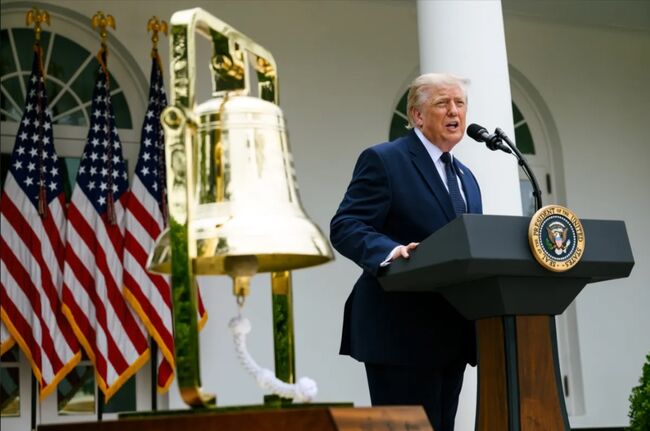 Trump pressures for rate cut again ahead of FOMC... "Should be the lowest in the world"
U.S. President Donald Trump. [Photo = The White House] U.S. President Donald Trump once again pressured the Federal Reserve, the U.S. central bank, to lower interest rates on the 27th (local time
Trump pressures for rate cut again ahead of FOMC... "Should be the lowest in the world"
U.S. President Donald Trump. [Photo = The White House] U.S. President Donald Trump once again pressured the Federal Reserve, the U.S. central bank, to lower interest rates on the 27th (local time
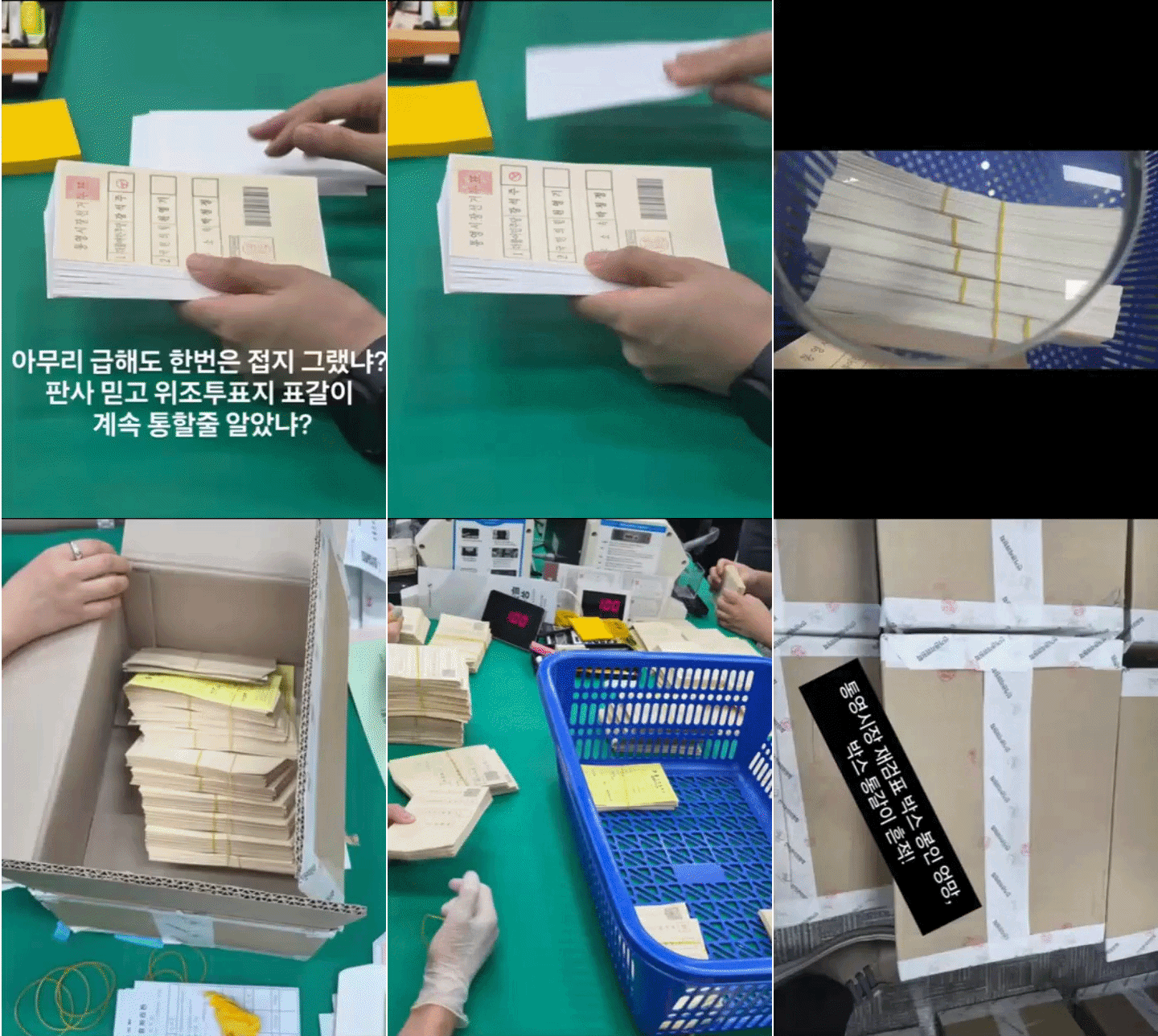 “Ignoring crisp ballots and damaged seals”… Tongyeong mayoral recount concludes with ‘no change in outcome,’ leaving suspicions and public outrage behind
Suspected counterfeit ballots discovered in Tongyeong [GIF from social media of Representative Hwang Kyo-ahn / Attorney Park Joo-hyun]During a recount of the Tongyeong mayoral election in South Gyeong
“Ignoring crisp ballots and damaged seals”… Tongyeong mayoral recount concludes with ‘no change in outcome,’ leaving suspicions and public outrage behind
Suspected counterfeit ballots discovered in Tongyeong [GIF from social media of Representative Hwang Kyo-ahn / Attorney Park Joo-hyun]During a recount of the Tongyeong mayoral election in South Gyeong
 President Yoon, regarding the first-instance ruling on the Public Official Election Act: “An excessive political verdict that distorts the facts… We will appeal immediately.”
The first-instance sentencing hearing for President Yoon Suk Yeol regarding violations of the Public Official Election Act is being broadcast live at Seoul Station on the 27th. [Photo=Yonhap News]Pres
President Yoon, regarding the first-instance ruling on the Public Official Election Act: “An excessive political verdict that distorts the facts… We will appeal immediately.”
The first-instance sentencing hearing for President Yoon Suk Yeol regarding violations of the Public Official Election Act is being broadcast live at Seoul Station on the 27th. [Photo=Yonhap News]Pres
 WSJ: "SK Hynix ADR Premium Is a Sign of AI Trading Overheat"
Advertisement for SK Hynix ADR listing in New York's Times Square [Reuters=Yonhap News file photo]The Wall Street Journal (WSJ) has pointed out that the price of SK Hynix’s American Depositary Recei
WSJ: "SK Hynix ADR Premium Is a Sign of AI Trading Overheat"
Advertisement for SK Hynix ADR listing in New York's Times Square [Reuters=Yonhap News file photo]The Wall Street Journal (WSJ) has pointed out that the price of SK Hynix’s American Depositary Recei
 'Godfather of Japanese Mystery Novels' Keigo Higashino Passes Away After Battle with Cancer at 68
Famous Japanese mystery novelist Keigo Higashino [AFP=Yonhap News]It has been belatedly reported that Keigo Higashino, the "godfather of Japanese mystery novels" and author of bestsellers such as "The
'Godfather of Japanese Mystery Novels' Keigo Higashino Passes Away After Battle with Cancer at 68
Famous Japanese mystery novelist Keigo Higashino [AFP=Yonhap News]It has been belatedly reported that Keigo Higashino, the "godfather of Japanese mystery novels" and author of bestsellers such as "The
 [Park Pil-kyu Security Column] To the Ignorant Trying to Clothe a Beast in Sheep's Clothing
Rep. Kim Byung-joo of the Democratic Party of Korea [Photo=Yonhap News]“The Air Force Academy doesn't teach you how to fly a plane!” “The Army, Navy, and Air Force academies are exactly the
[Park Pil-kyu Security Column] To the Ignorant Trying to Clothe a Beast in Sheep's Clothing
Rep. Kim Byung-joo of the Democratic Party of Korea [Photo=Yonhap News]“The Air Force Academy doesn't teach you how to fly a plane!” “The Army, Navy, and Air Force academies are exactly the
 [Issue Diagnosis] Two Effects of the Election Petition Review
 [Photo] Evidence of Election Fraud Flooding U.S. Media… Trump Had 2.7 Million Votes Stolen
 [Video] U.S. Semiquincentennial Air Show... 'Art in the Sky' streaks across New York
 [Editorial Cartoon] A Draconian Law That Undermines Freedom of Expression

 List
List









