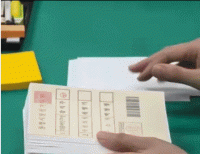
Former President Yoon Suk-yeol. Yonhap News photo
Former President Yoon Suk-yeol, in an interview with Japanese media ahead of the one-year anniversary of the imposition of martial law on December 3rd, argued that martial law was a "declaration of a national emergency in a situation where the constitutional order of liberal democracy was collapsing and the nation was in crisis," stating that it was an act of "informing the sovereign people of this situation."
In a written interview with the Yomiuri Shimbun, reported on the 3rd, former President Yoon stated, "It is different from the martial law of the past that oppressed the people," and added, "We accepted the National Assembly's request for its lifting within a few hours," indicating that there was no intention to paralyze the National Assembly.
Regarding his efforts to improve South Korea-Japan relations during his term, he stated, "The development of South Korea-Japan relations is very important not only for the two countries but also for the prosperity of freedom and peace in the Indo-Pacific region."
He further expressed that he felt great meaning and value in pursuing the expansion of trilateral cooperation among South Korea, the United States, and Japan.
The Yomiuri reported, "Former President Yoon justified the declaration of martial law again," and noted that public opinion in South Korea is generally cool towards former President Yoon.
The newspaper stated that it conducted the written interview with former President Yoon through his lawyers last month.
Meanwhile, Japanese media outlets assessed that South Korean society remains divided and continues to experience division one year after the imposition of martial law.
The Mainichi Shimbun reported, "It has been a year since former President Yoon declared martial law," and added, "Immediately after the declaration of martial law, public opinion in South Korea became sharply divided and confrontational over the impeachment of former President Yoon and other issues."
It analyzed, "The Lee Jae-myung administration is advocating for 'social integration,' but regarding the aftermath of martial law, the ruling and opposition parties in South Korea are not resisting the 'centrifugal forces' that are spreading social division."
The newspaper further commented that the ruling and opposition parties are in confrontation over the punishment of public officials involved in martial law, and both are acting with their hardline supporters in mind. "The confrontation between the progressive and conservative extremes, which have neglected the moderate centrist demographic, has not subsided even after a year," it added.
The Asahi Shimbun, in an article that occupied a full page, reported that calls for accountability for "insurrection" are intensifying, and the opposition party is protesting this.
In a separate editorial, the Asahi stated, "South Korean society is still in the aftershocks of the shock," and expressed its hope that "discussions will deepen not only on accountability but also on what kind of power the presidency, a colossal power, should wield, and whether politics characterized by fierce confrontation between conservatives and progressives reflects the will of the people."
It advised, "What is required of President Lee is the implementation of 'national integration,' which he has repeatedly advocated," and stated that "efforts to synthesize a wide range of opinions and to engage in repeated deliberation are necessary during the remaining four and a half years of his term."
The newspaper pointed out, "Although the extraordinary situation of martial law has been resolved since democratization, the seeds that threaten democracy and lead to crisis continue to exist," and stated, "The intensification of risks that shake democracy is becoming a global challenge, including for Japan."
Yonhap News

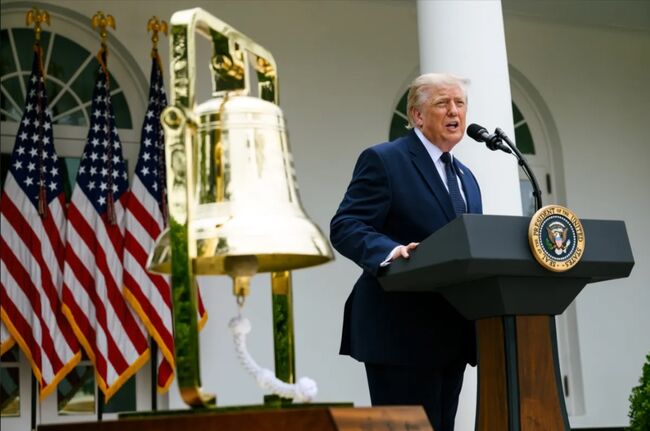 Trump pressures for rate cut again ahead of FOMC... "Should be the lowest in the world"
U.S. President Donald Trump. [Photo = The White House] U.S. President Donald Trump once again pressured the Federal Reserve, the U.S. central bank, to lower interest rates on the 27th (local time
Trump pressures for rate cut again ahead of FOMC... "Should be the lowest in the world"
U.S. President Donald Trump. [Photo = The White House] U.S. President Donald Trump once again pressured the Federal Reserve, the U.S. central bank, to lower interest rates on the 27th (local time
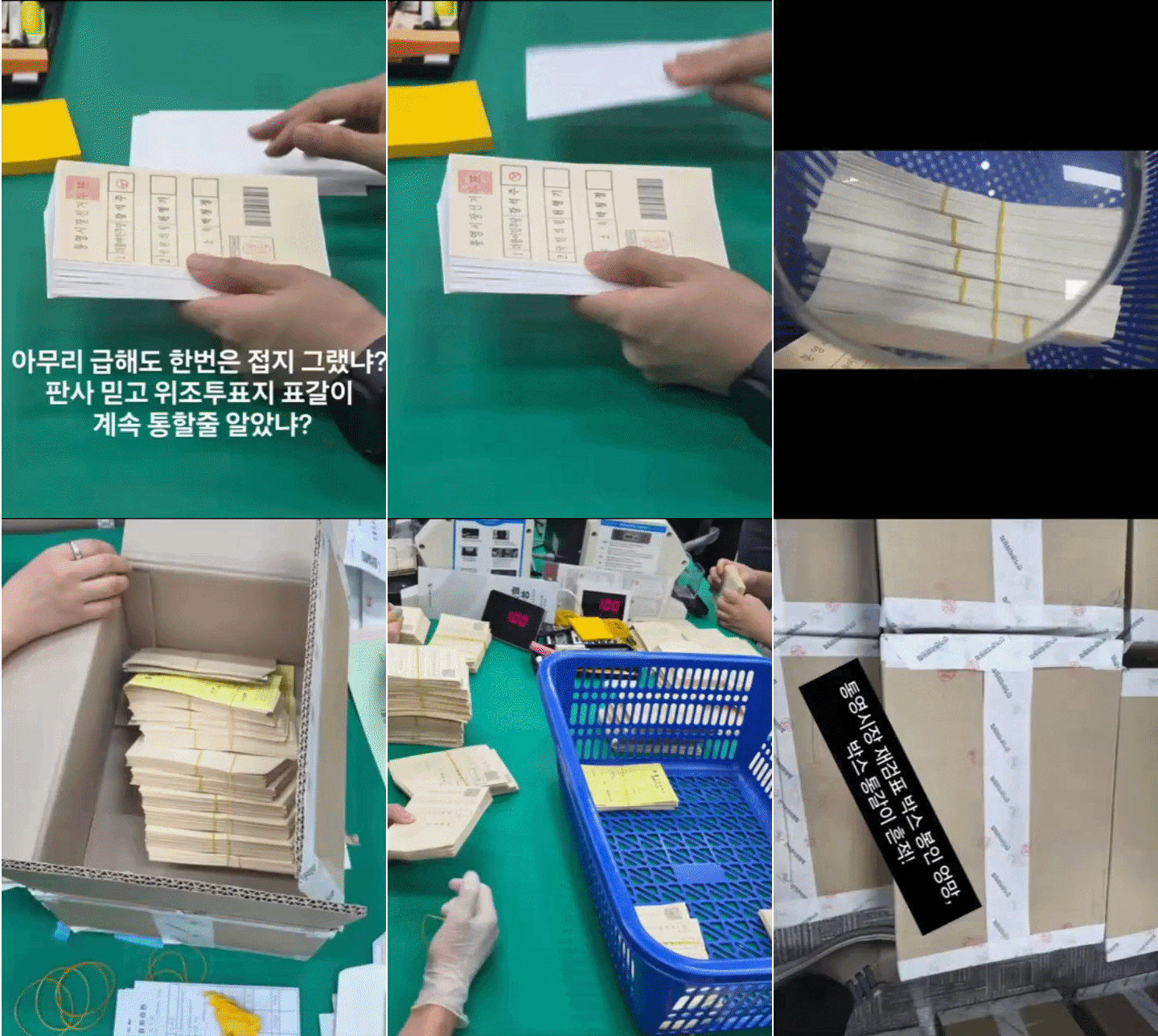 “Ignoring crisp ballots and damaged seals”… Tongyeong mayoral recount concludes with ‘no change in outcome,’ leaving suspicions and public outrage behind
Suspected counterfeit ballots discovered in Tongyeong [GIF from social media of Representative Hwang Kyo-ahn / Attorney Park Joo-hyun]During a recount of the Tongyeong mayoral election in South Gyeong
“Ignoring crisp ballots and damaged seals”… Tongyeong mayoral recount concludes with ‘no change in outcome,’ leaving suspicions and public outrage behind
Suspected counterfeit ballots discovered in Tongyeong [GIF from social media of Representative Hwang Kyo-ahn / Attorney Park Joo-hyun]During a recount of the Tongyeong mayoral election in South Gyeong
 President Yoon, regarding the first-instance ruling on the Public Official Election Act: “An excessive political verdict that distorts the facts… We will appeal immediately.”
The first-instance sentencing hearing for President Yoon Suk Yeol regarding violations of the Public Official Election Act is being broadcast live at Seoul Station on the 27th. [Photo=Yonhap News]Pres
President Yoon, regarding the first-instance ruling on the Public Official Election Act: “An excessive political verdict that distorts the facts… We will appeal immediately.”
The first-instance sentencing hearing for President Yoon Suk Yeol regarding violations of the Public Official Election Act is being broadcast live at Seoul Station on the 27th. [Photo=Yonhap News]Pres
 WSJ: "SK Hynix ADR Premium Is a Sign of AI Trading Overheat"
Advertisement for SK Hynix ADR listing in New York's Times Square [Reuters=Yonhap News file photo]The Wall Street Journal (WSJ) has pointed out that the price of SK Hynix’s American Depositary Recei
WSJ: "SK Hynix ADR Premium Is a Sign of AI Trading Overheat"
Advertisement for SK Hynix ADR listing in New York's Times Square [Reuters=Yonhap News file photo]The Wall Street Journal (WSJ) has pointed out that the price of SK Hynix’s American Depositary Recei
 'Godfather of Japanese Mystery Novels' Keigo Higashino Passes Away After Battle with Cancer at 68
Famous Japanese mystery novelist Keigo Higashino [AFP=Yonhap News]It has been belatedly reported that Keigo Higashino, the "godfather of Japanese mystery novels" and author of bestsellers such as "The
'Godfather of Japanese Mystery Novels' Keigo Higashino Passes Away After Battle with Cancer at 68
Famous Japanese mystery novelist Keigo Higashino [AFP=Yonhap News]It has been belatedly reported that Keigo Higashino, the "godfather of Japanese mystery novels" and author of bestsellers such as "The
 [Park Pil-kyu Security Column] To the Ignorant Trying to Clothe a Beast in Sheep's Clothing
Rep. Kim Byung-joo of the Democratic Party of Korea [Photo=Yonhap News]“The Air Force Academy doesn't teach you how to fly a plane!” “The Army, Navy, and Air Force academies are exactly the
[Park Pil-kyu Security Column] To the Ignorant Trying to Clothe a Beast in Sheep's Clothing
Rep. Kim Byung-joo of the Democratic Party of Korea [Photo=Yonhap News]“The Air Force Academy doesn't teach you how to fly a plane!” “The Army, Navy, and Air Force academies are exactly the
 [Issue Diagnosis] Two Effects of the Election Petition Review
 [Photo] Evidence of Election Fraud Flooding U.S. Media… Trump Had 2.7 Million Votes Stolen
 [Video] U.S. Semiquincentennial Air Show... 'Art in the Sky' streaks across New York
 [Editorial Cartoon] A Draconian Law That Undermines Freedom of Expression

 List
List