- The final ruling is expected in the first half of next year... Controversy over the interpretation of the 14th Amendment.
 A map showing the front of the Supreme Court building and the states that have sued the federal government in response to the birthright citizenship executive order.
The Supreme Court decided on Friday, the 5th, to hear arguments regarding the constitutionality of President Donald Trump's birthright citizenship order. The order declared that children born to undocumented or temporarily present parents are not U.S. citizens.
The justices will hear President Trump's appeal of a lower court ruling that invalidated the citizenship restriction. The measure has not been implemented anywhere in the country.
Arguments in the case are scheduled for the spring. A final ruling is expected by early summer.
The birthright citizenship executive order, signed by President Trump on January 20, his first day in his second term, is part of a broader crackdown on immigration by the Republican administration. Other measures include increased immigration enforcement in several cities and the first-ever activation of the 18th-century Alien Enemies Act during peacetime.
The administration has faced numerous legal challenges, and the Supreme Court has sent mixed signals in emergency orders. The justices have effectively halted the application of the "Enemy Alien Law" to accelerate the deportation of suspected gang members from Venezuela without court hearings.
However, the Supreme Court has allowed the resumption of widespread immigration checkpoints in the Los Angeles area after lower courts blocked the practice based solely on race, language, occupation, or location.
Furthermore, the justices are reviewing the administration's emergency appeal to deploy National Guard troops for immigration enforcement in the Chicago area. Lower courts have indefinitely prohibited such deployments.
Birthright citizenship is the first immigration-related policy of the Trump administration to reach a final court ruling.
This executive order seeks to overturn the long-standing interpretation of the 14th Amendment, in place for over 125 years, which grants citizenship to all born on U.S. soil, with the few exceptions of children of foreign diplomats and those born under hostile foreign occupation.
Lower courts have, in a series of rulings, invalidated this executive order, deeming it unconstitutional or likely unconstitutional. This has continued even after the Supreme Court's ruling at the end of June that limited the use of nationwide injunctions.
The administration contends that the 14th Amendment was enacted to guarantee citizenship to the descendants of those brought over as slaves. It argues that the amendment was created to overturn the 1857 Dred Scott decision, where the Supreme Court ruled that the U.S. Constitution did not grant citizenship to Black Africans, and therefore they could not enjoy the rights and privileges granted to U.S. citizens.
Historians also evaluate the 14th Amendment as an extension of the American principle of egalitarianism, in contrast to the European principle of jus sanguinis (right of blood), which grants citizenship based on parentage.
This background also supports the current claim that children of undocumented immigrants are not eligible for automatic citizenship because they are "not subject to the jurisdiction of the United States."
D. John Sauer, the administration's top lawyer, wrote in a brief urging the Supreme Court's review, "The citizenship clause of the Fourteenth Amendment was adopted to grant citizenship to newly freed slaves and their children, not to the children of aliens who are illegally or temporarily present in the United States."
Twenty-four states and 27 Republican members of Congress, including Senators Ted Cruz (R-Texas) and Lindsey Graham (R-South Carolina), are supporting the administration, according to the Associated Press.
By NNP Chief Reporter Sung Ku Hong / Special Correspondent for this publication NNP info@newsandpost.com
What do you think of this article?

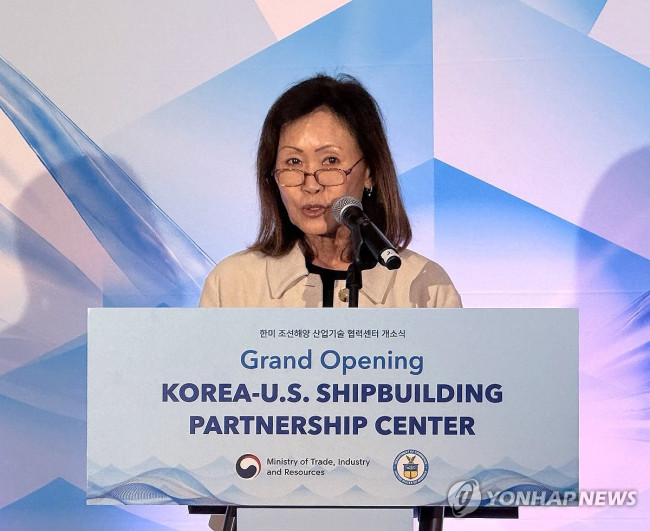 First U.S. Ambassador of Trump's Second Term to Arrive This Week… Will It Provide Momentum to Resolve Pending Issues?
U.S. Ambassador to South Korea Michelle Steel speaks at the opening ceremony of the Korea-U.S. Shipbuilding Cooperation Center held at the Mayflower Hotel in Washington, D.C., on the 23rd (local time)
First U.S. Ambassador of Trump's Second Term to Arrive This Week… Will It Provide Momentum to Resolve Pending Issues?
U.S. Ambassador to South Korea Michelle Steel speaks at the opening ceremony of the Korea-U.S. Shipbuilding Cooperation Center held at the Mayflower Hotel in Washington, D.C., on the 23rd (local time)
 President Yoon, regarding the first-instance ruling on the Public Official Election Act: “An excessive political verdict that distorts the facts… We will appeal immediately.”
The first-instance sentencing hearing for President Yoon Suk Yeol regarding violations of the Public Official Election Act is being broadcast live at Seoul Station on the 27th. [Photo=Yonhap News]Pres
President Yoon, regarding the first-instance ruling on the Public Official Election Act: “An excessive political verdict that distorts the facts… We will appeal immediately.”
The first-instance sentencing hearing for President Yoon Suk Yeol regarding violations of the Public Official Election Act is being broadcast live at Seoul Station on the 27th. [Photo=Yonhap News]Pres
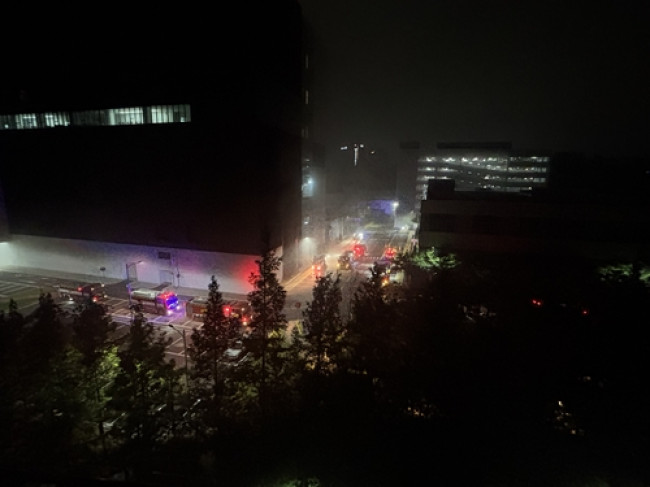 Fire at Hyundai Motor Group Battery Research Facility in Uiwang… Ignited in Waste Storage Room
A fire broke out at the Hyundai Motor Group battery research building at its Uiwang Research Center in Sam-dong, Uiwang-si, Gyeonggi-do, at 12:48 a.m. on the 28th and was extinguished after approximat
Fire at Hyundai Motor Group Battery Research Facility in Uiwang… Ignited in Waste Storage Room
A fire broke out at the Hyundai Motor Group battery research building at its Uiwang Research Center in Sam-dong, Uiwang-si, Gyeonggi-do, at 12:48 a.m. on the 28th and was extinguished after approximat
 'Godfather of Japanese Mystery Novels' Keigo Higashino Passes Away After Battle with Cancer at 68
Famous Japanese mystery novelist Keigo Higashino [AFP=Yonhap News]It has been belatedly reported that Keigo Higashino, the "godfather of Japanese mystery novels" and author of bestsellers such as "The
'Godfather of Japanese Mystery Novels' Keigo Higashino Passes Away After Battle with Cancer at 68
Famous Japanese mystery novelist Keigo Higashino [AFP=Yonhap News]It has been belatedly reported that Keigo Higashino, the "godfather of Japanese mystery novels" and author of bestsellers such as "The
 [Park Pil-kyu Security Column] To the Ignorant Trying to Clothe a Beast in Sheep's Clothing
Rep. Kim Byung-joo of the Democratic Party of Korea [Photo=Yonhap News]“The Air Force Academy doesn't teach you how to fly a plane!” “The Army, Navy, and Air Force academies are exactly the
[Park Pil-kyu Security Column] To the Ignorant Trying to Clothe a Beast in Sheep's Clothing
Rep. Kim Byung-joo of the Democratic Party of Korea [Photo=Yonhap News]“The Air Force Academy doesn't teach you how to fly a plane!” “The Army, Navy, and Air Force academies are exactly the
 [Issue Diagnosis] Two Effects of the Election Petition Review
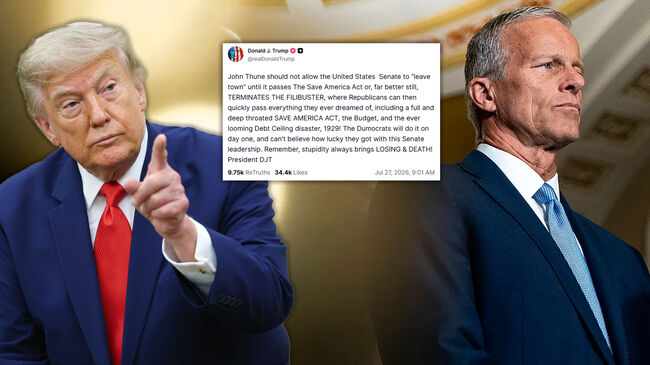 Trump Demands Passage of ‘SAVE Act’ Before Senate Recess
 [Photo] Evidence of Election Fraud Flooding U.S. Media… Trump Had 2.7 Million Votes Stolen
 [Video] U.S. Semiquincentennial Air Show... 'Art in the Sky' streaks across New York
 [Editorial Cartoon] A Draconian Law That Undermines Freedom of Expression

 List
List