 U.S. President Donald Trump. Yonhap News
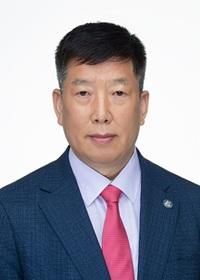 Editorial Board Member, Korea Military Academy Class of '74 (40th)The National Security Strategy (NSS) announced by the Trump 2.0 administration on December 4th contains three declarations: ▲ a declaration to end the "Atlas role," meaning the U.S. will no longer protect the world alone; ▲ the call for greater participation from South Korea and Japan in defending the First Island Chain (linking Japan, Taiwan, and the Philippines), which serves as a defensive line to deter the expansion of the Chinese navy and air force into the Pacific; and ▲ the assertion that South Korea must bear the primary responsibility for managing the North Korean nuclear and security crisis.
1. The End of America's "Atlas Role" is an Opportunity for South Korea's Strategic Autonomy
For a long time, the United States has acted like "Atlas," the mythical giant holding up the sky alone. But now, Trump has clearly stated, "We will no longer protect you in your stead." While some may feel discomfort at these words, South Korea should awaken to their implications the moment they hear them. The "end of the Atlas role" is a shockwave that will enable South Korea to grow to a new level.
South Korea has long lived in a sense of security, relying on American protection and support. The illusion that America would defend us in case of war, the misconception that America would resolve the North Korean nuclear issue, and the expectation that America would bear the burden of global security – this weak security mindset has now ended. The Trump 2.0 National Security Strategy (NSS) has shattered those illusions.
South Korea has consistently relied on the United States for its core security. It is a country where increasing defense spending leads to political disputes, and where calls for expanding strategic assets are attacked as "overreaction" that provokes North Korea. Trump's declaration is a shock therapy that allows South Korea to finally contribute to security commensurate with its capabilities. We should be grateful for this shock therapy in the long run, even if it is uncomfortable in the short term.
2. The NSS's Demand for Participation in First Island Chain Defense is an Opportunity for South Korea to Step into the Strategic Arena
The First Island Chain, stretching from Japan to Taiwan and the Philippines, is a massive shield wall against China's military expansion. Trump is saying, "We will even allow nuclear submarines, so let's jointly hold this shield wall." To hesitate or refuse this would be the logic of pro-China forces. South Korea must now be reborn as a strategic force capable of being deployed on the central stage of Northeast Asian, Indian, and Pacific strategies.
Containing China is not an option, but a structural imperative. South Korea has already experienced China's economic retaliation when it deployed THAAD. To avoid being swayed by China, South Korea must also play a role in international strategy. The Trump NSS is not giving South Korea a difficult mission, but a proposal to elevate South Korea from a "peripheral country in international strategy" to a "core strategic nation." We must seize this opportunity.
The NSS is a strategic demand for South Korea to awaken anew and wield a larger shield than before. Feeling burdened by and complaining about the NSS is tantamount to confessing that one is unqualified to be responsible for the nation. South Korea must strengthen the international security belt by supporting and implementing this demand.
3. The NSS's Demand for South Korea to Take Primary Responsibility for North Korean Issues is an Opportunity for Free Unification
North Korea was not mentioned even once in this NSS. This is not a matter to be sensationalized or cause a stir as "Korea passing." The fact that the United States did not mention the North Korean issue means that the initiative for managing North Korean nuclear weapons has been transferred to South Korea. Why should the United States bear greater responsibility when North Korea threatens South Korea? This is a changed stance within American political circles. It signifies that the U.S. will provide assistance from a geopolitical and strategic perspective, but the primary party involved is ultimately South Korea.
The exclusion of the North Korean issue from the strategic priorities in the NSS is a clear signal that the U.S. no longer considers the conventional threat from North Korea its top security concern. The American message can be summarized as: "South Korea, you are responsible for the threats you face." The NSS demands that South Korea face the grand objective of strengthening its own security capabilities, which it has long avoided, and achieve strategic independence not subservient to other nations' strategies.
The threat from North Korea is a matter that directly affects South Korea's survival. Trump's realistic message is that South Korea, as the party directly involved, must bear the greatest responsibility. Trump's America will support South Korea from a geopolitical perspective of containing China, but it has declared that it will no longer act as a direct shield against threats to South Korea. Instead of hiding behind the U.S., we must step forward and create an opportunity for free unification.
It is time to accept the transfer of primary responsibility for the North Korean nuclear issue to South Korea as a security reality. If one contemplates President Trump's NSS, it is not a burden placed on South Korea. The ROK-U.S. alliance must be accepted as a relationship of "equal management and responsibility" rather than a "protector-protected" relationship. To move from deterrence to proactive management, we must abandon our reliance on the ROK-U.S. alliance and move towards a strategic alliance based on national interests.
The strength to protect ourselves now rests in our own hands. The National Security Strategy of the Trump 2.0 administration is not a burden but an opportunity for South Korea. We must grow into a nation that is free from American protection, takes up its own shield, and manages international strategies. To this end, the advancement of the three-axis system, the acquisition of advanced military capabilities, and the codification of extended deterrence are not options but necessities. We must also consider participation measures such as nuclear sharing. It is hoped that a "Don Quixote of Korean security" will emerge and call for South Korea's independent nuclear armament, which is essential for a strategic ROK-U.S. alliance.
Editorial Board Member, Hanmi Ilbo

 Iranian Foreign Ministry: "Continuing Message Exchanges with the U.S. and Activities of Mediating Countries"
Esmaeil Baghaei, Spokesperson for the Iranian Ministry of Foreign Affairs [Xinhua, Yonhap News file photo]Esmaeil Baghaei, spokesperson for the Iranian Ministry of Foreign Affairs, stated on the 26th
Iranian Foreign Ministry: "Continuing Message Exchanges with the U.S. and Activities of Mediating Countries"
Esmaeil Baghaei, Spokesperson for the Iranian Ministry of Foreign Affairs [Xinhua, Yonhap News file photo]Esmaeil Baghaei, spokesperson for the Iranian Ministry of Foreign Affairs, stated on the 26th
 President Yoon: "Do You Think You Are Safe from the Special Counsel?"... Final Statement Video Released
President Yoon Suk Yeol rebuking the special prosecutor on the 24th. [Court video / @birds_justice X account subtitle GIF] A video of President Yoon Suk Yeol's closing statement at his trial rega
President Yoon: "Do You Think You Are Safe from the Special Counsel?"... Final Statement Video Released
President Yoon Suk Yeol rebuking the special prosecutor on the 24th. [Court video / @birds_justice X account subtitle GIF] A video of President Yoon Suk Yeol's closing statement at his trial rega
 President Yoon, regarding the first-instance ruling on the Public Official Election Act: “An excessive political verdict that distorts the facts… We will appeal immediately.”
The first-instance sentencing hearing for President Yoon Suk Yeol regarding violations of the Public Official Election Act is being broadcast live at Seoul Station on the 27th. [Photo=Yonhap News]Pres
President Yoon, regarding the first-instance ruling on the Public Official Election Act: “An excessive political verdict that distorts the facts… We will appeal immediately.”
The first-instance sentencing hearing for President Yoon Suk Yeol regarding violations of the Public Official Election Act is being broadcast live at Seoul Station on the 27th. [Photo=Yonhap News]Pres
 WSJ: "SK Hynix ADR Premium Is a Sign of AI Trading Overheat"
Advertisement for SK Hynix ADR listing in New York's Times Square [Reuters=Yonhap News file photo]The Wall Street Journal (WSJ) has pointed out that the price of SK Hynix’s American Depositary Recei
WSJ: "SK Hynix ADR Premium Is a Sign of AI Trading Overheat"
Advertisement for SK Hynix ADR listing in New York's Times Square [Reuters=Yonhap News file photo]The Wall Street Journal (WSJ) has pointed out that the price of SK Hynix’s American Depositary Recei
 'Godfather of Japanese Mystery Novels' Keigo Higashino Passes Away After Battle with Cancer at 68
Famous Japanese mystery novelist Keigo Higashino [AFP=Yonhap News]It has been belatedly reported that Keigo Higashino, the "godfather of Japanese mystery novels" and author of bestsellers such as "The
'Godfather of Japanese Mystery Novels' Keigo Higashino Passes Away After Battle with Cancer at 68
Famous Japanese mystery novelist Keigo Higashino [AFP=Yonhap News]It has been belatedly reported that Keigo Higashino, the "godfather of Japanese mystery novels" and author of bestsellers such as "The
 [Park Pil-kyu Security Column] To the Ignorant Trying to Clothe a Beast in Sheep's Clothing
Rep. Kim Byung-joo of the Democratic Party of Korea [Photo=Yonhap News]“The Air Force Academy doesn't teach you how to fly a plane!” “The Army, Navy, and Air Force academies are exactly the
[Park Pil-kyu Security Column] To the Ignorant Trying to Clothe a Beast in Sheep's Clothing
Rep. Kim Byung-joo of the Democratic Party of Korea [Photo=Yonhap News]“The Air Force Academy doesn't teach you how to fly a plane!” “The Army, Navy, and Air Force academies are exactly the
 [Issue Diagnosis] Two Effects of the Election Petition Review
 [Photo] Evidence of Election Fraud Flooding U.S. Media… Trump Had 2.7 Million Votes Stolen
 [Video] U.S. Semiquincentennial Air Show... 'Art in the Sky' streaks across New York
 [Editorial Cartoon] A Draconian Law That Undermines Freedom of Expression

 List
List









