 Special Prosecutor Jo Eun-seok. Yonhap News
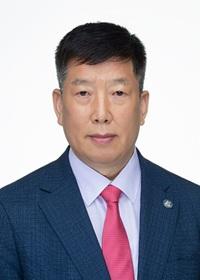 Editorial Board Member · Korea Military Academy Class of '78Jo Eun-seok, the special prosecutor investigating the alleged sedition, has announced the final results of the 'December 3 Emergency Martial Law' after a six-month investigation. The special prosecution team received 249 cases and processed 215, indicting 27 individuals. The investigation characterized former President Yoon Suk-yeol's declaration of martial law as a 'palace coup aimed at consolidating and maintaining power.'
The special prosecution team concluded that many of the core suspicions that had been raised were unfounded. They announced that no evidence was found for theories such as the judiciary's complicity in martial law, the influence of a shaman on the martial law decision, the deployment of National Election Commission forensic agents by the prosecution and the National Intelligence Service, or a 'second attempt at martial law.' Nevertheless, the special prosecution team, isolating only certain charges, concluded that martial law was imposed to 'consolidate and maintain power.' This leans more towards a political assessment than a strict application of criminal responsibility standards.
Most notably, contrary to its designation as a 'sedition' special prosecution, the investigation did not directly assess or explain the legal grounds for sedition. The comprehensive report, approximately 2,900 characters long, did not include an explicit legal judgment on whether martial law constituted sedition under criminal law, nor did it contain any expressions interpreting martial law as directly linked to the elements of the crime of sedition. By deferring legal judgment on key issues and emphasizing the political responsibility for power consolidation and maintenance, the special prosecution's work amounts to merely a superficial summary of the investigation.
1. The Sedition Special Prosecution Failed to Prove that 'December 3 Emergency Martial Law' was 'Sedition'
The 'December 3 Emergency Martial Law' was a situation where the President could directly decide to impose it if a grave crisis was deemed to exist for the nation. The Constitutional Court also acknowledged in the 'Impeachment Trial of President Roh Moo-hyun' case that the President has the primary authority to decide on the exercise of emergency powers. The special prosecution team failed to demonstrate any grave and manifest violations that would warrant the complete disregard of procedures such as deliberation by the State Council and notification to the National Assembly.
Furthermore, the motive of maintaining political power was not substantiated by any documents or directives. The alleged constitutional violations, such as media control, the blockade of the National Assembly, and the deployment of large-scale military forces, did not materialize and the martial law was lifted after six hours. Moreover, martial law is a constitutional matter, whereas sedition is a separate concept under criminal law requiring an act of rebellion or an attempt to execute it. Even the special prosecution team for sedition did not present an explicit judgment on whether sedition was constituted. Therefore, it has been demonstrated that it is difficult to definitively label the martial law as unconstitutional.
2. Did the Sedition Special Prosecution Construct a Crime Solely Based on Circumstances and Intent?
Despite investing 180 days, 238 investigators, and 50 billion won, the core findings of the special prosecution team did not significantly deviate from facts that had already been largely revealed when the prosecution indicted former President Yoon Suk-yeol on charges of sedition in January.
The special prosecution team concluded that discussions of martial law had been ongoing since the president's inauguration and that it had been systematically prepared for before October 2023, citing the appointment of key figures such as Generals Park An-su and Yeo In-hyeong to important positions and the diary entries of former Information Command Chief Noh Sang-won as evidence. However, the investigation did not clearly define the criteria for determining whether these actions, such as the preparation of military personnel documents and personnel assignments, went beyond the scope of typical military preparations, nor did it clearly establish whether there were unconstitutional directives such as the blockade of the National Assembly or media control, or acts of execution such as actual troop movements or the use of physical force.
Without presenting an analysis of the political and institutional background that led to martial law, or the circumstances at the time that made it impossible to govern the nation, the special prosecution team derived its conclusions by accumulating circumstantial evidence such as the president's remarks, personnel actions, and the drafting of martial law-related documents. However, in criminal law, crimes cannot be constituted solely by circumstances and intent. Indictment is only possible when it is proven that circumstances and intent led to a violation of current law. Just as thousands of broken shards cannot form a ceramic vessel, no amount of accumulated circumstances and intent can become decisive evidence.
The method of constructing criminal intent based on circumstances at a single point in time is legally highly controversial. There are no precedents for judging and punishing the 'martial law' of a democratic government legally established through elections as 'sedition.' Nevertheless, the ruling party immediately engaged in a 'witch hunt' after the martial law declaration, and the special prosecution team did not cite international precedents. The public has observed for over a year how the rule of law is being swayed by political emotions.
3. The Sedition Special Prosecution, Which Constructed Crimes Based on Circumstances and Intent, Should Be Judged by the Court
The special prosecution's announcement appears to be a forced judgment that fits preconceived political narratives rather than a factual investigation. The repeated method involved defining the objective of martial law as 'eliminating political opposition and consolidating/maintaining power,' and adding conjecture to already known documents and circumstances.
Although the special prosecution team cited the indictment of 27 individuals as an achievement, they attempted to arrest ministers who were unaware of the martial law plan and presidential office staff, labeling them as participants in sedition. Most of these attempts were not accepted by the courts, leading to criticism that the investigation was excessive.
The special prosecution team claimed that sending a drone for military purposes near North Korea was intended to provoke the North and create a crisis. However, they failed to find evidence of collusion or secret negotiations with North Korea. Consequently, they applied the charge of 'aiding the enemy,' which is less severe than 'espionage.' This is tantamount to admitting that the evidence was insufficient to prove espionage in the first place.
The special prosecution team strongly imbued the incident with political meaning by referring to it as a 'palace coup.' However, as the trial was already underway, reopening the investigation further intensified the political controversy. Furthermore, the pursuit of another special prosecution in the future indicates a persistent political agenda. If the Corruption Investigation Office for High-ranking Officials operates effectively, it should re-examine such investigations by special prosecutors, and the final judgment must ultimately be rendered by the courts.
In conclusion, the 'December 3 Emergency Martial Law' revealed the fragility of the state system in a political crisis. This leaves urgent national tasks for institutional improvements, such as measures to enhance transparency in the process of invoking emergency powers, the people's right to resist when a large ruling party undermines the separation of powers, the establishment of control mechanisms for the executive branch when congressional checks and balances are broken, and an audit structure for documents and directive systems.
In a free democracy, even the most serious incidents cannot be punished based solely on circumstances and intent. A 'sedition witch hunt' is a reckless maneuver to force a square peg into a round hole and is an unconstitutional plot. The current dictatorial and arrogant governance is pushing the limits of patience. The majority of public and military sentiment hopes and urges for the 'sedition crisis' to be brought to an end and for South Korea to be normalized through a just ruling by the judiciary.
Editorial Board Member, Hanmi Ilbo

 Iranian Foreign Ministry: "Continuing Message Exchanges with the U.S. and Activities of Mediating Countries"
Esmaeil Baghaei, Spokesperson for the Iranian Ministry of Foreign Affairs [Xinhua, Yonhap News file photo]Esmaeil Baghaei, spokesperson for the Iranian Ministry of Foreign Affairs, stated on the 26th
Iranian Foreign Ministry: "Continuing Message Exchanges with the U.S. and Activities of Mediating Countries"
Esmaeil Baghaei, Spokesperson for the Iranian Ministry of Foreign Affairs [Xinhua, Yonhap News file photo]Esmaeil Baghaei, spokesperson for the Iranian Ministry of Foreign Affairs, stated on the 26th
 President Yoon: "Do You Think You Are Safe from the Special Counsel?"... Final Statement Video Released
President Yoon Suk Yeol rebuking the special prosecutor on the 24th. [Court video / @birds_justice X account subtitle GIF] A video of President Yoon Suk Yeol's closing statement at his trial rega
President Yoon: "Do You Think You Are Safe from the Special Counsel?"... Final Statement Video Released
President Yoon Suk Yeol rebuking the special prosecutor on the 24th. [Court video / @birds_justice X account subtitle GIF] A video of President Yoon Suk Yeol's closing statement at his trial rega
 President Yoon, regarding the first-instance ruling on the Public Official Election Act: “An excessive political verdict that distorts the facts… We will appeal immediately.”
The first-instance sentencing hearing for President Yoon Suk Yeol regarding violations of the Public Official Election Act is being broadcast live at Seoul Station on the 27th. [Photo=Yonhap News]Pres
President Yoon, regarding the first-instance ruling on the Public Official Election Act: “An excessive political verdict that distorts the facts… We will appeal immediately.”
The first-instance sentencing hearing for President Yoon Suk Yeol regarding violations of the Public Official Election Act is being broadcast live at Seoul Station on the 27th. [Photo=Yonhap News]Pres
 WSJ: "SK Hynix ADR Premium Is a Sign of AI Trading Overheat"
Advertisement for SK Hynix ADR listing in New York's Times Square [Reuters=Yonhap News file photo]The Wall Street Journal (WSJ) has pointed out that the price of SK Hynix’s American Depositary Recei
WSJ: "SK Hynix ADR Premium Is a Sign of AI Trading Overheat"
Advertisement for SK Hynix ADR listing in New York's Times Square [Reuters=Yonhap News file photo]The Wall Street Journal (WSJ) has pointed out that the price of SK Hynix’s American Depositary Recei
 'Godfather of Japanese Mystery Novels' Keigo Higashino Passes Away After Battle with Cancer at 68
Famous Japanese mystery novelist Keigo Higashino [AFP=Yonhap News]It has been belatedly reported that Keigo Higashino, the "godfather of Japanese mystery novels" and author of bestsellers such as "The
'Godfather of Japanese Mystery Novels' Keigo Higashino Passes Away After Battle with Cancer at 68
Famous Japanese mystery novelist Keigo Higashino [AFP=Yonhap News]It has been belatedly reported that Keigo Higashino, the "godfather of Japanese mystery novels" and author of bestsellers such as "The
 [Park Pil-kyu Security Column] To the Ignorant Trying to Clothe a Beast in Sheep's Clothing
Rep. Kim Byung-joo of the Democratic Party of Korea [Photo=Yonhap News]“The Air Force Academy doesn't teach you how to fly a plane!” “The Army, Navy, and Air Force academies are exactly the
[Park Pil-kyu Security Column] To the Ignorant Trying to Clothe a Beast in Sheep's Clothing
Rep. Kim Byung-joo of the Democratic Party of Korea [Photo=Yonhap News]“The Air Force Academy doesn't teach you how to fly a plane!” “The Army, Navy, and Air Force academies are exactly the
 [Issue Diagnosis] Two Effects of the Election Petition Review
 [Photo] Evidence of Election Fraud Flooding U.S. Media… Trump Had 2.7 Million Votes Stolen
 [Video] U.S. Semiquincentennial Air Show... 'Art in the Sky' streaks across New York
 [Editorial Cartoon] A Draconian Law That Undermines Freedom of Expression

 List
List










