A queue of trucks waiting on a Mexican road to enter the United States. EPA Yonhap News
The Mexican Chamber of Deputies has passed a bill to impose increased tariff rates on imports from countries that do not have a Free Trade Agreement (FTA) with Mexico, such as China and South Korea.
The Mexican Chamber of Deputies officially announced through its social media channels that on the 10th (local time), it approved the government's amendment to the General Law of Import and Export Taxes (LIGIE) in a plenary session with 281 votes in favor, 24 against, and 149 abstentions, led by the ruling party, MORENA.
The ruling party holds a majority of seats in the Federal Chamber of Deputies. So far, they have not raised any significant objections to the various legislative proposals from the Claudia Sheinbaum administration, which took office in October last year.
Previously, the Mexican executive branch announced it would impose differentiated maximum tariffs, within the scope of World Trade Organization (WTO) regulations, on 1,463 items selected from 17 strategic sectors, including automobiles and auto parts, steel and aluminum, plastics, home appliances, and textiles.
The current tariff rates, ranging from 0% to 35% depending on the item, have been designed to be raised up to 50%.
However, local daily newspapers La Jornada and El Financiero reported that the Chamber of Deputies, after receiving various opinions from national business organizations and individual companies during the committee review process, reduced the number of items subject to tariffs and somewhat eased the tariff rates to around 35% maximum. It is also understood that the tariff rates may change again.
Furthermore, to allow for sufficient deliberation, the deadline for reviewing and approving the government's amendment to the General Law of Import and Export Taxes has been extended to the end of the 66th legislative term (August 31, 2027).
However, Ricardo Monreal, leader of the MORENA bloc in the Federal Chamber of Deputies, signaled a faster pace by stating in an X (formerly Twitter) post on the 8th that "this week, the Chamber of Deputies will discuss and, if necessary, approve the government's amendment."
This has led to speculation in Mexican political circles that the ruling party's stance has shifted towards "expedited processing," with the government pressuring Congress to legislate the tariff increase within this year.
The countries subject to tariffs are those that have not concluded FTAs with Mexico. If the tariff imposition becomes a reality, China is expected to be the most affected. Trade volume between China and Mexico has more than doubled in the past decade, reaching 2024.
South Korea, for which Mexico is the largest trading partner in Latin America, will also inevitably face repercussions.
According to data from the Bank of Mexico and the Ministry of Economy, South Korea has maintained a trade surplus with Mexico continuously since at least 1993.
It is estimated that this year, a surplus of $12.098 billion (equivalent to 17.8 trillion won) was recorded through the third quarter.
Major export items include machinery and auto parts, as well as electronic components, which accounted for approximately 30% of exports last year. While specific tariff-applicable items need to be examined, some of these are strategic items designated by the Mexican government and are likely to be included in the tariff increase.
Mexico's push for tariff increases is widely seen as an effort to secure negotiating leverage with the Donald Trump administration ahead of discussions related to the United States-Mexico-Canada Agreement (USMCA).
Mexico, which cannot afford to sever its trade ties with the United States within the bloc's economic and trade order, has had no choice but to distance itself to some extent from China, with which it experienced trade disputes during the Donald Trump administration.
However, some Mexican economic media outlets have suggested that there are "differing opinions within the ruling party regarding the tariff increase." In fact, the vote on the day revealed some internal struggles, with the Labor Party (an ally of the ruling party), known for its active exchanges with China, casting a bloc of abstention votes.
This bill still requires review and a vote in the Senate. It will officially come into effect after the President's signature.

 [Statement by the Seobeokka KMA Patriots Association] ㉛ Recount the ballots openly, as the previous recount covered up election fraud
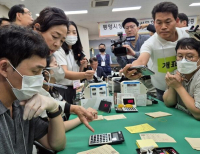
Recount of the Tongyeong mayoral election [Photo=Yonhap News]South Korea's liberal democracy is dying. The National Election Commission (NEC), which has degraded into a criminal organization through t
[Statement by the Seobeokka KMA Patriots Association] ㉛ Recount the ballots openly, as the previous recount covered up election fraud
Recount of the Tongyeong mayoral election [Photo=Yonhap News]South Korea's liberal democracy is dying. The National Election Commission (NEC), which has degraded into a criminal organization through t
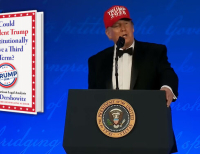
 What is the significance of the "Trump 2028" red hat that keeps reappearing?
It is noteworthy that while it is "highly likely" that President Donald Trump is "seriously considering" a run for the presidency in 2028, he is also "deliberately" fueling speculation regarding wheth
What is the significance of the "Trump 2028" red hat that keeps reappearing?
It is noteworthy that while it is "highly likely" that President Donald Trump is "seriously considering" a run for the presidency in 2028, he is also "deliberately" fueling speculation regarding wheth
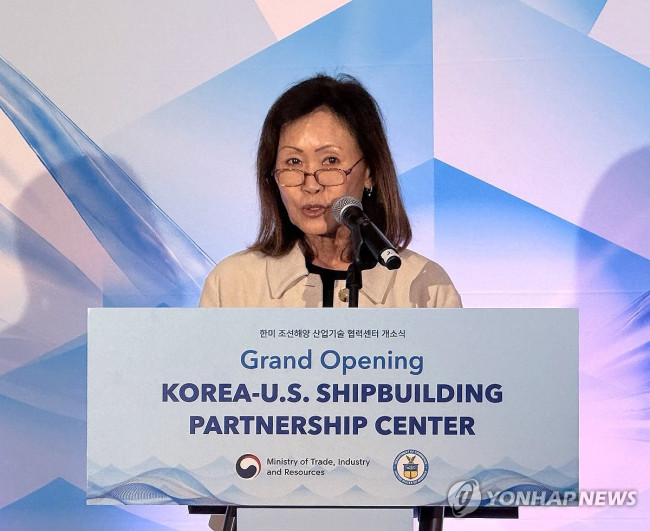 First U.S. Ambassador of Trump's Second Term to Arrive This Week… Will It Provide Momentum to Resolve Pending Issues?
U.S. Ambassador to South Korea Michelle Steel speaks at the opening ceremony of the Korea-U.S. Shipbuilding Cooperation Center held at the Mayflower Hotel in Washington, D.C., on the 23rd (local time)
First U.S. Ambassador of Trump's Second Term to Arrive This Week… Will It Provide Momentum to Resolve Pending Issues?
U.S. Ambassador to South Korea Michelle Steel speaks at the opening ceremony of the Korea-U.S. Shipbuilding Cooperation Center held at the Mayflower Hotel in Washington, D.C., on the 23rd (local time)
 President Yoon, regarding the first-instance ruling on the Public Official Election Act: “An excessive political verdict that distorts the facts… We will appeal immediately.”
The first-instance sentencing hearing for President Yoon Suk Yeol regarding violations of the Public Official Election Act is being broadcast live at Seoul Station on the 27th. [Photo=Yonhap News]Pres
President Yoon, regarding the first-instance ruling on the Public Official Election Act: “An excessive political verdict that distorts the facts… We will appeal immediately.”
The first-instance sentencing hearing for President Yoon Suk Yeol regarding violations of the Public Official Election Act is being broadcast live at Seoul Station on the 27th. [Photo=Yonhap News]Pres
 91% of Net Influx of MZ Generation Goes to Seoul Metropolitan Area… Population Migration Also Shows 'K-shaped Polarization' by Industry
[Provided by Leaders Index]Over the past four years, the MZ generation population has become increasingly concentrated in the Seoul metropolitan area and the Chungcheong region. While cities cen
91% of Net Influx of MZ Generation Goes to Seoul Metropolitan Area… Population Migration Also Shows 'K-shaped Polarization' by Industry
[Provided by Leaders Index]Over the past four years, the MZ generation population has become increasingly concentrated in the Seoul metropolitan area and the Chungcheong region. While cities cen
 'Godfather of Japanese Mystery Novels' Keigo Higashino Passes Away After Battle with Cancer at 68
Famous Japanese mystery novelist Keigo Higashino [AFP=Yonhap News]It has been belatedly reported that Keigo Higashino, the "godfather of Japanese mystery novels" and author of bestsellers such as "The
'Godfather of Japanese Mystery Novels' Keigo Higashino Passes Away After Battle with Cancer at 68
Famous Japanese mystery novelist Keigo Higashino [AFP=Yonhap News]It has been belatedly reported that Keigo Higashino, the "godfather of Japanese mystery novels" and author of bestsellers such as "The
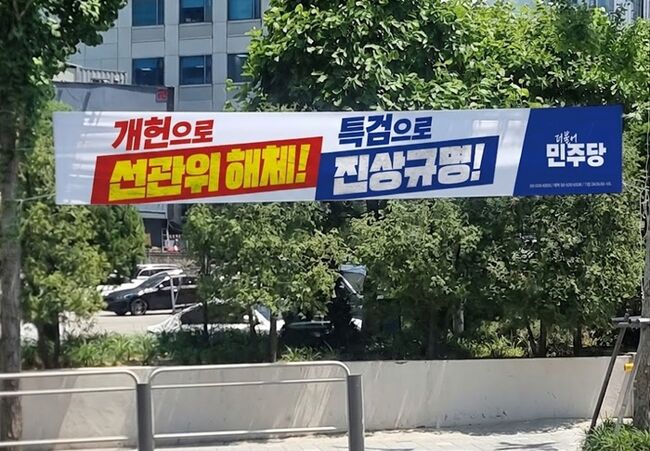 [Cho Yang-geon Column] The NEC: Facing a Fate of "Discarding the Dog After the Hunt"
Banner calling for the "dissolution of the NEC" posted by the Democratic Party. [AI-generated image]Banners calling for the "dissolution of the National Election Commission (NEC)" posted by the Democr
[Cho Yang-geon Column] The NEC: Facing a Fate of "Discarding the Dog After the Hunt"
Banner calling for the "dissolution of the NEC" posted by the Democratic Party. [AI-generated image]Banners calling for the "dissolution of the National Election Commission (NEC)" posted by the Democr
 [Photo] Evidence of Election Fraud Flooding U.S. Media… Trump Had 2.7 Million Votes Stolen
 [Video] U.S. Semiquincentennial Air Show... 'Art in the Sky' streaks across New York
 [Editorial Cartoon] A Draconian Law That Undermines Freedom of Expression

 List
List