Sanae Takaichi, Japan's Prime Minister, attends a session of the National Diet on the 14th of last month. Yonhap News
 Choi In-sik, ColumnistThe fact that the Takaichi Sanae cabinet has a support rating of 75% is not simply a matter of popularity. It is a collective signal of the Japanese society's "psychology of rallying in the face of crisis," and a concentrated result of the public's demand for a strong yet predictable leader and strategic, sound national governance amidst military and economic tensions with China. This figure, unusual in Japanese politics, is a product of a confluence of domestic and external environments.
Firstly, China's military expansion is no longer a "distant issue" for the Japanese public. Tensions in the Taiwan Strait, the possibility of conflict in the East China Sea, and incursions into Japan's EEZ make the public feel a tangible "national security crisis." The Takaichi cabinet has clearly communicated its message of strengthening security and defense, enhancing the Self-Defense Forces' actual capabilities, and reinforcing alliances in response to these anxieties. This is why the Japanese public desires a "Prime Minister who is not afraid of China."
Secondly, Prime Minister Takaichi has established an image of a "decisive leader" through swift decision-making and direct language. Amidst fatigue with the slow pace and evasion of responsibility characteristic of Japanese politics, he is earning public trust by demonstrating momentum across economic, diplomatic, and security policy.
Thirdly, economic anxieties have also contributed to the rise in approval ratings. Facing a triple threat of a weak yen, rising prices, and low birth rates coupled with an aging population, the Japanese public favors a "crisis management leader." The Takaichi cabinet has created an image of a "government preparing for the future" by pushing for regulatory innovation, industrial restructuring, and digital/AI transformation.
Fourthly, Japan is seeking to build an independent security line amidst the US-China hegemonic competition. The appointment of Shinjirō Koizumi as Defense Minister and the strengthening of military cooperation among Japan, the US, Australia, and the UK have reinforced public unity behind the cabinet, aligning with the public sentiment that "Japan must protect itself."
◇What can Korea learn from this?
First, the power of the government, parliament, and public uniting as "one nation" in the face of crisis. Korea is in a period of unprecedented complex crises, including climate change, low birth rates, global supply chain restructuring, North Korea's nuclear program, and US-China conflict. Despite this, the government remains trapped in political infighting, the National Assembly is engrossed in partisan struggles, and the public is divided by factional conflicts. Korea needs to create a structure where society unites around a "national survival strategy" during times of crisis, much like Japan.
Second, predictable leadership and consistent national strategy are needed. The current government's messaging on economic, security, and regulatory policies frequently wavers, and its policy implementation momentum is weakening due to prolonged conflicts with the National Assembly. Korea urgently needs leadership that clearly articulates security, economic, and diplomatic strategies, and pursues them consistently, as Japan does.
Third, the speed and accountability of politics. Japan favors a "decisive leader" during crises, and its political circles support this. The Korean National Assembly's delays in processing legislation, implementing reforms, and establishing systems are undermining national competitiveness. What is needed now is not partisan conflict but a "race against time for national survival."
Fourth, the public must also break free from political fatigue and prioritize the overall direction of the nation. Just as the Japanese public judged that "a strong leader is needed now," Korea should evaluate leaders and policies based on the nation's future, rather than short-term emotions or factional logic.
Ultimately, Japan's 75% approval rating is not a mere explosion of popularity but the result of a virtuous cycle of crisis-rallying-strategy-leadership. This is precisely what Korean politics and the public must learn from now.
Columnist for The Hankyoreh-Japan News

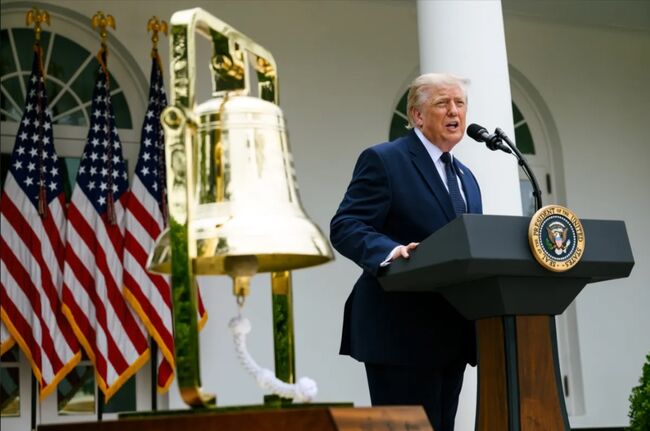 Trump pressures for rate cut again ahead of FOMC... "Should be the lowest in the world"
U.S. President Donald Trump. [Photo = The White House] U.S. President Donald Trump once again pressured the Federal Reserve, the U.S. central bank, to lower interest rates on the 27th (local time
Trump pressures for rate cut again ahead of FOMC... "Should be the lowest in the world"
U.S. President Donald Trump. [Photo = The White House] U.S. President Donald Trump once again pressured the Federal Reserve, the U.S. central bank, to lower interest rates on the 27th (local time
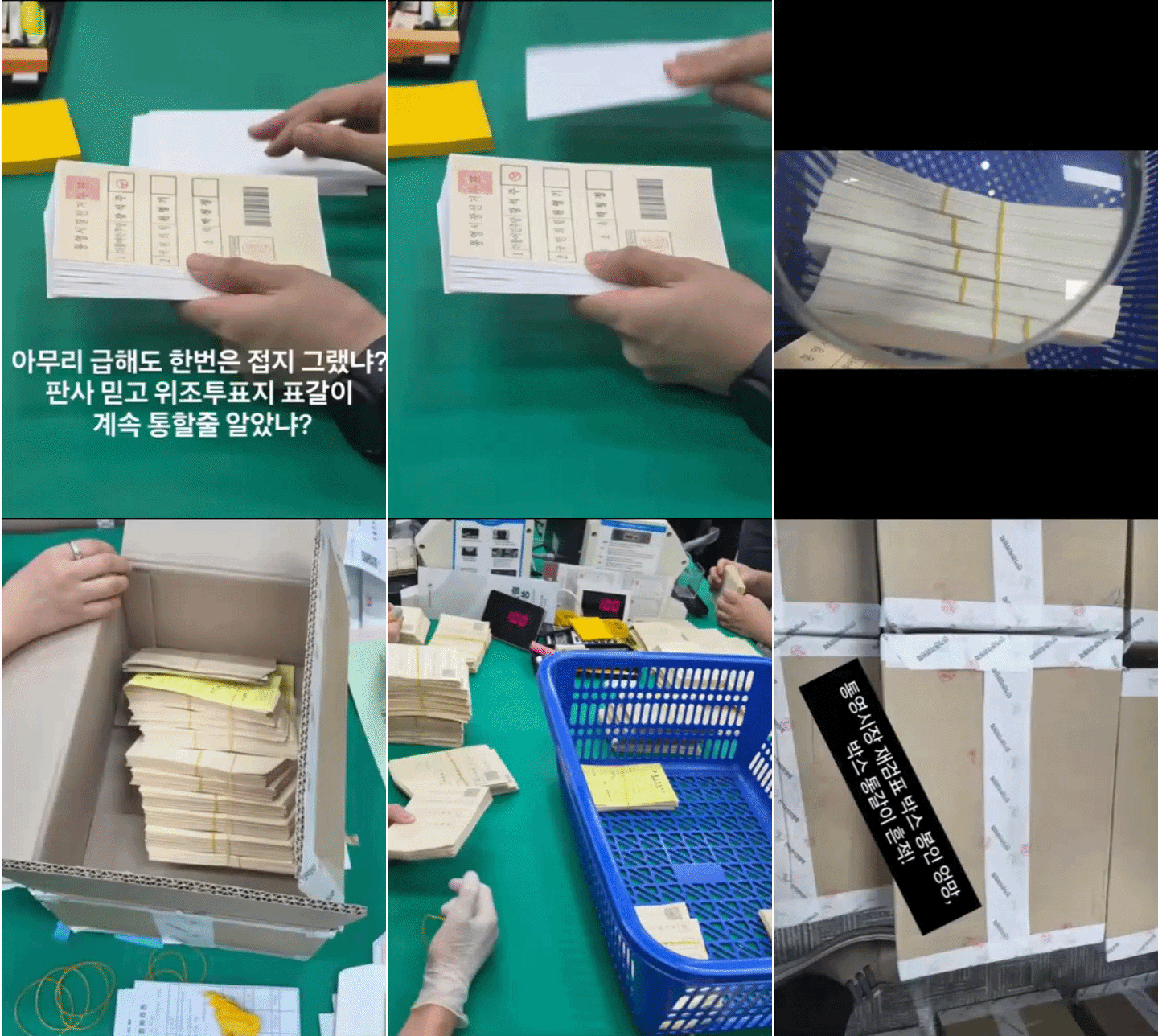 “Ignoring crisp ballots and damaged seals”… Tongyeong mayoral recount concludes with ‘no change in outcome,’ leaving suspicions and public outrage behind
Suspected counterfeit ballots discovered in Tongyeong [GIF from social media of Representative Hwang Kyo-ahn / Attorney Park Joo-hyun]During a recount of the Tongyeong mayoral election in South Gyeong
“Ignoring crisp ballots and damaged seals”… Tongyeong mayoral recount concludes with ‘no change in outcome,’ leaving suspicions and public outrage behind
Suspected counterfeit ballots discovered in Tongyeong [GIF from social media of Representative Hwang Kyo-ahn / Attorney Park Joo-hyun]During a recount of the Tongyeong mayoral election in South Gyeong
 President Yoon, regarding the first-instance ruling on the Public Official Election Act: “An excessive political verdict that distorts the facts… We will appeal immediately.”
The first-instance sentencing hearing for President Yoon Suk Yeol regarding violations of the Public Official Election Act is being broadcast live at Seoul Station on the 27th. [Photo=Yonhap News]Pres
President Yoon, regarding the first-instance ruling on the Public Official Election Act: “An excessive political verdict that distorts the facts… We will appeal immediately.”
The first-instance sentencing hearing for President Yoon Suk Yeol regarding violations of the Public Official Election Act is being broadcast live at Seoul Station on the 27th. [Photo=Yonhap News]Pres
 WSJ: "SK Hynix ADR Premium Is a Sign of AI Trading Overheat"
Advertisement for SK Hynix ADR listing in New York's Times Square [Reuters=Yonhap News file photo]The Wall Street Journal (WSJ) has pointed out that the price of SK Hynix’s American Depositary Recei
WSJ: "SK Hynix ADR Premium Is a Sign of AI Trading Overheat"
Advertisement for SK Hynix ADR listing in New York's Times Square [Reuters=Yonhap News file photo]The Wall Street Journal (WSJ) has pointed out that the price of SK Hynix’s American Depositary Recei
 'Godfather of Japanese Mystery Novels' Keigo Higashino Passes Away After Battle with Cancer at 68
Famous Japanese mystery novelist Keigo Higashino [AFP=Yonhap News]It has been belatedly reported that Keigo Higashino, the "godfather of Japanese mystery novels" and author of bestsellers such as "The
'Godfather of Japanese Mystery Novels' Keigo Higashino Passes Away After Battle with Cancer at 68
Famous Japanese mystery novelist Keigo Higashino [AFP=Yonhap News]It has been belatedly reported that Keigo Higashino, the "godfather of Japanese mystery novels" and author of bestsellers such as "The
 [Park Pil-kyu Security Column] To the Ignorant Trying to Clothe a Beast in Sheep's Clothing
Rep. Kim Byung-joo of the Democratic Party of Korea [Photo=Yonhap News]“The Air Force Academy doesn't teach you how to fly a plane!” “The Army, Navy, and Air Force academies are exactly the
[Park Pil-kyu Security Column] To the Ignorant Trying to Clothe a Beast in Sheep's Clothing
Rep. Kim Byung-joo of the Democratic Party of Korea [Photo=Yonhap News]“The Air Force Academy doesn't teach you how to fly a plane!” “The Army, Navy, and Air Force academies are exactly the
 [Issue Diagnosis] Two Effects of the Election Petition Review
 [Photo] Evidence of Election Fraud Flooding U.S. Media… Trump Had 2.7 Million Votes Stolen
 [Video] U.S. Semiquincentennial Air Show... 'Art in the Sky' streaks across New York
 [Editorial Cartoon] A Draconian Law That Undermines Freedom of Expression

 List
List