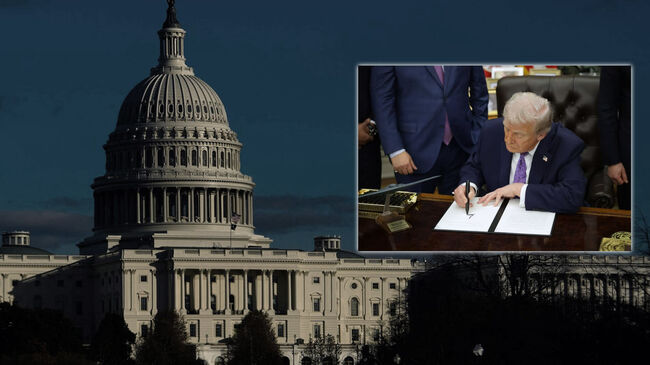
Despite President Donald Trump signing an executive order aimed at curbing state-level regulations, states are forging ahead with their own artificial intelligence (AI) legislation, creating a wave of legal and political conflict that could leave U.S. AI regulations in flux unless Congress intervenes, the Associated Press reported.
Trump's order directs the Justice Department to challenge state AI bills deemed excessive and links certain federal grants to states' compliance with national AI policies.
The White House argues that disparate state regulations threaten innovation and America's competitiveness, especially in its rivalry with China.
State officials from both parties claim the administration has overstepped its authority.
Multiple state AI policymakers have dismissed the order and warned of lawsuits if the administration attempts to enforce it.
"It's outrageous that Trump thinks he can weaponize the Justice and Commerce departments to undermine state authority," said California State Senator Scott Wiener, whose state enacted AI legislation this year. "If the Trump administration tries to implement this outrageous order, we will see them in court."
New York State Assemblyman Alex Bores, who supports legislation similar to California's and is preparing to run for Congress, emphasized that Trump is "opening the door wide" to "unfettered artificial intelligence development" and that Congress must establish safeguards "before it's too late."
Even GOP-led states are pushing back.
Florida Governor Ron DeSantis is preparing a proposed AI Bill of Rights that focuses on parental controls, data privacy, consumer protection, and restricting the nonconsensual use of individuals' names, images, and likenesses.
DeSantis has opposed federal attempts to block state regulations without a consistent national framework.
Prior to the executive order's release, Utah Governor Spencer Cox called for a MAGA-aligned alternative approach that could protect children while maintaining American competitiveness. Those ideas reportedly did not make it into the final order.
Former Trump advisor Steve Bannon stated that AI policy advisor David Sacks had "completely" misled the president on state law preemption issues.
Legal experts point out that only Congress can officially preempt state laws.
The executive order directs federal agencies to identify conflicting state regulations and explore funding mechanisms as a measure to ensure national obligations on AI.
On Capitol Hill, lawmakers from both parties say Congress must act.
"This executive order is overly broad," said Washington Democrat Maria Cantwell, chairwoman of the Senate Committee on Commerce, Science, and Transportation, adding that lawmakers "need to get this right and pass a bipartisan national artificial intelligence (AI) framework."
Marsha Blackburn, a Republican senator from Tennessee, said she would work with the president on legislative efforts to establish the framework mentioned in the order.
Joseph Hoefer, principal and chief AI officer at Monument Advocacy, said that if the administration sues state governments, it should expect counterclaims that question the use of federal funds impacting state policies.
"Everyone wants a clearer national framework," Hoefer said, warning that lawsuits and agency actions "do not bring immediate clarity."
Several states, including California, Colorado, and Utah, already have AI transparency and consumer protection laws in effect, making them likely early targets in legal disputes.
United States NNP=Reporter Sung Ku Hong / Special Correspondent NNP info@newsandpost.com

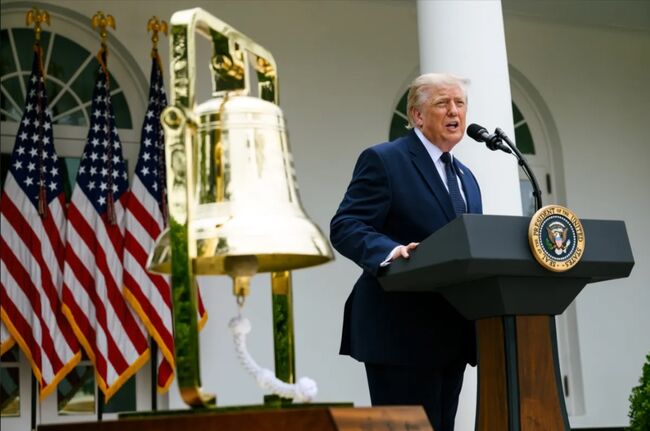 Trump pressures for rate cut again ahead of FOMC... "Should be the lowest in the world"
U.S. President Donald Trump. [Photo = The White House] U.S. President Donald Trump once again pressured the Federal Reserve, the U.S. central bank, to lower interest rates on the 27th (local time
Trump pressures for rate cut again ahead of FOMC... "Should be the lowest in the world"
U.S. President Donald Trump. [Photo = The White House] U.S. President Donald Trump once again pressured the Federal Reserve, the U.S. central bank, to lower interest rates on the 27th (local time
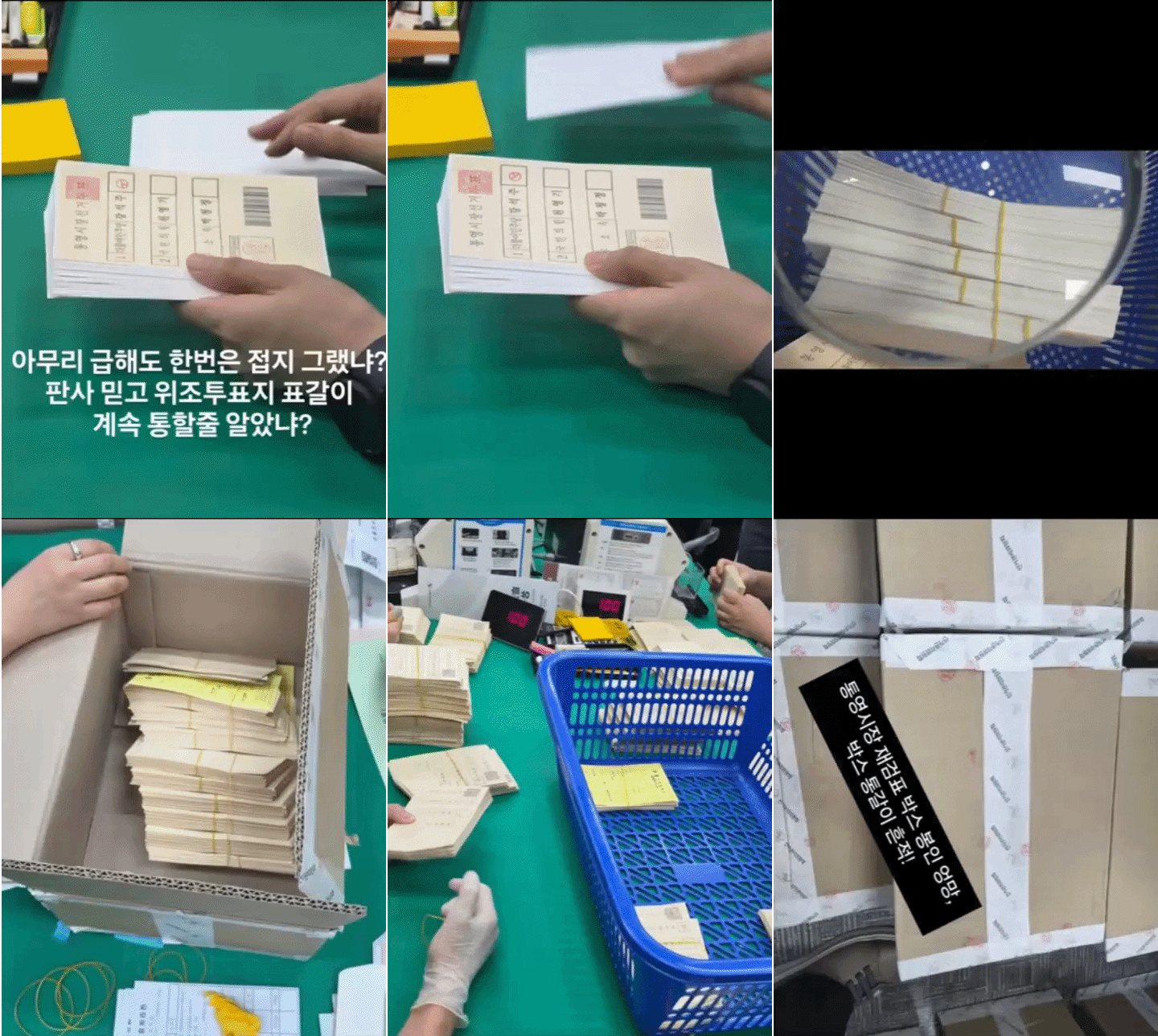 “Ignoring crisp ballots and damaged seals”… Tongyeong mayoral recount concludes with ‘no change in outcome,’ leaving suspicions and public outrage behind
Suspected counterfeit ballots discovered in Tongyeong [GIF from social media of Representative Hwang Kyo-ahn / Attorney Park Joo-hyun]During a recount of the Tongyeong mayoral election in South Gyeong
“Ignoring crisp ballots and damaged seals”… Tongyeong mayoral recount concludes with ‘no change in outcome,’ leaving suspicions and public outrage behind
Suspected counterfeit ballots discovered in Tongyeong [GIF from social media of Representative Hwang Kyo-ahn / Attorney Park Joo-hyun]During a recount of the Tongyeong mayoral election in South Gyeong
 President Yoon, regarding the first-instance ruling on the Public Official Election Act: “An excessive political verdict that distorts the facts… We will appeal immediately.”
The first-instance sentencing hearing for President Yoon Suk Yeol regarding violations of the Public Official Election Act is being broadcast live at Seoul Station on the 27th. [Photo=Yonhap News]Pres
President Yoon, regarding the first-instance ruling on the Public Official Election Act: “An excessive political verdict that distorts the facts… We will appeal immediately.”
The first-instance sentencing hearing for President Yoon Suk Yeol regarding violations of the Public Official Election Act is being broadcast live at Seoul Station on the 27th. [Photo=Yonhap News]Pres
 WSJ: "SK Hynix ADR Premium Is a Sign of AI Trading Overheat"
Advertisement for SK Hynix ADR listing in New York's Times Square [Reuters=Yonhap News file photo]The Wall Street Journal (WSJ) has pointed out that the price of SK Hynix’s American Depositary Recei
WSJ: "SK Hynix ADR Premium Is a Sign of AI Trading Overheat"
Advertisement for SK Hynix ADR listing in New York's Times Square [Reuters=Yonhap News file photo]The Wall Street Journal (WSJ) has pointed out that the price of SK Hynix’s American Depositary Recei
 'Godfather of Japanese Mystery Novels' Keigo Higashino Passes Away After Battle with Cancer at 68
Famous Japanese mystery novelist Keigo Higashino [AFP=Yonhap News]It has been belatedly reported that Keigo Higashino, the "godfather of Japanese mystery novels" and author of bestsellers such as "The
'Godfather of Japanese Mystery Novels' Keigo Higashino Passes Away After Battle with Cancer at 68
Famous Japanese mystery novelist Keigo Higashino [AFP=Yonhap News]It has been belatedly reported that Keigo Higashino, the "godfather of Japanese mystery novels" and author of bestsellers such as "The
 [Park Pil-kyu Security Column] To the Ignorant Trying to Clothe a Beast in Sheep's Clothing
Rep. Kim Byung-joo of the Democratic Party of Korea [Photo=Yonhap News]“The Air Force Academy doesn't teach you how to fly a plane!” “The Army, Navy, and Air Force academies are exactly the
[Park Pil-kyu Security Column] To the Ignorant Trying to Clothe a Beast in Sheep's Clothing
Rep. Kim Byung-joo of the Democratic Party of Korea [Photo=Yonhap News]“The Air Force Academy doesn't teach you how to fly a plane!” “The Army, Navy, and Air Force academies are exactly the
 [Issue Diagnosis] Two Effects of the Election Petition Review
 [Photo] Evidence of Election Fraud Flooding U.S. Media… Trump Had 2.7 Million Votes Stolen
 [Video] U.S. Semiquincentennial Air Show... 'Art in the Sky' streaks across New York
 [Editorial Cartoon] A Draconian Law That Undermines Freedom of Expression

 List
List