
In the age of images, "Reading the Plastic Arts of Humanity," which delves into the fundamental nature of form, has been published. In this book, Kang Woo-bang, a master of art history and director of the Il-hyang Institute for Korean Art History, reveals through extensive fieldwork and the analysis of numerous artifacts that the patterns expressed in art are indeed "plastic languages."
This book, which shifts perspectives on viewing art, draws attention to the "patterns" inscribed on works that have not been interpreted in art history until now.
While conventional art theories focus on artists, periods, regions, and stylistic characteristics, this book empirically demonstrates that the patterns expressed in artifacts and artworks from Korea and around the world function as "plastic languages."
The patterns inscribed in plastic arts, or plastic languages, reveal beauty through the poetic cycle of repetition and variation, acting as the principle by which artworks are created.
The author clarifies that the patterns inscribed in tens of thousands of artifacts from antiquity to the present, in both Eastern and Western art, and in global examples of painting, sculpture, architecture, patterns, metalwork, and costume, are not mere iconographic signs or decorations, but rather "plastic languages" that visually re-enact the principles of vitality and movement in art.
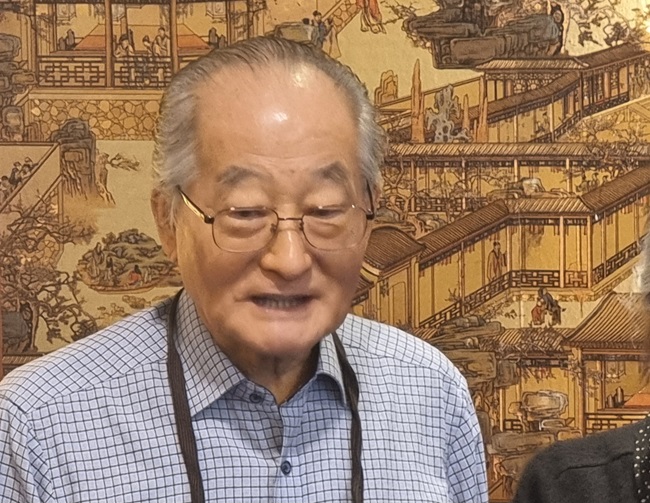 Kang Woo-bang, Director of the Il-hyang Institute for Korean Art History, who published "Reading the Plastic Arts of Humanity: From Patterns to Plastic Languages" (Mulboda). Reporter Lim Yo-hee.
The author presents these plastic languages in four forms: "First Eclipsed Bud," "Second Eclipsed Bud," "Third Eclipsed Bud," and "Jewel." These four plastic languages are expressed in various rhythms within artworks and function as the power that generates art. The author concretely illustrates these aspects through "coloring analysis," which involves direct drawing and coloring.
Through this process, art becomes not a vague object of appreciation, but a living artwork that can be read, discovered, and vividly encountered. The aesthetics of artistic "reading" presented by the author, namely "plastic language" and "coloring analysis," revive the vitality and dynamic power of plastic arts.
For instance, the coloring analysis of the green-glazed dragon face tile (Nok-yu Yong-myeon-wa) from the Unified Silla period vividly showcases the plastic language of the dragon. The "face" inscribed on the tile is not a ghost or an ogre, but a spiritual pattern (Je-il, Je-i, Je-sam Yeonggi-ssak, Bo-ju) composed of plastic languages. In particular, the round jewel (Bo-ju) in the dragon's mouth and the plastic language act as the creative force of the plastic art.
Furthermore, observing the Azure Dragon in the Four Guardian Deities painting at the Gangseo Tomb, we witness not just a dragon drawn on the wall, but the "emergence of a dragon" from the tomb itself as the rolled patterns on the dragon's legs overlap and connect to its body. By exploring why the dragon is there, one can feel the scene where art is generated through the form of plastic language.
The scene of artistic creation is also evident in the illustrations of various objects from Joseon's "Chaekgeori" (books and scholar's objects), such as myriad books, book boxes, and brush holders.
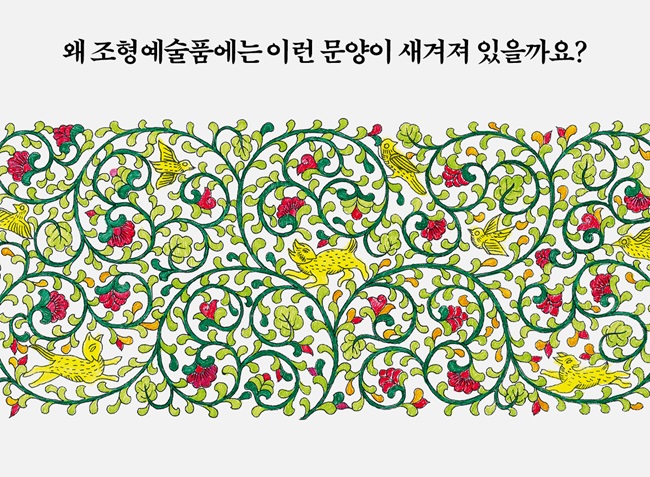
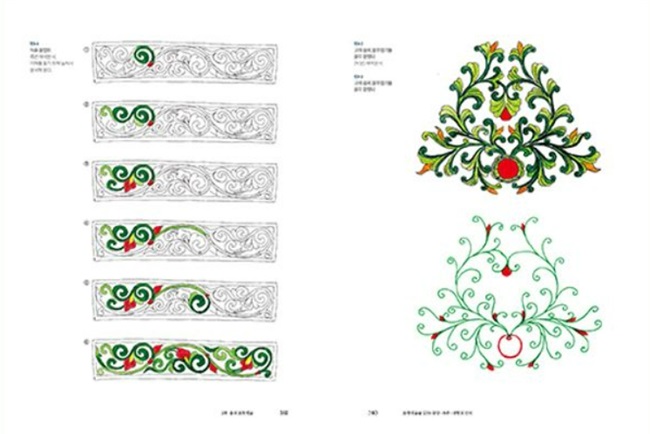
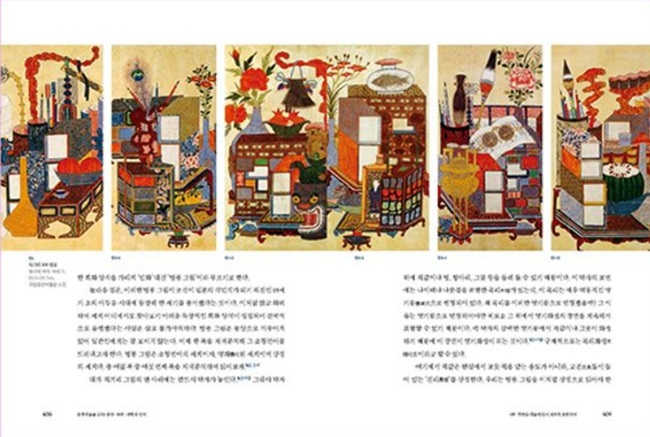
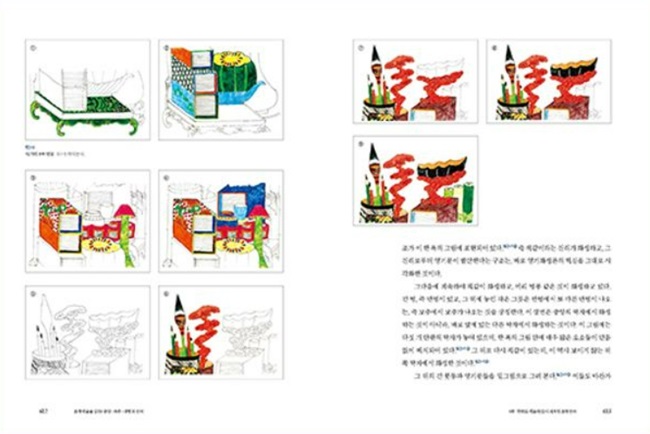 Through "coloring analysis," which involves direct drawing and coloring, Director Kang Woo-bang concretely presents the four forms of plastic language: "First Eclipsed Bud," "Second Eclipsed Bud," "Third Eclipsed Bud," and "Jewel." Mulboda.
Across its 58 chapters, the book broadens the horizons of art by posing questions such as, "Why has humanity repeatedly used these patterns?" "Are patterns merely decoration?" "What is humanity trying to remember by leaving behind so many forms?" and "Is there a way for us to read these forms?"
Reporter Lim Yo-hee

 Iranian Foreign Ministry: "Continuing Message Exchanges with the U.S. and Activities of Mediating Countries"
Esmaeil Baghaei, Spokesperson for the Iranian Ministry of Foreign Affairs [Xinhua, Yonhap News file photo]Esmaeil Baghaei, spokesperson for the Iranian Ministry of Foreign Affairs, stated on the 26th
Iranian Foreign Ministry: "Continuing Message Exchanges with the U.S. and Activities of Mediating Countries"
Esmaeil Baghaei, Spokesperson for the Iranian Ministry of Foreign Affairs [Xinhua, Yonhap News file photo]Esmaeil Baghaei, spokesperson for the Iranian Ministry of Foreign Affairs, stated on the 26th
 President Yoon: "Do You Think You Are Safe from the Special Counsel?"... Final Statement Video Released
President Yoon Suk Yeol rebuking the special prosecutor on the 24th. [Court video / @birds_justice X account subtitle GIF] A video of President Yoon Suk Yeol's closing statement at his trial rega
President Yoon: "Do You Think You Are Safe from the Special Counsel?"... Final Statement Video Released
President Yoon Suk Yeol rebuking the special prosecutor on the 24th. [Court video / @birds_justice X account subtitle GIF] A video of President Yoon Suk Yeol's closing statement at his trial rega
 President Yoon, regarding the first-instance ruling on the Public Official Election Act: “An excessive political verdict that distorts the facts… We will appeal immediately.”
The first-instance sentencing hearing for President Yoon Suk Yeol regarding violations of the Public Official Election Act is being broadcast live at Seoul Station on the 27th. [Photo=Yonhap News]Pres
President Yoon, regarding the first-instance ruling on the Public Official Election Act: “An excessive political verdict that distorts the facts… We will appeal immediately.”
The first-instance sentencing hearing for President Yoon Suk Yeol regarding violations of the Public Official Election Act is being broadcast live at Seoul Station on the 27th. [Photo=Yonhap News]Pres
 WSJ: "SK Hynix ADR Premium Is a Sign of AI Trading Overheat"
Advertisement for SK Hynix ADR listing in New York's Times Square [Reuters=Yonhap News file photo]The Wall Street Journal (WSJ) has pointed out that the price of SK Hynix’s American Depositary Recei
WSJ: "SK Hynix ADR Premium Is a Sign of AI Trading Overheat"
Advertisement for SK Hynix ADR listing in New York's Times Square [Reuters=Yonhap News file photo]The Wall Street Journal (WSJ) has pointed out that the price of SK Hynix’s American Depositary Recei
 'Godfather of Japanese Mystery Novels' Keigo Higashino Passes Away After Battle with Cancer at 68
Famous Japanese mystery novelist Keigo Higashino [AFP=Yonhap News]It has been belatedly reported that Keigo Higashino, the "godfather of Japanese mystery novels" and author of bestsellers such as "The
'Godfather of Japanese Mystery Novels' Keigo Higashino Passes Away After Battle with Cancer at 68
Famous Japanese mystery novelist Keigo Higashino [AFP=Yonhap News]It has been belatedly reported that Keigo Higashino, the "godfather of Japanese mystery novels" and author of bestsellers such as "The
 [Park Pil-kyu Security Column] To the Ignorant Trying to Clothe a Beast in Sheep's Clothing
Rep. Kim Byung-joo of the Democratic Party of Korea [Photo=Yonhap News]“The Air Force Academy doesn't teach you how to fly a plane!” “The Army, Navy, and Air Force academies are exactly the
[Park Pil-kyu Security Column] To the Ignorant Trying to Clothe a Beast in Sheep's Clothing
Rep. Kim Byung-joo of the Democratic Party of Korea [Photo=Yonhap News]“The Air Force Academy doesn't teach you how to fly a plane!” “The Army, Navy, and Air Force academies are exactly the
 [Issue Diagnosis] Two Effects of the Election Petition Review
 [Photo] Evidence of Election Fraud Flooding U.S. Media… Trump Had 2.7 Million Votes Stolen
 [Video] U.S. Semiquincentennial Air Show... 'Art in the Sky' streaks across New York
 [Editorial Cartoon] A Draconian Law That Undermines Freedom of Expression

 List
List









