Osan Air Base. Yonhap News photo
 Choi In-sik, ColumnistThe decision by the U.S. Forces Korea (USFK) to reclaim control over access to the Osan Air Base from the ROK military is not a mere security measure.
It is a consequence of the ignorance and overreach of the government and investigative agencies, which disregarded the operational principles of the ROK-U.S. alliance, and an incident that has undermined South Korea's own security capabilities and alliance management abilities.
The issue began in July when the special prosecutor's office, which was investigating an alleged "rebellion," entered a key security facility, the Combined Air Defense Operations Center (MCRC) at Osan Air Base, for a search and seizure operation without prior consultation with USFK, and in the process, led the ROK military personnel.
USFK deemed this action a clear violation of the Status of Forces Agreement (SOFA) and immediately protested. The principle that even for facilities provided by South Korea, the authority regarding security, guard duty, and access control rests entirely with USFK is a fundamental aspect of the alliance order stipulated in SOFA.
Despite this, the South Korean government failed to provide an immediate and clear explanation for USFK's concerns, and the official response from diplomatic authorities was delayed for two months. With follow-up discussions only occurring in September, it is difficult to avoid criticism that the government's response was overly complacent given the severity of the situation.
A more significant problem lies in the perception of the special prosecutor and the government. While the special prosecutor explained that there was no issue because they had received approval for entry from the ROK military, there are arguments that this indicates a failure to understand, or a deliberate disregard for, the fundamental structure of SOFA.
The assertion that mandatory investigations into key facilities are possible solely with the ROK military's approval, when the ultimate authority for access to USFK bases rests with USFK itself, fundamentally undermines the legal and military order of the alliance. It is as if investigative agencies, which should emphasize the rule of law and procedures, have instead treated an international agreement lightly.
The MCRC within Osan Base is the cornerstone of the combined defense system where ROK-U.S. air defense information is integrated and operated. The information generated and processed here is classified as top-level military secrets, and its leakage could directly lead to an immediate security threat.
Given that this facility houses information most coveted by adversarial forces, including North Korea, it is an entirely reasonable judgment for USFK to perceive this issue not merely as a matter of "enhanced security" but as a matter of trust between allies. Nevertheless, South Korea's investigative agencies treated the facility as if it were a general administrative office, and the government did not intervene.
As a result of this incident, USFK has decided to centrally manage all access gates at Osan Base. ROK military identification cards will no longer be recognized as a means of entry; only holders of Defense Biometric Identification System (DBIDS) cards issued by USFK will be permitted access.
The access system, which was jointly managed by South Korea and the U.S., has effectively transitioned to USFK's sole control. This is a measure rarely seen in the history of alliances, demonstrating the extent to which trust in the South Korean government and investigative agencies has been damaged.
The core of this incident lies in the fact that politically motivated investigations infringed upon the fundamental order of national security.
The Lee Jae-myung administration and the special prosecutor, prioritizing political justification, failed to adequately consider the ROK-U.S. military cooperation structure and the SOFA framework.
Security facilities and alliance norms are not subjects that can be arbitrarily interpreted based on a regime's leanings or political circumstances. The consequence of disregarding this has directly manifested as a failure in alliance management.
The government must now face the seriousness of the situation. Firstly, it must clearly demonstrate its commitment to SOFA compliance through an official and responsible explanation to the U.S. side. Concurrently, it is necessary to institutionalize systematic education for the military, prosecutors, and investigative agencies regarding access to USFK bases and alliance norms.
The National Assembly must also establish legal frameworks to fundamentally prevent politically motivated investigations from extending to key security facilities. Most importantly, substantive measures must follow to restore the damaged trust between South Korea and the U.S.
Alliances are maintained not through declarations or rhetoric, but through trust and norms. If authority is exercised by disregarding laws, procedures, and international agreements, the damage will directly translate into public insecurity.
The Osan Base incident of 2025 will be recorded not as a fleeting controversy, but as a significant warning questioning how South Korea will manage its alliances and uphold the fundamentals of national security.
Columnist, Hankookilbo

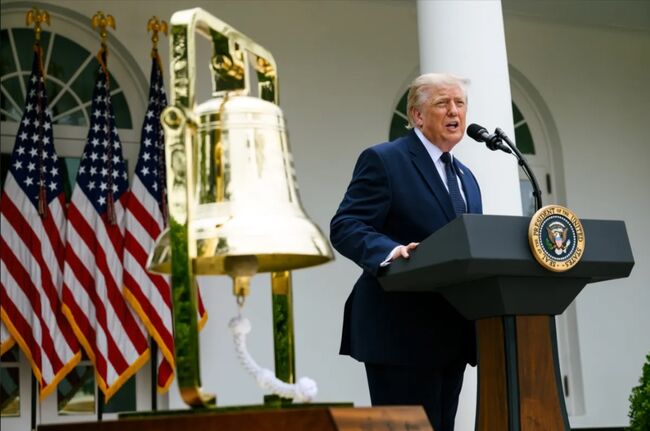 Trump pressures for rate cut again ahead of FOMC... "Should be the lowest in the world"
U.S. President Donald Trump. [Photo = The White House] U.S. President Donald Trump once again pressured the Federal Reserve, the U.S. central bank, to lower interest rates on the 27th (local time
Trump pressures for rate cut again ahead of FOMC... "Should be the lowest in the world"
U.S. President Donald Trump. [Photo = The White House] U.S. President Donald Trump once again pressured the Federal Reserve, the U.S. central bank, to lower interest rates on the 27th (local time
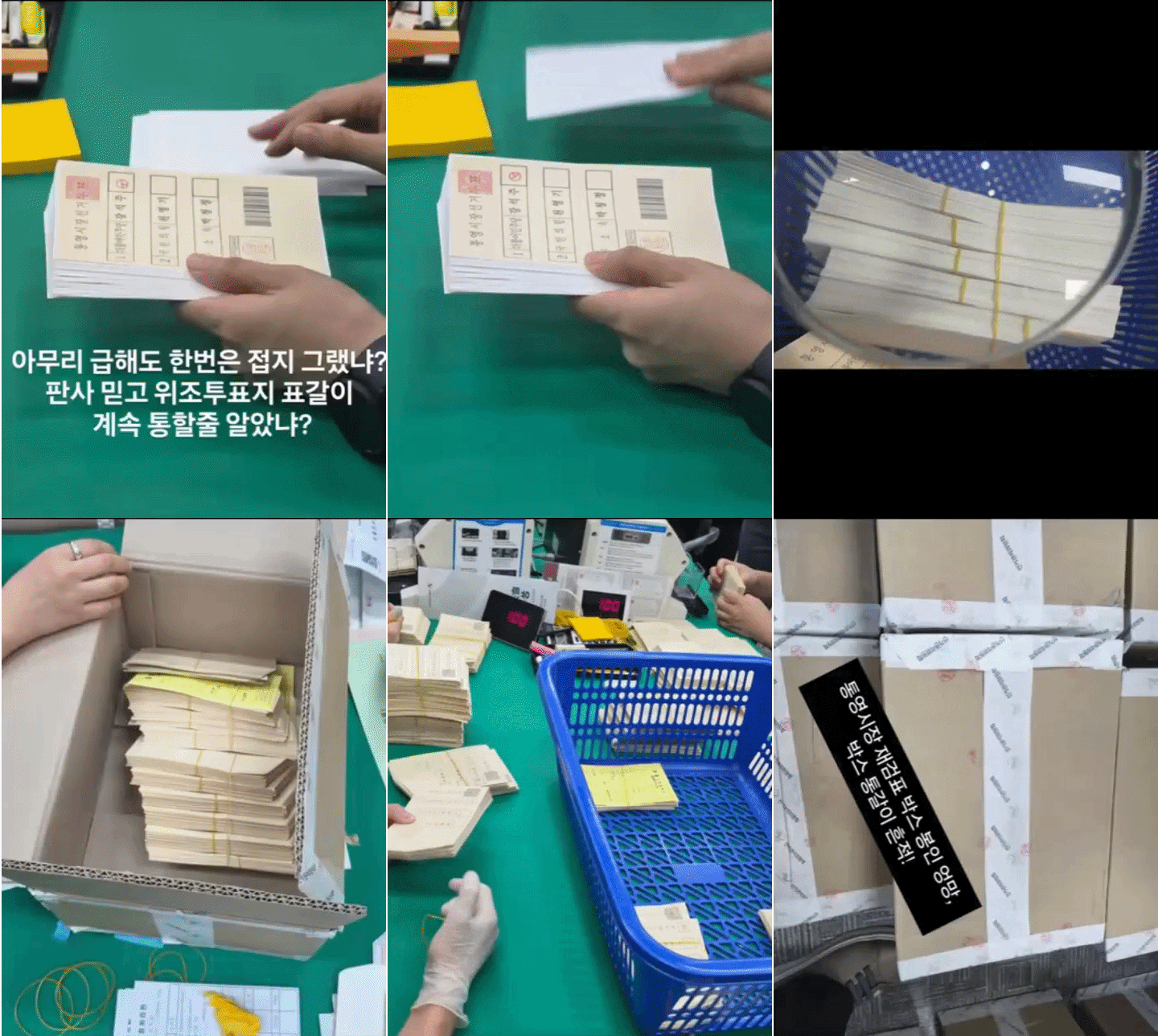 “Ignoring crisp ballots and damaged seals”… Tongyeong mayoral recount concludes with ‘no change in outcome,’ leaving suspicions and public outrage behind
Suspected counterfeit ballots discovered in Tongyeong [GIF from social media of Representative Hwang Kyo-ahn / Attorney Park Joo-hyun]During a recount of the Tongyeong mayoral election in South Gyeong
“Ignoring crisp ballots and damaged seals”… Tongyeong mayoral recount concludes with ‘no change in outcome,’ leaving suspicions and public outrage behind
Suspected counterfeit ballots discovered in Tongyeong [GIF from social media of Representative Hwang Kyo-ahn / Attorney Park Joo-hyun]During a recount of the Tongyeong mayoral election in South Gyeong
 President Yoon, regarding the first-instance ruling on the Public Official Election Act: “An excessive political verdict that distorts the facts… We will appeal immediately.”
The first-instance sentencing hearing for President Yoon Suk Yeol regarding violations of the Public Official Election Act is being broadcast live at Seoul Station on the 27th. [Photo=Yonhap News]Pres
President Yoon, regarding the first-instance ruling on the Public Official Election Act: “An excessive political verdict that distorts the facts… We will appeal immediately.”
The first-instance sentencing hearing for President Yoon Suk Yeol regarding violations of the Public Official Election Act is being broadcast live at Seoul Station on the 27th. [Photo=Yonhap News]Pres
 WSJ: "SK Hynix ADR Premium Is a Sign of AI Trading Overheat"
Advertisement for SK Hynix ADR listing in New York's Times Square [Reuters=Yonhap News file photo]The Wall Street Journal (WSJ) has pointed out that the price of SK Hynix’s American Depositary Recei
WSJ: "SK Hynix ADR Premium Is a Sign of AI Trading Overheat"
Advertisement for SK Hynix ADR listing in New York's Times Square [Reuters=Yonhap News file photo]The Wall Street Journal (WSJ) has pointed out that the price of SK Hynix’s American Depositary Recei
 'Godfather of Japanese Mystery Novels' Keigo Higashino Passes Away After Battle with Cancer at 68
Famous Japanese mystery novelist Keigo Higashino [AFP=Yonhap News]It has been belatedly reported that Keigo Higashino, the "godfather of Japanese mystery novels" and author of bestsellers such as "The
'Godfather of Japanese Mystery Novels' Keigo Higashino Passes Away After Battle with Cancer at 68
Famous Japanese mystery novelist Keigo Higashino [AFP=Yonhap News]It has been belatedly reported that Keigo Higashino, the "godfather of Japanese mystery novels" and author of bestsellers such as "The
 [Park Pil-kyu Security Column] To the Ignorant Trying to Clothe a Beast in Sheep's Clothing
Rep. Kim Byung-joo of the Democratic Party of Korea [Photo=Yonhap News]“The Air Force Academy doesn't teach you how to fly a plane!” “The Army, Navy, and Air Force academies are exactly the
[Park Pil-kyu Security Column] To the Ignorant Trying to Clothe a Beast in Sheep's Clothing
Rep. Kim Byung-joo of the Democratic Party of Korea [Photo=Yonhap News]“The Air Force Academy doesn't teach you how to fly a plane!” “The Army, Navy, and Air Force academies are exactly the
 [Issue Diagnosis] Two Effects of the Election Petition Review
 [Photo] Evidence of Election Fraud Flooding U.S. Media… Trump Had 2.7 Million Votes Stolen
 [Video] U.S. Semiquincentennial Air Show... 'Art in the Sky' streaks across New York
 [Editorial Cartoon] A Draconian Law That Undermines Freedom of Expression

 List
List