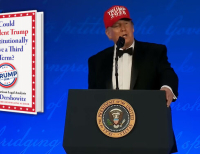
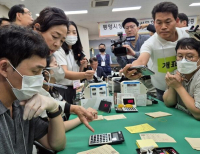
North Korean IT personnel (PG). Yonhap News
This year, at least $2.7 billion (approximately 3.99 trillion won) has been stolen globally through cryptocurrency hacks, with a majority attributed to North Korea, according to an analysis.
Notably, North Korea is focusing on centralized exchanges, which allow for the theft of large sums in a single attack, and is laundering the stolen funds on a large scale through China's underground financial network.
Blockchain research firm 'TRM Labs' released a report on the 18th stating that North Korea has weaponized cryptocurrency hacking at a state level for years to fund its weapons development and foreign currency earnings.
According to the report, North Korea's attack targets have completely shifted from small-scale decentralized finance (DeFi) services to large centralized exchanges (CEX). A prime example is the hacking of cryptocurrency exchange Bybit in February. It is estimated that North Korea stole approximately $1.5 billion (about 2.21 trillion won) from this single incident.
The attack methods have become more sophisticated. They have been employing tactics such as offering fake job opportunities or investments to developers of companies they target, sending them malicious code-infected files to infiltrate systems. TRM Labs analyzed that this 'Code to Custody' strategy has made the developer environment the most efficient path to access exchange assets.
 Cryptocurrency (PG). Yonhap News
North Korea's methods for handling stolen funds have also evolved. In the past, they relied on mixing services to break down and obscure funds, but with sanctions from the United States blocking this, they have begun using underground financial networks referred to as the 'Chinese Laundromat'.
Stolen cryptocurrencies are split and moved across various blockchain networks, then handed over to money laundering networks composed of Chinese underground bankers, over-the-counter brokers (OTC), and money couriers to be cashed out. Through this process, hacking funds sometimes re-enter North Korean companies under the guise of payments for goods. TRM Labs assessed that the reason North Korea's large-scale money laundering operations continue despite Western sanctions is due to China's industrialized money laundering network.
Chris Wong, an investigator at TRM Labs and former FBI agent, stated, "North Korea's hacking is a highly specialized operation with strategic objectives," adding, "It requires real-time intelligence gathering, innovative networks, and cross-border cooperation."
What do you think of this article?

 [Statement by the Seobeokka KMA Patriots Association] ㉛ Recount the ballots openly, as the previous recount covered up election fraud
Recount of the Tongyeong mayoral election [Photo=Yonhap News]South Korea's liberal democracy is dying. The National Election Commission (NEC), which has degraded into a criminal organization through t
[Statement by the Seobeokka KMA Patriots Association] ㉛ Recount the ballots openly, as the previous recount covered up election fraud
Recount of the Tongyeong mayoral election [Photo=Yonhap News]South Korea's liberal democracy is dying. The National Election Commission (NEC), which has degraded into a criminal organization through t
 What is the significance of the "Trump 2028" red hat that keeps reappearing?
It is noteworthy that while it is "highly likely" that President Donald Trump is "seriously considering" a run for the presidency in 2028, he is also "deliberately" fueling speculation regarding wheth
What is the significance of the "Trump 2028" red hat that keeps reappearing?
It is noteworthy that while it is "highly likely" that President Donald Trump is "seriously considering" a run for the presidency in 2028, he is also "deliberately" fueling speculation regarding wheth
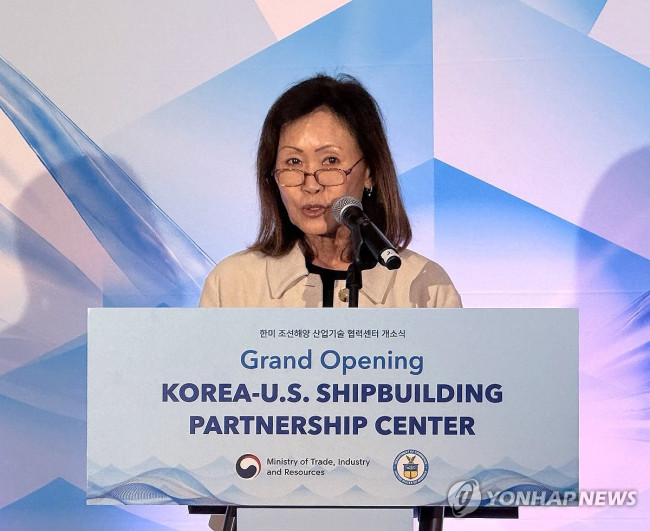 First U.S. Ambassador of Trump's Second Term to Arrive This Week… Will It Provide Momentum to Resolve Pending Issues?
U.S. Ambassador to South Korea Michelle Steel speaks at the opening ceremony of the Korea-U.S. Shipbuilding Cooperation Center held at the Mayflower Hotel in Washington, D.C., on the 23rd (local time)
First U.S. Ambassador of Trump's Second Term to Arrive This Week… Will It Provide Momentum to Resolve Pending Issues?
U.S. Ambassador to South Korea Michelle Steel speaks at the opening ceremony of the Korea-U.S. Shipbuilding Cooperation Center held at the Mayflower Hotel in Washington, D.C., on the 23rd (local time)
 President Yoon, regarding the first-instance ruling on the Public Official Election Act: “An excessive political verdict that distorts the facts… We will appeal immediately.”
The first-instance sentencing hearing for President Yoon Suk Yeol regarding violations of the Public Official Election Act is being broadcast live at Seoul Station on the 27th. [Photo=Yonhap News]Pres
President Yoon, regarding the first-instance ruling on the Public Official Election Act: “An excessive political verdict that distorts the facts… We will appeal immediately.”
The first-instance sentencing hearing for President Yoon Suk Yeol regarding violations of the Public Official Election Act is being broadcast live at Seoul Station on the 27th. [Photo=Yonhap News]Pres
 91% of Net Influx of MZ Generation Goes to Seoul Metropolitan Area… Population Migration Also Shows 'K-shaped Polarization' by Industry
[Provided by Leaders Index]Over the past four years, the MZ generation population has become increasingly concentrated in the Seoul metropolitan area and the Chungcheong region. While cities cen
91% of Net Influx of MZ Generation Goes to Seoul Metropolitan Area… Population Migration Also Shows 'K-shaped Polarization' by Industry
[Provided by Leaders Index]Over the past four years, the MZ generation population has become increasingly concentrated in the Seoul metropolitan area and the Chungcheong region. While cities cen
 'Godfather of Japanese Mystery Novels' Keigo Higashino Passes Away After Battle with Cancer at 68
Famous Japanese mystery novelist Keigo Higashino [AFP=Yonhap News]It has been belatedly reported that Keigo Higashino, the "godfather of Japanese mystery novels" and author of bestsellers such as "The
'Godfather of Japanese Mystery Novels' Keigo Higashino Passes Away After Battle with Cancer at 68
Famous Japanese mystery novelist Keigo Higashino [AFP=Yonhap News]It has been belatedly reported that Keigo Higashino, the "godfather of Japanese mystery novels" and author of bestsellers such as "The
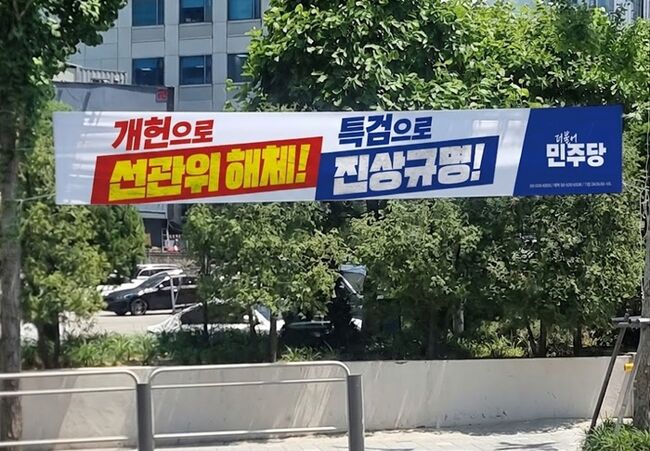 [Cho Yang-geon Column] The NEC: Facing a Fate of "Discarding the Dog After the Hunt"
Banner calling for the "dissolution of the NEC" posted by the Democratic Party. [AI-generated image]Banners calling for the "dissolution of the National Election Commission (NEC)" posted by the Democr
[Cho Yang-geon Column] The NEC: Facing a Fate of "Discarding the Dog After the Hunt"
Banner calling for the "dissolution of the NEC" posted by the Democratic Party. [AI-generated image]Banners calling for the "dissolution of the National Election Commission (NEC)" posted by the Democr
 [Photo] Evidence of Election Fraud Flooding U.S. Media… Trump Had 2.7 Million Votes Stolen
 [Video] U.S. Semiquincentennial Air Show... 'Art in the Sky' streaks across New York
 [Editorial Cartoon] A Draconian Law That Undermines Freedom of Expression

 List
List