A soldier deployed for night guard duty on the eastern front stares intently at the brightly lit barbed wire fence and the area ahead. Yonhap News
 Editorial Board Member, Korea Military Academy Class of '80The Ministry of National Defense reportedly issued a directive to the Joint Chiefs of Staff (JCS) to "closely evaluate the situation to determine if warning shots are necessary" when North Korean forces cross the Military Demarcation Line (MDL) into South Korean territory. This directive follows the proposal of military talks related to violations of the MDL. This action intervenes with political judgment into the existing procedure of warning broadcast → warning shot → aimed shot, halting the "act first, report later" principle on the ground and raising concerns about potentially causing unnecessary casualties for front-line soldiers due to delayed immediate decisions and responses.
The most evident example of the danger of delayed immediate response was the Second Battle of Yeonpyeong in 2002. At that time, the engagement rules applied at the Northern Limit Line (NLL) in the West Sea had a multi-stage structure: warning broadcast → demonstration maneuver → interdiction maneuver → firing. While North Korean patrol boats rapidly closed the distance with close-quarters maneuvers, the field commander's decision was delayed due to the reporting procedure, resulting in our fast attack craft being hit first under unfavorable conditions and leading to casualties. After this incident, the Navy simplified its engagement rules and excluded the concept of "pushing away" because the lesson learned was that immediate response, rather than meticulous situation assessment, ensures the survival of combat soldiers and creates deterrence.
On the battlefield, delayed decisions can be more fatal than misjudgments. The MDL and NLL, in particular, are spaces where situations compress by the second. In close-quarters standoff situations, the intent and nature of an intrusion are subjects for post-analysis, not information that can be immediately discerned by soldiers on guard duty.
In 2025, North Korean forces have violated the MDL a total of 16 times, a significant increase compared to the previous year. Ten of these violations occurred in concentrated fashion within the last month, primarily in areas such as Goseong in Gangwon Province and Yeoncheon in Gyeonggi Province. In addition to topographical errors, the possibility of intentional violations during work has been raised. While the military responded in accordance with the Armistice Agreement procedures, the Ministry of National Defense's recent directive inevitably weakens deterrence and increases the risk of intentional conflict by the enemy. The UN Command's public rebuttal regarding the bill for DMZ access is also exacerbating the possibility of cracks in the Armistice Agreement order and ROK-US cooperation.
The military did not originally engage in indiscriminate firing even if the enemy encroached. The phased engagement concept, leading from warning broadcast, warning shot, to response (aimed) shot, is already institutionalized. The problem is that the directive to "closely evaluate the situation first" creates confusion in decision-making and response time, as well as command responsibility. If it is not clear who makes the final decision, within how many seconds that decision must be made, and who is responsible for the outcome, the engagement scene will react passively and conservatively. This, in turn, leads to unnecessary sacrifices due to prioritizing reporting and delayed decisions.
We must also consider the UN Command's engagement structure. The UN Command's engagement principles, based on the Armistice Agreement, have emphasized immediate judgment and proportional response by field commanders over prior authorization. This is not an aggressive concept but a minimum deterrence logic aimed at immediately stopping enemy incursions and concluding conflicts quickly. The ambiguous directive from the Ministry of National Defense, which delays field judgment, also conflicts with the UN Command's engagement principles.
North Korea's rules of engagement are even simpler. North Korea's concept of engagement against the South is based on preemption, speed, and maximization of on-site discretion. They prioritize striking immediately upon seizing an opportunity rather than warnings or phased procedures, with initial actions taking precedence over reporting and prior authorization. The repeated cases of provocations at the DMZ and NLL clearly demonstrate that North Korea does not delay its combat actions. The more the enemy perceives our decision-making and response as slow, the more the intensity of their provocations will increase.
Military deterrence does not assume goodwill. It is only established when the enemy's combat mindset is accurately presupposed. While the enemy maintains a structure that accelerates decision-making, if we use directives and language that can delay decisions, the balance of deterrence is bound to be shaken. This is an act that aids the provocative enemy.
To manage the risk of escalation, concrete response guidelines must be issued, not abstract appeals. Everything must be transparent and clear, including whether the authority for the final firing decision in MDL and NLL situations rests with the field commander, within how many seconds that decision must be made, and the standardization of initial, intermediate, and final reports following immediate action. If friendly casualties occur, as they did in the Second Battle of Yeonpyeong due to the Ministry of National Defense's irresponsible political directives, the Minister of National Defense and the Chairman of the Joint Chiefs of Staff will bear full responsibility.
The front lines are not a space for interpreting political messages. The front line is a battlefield space that survives only when rules are applied immediately. Victory can be achieved by reading signs and the enemy's intentions in advance and not delaying decisions and responses when the enemy provokes. The front lines are not protected by political directives and slogans of peace. They are protected by clear rules of engagement and a clear and consistent accountability structure.
I recommend that the Minister of National Defense participate in front-line reconnaissance and ambush operations. Only by directly witnessing the soldiers fighting the cold while conducting reconnaissance operations in temperatures ranging from minus 20 to 30 degrees Celsius will they understand how dangerous vague political rhetoric can be. Before issuing directives related to military doctrine, I urge the Minister of National Defense to review the manuals, past directives, and war history once more, and to listen to the opinions of his staff.
The sacrifice of soldiers must not be repeated due to directives, guidelines, and policies that conflict with military principles.
Editor, The Hankyoreh

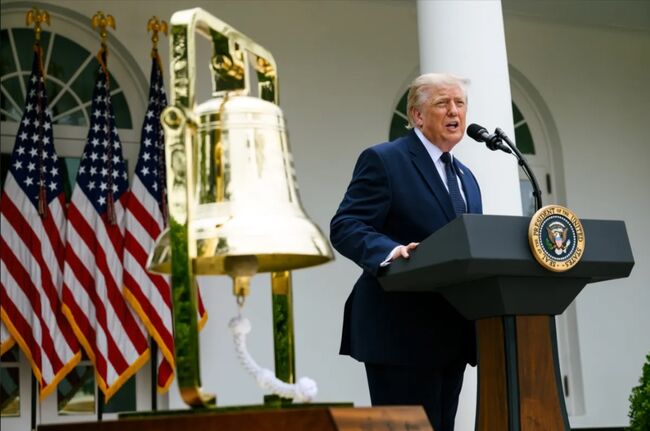 Trump pressures for rate cut again ahead of FOMC... "Should be the lowest in the world"
U.S. President Donald Trump. [Photo = The White House] U.S. President Donald Trump once again pressured the Federal Reserve, the U.S. central bank, to lower interest rates on the 27th (local time
Trump pressures for rate cut again ahead of FOMC... "Should be the lowest in the world"
U.S. President Donald Trump. [Photo = The White House] U.S. President Donald Trump once again pressured the Federal Reserve, the U.S. central bank, to lower interest rates on the 27th (local time
 “Ignoring crisp ballots and damaged seals”… Tongyeong mayoral recount concludes with ‘no change in outcome,’ leaving suspicions and public outrage behind
Suspected counterfeit ballots discovered in Tongyeong [GIF from social media of Representative Hwang Kyo-ahn / Attorney Park Joo-hyun]During a recount of the Tongyeong mayoral election in South Gyeong
“Ignoring crisp ballots and damaged seals”… Tongyeong mayoral recount concludes with ‘no change in outcome,’ leaving suspicions and public outrage behind
Suspected counterfeit ballots discovered in Tongyeong [GIF from social media of Representative Hwang Kyo-ahn / Attorney Park Joo-hyun]During a recount of the Tongyeong mayoral election in South Gyeong
 President Yoon, regarding the first-instance ruling on the Public Official Election Act: “An excessive political verdict that distorts the facts… We will appeal immediately.”
The first-instance sentencing hearing for President Yoon Suk Yeol regarding violations of the Public Official Election Act is being broadcast live at Seoul Station on the 27th. [Photo=Yonhap News]Pres
President Yoon, regarding the first-instance ruling on the Public Official Election Act: “An excessive political verdict that distorts the facts… We will appeal immediately.”
The first-instance sentencing hearing for President Yoon Suk Yeol regarding violations of the Public Official Election Act is being broadcast live at Seoul Station on the 27th. [Photo=Yonhap News]Pres
 WSJ: "SK Hynix ADR Premium Is a Sign of AI Trading Overheat"
Advertisement for SK Hynix ADR listing in New York's Times Square [Reuters=Yonhap News file photo]The Wall Street Journal (WSJ) has pointed out that the price of SK Hynix’s American Depositary Recei
WSJ: "SK Hynix ADR Premium Is a Sign of AI Trading Overheat"
Advertisement for SK Hynix ADR listing in New York's Times Square [Reuters=Yonhap News file photo]The Wall Street Journal (WSJ) has pointed out that the price of SK Hynix’s American Depositary Recei
 'Godfather of Japanese Mystery Novels' Keigo Higashino Passes Away After Battle with Cancer at 68
Famous Japanese mystery novelist Keigo Higashino [AFP=Yonhap News]It has been belatedly reported that Keigo Higashino, the "godfather of Japanese mystery novels" and author of bestsellers such as "The
'Godfather of Japanese Mystery Novels' Keigo Higashino Passes Away After Battle with Cancer at 68
Famous Japanese mystery novelist Keigo Higashino [AFP=Yonhap News]It has been belatedly reported that Keigo Higashino, the "godfather of Japanese mystery novels" and author of bestsellers such as "The
 [Park Pil-kyu Security Column] To the Ignorant Trying to Clothe a Beast in Sheep's Clothing
Rep. Kim Byung-joo of the Democratic Party of Korea [Photo=Yonhap News]“The Air Force Academy doesn't teach you how to fly a plane!” “The Army, Navy, and Air Force academies are exactly the
[Park Pil-kyu Security Column] To the Ignorant Trying to Clothe a Beast in Sheep's Clothing
Rep. Kim Byung-joo of the Democratic Party of Korea [Photo=Yonhap News]“The Air Force Academy doesn't teach you how to fly a plane!” “The Army, Navy, and Air Force academies are exactly the
 [Issue Diagnosis] Two Effects of the Election Petition Review
 [Photo] Evidence of Election Fraud Flooding U.S. Media… Trump Had 2.7 Million Votes Stolen
 [Video] U.S. Semiquincentennial Air Show... 'Art in the Sky' streaks across New York
 [Editorial Cartoon] A Draconian Law That Undermines Freedom of Expression

 List
List