- Elevating Civilian Campaign Standards to National Strategy
- Legislation foreshadows debates on power burden and legitimacy
 Prime Minister Kim Boo-kyum is seen conversing with Democratic Party leader Lee Jae-myung and Presidential Chief of Staff Kang Hoon-sik before a meeting at the Prime Minister's official residence in Samcheong-dong, Seoul, on the 21st. [Photo = Yonhap News]
The ruling party, government, and presidential office have decided to promote renewable energy 100% (RE100) industrial complexes as a national strategic task and expedite the enactment of related special legislation. The ruling party, government, and presidential office agreed at a high-level party-government consultation held on the 21st to rapidly proceed with legislation and institutional reforms for the creation of RE100 industrial complexes.
At the consultation, legislative schedules and policy directions for the promotion of RE100 industrial complexes were discussed. It is understood that the party, government, and presidential office reached a consensus on establishing a legal basis for the project through the enactment of a special law and building a national support system including financial aid and special licensing permits. The government plans to simultaneously pursue renewable energy transition and industrial structure reorganization through this initiative.
Kim Yong-beom, Senior Secretary to the President for Economic Affairs, stated in a briefing after the meeting, "RE100 industrial complexes are national strategic tasks that simultaneously pursue energy transition and industrial structure reorganization," and added, "We plan to rapidly proceed with follow-up procedures, including the enactment of a special law."
RE100 is an international campaign for companies to transition to using 100% renewable energy, and it has no legal enforceability. However, as it is used as a supply chain evaluation criterion by global companies and financial markets, there has been increasing pressure on companies, especially exporters, to participate.
Supply chain evaluation criteria refer to internal standards used by finished product companies or global buyers when selecting suppliers, which score factors such as electricity usage, carbon emission levels, and whether renewable energy has been adopted, reflecting these scores in the continuation of transactions and the allocation of volumes. Although these are private standards rather than laws, they operate as de facto transaction conditions, limiting companies' choices.
Upon news of the policy promotion, concerns about electricity cost burdens and supply stability were raised by the industry. While large corporations largely agreed on the necessity of responding to global standards, there were calls for specific measures on how to address the issues of renewable energy unit prices and output volatility. Concerns were also raised that an expansion of renewable energy could lead to increased electricity costs, which in turn could weaken export competitiveness.
Small and medium-sized enterprises (SMEs) and their partners identified the lack of adequate participation conditions as a problem. They pointed out that accessibility to direct renewable energy purchase (PPA) is low, and in a structure where additional costs are difficult to reflect in the supply prices, the burden could effectively be passed on to subcontractors and partners.
The opposition party criticized that there has not been sufficient explanation regarding the background of adopting RE100 industrial complexes as a national strategy and the legitimacy of its standards. Controversy is expected due to the emphasis on legislative speed without clear articulation of the reasons for elevating a private campaign-style standard with no legal enforceability to the level of a national strategy and special law, along with the lack of complementary measures for electricity cost increases, exceptions/buffer regulations for SME participation, and consideration of alternative criteria.
The key issue in the upcoming legislative process is expected to be how to balance industrial competitiveness and cost burdens in the process of elevating a standard that operates as a supply chain transaction condition, though without legal enforceability, to a national strategy and special law.
- 관련기사
-
What do you think of this article?

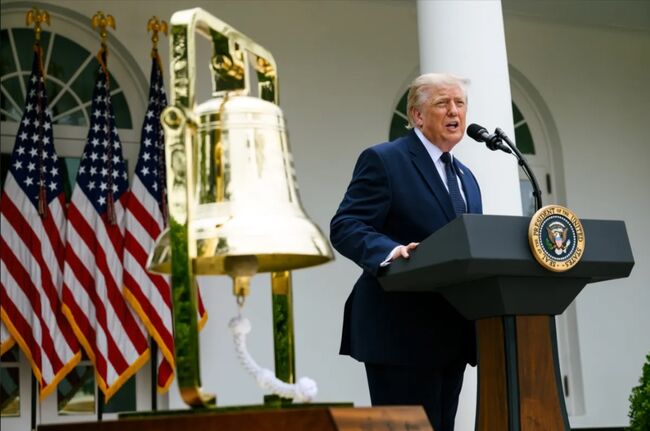 Trump pressures for rate cut again ahead of FOMC... "Should be the lowest in the world"
U.S. President Donald Trump. [Photo = The White House] U.S. President Donald Trump once again pressured the Federal Reserve, the U.S. central bank, to lower interest rates on the 27th (local time
Trump pressures for rate cut again ahead of FOMC... "Should be the lowest in the world"
U.S. President Donald Trump. [Photo = The White House] U.S. President Donald Trump once again pressured the Federal Reserve, the U.S. central bank, to lower interest rates on the 27th (local time
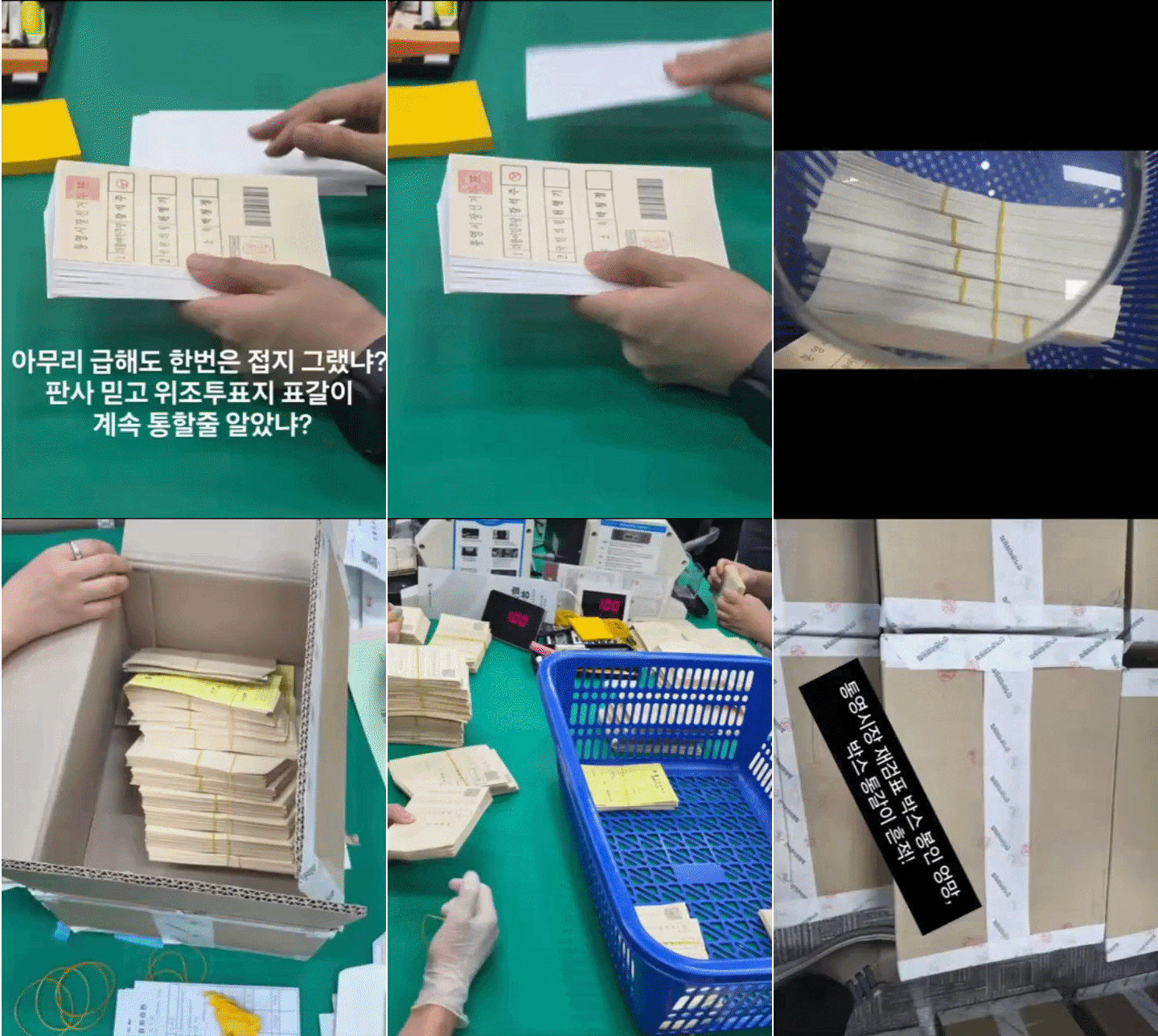 “Ignoring crisp ballots and damaged seals”… Tongyeong mayoral recount concludes with ‘no change in outcome,’ leaving suspicions and public outrage behind
Suspected counterfeit ballots discovered in Tongyeong [GIF from social media of Representative Hwang Kyo-ahn / Attorney Park Joo-hyun]During a recount of the Tongyeong mayoral election in South Gyeong
“Ignoring crisp ballots and damaged seals”… Tongyeong mayoral recount concludes with ‘no change in outcome,’ leaving suspicions and public outrage behind
Suspected counterfeit ballots discovered in Tongyeong [GIF from social media of Representative Hwang Kyo-ahn / Attorney Park Joo-hyun]During a recount of the Tongyeong mayoral election in South Gyeong
 President Yoon, regarding the first-instance ruling on the Public Official Election Act: “An excessive political verdict that distorts the facts… We will appeal immediately.”
The first-instance sentencing hearing for President Yoon Suk Yeol regarding violations of the Public Official Election Act is being broadcast live at Seoul Station on the 27th. [Photo=Yonhap News]Pres
President Yoon, regarding the first-instance ruling on the Public Official Election Act: “An excessive political verdict that distorts the facts… We will appeal immediately.”
The first-instance sentencing hearing for President Yoon Suk Yeol regarding violations of the Public Official Election Act is being broadcast live at Seoul Station on the 27th. [Photo=Yonhap News]Pres
 WSJ: "SK Hynix ADR Premium Is a Sign of AI Trading Overheat"
Advertisement for SK Hynix ADR listing in New York's Times Square [Reuters=Yonhap News file photo]The Wall Street Journal (WSJ) has pointed out that the price of SK Hynix’s American Depositary Recei
WSJ: "SK Hynix ADR Premium Is a Sign of AI Trading Overheat"
Advertisement for SK Hynix ADR listing in New York's Times Square [Reuters=Yonhap News file photo]The Wall Street Journal (WSJ) has pointed out that the price of SK Hynix’s American Depositary Recei
 'Godfather of Japanese Mystery Novels' Keigo Higashino Passes Away After Battle with Cancer at 68
Famous Japanese mystery novelist Keigo Higashino [AFP=Yonhap News]It has been belatedly reported that Keigo Higashino, the "godfather of Japanese mystery novels" and author of bestsellers such as "The
'Godfather of Japanese Mystery Novels' Keigo Higashino Passes Away After Battle with Cancer at 68
Famous Japanese mystery novelist Keigo Higashino [AFP=Yonhap News]It has been belatedly reported that Keigo Higashino, the "godfather of Japanese mystery novels" and author of bestsellers such as "The
 [Park Pil-kyu Security Column] To the Ignorant Trying to Clothe a Beast in Sheep's Clothing
Rep. Kim Byung-joo of the Democratic Party of Korea [Photo=Yonhap News]“The Air Force Academy doesn't teach you how to fly a plane!” “The Army, Navy, and Air Force academies are exactly the
[Park Pil-kyu Security Column] To the Ignorant Trying to Clothe a Beast in Sheep's Clothing
Rep. Kim Byung-joo of the Democratic Party of Korea [Photo=Yonhap News]“The Air Force Academy doesn't teach you how to fly a plane!” “The Army, Navy, and Air Force academies are exactly the
 [Issue Diagnosis] Two Effects of the Election Petition Review
 [Photo] Evidence of Election Fraud Flooding U.S. Media… Trump Had 2.7 Million Votes Stolen
 [Video] U.S. Semiquincentennial Air Show... 'Art in the Sky' streaks across New York
 [Editorial Cartoon] A Draconian Law That Undermines Freedom of Expression

 List
List