Law on Establishment of Special Courts for Insurrection Passes Plenary Session. Yonhap News
With the law on the establishment of special courts for insurrection passing the National Assembly's plenary session on the 23rd, attention is focused on how the appellate court for former President Yoon Suk-yeol's insurrection case, scheduled for early next year, will be constituted.
The key issue is how much randomness can be secured by the standards set by the Seoul High Court Judges' Conference. Meanwhile, there are concerns that the trial could be delayed as Yoon's side has announced plans to file a request for a constitutional review of the law.
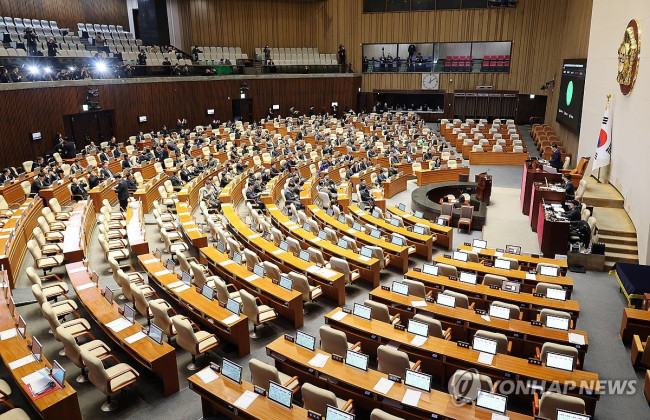 Law on Establishment of Special Courts for Insurrection Passes National Assembly. Yonhap News
The 'Special Act on Criminal Procedure for Crimes of Insurrection, Foreign Aggression, and Rebellion' (Law on Establishment of Special Courts for Insurrection), which was passed at the National Assembly plenary session today at the initiative of the Democratic Party of Korea, has been evaluated as having significantly reduced the unconstitutional aspects pointed out in the previous bill and granted considerable discretion to the Seoul High Court, which will handle the second-instance trial.
The Seoul High Court Judges' Conference will establish the criteria for forming the special court, and the Office Management Committee will allocate cases based on those criteria. The presiding judge will then appoint judges to the special court upon the resolution of the Judges' Conference.
Unlike the Supreme Court's internally prepared directive, which ensures random assignment by conducting an initial allocation and then designating the assigned court as a special court afterward, the Democratic Party's bill, which passed the plenary session today, places no restrictions on the criteria and effectively delegates the decision-making to the Judges' Conference.
The crucial point is how much randomness will be secured in the assignment process, as the randomness of case assignment is a prerequisite for judicial independence and fairness.
If the Seoul High Court Judges' Conference designates two to three courts, similar to the existing special courts for corruption or election-related cases, as special courts and randomly assigns former President Yoon's case among them, it is expected that a certain degree of randomness can be secured.
This is similar to how major corruption cases currently reaching the Seoul High Court are randomly assigned among the corruption-dedicated divisions: Criminal Divisions 1, 3, 6, and 13.
It is also suggested that criteria might be established similar to the Supreme Court's directive to maximize randomness.
Given that the law grants broad discretion to the Judges' Conference, it is interpreted that criteria could be established by conducting random assignments among all courts and then retrospectively designating the assigned court as a special court.
A chief judge, who requested anonymity, explained, "While it may be possible to 'place' specific judges through office management, it is also possible to set up the court composition and then randomly assign cases."
However, there are also predictions that this method will not be used as it could effectively contradict the purpose of the law, which is to establish special courts for insurrection and foreign aggression cases.
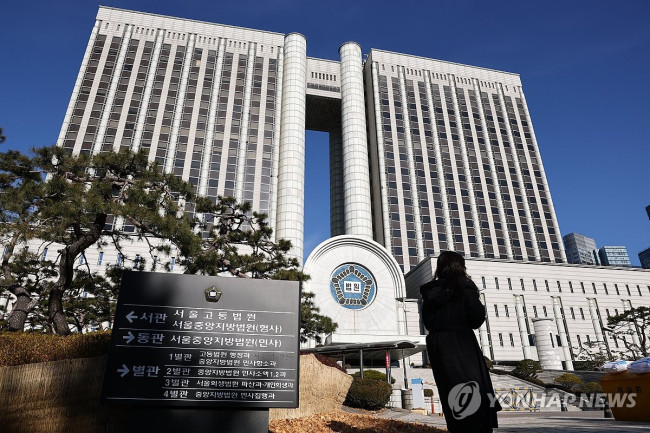 Seoul High Court Holds Full Judges' Conference on Supreme Court Directive. Yonhap News
There is a possibility that the system will operate by the Judges' Conference effectively designating specific judges through the Office Management Committee, as in the previous Democratic Party proposal. However, many observers believe this is unlikely, as the judiciary has consistently pointed out the unconstitutionality of such a method, and the Democratic Party has amended the bill to reflect this.
As the law grants broad discretion to the courts, the formation of the special court for insurrection will ultimately depend on the decision of the Seoul High Court Judges' Conference. The Seoul High Court held a Judges' Conference yesterday and resolved to increase the number of criminal divisions by two or more in the upcoming office management for next year.
With the passage of the law on the establishment of special courts for insurrection today, it is anticipated that a Judges' Conference will be held next month to discuss the number and composition of the special courts.
As the legislative process for the bill is completed, it is expected that the Supreme Court's internally prepared directive on special courts for insurrection and foreign aggression will also require some revisions. The Court Administration Office announced the directive for public comment yesterday, with opinions being accepted until January 2nd of next year.
When asked by reporters about his stance on the passage of the law on the establishment of special courts for insurrection as he arrived at work this morning, Chief Justice Cho Hee-dae stated, "I am reviewing it overall and will provide a statement later."
As the establishment of special courts for insurrection becomes a reality, there is also interest in what cases they will handle first.
The scope of application for the special court law includes cases of insurrection, foreign aggression, and rebellion, as well as related cases that have been prosecuted due to complaints, accusations, or acknowledgment during investigations. While special courts are established in principle from the first instance, the supplementary provisions state that cases already in progress at the time of the law's enforcement will continue to be tried by the respective courts.
Former President Yoon's case of leading an insurrection is expected to have its first-instance verdict in February next year, making the second instance subject to the special court for insurrection.
Former President Yoon's case of obstructing the arrest by the Corruption Investigation Office for High-ranking Officials, which has a sentencing scheduled for January 16th, prior to the main insurrection case, could be assigned to a special court as a "related case" first.
Although the law is evaluated as having reduced the unconstitutional aspects to a certain extent through final revisions, some legal circles argue that it still infringes upon the principle of equality because it essentially involves "post-hoc court formation" targeting only the December 12th and 13th martial law cases.
There are also points raised that by creating a separate law, bypassing the Supreme Court's directive, the political sphere has opened the door for Yoon's side to request a constitutional review of the law establishing special courts for insurrection.
A request for constitutional review is a system where, if the constitutionality of a law is a prerequisite for a trial, the court, either ex officio or upon the request of a party, refers the matter to the Constitutional Court for review. If the court accepts the defendant's request and refers it to the Constitutional Court, the trial is suspended until the Constitutional Court makes a decision, inevitably leading to a delay in the proceedings.
Yoon's side has already announced its intention to file a request for constitutional review. In a press conference held after the court hearing to determine his continued detention, Yoon's legal team stated, "The special court for insurrection is unconstitutional, akin to a special court, as it specifically handles and judges insurrection cases. We will not stand by and watch this act of constitutional destruction through legislative dictatorship, including filing a request for constitutional review."
Yoon's side argued, "Even if the Judges' Conference and Office Management Committee assign judges through post-hoc case specification to create a special court, no matter how they try to conceal it, it becomes 'case-tailored judge assignment'."
They added, "The law on special courts for insurrection is a 'Nazi law' heading towards a dictatorship. The Lee Jae-myung administration should exercise its veto power on this bill." The legal team also stated, "The legal team may make a significant decision later." When asked if "significant decision" meant an attempt to delay the trial by having the entire legal team resign, Yoon's side replied, "We cannot provide specific details at this stage."
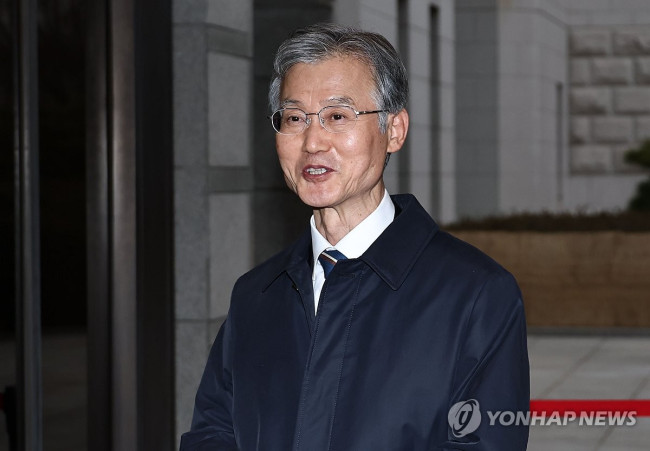 Chief Justice Cho Hee-dae Responds to Reporters' Questions. Yonhap News
Yonhap News

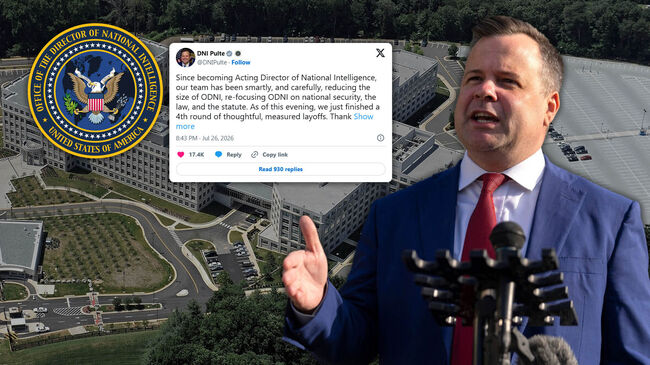 Bill Pulte to Restructure ‘Deep State’… Announces 4th Round of Layoffs at the Office of the Director of National Intelligence
Acting Director of National Intelligence Bill Pulte announced Sunday that he has carried out a fourth "deliberate and measured" reduction in personnel since taking office on June 19, as part of the Tr
Bill Pulte to Restructure ‘Deep State’… Announces 4th Round of Layoffs at the Office of the Director of National Intelligence
Acting Director of National Intelligence Bill Pulte announced Sunday that he has carried out a fourth "deliberate and measured" reduction in personnel since taking office on June 19, as part of the Tr
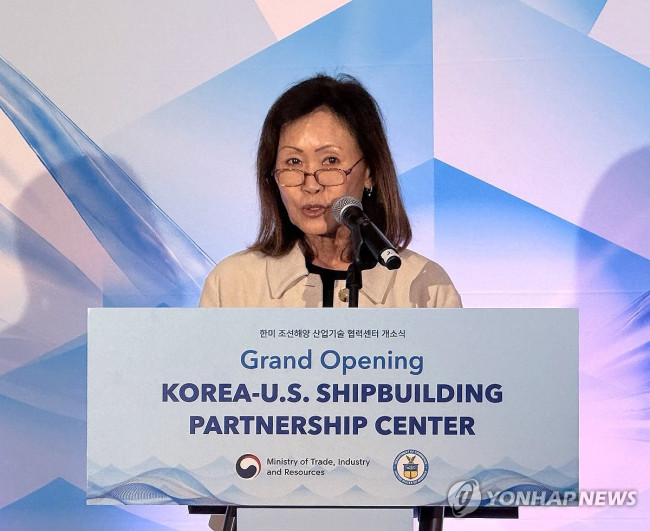 First U.S. Ambassador of Trump's Second Term to Arrive This Week… Will It Provide Momentum to Resolve Pending Issues?
U.S. Ambassador to South Korea Michelle Steel speaks at the opening ceremony of the Korea-U.S. Shipbuilding Cooperation Center held at the Mayflower Hotel in Washington, D.C., on the 23rd (local time)
First U.S. Ambassador of Trump's Second Term to Arrive This Week… Will It Provide Momentum to Resolve Pending Issues?
U.S. Ambassador to South Korea Michelle Steel speaks at the opening ceremony of the Korea-U.S. Shipbuilding Cooperation Center held at the Mayflower Hotel in Washington, D.C., on the 23rd (local time)
 President Yoon, regarding the first-instance ruling on the Public Official Election Act: “An excessive political verdict that distorts the facts… We will appeal immediately.”
The first-instance sentencing hearing for President Yoon Suk Yeol regarding violations of the Public Official Election Act is being broadcast live at Seoul Station on the 27th. [Photo=Yonhap News]Pres
President Yoon, regarding the first-instance ruling on the Public Official Election Act: “An excessive political verdict that distorts the facts… We will appeal immediately.”
The first-instance sentencing hearing for President Yoon Suk Yeol regarding violations of the Public Official Election Act is being broadcast live at Seoul Station on the 27th. [Photo=Yonhap News]Pres
 91% of Net Influx of MZ Generation Goes to Seoul Metropolitan Area… Population Migration Also Shows 'K-shaped Polarization' by Industry
[Provided by Leaders Index]Over the past four years, the MZ generation population has become increasingly concentrated in the Seoul metropolitan area and the Chungcheong region. While cities cen
91% of Net Influx of MZ Generation Goes to Seoul Metropolitan Area… Population Migration Also Shows 'K-shaped Polarization' by Industry
[Provided by Leaders Index]Over the past four years, the MZ generation population has become increasingly concentrated in the Seoul metropolitan area and the Chungcheong region. While cities cen
 'Godfather of Japanese Mystery Novels' Keigo Higashino Passes Away After Battle with Cancer at 68
Famous Japanese mystery novelist Keigo Higashino [AFP=Yonhap News]It has been belatedly reported that Keigo Higashino, the "godfather of Japanese mystery novels" and author of bestsellers such as "The
'Godfather of Japanese Mystery Novels' Keigo Higashino Passes Away After Battle with Cancer at 68
Famous Japanese mystery novelist Keigo Higashino [AFP=Yonhap News]It has been belatedly reported that Keigo Higashino, the "godfather of Japanese mystery novels" and author of bestsellers such as "The
 [Park Pil-kyu Security Column] To the Ignorant Trying to Clothe a Beast in Sheep's Clothing
Rep. Kim Byung-joo of the Democratic Party of Korea [Photo=Yonhap News]“The Air Force Academy doesn't teach you how to fly a plane!” “The Army, Navy, and Air Force academies are exactly the
[Park Pil-kyu Security Column] To the Ignorant Trying to Clothe a Beast in Sheep's Clothing
Rep. Kim Byung-joo of the Democratic Party of Korea [Photo=Yonhap News]“The Air Force Academy doesn't teach you how to fly a plane!” “The Army, Navy, and Air Force academies are exactly the
 [Issue Diagnosis] Two Effects of the Election Petition Review
 [Photo] Evidence of Election Fraud Flooding U.S. Media… Trump Had 2.7 Million Votes Stolen
 [Video] U.S. Semiquincentennial Air Show... 'Art in the Sky' streaks across New York
 [Editorial Cartoon] A Draconian Law That Undermines Freedom of Expression

 List
List