Kim Byung-joo, floor leader of the Democratic Party, attends and speaks at a supreme council meeting at the National Assembly on the 4th. [Photo=Yonhap News]
When Democracy, Integrity, and Rule of Law are Simultaneously Shaken, Public Sentiment Departs
It has only been seven months since the Lee Jae-myung administration took office, yet the fatigue felt by the public is not much different from that experienced at the end of a previous administration. Typically, the beginning of an administration is a period of mixed anticipation and observation. However, the current atmosphere is different. Distrust, wariness, and a quiet distancing are all apparent simultaneously.
The cause of this unusual early fatigue lies not simply in policy failures, but in the administration's operating method of dismantling and reconstructing the existing order.
The core values that left-leaning administrations have always espoused are "democracy" and "integrity." However, the public, observing the recent course of national affairs, sees both of these being shaken simultaneously. The administration's claimed top priorities are wavering.
There are three reasons for this.
First, the so-called "purging politics" spearheaded by special prosecutors.
The unconstitutional legislative attempt to remove President Lee Jae-myung's legal risks and the push for punitive damages legislation that could restrict freedom of expression have left the impression that legislative power is being exercised without restraint. This is the primary reason for the public's alienation.
Second, doubts about the level of understanding of the chief executive responsible for national affairs.
The decision to drop the appeal in the Daejang-dong case has sparked controversy, suggesting that political considerations outweighed the final resolution of judicial judgment. The remark about the "dissolution" of the Unification Church has also drawn criticism for viewing complex social and religious issues too simplistically.
The president's words and judgments themselves define the direction of national governance. An awareness is accumulating that there is insufficient explanation and deliberation for their weight.
However, a more fatal blow than all these policy errors is elsewhere. It is the distrust that the standards of law and ethics are applied differently to those in power and to common people.
The public no longer evaluates the administration solely by legal standards.
The more controversies arise regarding luxurious dining and corporate entertainment, and the more the complacent perception within the power circles of "no problem" is repeated, the more the public comes to believe that politics operates under different rules than their own.
The reason why the recent controversy over Kim Byung-joo, floor leader of the Democratic Party, dining expensively at Coupang and the suspicions of 대한항공 (Korean Air) entertainment are drawing intense criticism lies precisely at this point: the principle of fairness that politics has lost.
The analysis that the previously firm public sentiment in Honam is wavering after the Unification Church controversy also aligns with this point.
This is not due to a single policy or individual. It is the cumulative result of the feeling that "the standards we believed in are no longer being upheld." This feeling gives rise to cynicism rather than anger, and resignation rather than resistance. Once a distance is created, it is not easily bridged by explanations.
Looking back at modern Korean history, instances where trust in democracy, integrity, and the rule of law were simultaneously shaken are rare.
The bigger problem is that this administration, rather than acknowledging and correcting those cracks, displays an attitude of pushing forward relying on legitimacy and numbers.
Power that makes errors without reflection and apology is easily mistaken for an absolute majority.
However, the Lee Jae-myung administration stood on "half the support" from its inception. The more it acts unilaterally, forgetting that fact, the more the remaining half of public sentiment quietly lets go. And now, that remaining other half is also preparing to let go.
The controversy involving Kim Byung-joo is not just a matter of one politician's conduct, but an event that shows how far removed the power's sense of morality is from the daily lives of the people.
Public sentiment moves faster than the law. If the Lee Jae-myung administration does not acknowledge the gap in public sentiment and realign its standards, the fatigue towards the administration will accumulate even more rapidly.
Public sentiment demands consistency in standards rather than grand slogans.
Water flows downwards. The direction of public sentiment also follows the natural order in the same way.

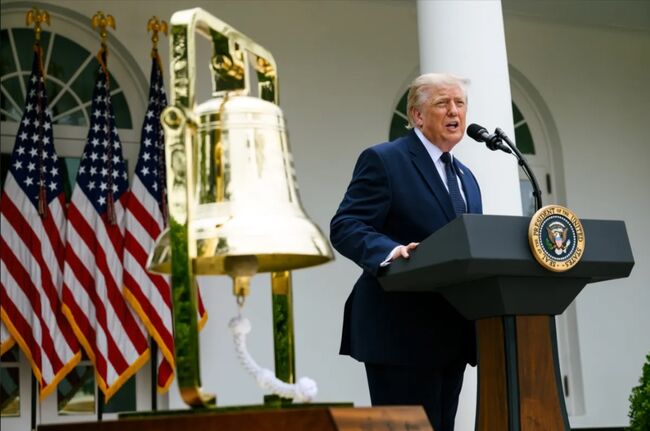 Trump pressures for rate cut again ahead of FOMC... "Should be the lowest in the world"
U.S. President Donald Trump. [Photo = The White House] U.S. President Donald Trump once again pressured the Federal Reserve, the U.S. central bank, to lower interest rates on the 27th (local time
Trump pressures for rate cut again ahead of FOMC... "Should be the lowest in the world"
U.S. President Donald Trump. [Photo = The White House] U.S. President Donald Trump once again pressured the Federal Reserve, the U.S. central bank, to lower interest rates on the 27th (local time
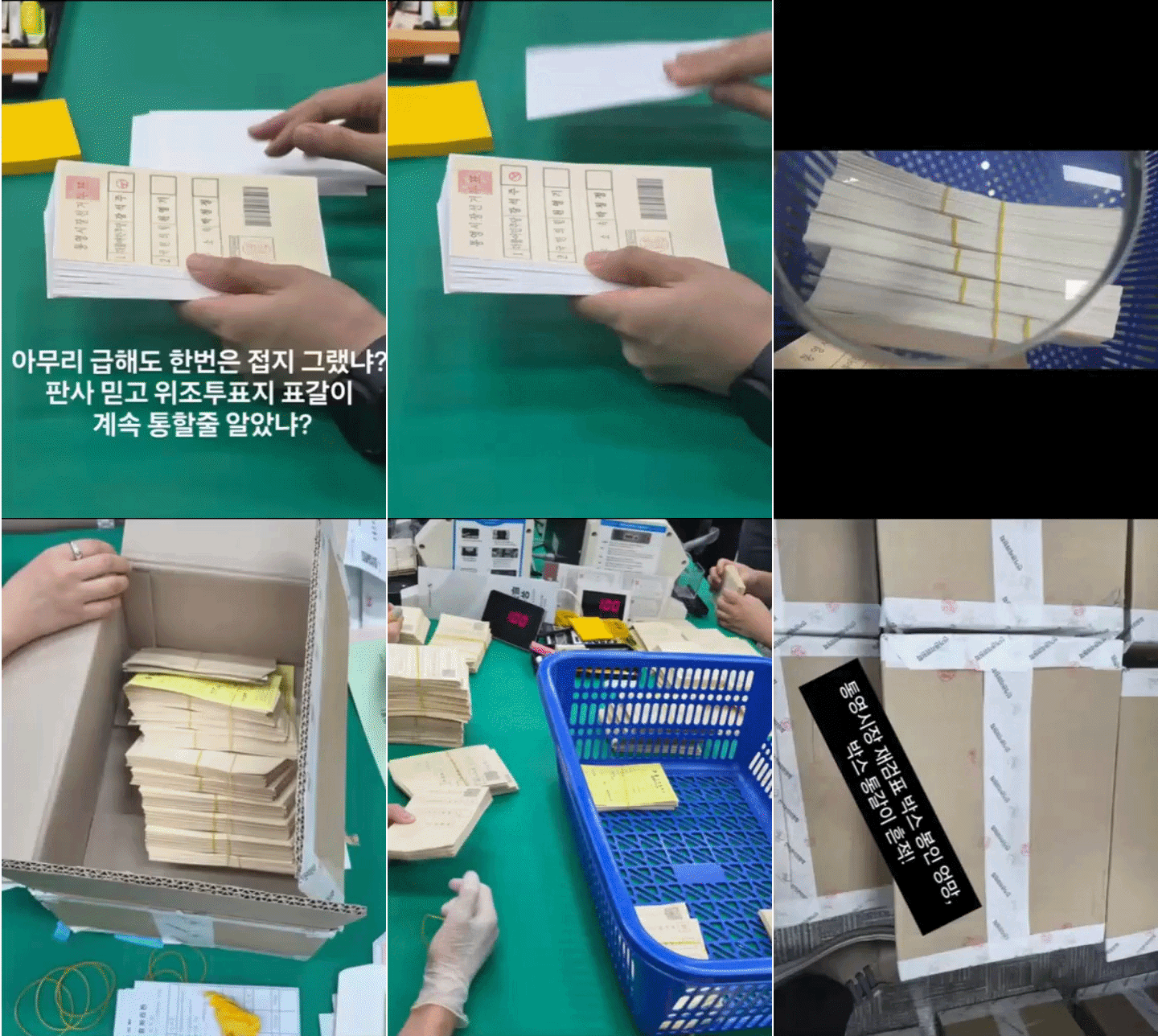 “Ignoring crisp ballots and damaged seals”… Tongyeong mayoral recount concludes with ‘no change in outcome,’ leaving suspicions and public outrage behind
Suspected counterfeit ballots discovered in Tongyeong [GIF from social media of Representative Hwang Kyo-ahn / Attorney Park Joo-hyun]During a recount of the Tongyeong mayoral election in South Gyeong
“Ignoring crisp ballots and damaged seals”… Tongyeong mayoral recount concludes with ‘no change in outcome,’ leaving suspicions and public outrage behind
Suspected counterfeit ballots discovered in Tongyeong [GIF from social media of Representative Hwang Kyo-ahn / Attorney Park Joo-hyun]During a recount of the Tongyeong mayoral election in South Gyeong
 President Yoon, regarding the first-instance ruling on the Public Official Election Act: “An excessive political verdict that distorts the facts… We will appeal immediately.”
The first-instance sentencing hearing for President Yoon Suk Yeol regarding violations of the Public Official Election Act is being broadcast live at Seoul Station on the 27th. [Photo=Yonhap News]Pres
President Yoon, regarding the first-instance ruling on the Public Official Election Act: “An excessive political verdict that distorts the facts… We will appeal immediately.”
The first-instance sentencing hearing for President Yoon Suk Yeol regarding violations of the Public Official Election Act is being broadcast live at Seoul Station on the 27th. [Photo=Yonhap News]Pres
 WSJ: "SK Hynix ADR Premium Is a Sign of AI Trading Overheat"
Advertisement for SK Hynix ADR listing in New York's Times Square [Reuters=Yonhap News file photo]The Wall Street Journal (WSJ) has pointed out that the price of SK Hynix’s American Depositary Recei
WSJ: "SK Hynix ADR Premium Is a Sign of AI Trading Overheat"
Advertisement for SK Hynix ADR listing in New York's Times Square [Reuters=Yonhap News file photo]The Wall Street Journal (WSJ) has pointed out that the price of SK Hynix’s American Depositary Recei
 'Godfather of Japanese Mystery Novels' Keigo Higashino Passes Away After Battle with Cancer at 68
Famous Japanese mystery novelist Keigo Higashino [AFP=Yonhap News]It has been belatedly reported that Keigo Higashino, the "godfather of Japanese mystery novels" and author of bestsellers such as "The
'Godfather of Japanese Mystery Novels' Keigo Higashino Passes Away After Battle with Cancer at 68
Famous Japanese mystery novelist Keigo Higashino [AFP=Yonhap News]It has been belatedly reported that Keigo Higashino, the "godfather of Japanese mystery novels" and author of bestsellers such as "The
 [Park Pil-kyu Security Column] To the Ignorant Trying to Clothe a Beast in Sheep's Clothing
Rep. Kim Byung-joo of the Democratic Party of Korea [Photo=Yonhap News]“The Air Force Academy doesn't teach you how to fly a plane!” “The Army, Navy, and Air Force academies are exactly the
[Park Pil-kyu Security Column] To the Ignorant Trying to Clothe a Beast in Sheep's Clothing
Rep. Kim Byung-joo of the Democratic Party of Korea [Photo=Yonhap News]“The Air Force Academy doesn't teach you how to fly a plane!” “The Army, Navy, and Air Force academies are exactly the
 [Issue Diagnosis] Two Effects of the Election Petition Review
 [Photo] Evidence of Election Fraud Flooding U.S. Media… Trump Had 2.7 Million Votes Stolen
 [Video] U.S. Semiquincentennial Air Show... 'Art in the Sky' streaks across New York
 [Editorial Cartoon] A Draconian Law That Undermines Freedom of Expression

 List
List