High Exchange Rate. Yonhap News
 Editorial Board Member, Class of '80, Korea Military AcademyThe Korean economy is currently caught in a "high exchange rate trap." The exchange rate is not just a number; it's a price tag for national credibility and survival. It's the most rapid indicator of a nation's trustworthiness. When foreign policy, security, and economic policies are out of sync, the market reacts instantly. A high exchange rate is the visible manifestation of a judgment that "this nation finds it difficult to maintain consistent decisions during a crisis." The soaring won-dollar exchange rate is not a simple fluctuation in the foreign exchange market. It is an indicator directly linked to national fiscal stability and existence.
The causes of the high exchange rate are complex. They can be categorized into external factors such as the prolonged high interest rates in the US and a strong dollar, geopolitical instability in the Middle East and Northeast Asia, and increased import costs for energy and raw materials. Internal factors include a decline in national credibility due to heightened security and diplomatic risks and a loss of policy consistency, profligate fiscal management and increasing debt, weakened corporate competitiveness, and a lack of communication with the market.
The problem is that the unusually sensitive reaction of the Korean exchange rate to the same external shocks is difficult to explain by domestic and international environments alone. We cannot escape the diagnosis that the structural fragility of the Korean economy and the decline in government policy credibility have amplified exchange rate volatility.
The high exchange rate is a warning to the current administration. Anti-business regulations such as the Serious Accidents Punishment Act, the Yellow Envelope Act, and amendments to the Commercial Act have increased corporate risk and uncertainty, leading to investment contraction. The government's unpredictable policy stance has encouraged the outflow of foreign capital and the relocation of domestic companies overseas, which has weakened demand for the won. The high exchange rate is a result of the global environment, structural fragility, and security/diplomatic risks arising from the decline in government policy credibility.
A high exchange rate is like "high blood pressure" for the economy. Just as high blood pressure gradually damages organs, a high exchange rate leads the economy into paralysis through a state of chronic fatigue. When the exchange rate rises, import prices increase, and households' real income and purchasing power plummet. If interest rates are raised to control inflation, the economy contracts; if policies are eased to stimulate the economy, the exchange rate becomes unstable again, creating a repeated dilemma. The longer this vicious cycle continues, the more policy consistency wavers, and the market begins to doubt the government's judgment.
While a high exchange rate may offer short-term benefits to exporting companies, it is devastating to domestic demand and import-dependent industries. The rise in energy, food, and raw material prices leads to increased costs for businesses, which in turn translates to higher consumer prices. As households' burden increases due to the high exchange rate, social discontent and conflict also escalate. The majority of the public perceives anti-market economic policies that erode real income and asset values as "economic rebellion."
A high exchange rate is not only detrimental to the economy but also to national security. For Korea, which relies on imports for energy, raw materials, and key components, a rising exchange rate effectively increases the cost of "energy supply in peace and war." Even without a war, the cost of industrial operations and national defense procurement soars, and the real purchasing power of the defense budget significantly weakens. Exchange rate instability reduces the options for monetary policy and limits strategic leverage in diplomatic and security negotiations. Just as high blood pressure can lead to cardiovascular disease, a high exchange rate is a fatal threat that can paralyze industry, consumption, and national security capabilities.
The solution is not short-term measures but rebuilding the economy's fundamental strength through pro-business policies. Just as a fever cannot be cured with antipyretics alone, the root cause must be diagnosed and treated. We must diagnose and eliminate the causes that have brought about the exchange rate crisis.
The high exchange rate is not a temporary market noise. It is a signal that a nation's strength, policy consistency, and crisis response capabilities are all being tested simultaneously. We must pre-emptively assess risks that can arise from the structure of borrowing foreign currency, the timing of repayment, and currency differentials to ensure we can withstand foreign exchange problems safely. We need to regularize and diversify the timing and scale of dollar purchases by institutions and companies, and instead of policies that block the dollar, we must prevent exchange rate쏠림 and rapid fluctuations with safety devices that limit the speed to prevent the exchange rate from running wild.
In the medium to long term, we must increase export capacity by fostering high-value-added industries and technological competitiveness, and accumulate national trust capital through predictable policies. The high exchange rate is not a simple problem to be solved with the antipyretic of foreign exchange market intervention, which is a temporary remedy. It is a warning to simultaneously assess the nation's economic and security capabilities. For issues that cannot be resolved with current capabilities, we must seek international cooperation.
The stage where we could cope with verbal intervention is already past. What is needed now is a shift in perspective to recognize the exchange rate not as a "manageable item" but as a "national system alarm." If, without addressing the root causes, we resort to artificially defending the exchange rate by mobilizing the National Pension Fund, our ultimate future asset, and are then branded as a "currency manipulator," South Korea will descend into a state of anarchy that very day.
We must end the "domestic rebellion" that has plunged the nation into confusion, form a pan-governmental task force to overcome the high exchange rate, and instead of solely blaming external factors, we must inform and seek cooperation from the public, businesses, and the opposition parties regarding the current high exchange rate situation.
If we continue with drastic measures, enacted in secret with next year's local elections in mind, and persist with economic and security policies that run counter to national interests and common sense, not only the current administration but South Korea itself will be in peril.
We urge personnel reshuffling and a comprehensive change in policy direction to accurately diagnose the source of the three-pronged wave (security crisis, high exchange rate, economic slowdown) that is shaking South Korea and the turbulent storms, and to overcome the national crisis and restore government credibility.
Editorial Board Member, Hankyoreh Shinmun

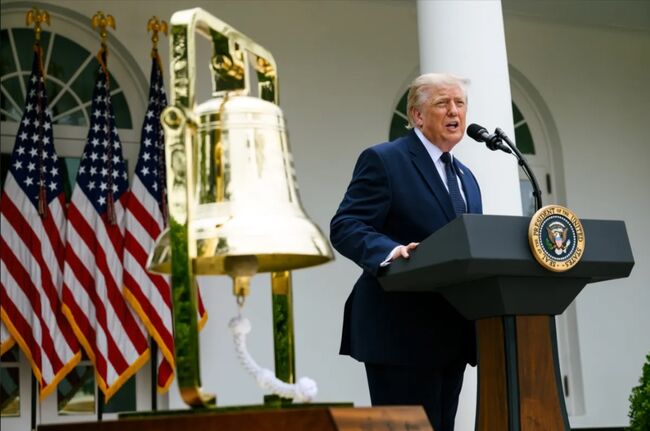 Trump pressures for rate cut again ahead of FOMC... "Should be the lowest in the world"
U.S. President Donald Trump. [Photo = The White House] U.S. President Donald Trump once again pressured the Federal Reserve, the U.S. central bank, to lower interest rates on the 27th (local time
Trump pressures for rate cut again ahead of FOMC... "Should be the lowest in the world"
U.S. President Donald Trump. [Photo = The White House] U.S. President Donald Trump once again pressured the Federal Reserve, the U.S. central bank, to lower interest rates on the 27th (local time
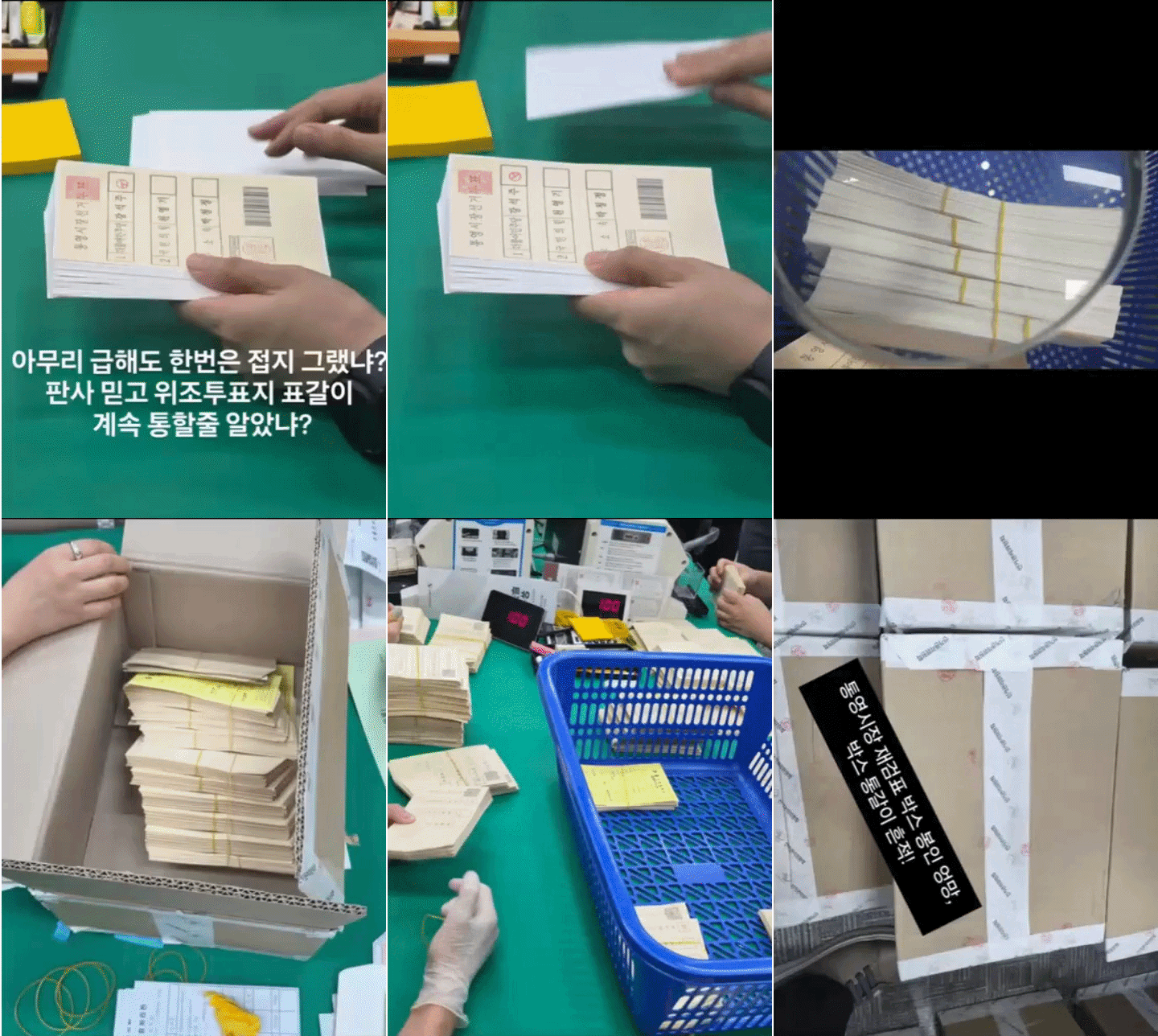 “Ignoring crisp ballots and damaged seals”… Tongyeong mayoral recount concludes with ‘no change in outcome,’ leaving suspicions and public outrage behind
Suspected counterfeit ballots discovered in Tongyeong [GIF from social media of Representative Hwang Kyo-ahn / Attorney Park Joo-hyun]During a recount of the Tongyeong mayoral election in South Gyeong
“Ignoring crisp ballots and damaged seals”… Tongyeong mayoral recount concludes with ‘no change in outcome,’ leaving suspicions and public outrage behind
Suspected counterfeit ballots discovered in Tongyeong [GIF from social media of Representative Hwang Kyo-ahn / Attorney Park Joo-hyun]During a recount of the Tongyeong mayoral election in South Gyeong
 President Yoon, regarding the first-instance ruling on the Public Official Election Act: “An excessive political verdict that distorts the facts… We will appeal immediately.”
The first-instance sentencing hearing for President Yoon Suk Yeol regarding violations of the Public Official Election Act is being broadcast live at Seoul Station on the 27th. [Photo=Yonhap News]Pres
President Yoon, regarding the first-instance ruling on the Public Official Election Act: “An excessive political verdict that distorts the facts… We will appeal immediately.”
The first-instance sentencing hearing for President Yoon Suk Yeol regarding violations of the Public Official Election Act is being broadcast live at Seoul Station on the 27th. [Photo=Yonhap News]Pres
 WSJ: "SK Hynix ADR Premium Is a Sign of AI Trading Overheat"
Advertisement for SK Hynix ADR listing in New York's Times Square [Reuters=Yonhap News file photo]The Wall Street Journal (WSJ) has pointed out that the price of SK Hynix’s American Depositary Recei
WSJ: "SK Hynix ADR Premium Is a Sign of AI Trading Overheat"
Advertisement for SK Hynix ADR listing in New York's Times Square [Reuters=Yonhap News file photo]The Wall Street Journal (WSJ) has pointed out that the price of SK Hynix’s American Depositary Recei
 'Godfather of Japanese Mystery Novels' Keigo Higashino Passes Away After Battle with Cancer at 68
Famous Japanese mystery novelist Keigo Higashino [AFP=Yonhap News]It has been belatedly reported that Keigo Higashino, the "godfather of Japanese mystery novels" and author of bestsellers such as "The
'Godfather of Japanese Mystery Novels' Keigo Higashino Passes Away After Battle with Cancer at 68
Famous Japanese mystery novelist Keigo Higashino [AFP=Yonhap News]It has been belatedly reported that Keigo Higashino, the "godfather of Japanese mystery novels" and author of bestsellers such as "The
 [Park Pil-kyu Security Column] To the Ignorant Trying to Clothe a Beast in Sheep's Clothing
Rep. Kim Byung-joo of the Democratic Party of Korea [Photo=Yonhap News]“The Air Force Academy doesn't teach you how to fly a plane!” “The Army, Navy, and Air Force academies are exactly the
[Park Pil-kyu Security Column] To the Ignorant Trying to Clothe a Beast in Sheep's Clothing
Rep. Kim Byung-joo of the Democratic Party of Korea [Photo=Yonhap News]“The Air Force Academy doesn't teach you how to fly a plane!” “The Army, Navy, and Air Force academies are exactly the
 [Issue Diagnosis] Two Effects of the Election Petition Review
 [Photo] Evidence of Election Fraud Flooding U.S. Media… Trump Had 2.7 Million Votes Stolen
 [Video] U.S. Semiquincentennial Air Show... 'Art in the Sky' streaks across New York
 [Editorial Cartoon] A Draconian Law That Undermines Freedom of Expression

 List
List