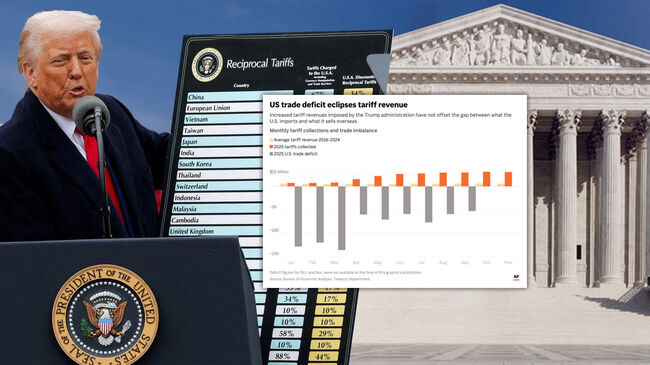
Newsmax reported on December 30 (local time), citing diplomats and trade lawyers, that U.S. President Donald Trump is preparing a swift alternative plan to re-impose broad trade tariffs under alternative statutes in case the Supreme Court invalidates his emergency powers to impose tariffs.
The Supreme Court is expected to rule on the legality of President Trump's emergency tariff powers as early as January. The decision could threaten the core of the president's trade policy and potentially obligate the federal government to refund billions of dollars in tariffs already collected.
According to a report by the Financial Times, markets are bracing for volatility if the court rules against the administration, with investors wary of financial fallout and trade disruptions.
Nevertheless, few in Washington believe tariffs will simply disappear.
"No one thinks the tariffs will go away," said Ted Murphy, a trade lawyer at Sidley Austin. "They will just be re-issued under different pretenses. They will re-issue the tariffs the same day."
Trade lawyers say the administration has several legal avenues it can pursue, regardless of whether the Supreme Court's ruling is narrow or broad.
One of the most-watched avenues is the expanded use of Section 232 of the Trade Expansion Act of 1962 (national security provision). This provision has already been used to impose tariffs on steel, aluminum, automobiles, copper, and lumber.
The administration is currently investigating Section 232 for semiconductors, pharmaceuticals, critical minerals, and aerospace components, but no results have been announced yet.
President Trump could also more aggressively utilize Section 301 of the Trade Act of 1974, which allows the U.S. to retaliate against unfair trade practices. This provision has already been used to initiate investigations against countries like China, Brazil, and Nicaragua, and further investigations could follow.
Another option is Section 122 of the Trade Act of 1974, which allows Washington to impose tariffs of up to 15% for 150 days to address international balance of payments problems. Trade lawyers note that this provision, while temporary, can be applied quickly, making it an attractive stopgap if emergency powers are curtailed.
The administration could also reactivate Section 338 of the Tariff Act of 1930. This provision, though rarely used, is a powerful tool that allows for tariffs of up to 50% against countries deemed to discriminate against U.S. commerce. Section 338 can be invoked in response to "unjustifiable charges, exactions, regulations, or restrictions" that harm U.S. trade, as defined by the law.
Sections 122 and 338 were discussed internally earlier this year as possible means for the Trump administration to pursue retaliatory tariffs, according to individuals familiar with the negotiations.
However, trade experts warn that relying on these alternative statutes will have practical limitations.
"If the Supreme Court rules against the administration, the president's ability to use tariffs as both punishment and reward will be significantly weakened," said Lori Wallach, director of Rethink Trade. "If they apply other laws, the administration will have to provide a rationale for using tariffs."
Wallach added that "impromptu decisions like 'I woke up this morning and I'm annoyed by a Canadian TV ad, so I'm going to raise tariffs' will be reduced," suggesting this shift would diminish Trump's ability to use tariffs as an immediate political weapon.
President Trump has described the Supreme Court case as an "existential one," calling it "one of the most important cases in the history of our country." This week, he urged supporters to pray for a favorable ruling, arguing that tariffs are essential to protecting America's "national security and financial freedom."
According to government figures, the administration collected approximately $236 billion in tariff revenue in 2025.
In any case, importers are already hiring lawyers and filing claims in anticipation of potential refunds. Costco recently sued the administration to protect its right to tariff refunds, and dozens of legal briefs opposing tariffs have been filed, including from the U.S. Chamber of Commerce.
A ruling against emergency tariff powers could shock bond markets, widen deficits, and create uncertainty for corporate earnings, even if alternative tariffs are quickly put in place.
"The consequences of losing this case would be 'enormous'," warned White House spokesperson Kush Desai, adding that the administration expects a "swift and appropriate resolution" from the court.
By Hong Sung-goo, Chief Reporter, NNP / Special Correspondent NNP info@newsandpost.com

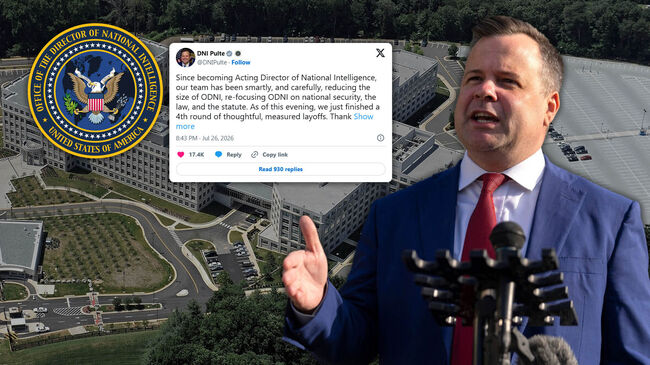 Bill Pulte to Restructure ‘Deep State’… Announces 4th Round of Layoffs at the Office of the Director of National Intelligence
Acting Director of National Intelligence Bill Pulte announced Sunday that he has carried out a fourth "deliberate and measured" reduction in personnel since taking office on June 19, as part of the Tr
Bill Pulte to Restructure ‘Deep State’… Announces 4th Round of Layoffs at the Office of the Director of National Intelligence
Acting Director of National Intelligence Bill Pulte announced Sunday that he has carried out a fourth "deliberate and measured" reduction in personnel since taking office on June 19, as part of the Tr
 First U.S. Ambassador of Trump's Second Term to Arrive This Week… Will It Provide Momentum to Resolve Pending Issues?
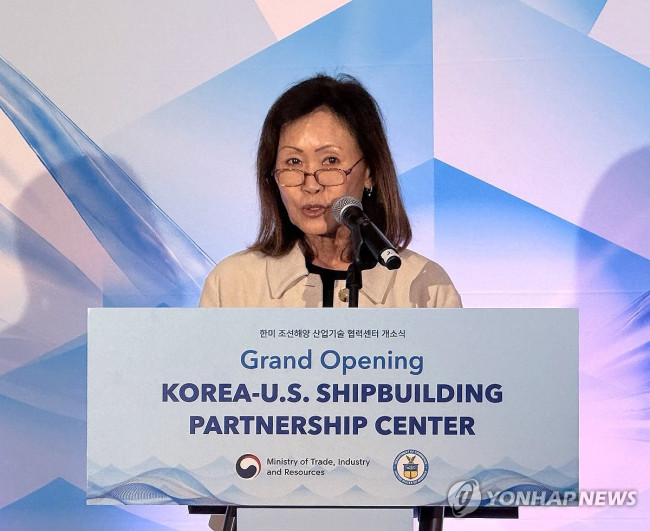
U.S. Ambassador to South Korea Michelle Steel speaks at the opening ceremony of the Korea-U.S. Shipbuilding Cooperation Center held at the Mayflower Hotel in Washington, D.C., on the 23rd (local time)
First U.S. Ambassador of Trump's Second Term to Arrive This Week… Will It Provide Momentum to Resolve Pending Issues?
U.S. Ambassador to South Korea Michelle Steel speaks at the opening ceremony of the Korea-U.S. Shipbuilding Cooperation Center held at the Mayflower Hotel in Washington, D.C., on the 23rd (local time)
 President Yoon, regarding the first-instance ruling on the Public Official Election Act: “An excessive political verdict that distorts the facts… We will appeal immediately.”
The first-instance sentencing hearing for President Yoon Suk Yeol regarding violations of the Public Official Election Act is being broadcast live at Seoul Station on the 27th. [Photo=Yonhap News]Pres
President Yoon, regarding the first-instance ruling on the Public Official Election Act: “An excessive political verdict that distorts the facts… We will appeal immediately.”
The first-instance sentencing hearing for President Yoon Suk Yeol regarding violations of the Public Official Election Act is being broadcast live at Seoul Station on the 27th. [Photo=Yonhap News]Pres
 91% of Net Influx of MZ Generation Goes to Seoul Metropolitan Area… Population Migration Also Shows 'K-shaped Polarization' by Industry
[Provided by Leaders Index]Over the past four years, the MZ generation population has become increasingly concentrated in the Seoul metropolitan area and the Chungcheong region. While cities cen
91% of Net Influx of MZ Generation Goes to Seoul Metropolitan Area… Population Migration Also Shows 'K-shaped Polarization' by Industry
[Provided by Leaders Index]Over the past four years, the MZ generation population has become increasingly concentrated in the Seoul metropolitan area and the Chungcheong region. While cities cen
 'Godfather of Japanese Mystery Novels' Keigo Higashino Passes Away After Battle with Cancer at 68
Famous Japanese mystery novelist Keigo Higashino [AFP=Yonhap News]It has been belatedly reported that Keigo Higashino, the "godfather of Japanese mystery novels" and author of bestsellers such as "The
'Godfather of Japanese Mystery Novels' Keigo Higashino Passes Away After Battle with Cancer at 68
Famous Japanese mystery novelist Keigo Higashino [AFP=Yonhap News]It has been belatedly reported that Keigo Higashino, the "godfather of Japanese mystery novels" and author of bestsellers such as "The
 [Park Pil-kyu Security Column] To the Ignorant Trying to Clothe a Beast in Sheep's Clothing
Rep. Kim Byung-joo of the Democratic Party of Korea [Photo=Yonhap News]“The Air Force Academy doesn't teach you how to fly a plane!” “The Army, Navy, and Air Force academies are exactly the
[Park Pil-kyu Security Column] To the Ignorant Trying to Clothe a Beast in Sheep's Clothing
Rep. Kim Byung-joo of the Democratic Party of Korea [Photo=Yonhap News]“The Air Force Academy doesn't teach you how to fly a plane!” “The Army, Navy, and Air Force academies are exactly the
 [Issue Diagnosis] Two Effects of the Election Petition Review
 [Photo] Evidence of Election Fraud Flooding U.S. Media… Trump Had 2.7 Million Votes Stolen
 [Video] U.S. Semiquincentennial Air Show... 'Art in the Sky' streaks across New York
 [Editorial Cartoon] A Draconian Law That Undermines Freedom of Expression

 List
List