Xi Jinping and Lee Jae-myung. [Yonhap News]
The repercussions surrounding President Lee Jae-myung's recent interview with China's CCTV are foreshadowing a collapse that goes beyond mere diplomatic rhetoric. At a time when even former senior U.S. officials are publicly warning that the global pro-China power network is structurally dismantling, with the arrest of Nicolás Maduro serving as a turning point, the Lee Jae-myung administration's overt pro-China gestures are directly contradicting the flow of the international order.
In his interview with China, President Lee firmly respected the 'One China' principle and emphasized South Korea's 'strategic autonomy,' which surpasses the past 'Anmi-gyeongjung' (prioritizing the U.S. for security and China for economy). He praised President Xi Jinping as a leader with broad vision and outstanding character, and a reliable neighbor. Economically, he highly valued China's innovative capabilities in solar power and AI, advocating for a horizontal cooperative relationship amidst competition.
If the statement respecting the 'One China' principle was made with the knowledge that it disregards Taiwan and is an atrocity against alliances and international order, it is an unforgivable and wicked utterance. At a time when China is intimidating Taiwan and the West with large-scale Taiwan encirclement drills, overt pro-China behavior is an anti-state act that causes confusion in national identity and leads to the destruction of the ROK-U.S. alliance and cracks in ROK-U.S.-Japan coordination.
Accepting 'One China' is an act of treason and national ruin, beyond economic and security risks.
If 'One China' is revealed through actions like Taiwan encirclement drills, rather than being a concept of internal Chinese cohesion, it is an act of defiance towards Taiwan and the West. Accepting 'One China' or maintaining an ambiguous stance on the international principle of opposing changes to the status quo will be interpreted as appeasement and concession by China, and as betrayal and distrust by allies. Japan, in particular, has formalized its participation in war if China invades Taiwan. Japan has declared itself a security community with the United States, and if the Lee Jae-myung administration leans towards China, the collapse and fragmentation of the ROK-U.S. alliance and ROK-U.S.-Japan cooperation will be unavoidable.
If the Chinese Communist Party wages war for 'One China,' Taiwan's missiles will strike China's Three Gorges Dam. Pro-China sentiment creates countless enemies and is a gamble that does not guarantee survival or stability. The moment principles of security and diplomacy are lost in the name of autonomy, options disappear, and one crosses an irreversible river of self-destruction. What South Korea needs now is not misguided flexibility, but strategic choices based on clear principles of the ROK-U.S. alliance and ROK-U.S.-Japan cooperation. China is not an option to choose from, but an entity to distance oneself from; if one insists on leaning towards China, an unseen force will attempt to subdue its reality.
Declaring that 'Anmi-gyeongjung' has been surpassed is not autonomy, but self-inflicted isolation.
While President Lee Jae-myung stated in August last year during his U.S. visit that both security and economy lie with the U.S., he declared the surpassing of 'Anmi-gyeongjung' just before his visit to China, a statement inconsistent with quiet diplomacy. Although foreign and security policy is packaged as 'strategic autonomy,' the overall policy direction and messages indicate appeasement and a modified subservience. It is not an expansion of autonomy, but a national self-harm that pulls the standards and principles of national security in the opposite direction, and an act of treason that only brings about international isolation.
South Korea's security is not a matter for leaders to choose. The ROK-U.S. alliance and ROK-U.S.-Japan cooperation are preconditions that must be chosen for the prevention of geopolitical war and national interest, not the diplomatic preference of a particular administration. When this value alliance is maintained, war has been deterred; when this axis wavers, crises are amplified. Nevertheless, the current administration's diplomatic messages repeatedly emphasize 'distance adjustment,' 'balance,' and 'independent path,' blurring the standards rather than strengthening the alliance. The more the standards in diplomacy are blurred, the less autonomy there is, and the greater the national self-harm becomes.
Regimes and nations impoverished by a pro-China stance.
Since the deployment of THAAD, China's actions, such as the Hallyu ban, tourism restrictions, and pressure in the distribution, cultural, and consumer goods sectors, have created substantial damage without formal sanctions. Subsequently, the Moon Jae-in administration attempted to ease relations by expressing the so-called 'Three Noes' policy, but China's pressure did not cease. The Moon administration's endless concessions failed to resolve economic disadvantages and only structured uncertainty and dependence.
Turkey attempted to strengthen relations with China, but in return for its silence on the Xinjiang Uyghur issue, it has experienced a weakened diplomatic standing and economic stagnation. Iran chose China as an alternative amidst its conflict with the U.S. but failed to achieve sanctions relief and remained diplomatically isolated. The Cambodian government, overly dependent on Chinese capital, has lost its policy autonomy. Its attempt to block internet information led to the collapse of the Cambodian communist regime by young people in their twenties, rendering it powerless against international criticism on democracy and human rights issues.
India, after economic cooperation with China, faced border clashes and military threats, ultimately making a bold decision to revise its pro-China policy. It is also noteworthy that most of the 72 countries globally that received support for fraudulent elections have experienced political instability and loss of trust.
True strategic autonomy is managing options based on alliance standards.
The world order is rapidly moving towards a consolidation phase. The United States no longer views regimes colluding with China favorably. As former senior U.S. officials have warned, leaders who have closely aligned with China will belatedly realize in moments of crisis that China will never protect them. Pro-China sentiment is neither a safety net nor a shield. It is a dangerous choice that defies the international order. Appeasement in the name of 'autonomy' is not a strategy, but an illusion and a kiss with a venomous snake.
China does not view diplomacy as a means of mutual trust or common prosperity. Instead, it uses it as an opportunity to expand its influence and spread communism. It cannot be ruled out that the Chinese Communist Party might consider the current Lee administration, which is not judged by its people despite its overt appeasement, as its last friendly force for the implementation of 'One China.'
We must clearly recognize that pro-China actions pose a fatal threat to national sovereignty and survival strategy. The ROK-U.S. alliance and ROK-U.S.-Japan cooperation must be the foundation and bedrock of security and diplomacy for survival. Once South Korea is normalized, we must institutionalize the principle of strategic diplomacy that quietly pursues practical interests, manage economic relations with China separately from security, and institutionalize supply chain diversification and the protection of core technologies.
Public sentiment and military morale hope that President Lee does not stage a humiliating scene during his visit to China. If the current administration persists in its pro-China actions, we expect a miracle where we control and restrain the reckless group with our own power before it leads to the ruin of our security and national continuity.
Editorial Writer, Hankookilbo
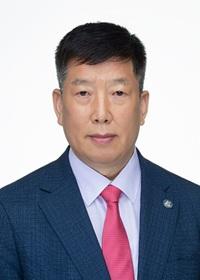
◆ Park Phil-kyu, Committee Member
Editorial Writer, Hankookilbo
ROK Army ROTC, Class of 40

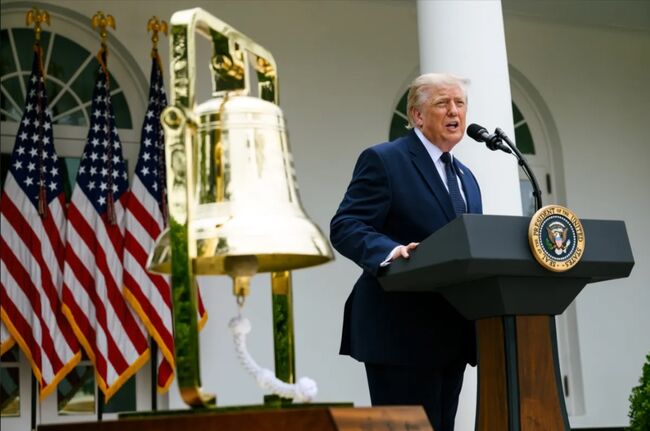 Trump pressures for rate cut again ahead of FOMC... "Should be the lowest in the world"
U.S. President Donald Trump. [Photo = The White House] U.S. President Donald Trump once again pressured the Federal Reserve, the U.S. central bank, to lower interest rates on the 27th (local time
Trump pressures for rate cut again ahead of FOMC... "Should be the lowest in the world"
U.S. President Donald Trump. [Photo = The White House] U.S. President Donald Trump once again pressured the Federal Reserve, the U.S. central bank, to lower interest rates on the 27th (local time
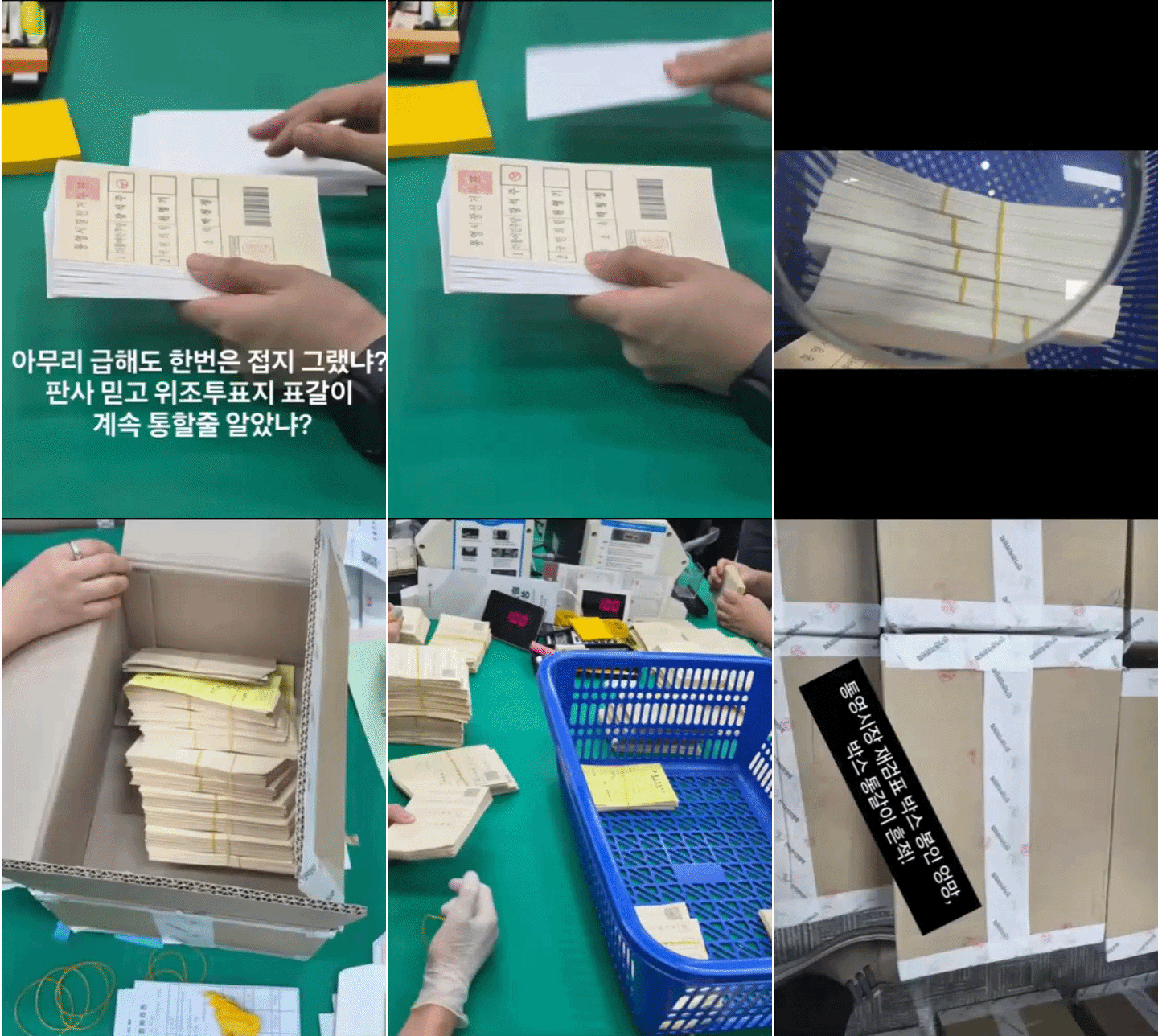 “Ignoring crisp ballots and damaged seals”… Tongyeong mayoral recount concludes with ‘no change in outcome,’ leaving suspicions and public outrage behind
Suspected counterfeit ballots discovered in Tongyeong [GIF from social media of Representative Hwang Kyo-ahn / Attorney Park Joo-hyun]During a recount of the Tongyeong mayoral election in South Gyeong
“Ignoring crisp ballots and damaged seals”… Tongyeong mayoral recount concludes with ‘no change in outcome,’ leaving suspicions and public outrage behind
Suspected counterfeit ballots discovered in Tongyeong [GIF from social media of Representative Hwang Kyo-ahn / Attorney Park Joo-hyun]During a recount of the Tongyeong mayoral election in South Gyeong
 President Yoon, regarding the first-instance ruling on the Public Official Election Act: “An excessive political verdict that distorts the facts… We will appeal immediately.”
The first-instance sentencing hearing for President Yoon Suk Yeol regarding violations of the Public Official Election Act is being broadcast live at Seoul Station on the 27th. [Photo=Yonhap News]Pres
President Yoon, regarding the first-instance ruling on the Public Official Election Act: “An excessive political verdict that distorts the facts… We will appeal immediately.”
The first-instance sentencing hearing for President Yoon Suk Yeol regarding violations of the Public Official Election Act is being broadcast live at Seoul Station on the 27th. [Photo=Yonhap News]Pres
 WSJ: "SK Hynix ADR Premium Is a Sign of AI Trading Overheat"
Advertisement for SK Hynix ADR listing in New York's Times Square [Reuters=Yonhap News file photo]The Wall Street Journal (WSJ) has pointed out that the price of SK Hynix’s American Depositary Recei
WSJ: "SK Hynix ADR Premium Is a Sign of AI Trading Overheat"
Advertisement for SK Hynix ADR listing in New York's Times Square [Reuters=Yonhap News file photo]The Wall Street Journal (WSJ) has pointed out that the price of SK Hynix’s American Depositary Recei
 'Godfather of Japanese Mystery Novels' Keigo Higashino Passes Away After Battle with Cancer at 68
Famous Japanese mystery novelist Keigo Higashino [AFP=Yonhap News]It has been belatedly reported that Keigo Higashino, the "godfather of Japanese mystery novels" and author of bestsellers such as "The
'Godfather of Japanese Mystery Novels' Keigo Higashino Passes Away After Battle with Cancer at 68
Famous Japanese mystery novelist Keigo Higashino [AFP=Yonhap News]It has been belatedly reported that Keigo Higashino, the "godfather of Japanese mystery novels" and author of bestsellers such as "The
 [Park Pil-kyu Security Column] To the Ignorant Trying to Clothe a Beast in Sheep's Clothing
Rep. Kim Byung-joo of the Democratic Party of Korea [Photo=Yonhap News]“The Air Force Academy doesn't teach you how to fly a plane!” “The Army, Navy, and Air Force academies are exactly the
[Park Pil-kyu Security Column] To the Ignorant Trying to Clothe a Beast in Sheep's Clothing
Rep. Kim Byung-joo of the Democratic Party of Korea [Photo=Yonhap News]“The Air Force Academy doesn't teach you how to fly a plane!” “The Army, Navy, and Air Force academies are exactly the
 [Issue Diagnosis] Two Effects of the Election Petition Review
 [Photo] Evidence of Election Fraud Flooding U.S. Media… Trump Had 2.7 Million Votes Stolen
 [Video] U.S. Semiquincentennial Air Show... 'Art in the Sky' streaks across New York
 [Editorial Cartoon] A Draconian Law That Undermines Freedom of Expression

 List
List