이제 국민이 두 눈 부릅뜨고 감시해야 할 시점이다. 대(對)정부·언론 감시에는 여야가 따로 없어야 한다. ‘개딸’이라 하더라도 국민의 안전과 국익, 미래에 조금이라도 관심이 있다면, 이재명정부와 이에 줄을 선 언론의 발표를 무비판적으로 수용하지 말고 그 이면에 무엇이 있는지 불편하더라도 질문을 던져야 한다. 진정으로 국익을 추구하는 외교란 무엇인지, 우리의 전략적 이익을 어떻게 지켜낼 것인지에 대해 국민 모두가 함께 고민하고 현명한 판단을 내려야 할 때다.
 Lee Jae-myung and Chinese President Xi Jinping are seen moving to a summit after an official welcome ceremony at the Great Hall of the People in Beijing on the 5th. [Photo = Yonhap News]
Lee Jae-myung has returned from a state visit to China, the first by a South Korean president in nine years. The government declared a "full restoration of ROK-China relations" and boasted of its achievements, including the signing of 14 Memoranda of Understanding (MOUs) and the strengthening of economic cooperation.
However, behind the elaborate official announcements, the reality of the summit differs significantly from the government and media portrayals. The visit has only deepened the diplomatic imbalance between South Korea and China, perpetuated historical distortion, and witnessed the reoccurrence of China's "take-and-run" diplomacy tactics. The stark contrast between official pronouncements and reality can be readily understood by examining a few key issues. Several scenes come to mind.
Lee Jae-myung Used by Xi Jinping: A State Visit as a Political Object
President Xi Jinping's invitation to Lee Jae-myung was not merely a diplomatic gesture. It was a complex interplay of Xi's personal political agenda to reassert his weakened standing within the CCP, other domestic political considerations, and geopolitical factors.
Specifically, there was a strategic intent related to China's approach to the US and Japan regarding geopolitical strategy, aiming to pressure Lee Jae-myung to publicly declare his stance on the "One China" principle, particularly the Taiwan issue. While domestic media has not widely covered it, analyses suggest a high probability of a secret agreement having been made concerning Xi Jinping's "liberation" of Taiwan and his responses to the US and Japan.
Ultimately, it is difficult to avoid the assessment that Lee Jae-myung was thoroughly utilized as a political object for China's strategic interests.
Deepening Hierarchy Beneath the Veneer of "State Visit": Imbalance in Protocol and Language
As has already been pointed out by the media, the most striking observation is the absence of a joint statement or joint agreement after the summit, despite the formal designation of a "state visit." This highlights the structural problems in ROK-China relations, given that the two countries have not issued a joint statement between their leaders for 12 consecutive years since 2014.
What I find even more serious is the protocol imbalance revealed during the meeting. Xi Jinping consistently addressed Lee Jae-myung in a condescending tone, as if speaking to a subordinate. Specifically, phrases used by President Xi, such as "should" (应当/应当坚定站在历史正确一边,作出正确战略选择) and "take care of" (照顾), are typically used by a superior when speaking to or instructing a subordinate in Chinese usage.
Conversely, Lee Jae-myung used terms like "respect" (尊重) towards President Xi. Without a nuanced understanding of the subtle implications of the Chinese language, this inadvertently created a dialogue where the superior instructed the subordinate, and the subordinate deferred to the superior. This demonstrates a deepening of the unequal relationship between South Korea and China, reminiscent of historical suzerain-vassal relationships.
Repetition of Ineptitude: Failure to Recognize Diplomatic Faux Pas
Even more surprising is the fact that despite inviting Lee Jae-myung as a state guest, Xi Jinping proceeded to hold a summit with the Prime Minister of Ireland immediately before meeting with Lee on the 5th.
This diplomatic snub is tantamount to mocking South Korea and severely undermines national dignity. The chronic ineptitude of South Korean diplomacy, the current administration's abnormal ignorance of China, and its simplistic self-interpretation and naivety were once again on display.
Regardless of the administration, it should be a diplomatic objective for the South Korean government to establish relations of equality with China. However, it appears the government is either unaware of the severity of the unequal relationship or has made no progress in addressing it, returning with more burdens rather than resolving existing ones.
Furthermore, Lee Jae-myung returned having achieved nothing substantial, only to engage in self-congratulatory propaganda through state-affiliated media, portraying himself as a highly capable president. In reality, the nation's dignity has been severely compromised.
Accomplice to Historical Distortion: History Erased Under the "One China" Principle
Xi Jinping strategically brought up historical issues from "over 80 years ago" in an attempt to draw Lee Jae-myung in. He claimed that China and South Korea jointly resisted Japanese colonial rule, thereby coercively persuading Lee to align with China in the war against Japan and the confrontation with the US, using a tone of instruction.
The ignorant Lee Jae-myung responded with unconditional agreement, revealing his lack of knowledge for all to see.
However, historical "facts" cannot be altered by even national leaders. Clear facts exist. The China that fought alongside us against Japanese imperialism was not the People's Republic of China (PRC) founded by Mao Zedong, but Chiang Kai-shek's Republic of China (ROC, Taiwan). While both are abbreviated as "China," they are distinct political entities with complex relationships, which requires further explanation.
Mao Zedong's Communist Party of China (CPC) colluded with the Japanese army during the anti-Japanese war, receiving money in return and providing intelligence on the Nationalist Army. Their primary focus was to defeat the Nationalist Army and seize state power.
The CPC contributed virtually nothing to Korea's independence movement, nor did it offer any significant assistance. The extent of their involvement, if any, was limited to Zhou Enlai and others hosting a modest congratulatory reception for Korean Provisional Government figures like Kim Gu at the CPC Liaison Office in Chongqing before their return to Korea.
The Republic of China (Taiwan) Under Chiang Kai-shek Fought Alongside in the Anti-Japanese Movement
In contrast, Chiang Kai-shek provided not only operational funds but also living expenses for the families of Provisional Government officials from the end of 1932 until 1946. The financial support provided at the time amounts to tens of billions of dollars in today's Korean won. He even provided Kim Gu with 50 million Chinese yuan and $500,000 USD in Chinese currency for his activities upon his return to Korea. This is historical fact.
Yet, Xi Jinping, without the realization of "One China" through the unification of China and Taiwan, distorted history by substituting the Republic of China with "China," implying that China jointly fought the anti-Japanese war with Korea. Lee Jae-myung, like a sycophant, readily followed suit.
The historical distortion during this summit is profoundly serious and fundamentally undermines trust in bilateral relations. Xi Jinping's distortion of historical facts requires separate professional review, which I will defer to a later opportunity due to the scope and length of this article.
Mirage Called "Achievements": The Recurrence of China's "Take-and-Run" Diplomacy
The diplomatic achievements lauded by the Lee Jae-myung administration can be summarized as "giving away everything and receiving nothing of substance – a hollow promise." Xi Jinping has taken everything he could from Lee Jae-myung, who has relied on the CPC in past elections, by cajoling and flattering him. These are China's demands for the guarantee of four interests and four prohibitions that South Korea must not violate, collectively known as the 'four wants' and 'four no's':
First, publicly affirm support for the "One China" principle.
Second, South Korea must not interfere with the Indo-Pacific strategy (including ensuring that defense industry cooperation with the US is not used to target China in the Indo-Pacific region).
Third, refrain from participating in the US-led Missile Defense system (THAAD).
Fourth, limit the role of the US Forces Korea.
While I cannot elaborate in detail here, Lee Jae-myung, as if presenting a gift package to Xi Jinping, had already expressed his support for the "One China" principle in an interview with China Central Television (CCTV) prior to his visit. It remains to be seen whether Lee Jae-myung will indeed implement China's demands for South Korea's non-involvement in the Indo-Pacific strategy and the limitation of USFK's role, or whether he will once again find ways to evade them.
"Listen to Their Words, Observe Their Actions (听其言, 观其行)"... China's Typical Diplomatic Tactic
Conversely, regarding Lee Jae-myung's requests, Xi Jinping's stance was to first accept the aforementioned four demands and then "decide after observing what Lee does in Japan." This implies an intention to say, "Just as you appeased Trump last time under the guise of pragmatic diplomacy, you will do something similar to Prime Minister Sanae Takaichi in Japan this time, so let's talk again after seeing what you do."
This is a typical Chinese diplomatic ploy: "Listen to their words, observe their actions." It represents the epitome of China's characteristic "take-and-run diplomacy," where they first elicit concessions from the other party without incurring any cost themselves.
From this perspective, it becomes clear that the pronouncements about China lifting sanctions on Hanwha Group's subsidiaries and gradually abolishing the "Hallyu Ban" (Korean Wave Ban) to allow Korean entertainers to perform in China were merely bait.
Xi Jinping summoned Lee Jae-myung to China, treating him like a child who had fallen for his scheme, securing all that he could while appearing to consider Lee's requests.
However, on January 6th, the day after the summit, the Chinese government, instead of announcing the fulfillment of its promises, maintained its existing restrictions. The distribution of new Korean dramas, films, and music content on Chinese platforms remains blocked, and the issuance of "service permits" for Korean games, which China has suspended for years, has not resumed. This is one of the reasons I argue that China has effectively deceived South Korea, and Lee Jae-myung has been backstabbed.
As I have long predicted, China has no intention of fulfilling its promises. It has clearly demonstrated that it continues to use the "Hallyu Ban" as an effective card to pressure South Korea.
Inter-Korean Relations and the West Sea Structures: Lee Jae-myung Entangled in China's Framework Due to Strategic Ignorance
When Lee Jae-myung requested China's mediation on inter-Korean issues, Xi Jinping agreed to mediate, despite its limited effectiveness, in exchange for the aforementioned four demands.
China stated it would cooperate in creating opportunities for a North-South summit but added a caveat that it could not guarantee North Korea's denuclearization. This serves as an example of how hollow China's promises are.
A more problematic issue is the territorial waters dispute. Lee Jae-myung's response to the West Sea structures issue has instead led to the loss of an opportunity to resolve the problem. Without any understanding of the strategic and geopolitical implications of this issue for US-China relations in East Asia, he settled for continued negotiations instead of calling for immediate demolition or proportional and reciprocal responses.
In my view, the West Sea structures have effectively become a fait accompli. In the future, China will prepare to expand them without dismantling them. Even if they are dismantled, they will demand something else in return for the dismantling. In other words, the West Sea structures have been turned into a diplomatic bargaining chip. This truly exposes Lee Jae-myung's complete lack of diplomatic strategy.
The Other Side of Increased Chinese Tourists and the Reality: Packaging China's Interests as Lee Jae-myung's Achievements
The increase in Chinese tourists to South Korea and the mediation of inter-Korean summits that Xi Jinping seemed willing to offer were things China intended to do for South Korea regardless of Lee Jae-myung's request. In essence, it was like receiving a slap on the cheek when one was already feeling down.
Xi Jinping's statement about allowing group tours for Chinese tourists to South Korea again, increasing tourist numbers by threefold in the first half of the year and fivefold in the second half, was presented as a favor in response to our request, but in reality, it was a policy he intended to implement.
The more Chinese people visit South Korea, the greater the number of Chinese residents, which can further destabilize South Korean society. This is because it becomes more advantageous for the development of "Unrestricted Warfare." By infiltrating Chinese intelligence operatives among visitors or residents in South Korea, not only can they gather critical industrial technology and military intelligence, but conditions are also enhanced for increased land acquisition by Chinese nationals, the creation of social unrest, and the sowing of division.
While North Korea mediation lacks effectiveness, maintaining such a format is beneficial for China's existing strategy of managing both sides of the Korean Peninsula in its divided state.
Ultimately, these issues are part of China's long-term strategy, and packaging them as diplomatic achievements for our country is an anti-national act that threatens our national security.
As I conclude this lengthy piece, I want to emphasize one point: national leaders and governments must be honest and truthful with the public on all matters. The media also has a responsibility to report the truth without omission or embellishment.
Citizens Must Ponder and Judge National Interests and the Future of the Nation Together
However, the current administration is moving in the completely opposite direction. It inflates achievements without a sober assessment and distorts the truth when conveying it to the public.
It is now time for the public to vigilantly monitor the situation. There should be no partisan division in monitoring the government and media. Even so-called "Die-hard Fans" (개딸), if they have even a slight interest in the safety, national interests, and future of the country, must not uncritically accept the pronouncements of the Lee Jae-myung administration and its affiliated media, but rather ask questions about what lies beneath the surface, even if it's uncomfortable.
This is the time for all citizens to ponder together what truly constitutes diplomacy that pursues national interests and how to protect our strategic interests, and to make wise judgments.
I hope that this visit to China will not end with a self-congratulatory celebration of diplomatic achievements but will serve as an opportunity for a sober reflection on the current state of our diplomacy.
Editorial Writer, Hanmi Ilbo
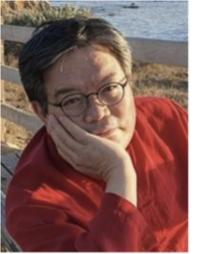
◆ Seo Sang-moon, Editorial Writer
Editorial Writer, Hanmi Ilbo
Director, Institute for Future Studies of the East Sea

 Iranian Foreign Ministry: "Continuing Message Exchanges with the U.S. and Activities of Mediating Countries"
Esmaeil Baghaei, Spokesperson for the Iranian Ministry of Foreign Affairs [Xinhua, Yonhap News file photo]Esmaeil Baghaei, spokesperson for the Iranian Ministry of Foreign Affairs, stated on the 26th
Iranian Foreign Ministry: "Continuing Message Exchanges with the U.S. and Activities of Mediating Countries"
Esmaeil Baghaei, Spokesperson for the Iranian Ministry of Foreign Affairs [Xinhua, Yonhap News file photo]Esmaeil Baghaei, spokesperson for the Iranian Ministry of Foreign Affairs, stated on the 26th
 President Yoon: "Do You Think You Are Safe from the Special Counsel?"... Final Statement Video Released
President Yoon Suk Yeol rebuking the special prosecutor on the 24th. [Court video / @birds_justice X account subtitle GIF] A video of President Yoon Suk Yeol's closing statement at his trial rega
President Yoon: "Do You Think You Are Safe from the Special Counsel?"... Final Statement Video Released
President Yoon Suk Yeol rebuking the special prosecutor on the 24th. [Court video / @birds_justice X account subtitle GIF] A video of President Yoon Suk Yeol's closing statement at his trial rega
 President Yoon, regarding the first-instance ruling on the Public Official Election Act: “An excessive political verdict that distorts the facts… We will appeal immediately.”
The first-instance sentencing hearing for President Yoon Suk Yeol regarding violations of the Public Official Election Act is being broadcast live at Seoul Station on the 27th. [Photo=Yonhap News]Pres
President Yoon, regarding the first-instance ruling on the Public Official Election Act: “An excessive political verdict that distorts the facts… We will appeal immediately.”
The first-instance sentencing hearing for President Yoon Suk Yeol regarding violations of the Public Official Election Act is being broadcast live at Seoul Station on the 27th. [Photo=Yonhap News]Pres
 WSJ: "SK Hynix ADR Premium Is a Sign of AI Trading Overheat"
Advertisement for SK Hynix ADR listing in New York's Times Square [Reuters=Yonhap News file photo]The Wall Street Journal (WSJ) has pointed out that the price of SK Hynix’s American Depositary Recei
WSJ: "SK Hynix ADR Premium Is a Sign of AI Trading Overheat"
Advertisement for SK Hynix ADR listing in New York's Times Square [Reuters=Yonhap News file photo]The Wall Street Journal (WSJ) has pointed out that the price of SK Hynix’s American Depositary Recei
 'Godfather of Japanese Mystery Novels' Keigo Higashino Passes Away After Battle with Cancer at 68
Famous Japanese mystery novelist Keigo Higashino [AFP=Yonhap News]It has been belatedly reported that Keigo Higashino, the "godfather of Japanese mystery novels" and author of bestsellers such as "The
'Godfather of Japanese Mystery Novels' Keigo Higashino Passes Away After Battle with Cancer at 68
Famous Japanese mystery novelist Keigo Higashino [AFP=Yonhap News]It has been belatedly reported that Keigo Higashino, the "godfather of Japanese mystery novels" and author of bestsellers such as "The
 [Park Pil-kyu Security Column] To the Ignorant Trying to Clothe a Beast in Sheep's Clothing
Rep. Kim Byung-joo of the Democratic Party of Korea [Photo=Yonhap News]“The Air Force Academy doesn't teach you how to fly a plane!” “The Army, Navy, and Air Force academies are exactly the
[Park Pil-kyu Security Column] To the Ignorant Trying to Clothe a Beast in Sheep's Clothing
Rep. Kim Byung-joo of the Democratic Party of Korea [Photo=Yonhap News]“The Air Force Academy doesn't teach you how to fly a plane!” “The Army, Navy, and Air Force academies are exactly the
 [Issue Diagnosis] Two Effects of the Election Petition Review
 [Photo] Evidence of Election Fraud Flooding U.S. Media… Trump Had 2.7 Million Votes Stolen
 [Video] U.S. Semiquincentennial Air Show... 'Art in the Sky' streaks across New York
 [Editorial Cartoon] A Draconian Law That Undermines Freedom of Expression

 List
List









