 A map centered on the Arctic. ⒸNational Snow and Ice Data Center
To us, accustomed to the Mercator projection, the Arctic was a region that was “out of sight.” The Arctic was a frozen land where polar bears lived, a somewhat mysterious space where Eskimos raised reindeer and pulled sleds.
However, the new year of 2026 is opening with interest in the Arctic. It's as if the Arctic shipping routes, which had been closed until now, are smoothly opening thanks to global warming.
The Arctic is the Center of the World Today
Since the Earth is round, its center is determined by one's perspective. When looking at a map centered on the Arctic, the center of the world is undoubtedly the Arctic. And now, an era has arrived where the map's perspective is precisely accurate.
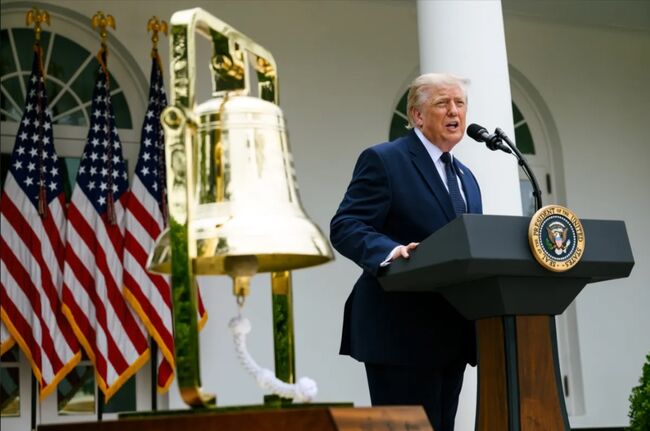
Notably, U.S. President Donald Trump garnered attention with his declaration, which sounded like a joke but was serious, stating his intention to purchase Greenland in the Arctic from Denmark and incorporate Canada as the 51st state of the United States.
Denmark reacted with great anger, threatening to respond with military force, but no one knows how the world will be reshaped.
The Arctic Ocean refers to the Mediterranean Sea surrounded by Russia, Norway, Greenland (Denmark), Canada, and Alaska in the United States. If the Greenland Sea is included, it also borders Iceland.
The Arctic Ocean has always been covered with ice, with only parts melting in the summer and refreezing.
However, starting in 2007, a significant amount of ice began to melt, reducing the ice sheet by 4 million square kilometers in the summer. Ice equivalent in size to almost the entire European Union disappeared in an instant. It was around this time that the movement to save polar bears was being extensively broadcast on television.
As the ice melts, the ocean absorbs sunlight instead of reflecting it, which in turn warms the ocean and leads to the entire planet heating up. This situation has caused a reshaping of global trade routes.
“Turn Your Course to the Arctic”
The shipping routes that traverse the Arctic are broadly divided into the Northeast Passage and the Northwest Passage.
The Northeast Passage (NEP) is an Arctic shipping route along the northern coast of Russia, connecting Asia and Europe. The Northwest Passage (NWP) passes through the northern islands of Canada, connecting the Atlantic and Pacific Oceans.
These two passages significantly shorten travel distance and time compared to existing routes through the Suez Canal and Panama Canal. Russia currently claims control over the Northeast Passage, and Canada asserts control by defining the Northwest Passage as internal waters within its territory.
If the Northeast Passage is fully opened, the distance from Busan to Europe will be shortened by more than 30% compared to the Suez Canal route. Additionally, if the Northwest Passage opens, the distance for travel from Korea to North America will be reduced by about 30% compared to using the Panama Canal route.
The Arctic shipping routes are beneficial to us in many ways and are also an area of interest for the United States, to the point of discussing the annexation of Canada.
This is not all. As the Arctic Ocean melts, vast amounts of minerals buried in the permafrost can also be extracted. In 2008, the U.S. Geological Survey announced that 85% of the Arctic's undiscovered oil, gas, and uranium reserves are located in the upper Arctic waters.
Considering the entire Arctic, it is estimated that up to 13% of the world's oil reserves and up to 30% of its gas reserves are buried there. This is equivalent to trillions of dollars in value.
The countries that have geographic access to this region are currently eight: Russia, Canada, the United States, Denmark, Norway, Finland, Iceland, and Sweden. However, there is an Asian country that cannot stand by and watch this valuable land untouched.
Asian countries do not have geographic access to the Arctic. However, China argues that "the Arctic belongs to all humankind and should be accessible to everyone," and became an observer state of the Arctic Council in 2013. In 2018, it declared itself a "near-Arctic state." This indicates that China does not want Western countries to be the sole beneficiaries of the Arctic's advantages.
Meanwhile, the 1994 United Nations Convention on the Law of the Sea considers all waters outside the continental shelf to be the property of all humankind. This means no one can privatize them. However, the United States is the only Arctic nation that has not ratified the convention and therefore claims it has no obligation to adhere to the UN Convention on the Law of the Sea.
Regardless, Arctic nations are requesting an extension of their continental shelves based on the UN convention. Experts predict that "if their requests are granted, these countries will actually be able to exploit enormous amounts of unexplored resources."
Indeed, in 2007, Russia organized an expedition to secure its continental shelf ownership. The world's first expedition used a special submarine to descend to the Arctic seabed and plant a Russian flag on the Lomonosov Ridge (a massive underwater mountain range spanning the Arctic Ocean).
This news provoked other Arctic nations. At the time, Canada's Ministry of Foreign Affairs firmly stated, "This is not the 15th century; you cannot claim territorial rights with a flag."
Canada's Ministry of Foreign Affairs considers the Lomonosov Ridge to be an extension of Ellesmere Island (Canada's northernmost island), and Denmark claims the ridge is adjacent to its Greenland.
Russia, Canada, and Denmark have all submitted requests for the extension of their continental shelves to a special UN commission, but a decision has not yet been made. According to the UN, the delay is due to the fact that these countries are continuously submitting new data, which takes time to update the applications.
If China has become a near-Arctic state, shouldn't other European, African, American, Oceanian, and Asian countries also step forward? Shouldn't they also claim to be "near-near-Arctic states," saying, "Let me have some of that Arctic advantage"?
By Lim Yo-hee, Reporter

 Trump pressures for rate cut again ahead of FOMC... "Should be the lowest in the world"
U.S. President Donald Trump. [Photo = The White House] U.S. President Donald Trump once again pressured the Federal Reserve, the U.S. central bank, to lower interest rates on the 27th (local time
Trump pressures for rate cut again ahead of FOMC... "Should be the lowest in the world"
U.S. President Donald Trump. [Photo = The White House] U.S. President Donald Trump once again pressured the Federal Reserve, the U.S. central bank, to lower interest rates on the 27th (local time
 “Ignoring crisp ballots and damaged seals”… Tongyeong mayoral recount concludes with ‘no change in outcome,’ leaving suspicions and public outrage behind
Suspected counterfeit ballots discovered in Tongyeong [GIF from social media of Representative Hwang Kyo-ahn / Attorney Park Joo-hyun]During a recount of the Tongyeong mayoral election in South Gyeong
“Ignoring crisp ballots and damaged seals”… Tongyeong mayoral recount concludes with ‘no change in outcome,’ leaving suspicions and public outrage behind
Suspected counterfeit ballots discovered in Tongyeong [GIF from social media of Representative Hwang Kyo-ahn / Attorney Park Joo-hyun]During a recount of the Tongyeong mayoral election in South Gyeong
 President Yoon, regarding the first-instance ruling on the Public Official Election Act: “An excessive political verdict that distorts the facts… We will appeal immediately.”
The first-instance sentencing hearing for President Yoon Suk Yeol regarding violations of the Public Official Election Act is being broadcast live at Seoul Station on the 27th. [Photo=Yonhap News]Pres
President Yoon, regarding the first-instance ruling on the Public Official Election Act: “An excessive political verdict that distorts the facts… We will appeal immediately.”
The first-instance sentencing hearing for President Yoon Suk Yeol regarding violations of the Public Official Election Act is being broadcast live at Seoul Station on the 27th. [Photo=Yonhap News]Pres
 WSJ: "SK Hynix ADR Premium Is a Sign of AI Trading Overheat"
Advertisement for SK Hynix ADR listing in New York's Times Square [Reuters=Yonhap News file photo]The Wall Street Journal (WSJ) has pointed out that the price of SK Hynix’s American Depositary Recei
WSJ: "SK Hynix ADR Premium Is a Sign of AI Trading Overheat"
Advertisement for SK Hynix ADR listing in New York's Times Square [Reuters=Yonhap News file photo]The Wall Street Journal (WSJ) has pointed out that the price of SK Hynix’s American Depositary Recei
 'Godfather of Japanese Mystery Novels' Keigo Higashino Passes Away After Battle with Cancer at 68
Famous Japanese mystery novelist Keigo Higashino [AFP=Yonhap News]It has been belatedly reported that Keigo Higashino, the "godfather of Japanese mystery novels" and author of bestsellers such as "The
'Godfather of Japanese Mystery Novels' Keigo Higashino Passes Away After Battle with Cancer at 68
Famous Japanese mystery novelist Keigo Higashino [AFP=Yonhap News]It has been belatedly reported that Keigo Higashino, the "godfather of Japanese mystery novels" and author of bestsellers such as "The
 [Park Pil-kyu Security Column] To the Ignorant Trying to Clothe a Beast in Sheep's Clothing
Rep. Kim Byung-joo of the Democratic Party of Korea [Photo=Yonhap News]“The Air Force Academy doesn't teach you how to fly a plane!” “The Army, Navy, and Air Force academies are exactly the
[Park Pil-kyu Security Column] To the Ignorant Trying to Clothe a Beast in Sheep's Clothing
Rep. Kim Byung-joo of the Democratic Party of Korea [Photo=Yonhap News]“The Air Force Academy doesn't teach you how to fly a plane!” “The Army, Navy, and Air Force academies are exactly the
 [Issue Diagnosis] Two Effects of the Election Petition Review
 [Photo] Evidence of Election Fraud Flooding U.S. Media… Trump Had 2.7 Million Votes Stolen
 [Video] U.S. Semiquincentennial Air Show... 'Art in the Sky' streaks across New York
 [Editorial Cartoon] A Draconian Law That Undermines Freedom of Expression

 List
List










