유엔이 해체된다면, 그 빈자리를 미국과 서구 중심의 가치동맹(價値同盟)이 대체해야 한다는 대안이 제시되고 있다. 유엔이라는 거대하고 비효율적인 우산 대신, 자유민주주의·인권· 시장경제라는 공통의 가치를 공유하는 국가들이 결속하여 실질적인 실행력을 갖추어야 한다는 논리이다.
 Protest against the Iranian government held in Brussels, Belgium. Last September, the leaders of the UK, France, and Germany, who led the restoration of UN sanctions against Iran, issued a joint statement urging the Iranian authorities to guarantee freedom of expression and peaceful assembly. [Photo=AFP Yonhap News]
On the 7th (local time), U.S. President Donald Trump signed an executive order to withdraw from a total of 66 UN organizations and treaties, including 31 UN-affiliated bodies.
The U.S. also notified its resignation from the Governing Council of the Green Climate Fund (GCF), located in Incheon, South Korea.
This is a measure that further strengthens Trump's "America First" policy and is causing significant ripples in the international order.
UNFCCC, Gender Equality, Human Rights, Labor-Related Bodies... "Radical and Ideological"
The main reason for withdrawal is the determination that these organizations operate in a manner that is contrary to U.S. national interests, security, economic prosperity, and sovereignty.
In particular, organizations that criticize U.S. policies or pursue agendas that conflict with U.S. values were targeted. U.S. Secretary of State Marco Rubio described these organizations as "wasteful, redundant, and mismanaged," implying that the U.S. taxpayer money would no longer be spent on ineffective entities.
Specifically, the U.S. stance is that organizations related to climate change policy (UNFCCC), gender equality (UN Women), human rights, and labor are pursuing "radical and ideological programs" that hinder U.S. economic growth.
In addition, it was declared that the budget saved through withdrawal from UN organizations and cessation of support would be invested in strengthening U.S. defense capabilities (2,000 trillion won in defense spending by 2026) and expanding domestic infrastructure.
Key UN organizations from which the U.S. decided to withdraw include: in the climate and energy sector, the UN Framework Convention on Climate Change (UNFCCC), the Intergovernmental Panel on Climate Change (IPCC), the International Solar Alliance (ISA), and the International Renewable Energy Agency (IRENA); in the human rights and social sector, the UN Human Rights Council (UNHRC), UN Women, and the UN Population Fund (UNFPA); and in other economic and fund sectors, the UN Democracy Fund (UNDEF), the World Health Organization (WHO), UNESCO, and the UN Relief and Works Agency for Palestine Refugees in the Near East (UNRWA).
UN Secretary-General António Guterres warned that the U.S. withdrawal would create a fatal vacuum in the response to the climate crisis and humanitarian relief efforts, stating that "UN contributions are a legal obligation." China has expressed its intention to uphold the multilateral system along with the international community, signaling a move to expand its international influence by filling the void left by the U.S.
The Theory of UN Futility... UN's Peacekeeping Function Will Be Further Crippled
The current UN Security Council, particularly the permanent members, is structured like spoils of war from the victors of World War II in 1945, bearing the responsibility for global security.
However, Russia and China are continuously engaging in aggression and political/economic pressure against sovereign states, while condoning or defending nations that threaten global security.
Russia invaded the sovereign nation of Ukraine, and in a structural contradiction, the veto power exercised by Russia itself prevented any sanctions from passing.
The Security Council, already ossified into a confrontational structure between the U.S., UK, and France on one side, and China and Russia on the other, lost its functionality long ago. The UN's peacekeeping role in active or potential conflict zones such as Ukraine, the Middle East, and the Taiwan Strait will be further weakened.
With North Korea's repeated nuclear-missile provocations and Iran's proxy warfare, China and Russia act as shields in the Security Council, effectively paralyzing the UN's sanctions function.
The ambiguous stance and tacit complicity of China and Russia, as permanent members of the Security Council, regarding some countries' nuclear development and sanctions, indicate that they are not actors upholding international peace but rather perpetrators of peace destruction and war instigation.
The UN is powerless to address China's human rights abuses and religious persecution in Xinjiang. The effectiveness of various UN human rights bodies is close to zero.
The UN is facing criticism for becoming a massive bureaucratic organization. It is continuously pointed out that the substantial contributions from member states disappear into high salaries and welfare for UN staff and administrative costs for endless meetings, rather than reaching actual relief sites. For reference, the UN's regular budget contributions are: U.S. 22%, China 20%, Japan 7%, and South Korea ranks 9th with 2.57%.
Certain blocs, such as the "Third World" or those with ideological solidarity, convene to pass ineffective resolutions, which are often used as political propaganda rather than actual solutions to international problems. UN Peacekeeping Operations (PKO) often limit their role to observing situations rather than exercising strong enforcement power in conflict zones.
The distinct differences in "national and bloc tendencies" make it impossible for the UN to speak with a single voice. As the values of Western liberal democracy clash directly with the authoritarian systems of China and Russia, the UN has transformed from a "forum for dialogue" into a "forum for condemnation."
In short, it is a structure where "some wield power with minimal contributions (Russia), while others undermine values using money as a weapon (China)."
Alternative to UN Dissolution... A U.S. and Western-Centric "Value Alliance"
If the UN is dissolved, an alternative is being proposed that a U.S. and Western-centric value alliance should replace its void. The logic is that instead of the large and inefficient umbrella of the UN, countries sharing common values of liberal democracy, human rights, and market economy should unite and possess practical execution capabilities.
It is argued that this value alliance should mitigate or resolve problems such as human rights abuses stemming from totalitarianism that destroys humanity's liberal democracy, and extreme poverty, through international law such as humanitarian intervention or the Responsibility to Protect (R2P).
The R2P principle states that all sovereign states have the primary responsibility to protect their populations from genocide, war crimes, ethnic cleansing, and crimes against humanity. If a state fails to protect its citizens or becomes the perpetrator, the international community can employ coercive measures (economic sanctions or military intervention) in accordance with the UN Charter.
Order Led by a Value Alliance
A value alliance system will overcome the limitations of the Security Council, which often misses critical windows of opportunity due to vetoes by dictatorial or totalitarian states, and enable immediate intervention in humanitarian crises or acts of aggression.
The value alliance can defend human rights values by exercising substantial "Responsibility to Protect" against totalitarian regimes that massacre or oppress their citizens under the guise of "state sovereignty."
By building supply chains among trustworthy nations (Friend-shoring), the free market economy can be protected from the threat of totalitarian states weaponizing resources.
However, there are significant practical challenges to overcome for such a system to take root. The anti-Western bloc, led by China and Russia, will expand organizations like BRICS and the Shanghai Cooperation Organization (SCO) to build their own economic and security ecosystems.
There is a risk that the "law of the jungle" state could ossify into a neo-Cold War confrontation between the liberal democratic alliance and totalitarian alliances such as Russia, China, Iran, and North Korea. Drawing neutral countries that prioritize pragmatism over ideology to the side of the value alliance is a crucial task.
New Security and Economic Consultative Bodies Beyond the UN
In reality, this is already being materialized through the expansion of the North Atlantic Treaty Organization (NATO), the strengthening of G7 authority, and the activation of minilateral security consultative bodies like QUAD and AUKUS.
If the UN is dissolved or its functions completely cease, it is highly probable that these organizations will unite to serve as a "new global democratic peacekeeping force."
The value alliance will also encompass economic and technological alliances, leading to cooperative supply chains centered around allied nations in sectors critical to national security such as semiconductors, AI, and critical minerals.
South Korea's Options
The neo-Cold War order and the theory of UN futility are likely to pose very direct threats to South Korea, an export-oriented nation and a divided country.
Addressing the North Korean nuclear issue could become more difficult as UN Security Council resolutions for sanctions against North Korea are rendered ineffective. Furthermore, the structure making it difficult to maintain strategic ambiguity between the U.S., China, and Russia will become entrenched, requiring diplomatic clarity based on a value alliance.
These changes signify more than just a crisis for the UN; they mean the collapse of the "norm-based international order" that has been maintained since 1945. Moving forward, "practical diplomatic capabilities" that can secure robust alliance networks while protecting national interests will be key to national survival.
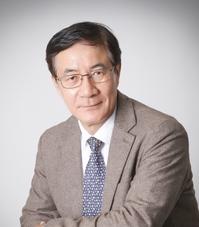
◆ Dr. Shin Dong-choon
Ph.D. in Public Administration, Representative of the National Union for Free Unification. After passing the 21st Higher Civil Service Examination and serving in public office, he has been actively engaged in various roles as a CEO, university professor, media contributor, author, and Chairman of the Global Aerospace Industry Association.

 Iranian Foreign Ministry: "Continuing Message Exchanges with the U.S. and Activities of Mediating Countries"
Esmaeil Baghaei, Spokesperson for the Iranian Ministry of Foreign Affairs [Xinhua, Yonhap News file photo]Esmaeil Baghaei, spokesperson for the Iranian Ministry of Foreign Affairs, stated on the 26th
Iranian Foreign Ministry: "Continuing Message Exchanges with the U.S. and Activities of Mediating Countries"
Esmaeil Baghaei, Spokesperson for the Iranian Ministry of Foreign Affairs [Xinhua, Yonhap News file photo]Esmaeil Baghaei, spokesperson for the Iranian Ministry of Foreign Affairs, stated on the 26th
 President Yoon: "Do You Think You Are Safe from the Special Counsel?"... Final Statement Video Released
President Yoon Suk Yeol rebuking the special prosecutor on the 24th. [Court video / @birds_justice X account subtitle GIF] A video of President Yoon Suk Yeol's closing statement at his trial rega
President Yoon: "Do You Think You Are Safe from the Special Counsel?"... Final Statement Video Released
President Yoon Suk Yeol rebuking the special prosecutor on the 24th. [Court video / @birds_justice X account subtitle GIF] A video of President Yoon Suk Yeol's closing statement at his trial rega
 President Yoon, regarding the first-instance ruling on the Public Official Election Act: “An excessive political verdict that distorts the facts… We will appeal immediately.”
The first-instance sentencing hearing for President Yoon Suk Yeol regarding violations of the Public Official Election Act is being broadcast live at Seoul Station on the 27th. [Photo=Yonhap News]Pres
President Yoon, regarding the first-instance ruling on the Public Official Election Act: “An excessive political verdict that distorts the facts… We will appeal immediately.”
The first-instance sentencing hearing for President Yoon Suk Yeol regarding violations of the Public Official Election Act is being broadcast live at Seoul Station on the 27th. [Photo=Yonhap News]Pres
 WSJ: "SK Hynix ADR Premium Is a Sign of AI Trading Overheat"
Advertisement for SK Hynix ADR listing in New York's Times Square [Reuters=Yonhap News file photo]The Wall Street Journal (WSJ) has pointed out that the price of SK Hynix’s American Depositary Recei
WSJ: "SK Hynix ADR Premium Is a Sign of AI Trading Overheat"
Advertisement for SK Hynix ADR listing in New York's Times Square [Reuters=Yonhap News file photo]The Wall Street Journal (WSJ) has pointed out that the price of SK Hynix’s American Depositary Recei
 'Godfather of Japanese Mystery Novels' Keigo Higashino Passes Away After Battle with Cancer at 68
Famous Japanese mystery novelist Keigo Higashino [AFP=Yonhap News]It has been belatedly reported that Keigo Higashino, the "godfather of Japanese mystery novels" and author of bestsellers such as "The
'Godfather of Japanese Mystery Novels' Keigo Higashino Passes Away After Battle with Cancer at 68
Famous Japanese mystery novelist Keigo Higashino [AFP=Yonhap News]It has been belatedly reported that Keigo Higashino, the "godfather of Japanese mystery novels" and author of bestsellers such as "The
 [Park Pil-kyu Security Column] To the Ignorant Trying to Clothe a Beast in Sheep's Clothing
Rep. Kim Byung-joo of the Democratic Party of Korea [Photo=Yonhap News]“The Air Force Academy doesn't teach you how to fly a plane!” “The Army, Navy, and Air Force academies are exactly the
[Park Pil-kyu Security Column] To the Ignorant Trying to Clothe a Beast in Sheep's Clothing
Rep. Kim Byung-joo of the Democratic Party of Korea [Photo=Yonhap News]“The Air Force Academy doesn't teach you how to fly a plane!” “The Army, Navy, and Air Force academies are exactly the
 [Issue Diagnosis] Two Effects of the Election Petition Review
 [Photo] Evidence of Election Fraud Flooding U.S. Media… Trump Had 2.7 Million Votes Stolen
 [Video] U.S. Semiquincentennial Air Show... 'Art in the Sky' streaks across New York
 [Editorial Cartoon] A Draconian Law That Undermines Freedom of Expression

 List
List









