 The Peace Commission, formalized by U.S. President Donald Trump in Davos, can be described as a selective and efficient value alliance system designed to overcome the UN's "comprehensive incompetence." [Photo=The White House]
In a column published on January 12th, I warned that the United States' withdrawal from a series of 66 UN-affiliated organizations was more than just a diplomatic friction; it signaled the end of the "UN system" that had persisted for over 80 years since World War II, indicating its validity had expired.
Less than a month has passed since then, and the international order is rapidly being drawn into an era of "alternative value alliances" as I had predicted.
The hottest topic at the recent World Economic Forum (WEF) held in Davos was undoubtedly the Peace Commission (Board of Peace), launched on the initiative of U.S. President Donald Trump. This marks a substantial prelude to a new global governance structure that will replace the paralyzed United Nations.
The White House stated that the UN had "degenerated into a propaganda forum for totalitarian states" and declared that the U.S. would no longer pour taxpayer money into an incompetent organization.
Another noteworthy event recently took place. On February 4th (local time), U.S. Vice President JD Vance announced the formation of a "Critical Minerals Trade Bloc" at a ministerial meeting on Critical Minerals held in Washington D.C., stating, "Many have come to keenly realize over the past year how heavily our economy depends on critical minerals."
Delegations from a total of 54 countries, including South Korea's Foreign Minister Cho Hyun, Australia, India, and Japan, as well as officials from the European Commission, attended the meeting.
In a separate press conference, U.S. Secretary of State Marco Rubio referred to the "Critical Minerals Trade Bloc" as the "FORGE Initiative" and stated, "We have 55 partner countries seeking to establish cooperative relationships, and many have already participated and signed agreements." He specifically mentioned that South Korea would serve as the chair of FORGE until June.
These innovative and bold moves by the United States are not only revolutionizing the international order but also hold the potential to usher in a golden age for America. Therefore, they demand continuous monitoring and our proactive engagement.
The Reality of the UN's Financial Collapse and the Argument of Uselessness
UN Secretary-General António Guterres recently sent a letter to the 193 member states, issuing a stark warning that the UN's financial collapse and depletion of cash would become a reality by July 2026.
The United States, the largest contributor responsible for 22% of the UN's regular budget, has effectively halted its contributions, citing "America First" policies and the "uselessness of the UN."
António Guterres criticized the current regulation that requires member states to return unused budget funds, even if contributions have not been received, calling it a "Kafkaesque vicious cycle." However, even Western powers like the UK and Germany are tightening the UN's lifeline by cutting aid budgets.
The UN, rendered powerless in the face of global peace and security crises due to the repeated use of veto power by permanent Security Council members Russia and China, has now reached a dead end of economic bankruptcy.
The Launch of the "Peace Commission," a Value Alliance: Qualifications and Conditions
The Peace Commission, formalized by President Trump in Davos, can be described as a selective and efficient value alliance system designed to overcome the UN's "comprehensive incompetence."
Membership is limited to countries that share liberal democratic values and adhere to market economy principles. The core principle is "ideological solidarity" rather than mere geographical representation. The decision-making structure envisions a weighted voting system based on contribution and democracy index, abandoning the UN's one-country, one-vote system.
Operational conditions require substantial financial responsibility and contribution, including a pledge of $1 billion in the first year of operation for permanent membership. This is to prevent free-riding and to secure a peace fund that can be immediately deployed for practical peacekeeping and reconstruction efforts (e.g., in Gaza and Ukraine).
Initial member countries include 19 nations: the United States, Israel, Saudi Arabia, the UAE, Qatar, Egypt, Turkey, Argentina, and Pakistan. France and some Nordic countries have adopted a cautious or opposing stance, citing "destruction of multilateralism."
The emergence of the Peace Commission will accelerate the "Great Fragmentation" or "Great Upheaval" of the world order.
U.S. strategic analysts view it as a powerful countermeasure against China's Belt and Road Initiative (BRI), with a dominant analysis suggesting that member countries will receive a "package" of strong U.S. military protection and trade benefits.
China and Russia, which have been expanding their influence by taking advantage of the UN's weakened functionality, are heavily criticizing the Peace Commission as "U.S.-led exclusive bloc formation" and are expected to accelerate their own bloc formation centered around BRICS and the Shanghai Cooperation Organization (SCO).
The Concept of the "Critical Minerals Trade Bloc"
The ministerial meeting on critical minerals is a move by the U.S., which was caught off guard by China's "rare earth export controls" amidst the "U.S.-China trade war" last year, to prevent China from gaining dominance over critical minerals essential for national security and economic prosperity. It is interpreted as a strategy to stabilize supply chains centered on allies and friendly nations and structurally reduce dependence on China.
Vice President JD Vance and Secretary of State Marco Rubio announced the concept of a new "Critical Minerals Trade Bloc" with a strong tone.
They proposed setting a "benchmark price" to protect producers from low-cost, high-volume exports from a specific country (China) and imposing variable tariffs on minerals entering at prices below this benchmark to maintain a price floor. They also stated that they would create a "Preferential Trade Zone" for participating countries, offering benefits for mineral trade and protection from external shocks. Furthermore, the U.S. pledged substantial investment in mining and processing facilities of allied nations through its approximately $100 billion lending authority and the recently announced strategic mineral stockpile project, "Project Vault."
South Korea's Survival Strategy: Diplomacy of Values and National Interest
In the midst of these turbulent times, South Korea's stance is clear. We must no longer be mired in the outdated "UN omnipotence theory." Regardless of whether we like it or not, we believe that joining the new world order led by the United States is the path to our survival and national interests.
It is the right and proper course of action to actively join the Peace Commission, led by the United States, our staunch ally and superpower, and a body that shares the values of liberal democracy and market economy. Moreover, to stably secure critical minerals essential for industrial production and establish smooth global supply chains, we must also actively participate in the FORGE Initiative.
The United States is making Central and South America pro-American again and is weaning Venezuela and Iran away from China and Russia. It has regained control over the Panama Canal, and through the installation of American Golden Domes in Greenland, it has secured its security and effectively controls the region through joint development of energy resources.
Remarkably, India has recently stopped importing oil and gas from Russia and has shifted its import source to the United States.
We are currently standing at a historical juncture where the Yalta system of 1945 is ending, and a new "new order centered on values and national interest" is being born.
We are faced with a choice: to board the train of the Peace Commission and the FORGE Initiative to solidify our position as a global leader, or to remain on the sinking ship of the United Nations, adrift and continuing a difficult voyage.
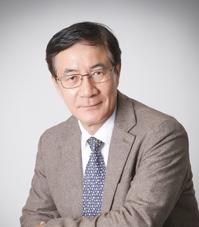
◆ Dr. Shin Dong-chun
Doctor of Public Administration, Representative of the National Alliance for Free Unification. After passing the 21st Higher Civil Service Examination and serving in public office, he has been actively engaged as a corporate CEO, university professor, media columnist, author, and chairman of the Global Aerospace Industry Association.

 Iranian Foreign Ministry: "Continuing Message Exchanges with the U.S. and Activities of Mediating Countries"
Esmaeil Baghaei, Spokesperson for the Iranian Ministry of Foreign Affairs [Xinhua, Yonhap News file photo]Esmaeil Baghaei, spokesperson for the Iranian Ministry of Foreign Affairs, stated on the 26th
Iranian Foreign Ministry: "Continuing Message Exchanges with the U.S. and Activities of Mediating Countries"
Esmaeil Baghaei, Spokesperson for the Iranian Ministry of Foreign Affairs [Xinhua, Yonhap News file photo]Esmaeil Baghaei, spokesperson for the Iranian Ministry of Foreign Affairs, stated on the 26th
 President Yoon: "Do You Think You Are Safe from the Special Counsel?"... Final Statement Video Released
President Yoon Suk Yeol rebuking the special prosecutor on the 24th. [Court video / @birds_justice X account subtitle GIF] A video of President Yoon Suk Yeol's closing statement at his trial rega
President Yoon: "Do You Think You Are Safe from the Special Counsel?"... Final Statement Video Released
President Yoon Suk Yeol rebuking the special prosecutor on the 24th. [Court video / @birds_justice X account subtitle GIF] A video of President Yoon Suk Yeol's closing statement at his trial rega
 President Yoon, regarding the first-instance ruling on the Public Official Election Act: “An excessive political verdict that distorts the facts… We will appeal immediately.”
The first-instance sentencing hearing for President Yoon Suk Yeol regarding violations of the Public Official Election Act is being broadcast live at Seoul Station on the 27th. [Photo=Yonhap News]Pres
President Yoon, regarding the first-instance ruling on the Public Official Election Act: “An excessive political verdict that distorts the facts… We will appeal immediately.”
The first-instance sentencing hearing for President Yoon Suk Yeol regarding violations of the Public Official Election Act is being broadcast live at Seoul Station on the 27th. [Photo=Yonhap News]Pres
 WSJ: "SK Hynix ADR Premium Is a Sign of AI Trading Overheat"
Advertisement for SK Hynix ADR listing in New York's Times Square [Reuters=Yonhap News file photo]The Wall Street Journal (WSJ) has pointed out that the price of SK Hynix’s American Depositary Recei
WSJ: "SK Hynix ADR Premium Is a Sign of AI Trading Overheat"
Advertisement for SK Hynix ADR listing in New York's Times Square [Reuters=Yonhap News file photo]The Wall Street Journal (WSJ) has pointed out that the price of SK Hynix’s American Depositary Recei
 'Godfather of Japanese Mystery Novels' Keigo Higashino Passes Away After Battle with Cancer at 68
Famous Japanese mystery novelist Keigo Higashino [AFP=Yonhap News]It has been belatedly reported that Keigo Higashino, the "godfather of Japanese mystery novels" and author of bestsellers such as "The
'Godfather of Japanese Mystery Novels' Keigo Higashino Passes Away After Battle with Cancer at 68
Famous Japanese mystery novelist Keigo Higashino [AFP=Yonhap News]It has been belatedly reported that Keigo Higashino, the "godfather of Japanese mystery novels" and author of bestsellers such as "The
 [Park Pil-kyu Security Column] To the Ignorant Trying to Clothe a Beast in Sheep's Clothing
Rep. Kim Byung-joo of the Democratic Party of Korea [Photo=Yonhap News]“The Air Force Academy doesn't teach you how to fly a plane!” “The Army, Navy, and Air Force academies are exactly the
[Park Pil-kyu Security Column] To the Ignorant Trying to Clothe a Beast in Sheep's Clothing
Rep. Kim Byung-joo of the Democratic Party of Korea [Photo=Yonhap News]“The Air Force Academy doesn't teach you how to fly a plane!” “The Army, Navy, and Air Force academies are exactly the
 [Issue Diagnosis] Two Effects of the Election Petition Review
 [Photo] Evidence of Election Fraud Flooding U.S. Media… Trump Had 2.7 Million Votes Stolen
 [Video] U.S. Semiquincentennial Air Show... 'Art in the Sky' streaks across New York
 [Editorial Cartoon] A Draconian Law That Undermines Freedom of Expression

 List
List









