 Former People Power Party leader Han Dong-hoon. [Photo=Yonhap News]
In politics, an apology is not a moral gesture but a clear strategic act.
Apologies, especially during a crisis, are evaluated not on whether the wrongdoing is admitted, but on how much they reduce political losses and leave room for recovery. In this regard, Han Dong-hoon's recent apology, regardless of its inherent rightness or wrongness, is closer to a case of failed political gain-loss calculation.
According to crisis management communication theory, an apology should be designed to aim for mid- to long-term trust recovery, even if it means enduring short-term criticism. In other words, the key performance indicator is to postpone the judgment of neutral and undecided audiences rather than immediate consolidation of the supporter base.
Long-Term Loss Consolidation Effect
However, this apology failed to generate political "gains" by these standards and instead resulted in a loss-consolidation effect.
The aspects that can be considered political gains are limited. Within the hardline supporter base, the mere formality of "offering an apology" acts as a psychological defense mechanism.
This can have the effect of partially preventing supporter defection in the short term. However, this effect is only valid within an already consolidated group and does not lead to new support expansion or persuasion of neutral audiences. The scope is too narrow to be called a political gain.
On the other hand, the political losses are structural and extensive. Firstly, the lack of clear attribution of responsibility, a core requirement of an apology, failed to provide neutral audiences with a reason to defer their judgment.
This can turn "let's wait and see" into "this person is not the one." In politics, a negative judgment from neutral audiences is the most difficult loss to recover from.
Secondly, the political arguments and disputes raised simultaneously within the apology undermined the message's consistency. In crisis management communication, an apology should serve to narrow the scope of the issue, but this apology instead expanded it.
As a result, the apology did not serve as a shield and risked being recycled as a quote for rebuttal in all subsequent reports and commentaries. This is a loss that accumulates political costs in the mid- to long-term.
Amplified Question of "Why Now?"
Thirdly, political benefits with the party in the National Assembly and legacy media were lost. The minimum condition they expect from an apology is manageability. That is, a signal that the situation can be resolved even if this individual is kept on board.
However, this apology did not provide that signal, and consequently weakened the motivation to defend. This manifests as a loss in the form of quiet distancing rather than public criticism. Politically, this loss is not easily visible but is the most fatal.
Fourthly, the very method of apology narrowed future options. In a crisis situation, an apology should leave room for subsequent actions, even if it fails. However, this message attempted both apology and struggle simultaneously, failing to secure persuasiveness in either.
As a result, even if further apologies or a shift in stance occur later, it is difficult to avoid the reaction of "Why now?" This is a loss that has narrowed the path to political recovery on its own.
In conclusion, the political gains and losses of this apology are clear. While there may have been a slight gain in the short term by aiding the psychological defense of hardline supporters, the mid- to long-term losses—failure to defer neutral audiences' judgment, loss of defense from the party and legacy media, and amplification of long-term message risks—are far greater.
From the perspective of crisis management communication, this can be evaluated not as a failed apology, but as a case of failing to manage political losses.
In politics, an apology is a matter of design, not courage. If it is not clear what will be sacrificed to gain what, an apology becomes a sentence that solidifies a crisis rather than a mechanism to overcome it. This case reconfirms that point once again.

◆ Professor Shim Gyu-jin
Assistant Professor of Digital Media, IE University, Spain. Previously served as a policy advisor to the Ministry of National Defense and head of the data lab at the Yeouido Institute. He also worked as a full-time professor at the University of Melbourne, Australia, and an assistant professor at Singapore Management University. His books include 'K-Drama Yoon Suk-yeol' and 'Hyper Gender'.

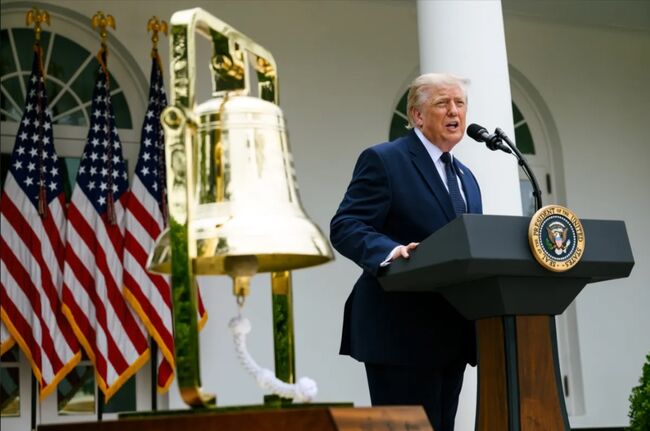 Trump pressures for rate cut again ahead of FOMC... "Should be the lowest in the world"
U.S. President Donald Trump. [Photo = The White House] U.S. President Donald Trump once again pressured the Federal Reserve, the U.S. central bank, to lower interest rates on the 27th (local time
Trump pressures for rate cut again ahead of FOMC... "Should be the lowest in the world"
U.S. President Donald Trump. [Photo = The White House] U.S. President Donald Trump once again pressured the Federal Reserve, the U.S. central bank, to lower interest rates on the 27th (local time
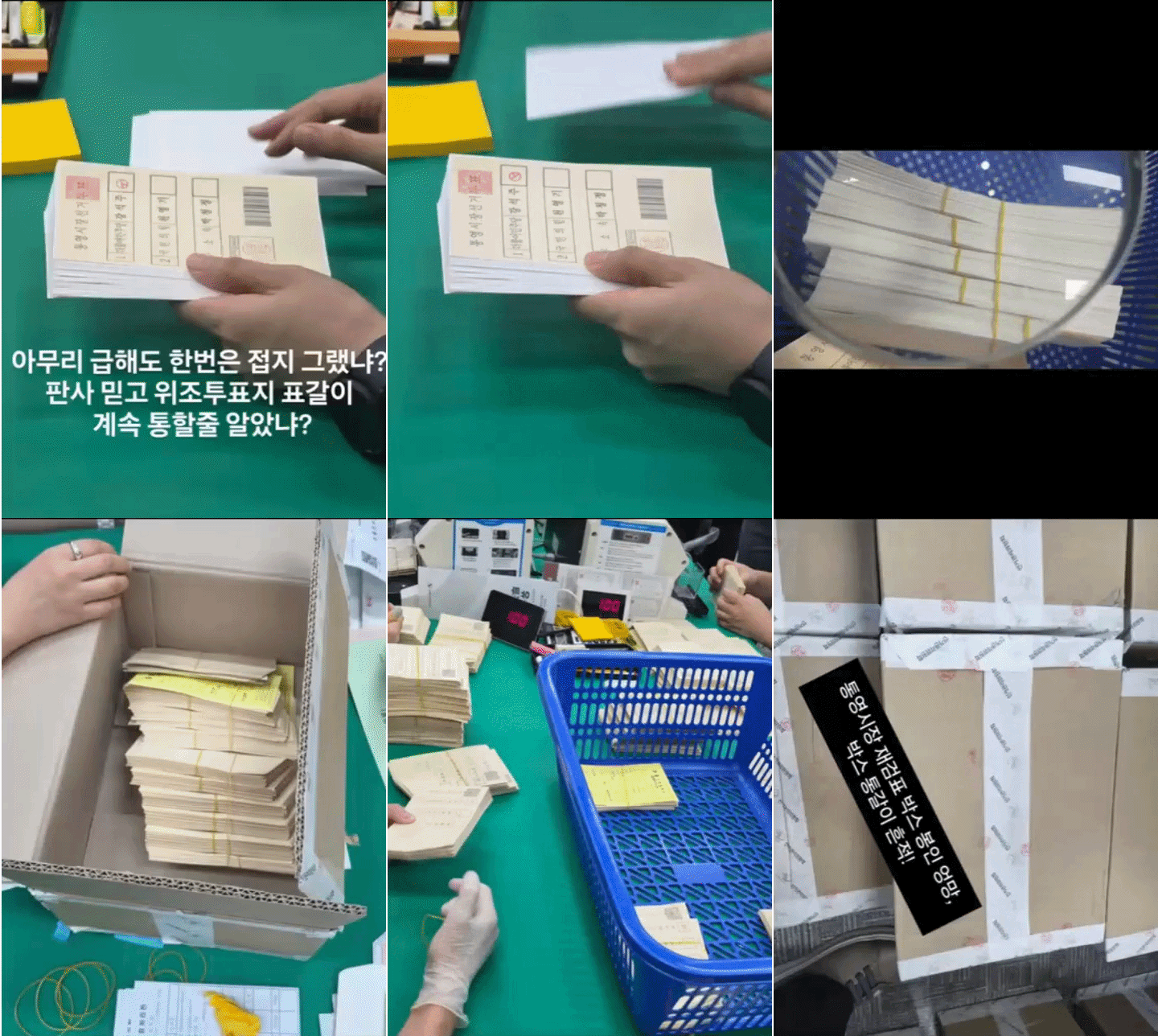 “Ignoring crisp ballots and damaged seals”… Tongyeong mayoral recount concludes with ‘no change in outcome,’ leaving suspicions and public outrage behind
Suspected counterfeit ballots discovered in Tongyeong [GIF from social media of Representative Hwang Kyo-ahn / Attorney Park Joo-hyun]During a recount of the Tongyeong mayoral election in South Gyeong
“Ignoring crisp ballots and damaged seals”… Tongyeong mayoral recount concludes with ‘no change in outcome,’ leaving suspicions and public outrage behind
Suspected counterfeit ballots discovered in Tongyeong [GIF from social media of Representative Hwang Kyo-ahn / Attorney Park Joo-hyun]During a recount of the Tongyeong mayoral election in South Gyeong
 President Yoon, regarding the first-instance ruling on the Public Official Election Act: “An excessive political verdict that distorts the facts… We will appeal immediately.”
The first-instance sentencing hearing for President Yoon Suk Yeol regarding violations of the Public Official Election Act is being broadcast live at Seoul Station on the 27th. [Photo=Yonhap News]Pres
President Yoon, regarding the first-instance ruling on the Public Official Election Act: “An excessive political verdict that distorts the facts… We will appeal immediately.”
The first-instance sentencing hearing for President Yoon Suk Yeol regarding violations of the Public Official Election Act is being broadcast live at Seoul Station on the 27th. [Photo=Yonhap News]Pres
 WSJ: "SK Hynix ADR Premium Is a Sign of AI Trading Overheat"
Advertisement for SK Hynix ADR listing in New York's Times Square [Reuters=Yonhap News file photo]The Wall Street Journal (WSJ) has pointed out that the price of SK Hynix’s American Depositary Recei
WSJ: "SK Hynix ADR Premium Is a Sign of AI Trading Overheat"
Advertisement for SK Hynix ADR listing in New York's Times Square [Reuters=Yonhap News file photo]The Wall Street Journal (WSJ) has pointed out that the price of SK Hynix’s American Depositary Recei
 'Godfather of Japanese Mystery Novels' Keigo Higashino Passes Away After Battle with Cancer at 68
Famous Japanese mystery novelist Keigo Higashino [AFP=Yonhap News]It has been belatedly reported that Keigo Higashino, the "godfather of Japanese mystery novels" and author of bestsellers such as "The
'Godfather of Japanese Mystery Novels' Keigo Higashino Passes Away After Battle with Cancer at 68
Famous Japanese mystery novelist Keigo Higashino [AFP=Yonhap News]It has been belatedly reported that Keigo Higashino, the "godfather of Japanese mystery novels" and author of bestsellers such as "The
 [Park Pil-kyu Security Column] To the Ignorant Trying to Clothe a Beast in Sheep's Clothing
Rep. Kim Byung-joo of the Democratic Party of Korea [Photo=Yonhap News]“The Air Force Academy doesn't teach you how to fly a plane!” “The Army, Navy, and Air Force academies are exactly the
[Park Pil-kyu Security Column] To the Ignorant Trying to Clothe a Beast in Sheep's Clothing
Rep. Kim Byung-joo of the Democratic Party of Korea [Photo=Yonhap News]“The Air Force Academy doesn't teach you how to fly a plane!” “The Army, Navy, and Air Force academies are exactly the
 [Issue Diagnosis] Two Effects of the Election Petition Review
 [Photo] Evidence of Election Fraud Flooding U.S. Media… Trump Had 2.7 Million Votes Stolen
 [Video] U.S. Semiquincentennial Air Show... 'Art in the Sky' streaks across New York
 [Editorial Cartoon] A Draconian Law That Undermines Freedom of Expression

 List
List










