The Israeli Arrow-3 missile defense system, adopted by Germany. [AP Yonhap News]
It has been suggested that the reason Israeli Prime Minister Benjamin Netanyahu dissuaded U.S. President Donald Trump from intervening militarily in Iran was due to a vulnerability in Israel's multi-layered air defense network.
On the 18th (local time), the Israeli daily Jerusalem Post pointed out, "Prime Minister Netanyahu pushed President Trump to cancel or postpone an attack on the Iranian regime," and "Iran's inability to prepare for a ballistic missile attack is strongly suggested as a major cause."
As protests against economic hardship, which began on the 28th of last month in Iran, intensified and spread to criticize the theocratic regime, Iranian authorities suppressed them with bloodshed.
This led to speculation that the United States and Israel, seeking to prevent Iran's development of nuclear and ballistic missiles, might oust Iran's Supreme Leader Ayatollah Seyed Ali Khamenei, and President Trump hinted at the possibility of military intervention.
However, Prime Minister Netanyahu adopted a cautious stance.
On the 14th, The New York Times reported that Prime Minister Netanyahu had requested President Trump in a phone call to "delay the plan for a military attack on Iran."
The Jerusalem Post analyzed, "Iran's ballistic missile capabilities have weakened the most in decades," but "Prime Minister Netanyahu felt that the Israeli military had not secured a sufficient quantity of Arrow interceptor missiles to counter the threat."
From a technical standpoint, the Israeli military successfully intercepted approximately 800 Iranian ballistic missiles aimed at Israel in 2024-2025, and Iran's inventory of ballistic missiles and launchers was halved during that period, the Jerusalem Post noted.
However, Israel and the United States spent $1.48 billion to $1.58 billion (approximately 2.2 to 2.3 trillion won) to intercept three airstrikes carried out by Iran during this period with interceptor missiles, and it took time to replenish the stock of interceptor missiles.
The publication suggested that Iran could also rebuild its ballistic missile capabilities during this time, adding, "Netanyahu's thinking would be that Israel could produce Arrow missiles faster than Iran and also secure additional U.S. air defense systems."
The previous day, the U.S. daily Washington Post reported that the dissuasion from regional allies such as Israel, Saudi Arabia, Qatar, and Egypt influenced President Trump's decision to put on hold the option of a military attack on Iran.
What do you think of this article?

 First U.S. Ambassador of Trump's Second Term to Arrive This Week… Will It Provide Momentum to Resolve Pending Issues?
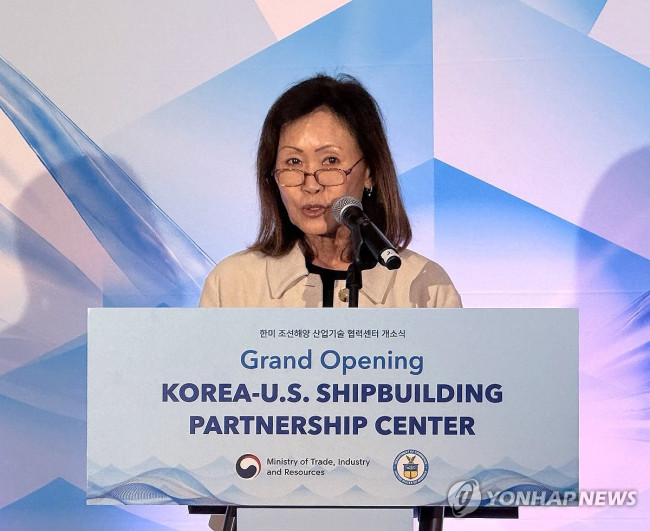
U.S. Ambassador to South Korea Michelle Steel speaks at the opening ceremony of the Korea-U.S. Shipbuilding Cooperation Center held at the Mayflower Hotel in Washington, D.C., on the 23rd (local time)
First U.S. Ambassador of Trump's Second Term to Arrive This Week… Will It Provide Momentum to Resolve Pending Issues?
U.S. Ambassador to South Korea Michelle Steel speaks at the opening ceremony of the Korea-U.S. Shipbuilding Cooperation Center held at the Mayflower Hotel in Washington, D.C., on the 23rd (local time)
 President Yoon, regarding the first-instance ruling on the Public Official Election Act: “An excessive political verdict that distorts the facts… We will appeal immediately.”
The first-instance sentencing hearing for President Yoon Suk Yeol regarding violations of the Public Official Election Act is being broadcast live at Seoul Station on the 27th. [Photo=Yonhap News]Pres
President Yoon, regarding the first-instance ruling on the Public Official Election Act: “An excessive political verdict that distorts the facts… We will appeal immediately.”
The first-instance sentencing hearing for President Yoon Suk Yeol regarding violations of the Public Official Election Act is being broadcast live at Seoul Station on the 27th. [Photo=Yonhap News]Pres
 Fire at Hyundai Motor Group Battery Research Facility in Uiwang… Ignited in Waste Storage Room
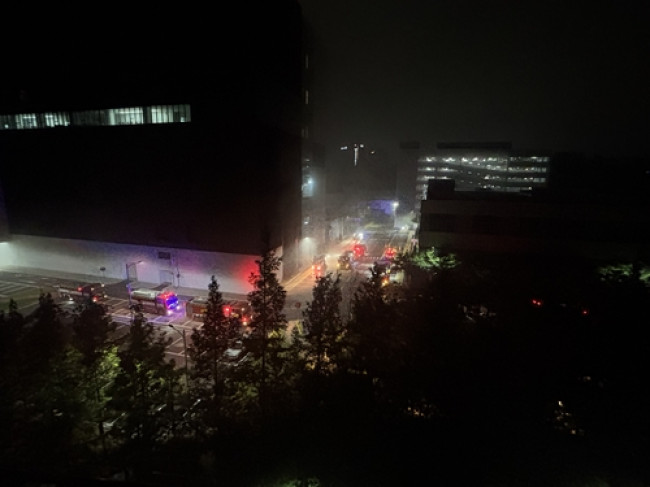
A fire broke out at the Hyundai Motor Group battery research building at its Uiwang Research Center in Sam-dong, Uiwang-si, Gyeonggi-do, at 12:48 a.m. on the 28th and was extinguished after approximat
Fire at Hyundai Motor Group Battery Research Facility in Uiwang… Ignited in Waste Storage Room
A fire broke out at the Hyundai Motor Group battery research building at its Uiwang Research Center in Sam-dong, Uiwang-si, Gyeonggi-do, at 12:48 a.m. on the 28th and was extinguished after approximat
 'Godfather of Japanese Mystery Novels' Keigo Higashino Passes Away After Battle with Cancer at 68
Famous Japanese mystery novelist Keigo Higashino [AFP=Yonhap News]It has been belatedly reported that Keigo Higashino, the "godfather of Japanese mystery novels" and author of bestsellers such as "The
'Godfather of Japanese Mystery Novels' Keigo Higashino Passes Away After Battle with Cancer at 68
Famous Japanese mystery novelist Keigo Higashino [AFP=Yonhap News]It has been belatedly reported that Keigo Higashino, the "godfather of Japanese mystery novels" and author of bestsellers such as "The
 [Park Pil-kyu Security Column] To the Ignorant Trying to Clothe a Beast in Sheep's Clothing
Rep. Kim Byung-joo of the Democratic Party of Korea [Photo=Yonhap News]“The Air Force Academy doesn't teach you how to fly a plane!” “The Army, Navy, and Air Force academies are exactly the
[Park Pil-kyu Security Column] To the Ignorant Trying to Clothe a Beast in Sheep's Clothing
Rep. Kim Byung-joo of the Democratic Party of Korea [Photo=Yonhap News]“The Air Force Academy doesn't teach you how to fly a plane!” “The Army, Navy, and Air Force academies are exactly the
 [Issue Diagnosis] Two Effects of the Election Petition Review
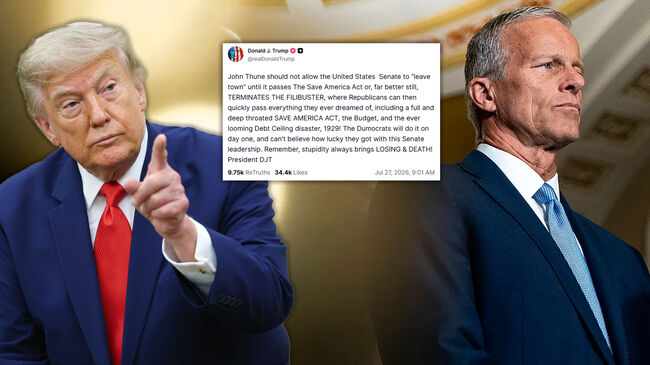 Trump Demands Passage of ‘SAVE Act’ Before Senate Recess
 [Photo] Evidence of Election Fraud Flooding U.S. Media… Trump Had 2.7 Million Votes Stolen
 [Video] U.S. Semiquincentennial Air Show... 'Art in the Sky' streaks across New York
 [Editorial Cartoon] A Draconian Law That Undermines Freedom of Expression

 List
List