도널드 트럼프 미국 대통령은 2026년 1월, 한국 입법부가 미국과의 무역 협정을 위한 절차를 이행하지 않고 있다며, 한국에 대한 상호 관세를 기존 15%에서 25%로 인상하겠다고 공식 발표했다. 트럼프 대통령은 이 조치를 한국 국회의 비준 지연에 따른 결과라고 설명했지만, 그보다는 한국의 정치 지형이 좀 더 근본적인 원인라는 해석이 나온다.
 Deputy Prime Minister and Minister of Economy and Finance, Gu Yoon-cheol, meets with Chairman of the National Assembly's Economy and Finance Committee, Lim Eui-ja, at the chairman's office on the 27th to discuss measures in response to U.S. President Donald Trump's mention of tariff hikes. [Photo=Yonhap News]
U.S. President Donald Trump officially announced on January 2026 that he would increase reciprocal tariffs on South Korea from the current 15% to 25%, stating that the South Korean legislature has not fulfilled the procedures for the trade agreement with the United States. President Trump explained this measure as a consequence of the delay in ratification by the South Korean National Assembly, but interpretations suggest that South Korea's political landscape is a more fundamental cause.
South Korea-U.S. Trade Agreement Signed Last July… National Assembly Ratification ‘Pending’
The agreement that President Trump is taking issue with is the South Korea-U.S. trade agreement signed by President Trump and Lee Jae-myung on July 30th of last year.
This agreement was reconfirmed on October 29th of last year during a meeting with Lee Jae-myung when President Trump visited South Korea for the Asia-Pacific Economic Cooperation (APEC) forum and a meeting with Chinese President Xi Jinping. At the time, Trump publicly praised it as a "great agreement that is very beneficial to both countries," but as of January 2026, it has not been ratified by the South Korean National Assembly.
On the 24th, Kim Min-seok's meeting with U.S. Vice President J.D. Vance in Washington D.C. to directly explain the controversy surrounding Coupang demonstrates that the background of this tariff hike cannot be viewed solely as a legislative procedure issue.
Coupang Controversy… Emerges as a Diplomatic Issue Amidst "America First" Policy
The fact that Vice President Vance brought up the Coupang issue from the start of the meeting signifies that the Coupang issue has been elevated to a diplomatic matter. Investors in Coupang within the United States have been demanding retaliatory measures, such as imposing tariffs on South Korean products, through the Office of the United States Trade Representative (USTR). This tariff hike incident is an example of the "America First" policy being concretized into a strategy that prioritizes American citizens and corporations.
After returning to Korea, Kim Min-seok publicly warned Coupang in an interview with domestic media, stating, "You should not try to solve problems through lobbying." While a relatively passive response was shown to personal information issues of companies linked to China, the fact that only the American company Coupang became the target of political and administrative pressure foreshadows continued difficulties in future South Korea-U.S. relations and trade.
In addition, Lee Jae-myung's mixed diplomatic messaging is also pointed out as a problem. During his visit to the United States in 2025, Lee Jae-myung emphasized the alliance and cooperation between South Korea and the U.S. in front of President Trump, but during his visit to China in early January, he spoke of "possibilities for cooperation on the West Sea issue and defense and security," appearing to move towards a path of prioritizing China over America (安中經中), beyond prioritizing America over China (安美經中). Lee Jae-myung's remarks on "possibilities for cooperation on the West Sea issue and defense and security" were interpreted by the U.S. as a signal that "it is unclear which side South Korea stands on" in the context of escalating U.S.-China strategic competition.
The Lee Jae-myung Administration… Perceived as Included in Trump-Style Pressure Targets
Statements that undermine trust also continued in the economic sector. On the 16th, Deputy Prime Minister and Minister of Economy and Finance Gu Yoon-cheol suggested the possibility of market intervention in an interview with Reuters, stating, "We will not tolerate excessive depreciation" in relation to the sharp decline in the won's value. He also said that the $350 billion investment plan in the United States would be difficult to commence in earnest in the first half of the year. This statement amplified doubts about the effectiveness of the investment promise to the U.S.
In the past, President Trump has publicly made friendly remarks towards Chinese President Xi Jinping and Russian President Vladimir Putin, while simultaneously employing tariffs, sanctions, and military pressure. Among foreign policy experts, there is an analysis that "it is realistic to view the Lee Jae-myung administration as also included in the targets of Trump-style pressure."
In his statement, President Trump said, "The United States has promptly lowered tariffs in accordance with agreed trade terms and expects its trading partners to act accordingly." He further stated, "We are increasing tariffs because the South Korean legislature has not enacted this historic trade agreement into law."
25% Tariff Hike… Concerns of Increased Volatility in the Foreign Exchange Market
If tariffs are increased to 25%, the sectors that will be most directly hit are industries with high export dependence on the U.S., such as automobiles, pharmaceuticals, and timber. Their price competitiveness will rapidly weaken, leading to an inevitable decline in market share within the U.S. market, which is likely to result in reduced domestic production and contraction of employment.
The impact on the financial markets cannot be ignored either. The tariff increase directly leads to concerns about reduced exports to the U.S. → worsening trade balance → pressure for a weaker won. In a situation where exchange rate instability has already increased, the tariff shock could further exacerbate volatility in the foreign exchange market.
The most serious problem is that the U.S. has begun to perceive South Korea not as a "special ally" anymore, but as a trading partner with whom conditions can be enforced through pressure. This will weaken South Korea's negotiating power in overall South Korea-U.S. negotiations in the future, including defense cost sharing, technological cooperation, and semiconductor and energy negotiations.
In the past, Trump has achieved his strategic goals by simultaneously employing tariffs, sanctions, and military pressure, even while making outwardly friendly remarks to China's Xi and Russia's Putin. Trump's attitude towards the Lee Jae-myung administration is clear. While smiling on the outside, he is holding a baseball bat inside and issuing a warning of "FAFO (If you mess around, you'll get hurt)."
This tariff hike also stems from the judgment that the South Korean government is not fulfilling its promises with the U.S., and it signals rough seas ahead for South Korean diplomacy, extending beyond mere economic losses.
Hankookilbo Editorial Department

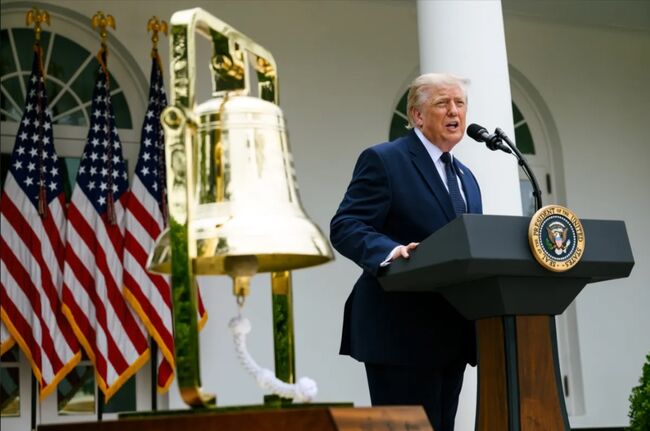 Trump pressures for rate cut again ahead of FOMC... "Should be the lowest in the world"
U.S. President Donald Trump. [Photo = The White House] U.S. President Donald Trump once again pressured the Federal Reserve, the U.S. central bank, to lower interest rates on the 27th (local time
Trump pressures for rate cut again ahead of FOMC... "Should be the lowest in the world"
U.S. President Donald Trump. [Photo = The White House] U.S. President Donald Trump once again pressured the Federal Reserve, the U.S. central bank, to lower interest rates on the 27th (local time
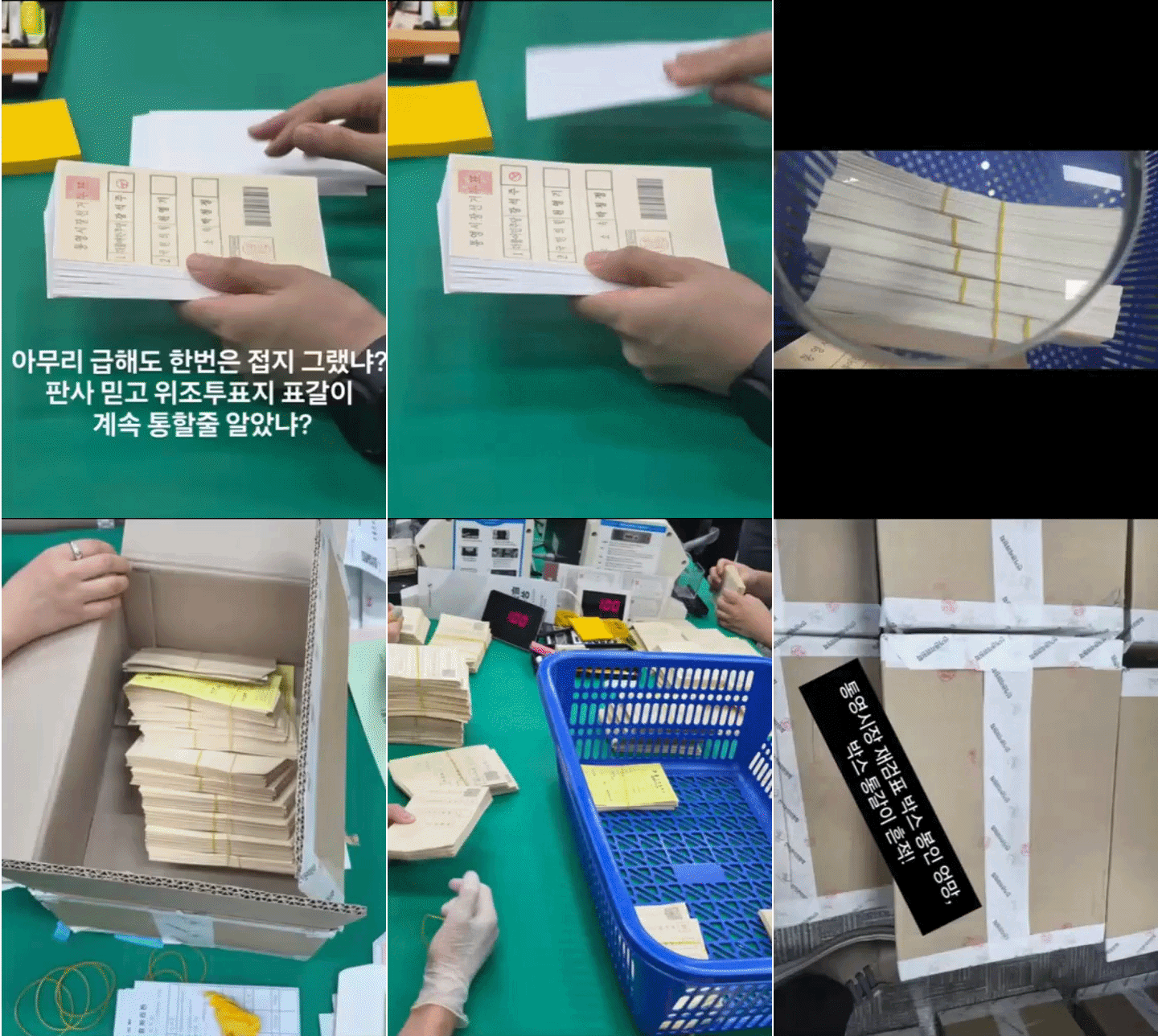 “Ignoring crisp ballots and damaged seals”… Tongyeong mayoral recount concludes with ‘no change in outcome,’ leaving suspicions and public outrage behind
Suspected counterfeit ballots discovered in Tongyeong [GIF from social media of Representative Hwang Kyo-ahn / Attorney Park Joo-hyun]During a recount of the Tongyeong mayoral election in South Gyeong
“Ignoring crisp ballots and damaged seals”… Tongyeong mayoral recount concludes with ‘no change in outcome,’ leaving suspicions and public outrage behind
Suspected counterfeit ballots discovered in Tongyeong [GIF from social media of Representative Hwang Kyo-ahn / Attorney Park Joo-hyun]During a recount of the Tongyeong mayoral election in South Gyeong
 President Yoon, regarding the first-instance ruling on the Public Official Election Act: “An excessive political verdict that distorts the facts… We will appeal immediately.”
The first-instance sentencing hearing for President Yoon Suk Yeol regarding violations of the Public Official Election Act is being broadcast live at Seoul Station on the 27th. [Photo=Yonhap News]Pres
President Yoon, regarding the first-instance ruling on the Public Official Election Act: “An excessive political verdict that distorts the facts… We will appeal immediately.”
The first-instance sentencing hearing for President Yoon Suk Yeol regarding violations of the Public Official Election Act is being broadcast live at Seoul Station on the 27th. [Photo=Yonhap News]Pres
 WSJ: "SK Hynix ADR Premium Is a Sign of AI Trading Overheat"
Advertisement for SK Hynix ADR listing in New York's Times Square [Reuters=Yonhap News file photo]The Wall Street Journal (WSJ) has pointed out that the price of SK Hynix’s American Depositary Recei
WSJ: "SK Hynix ADR Premium Is a Sign of AI Trading Overheat"
Advertisement for SK Hynix ADR listing in New York's Times Square [Reuters=Yonhap News file photo]The Wall Street Journal (WSJ) has pointed out that the price of SK Hynix’s American Depositary Recei
 'Godfather of Japanese Mystery Novels' Keigo Higashino Passes Away After Battle with Cancer at 68
Famous Japanese mystery novelist Keigo Higashino [AFP=Yonhap News]It has been belatedly reported that Keigo Higashino, the "godfather of Japanese mystery novels" and author of bestsellers such as "The
'Godfather of Japanese Mystery Novels' Keigo Higashino Passes Away After Battle with Cancer at 68
Famous Japanese mystery novelist Keigo Higashino [AFP=Yonhap News]It has been belatedly reported that Keigo Higashino, the "godfather of Japanese mystery novels" and author of bestsellers such as "The
 [Park Pil-kyu Security Column] To the Ignorant Trying to Clothe a Beast in Sheep's Clothing
Rep. Kim Byung-joo of the Democratic Party of Korea [Photo=Yonhap News]“The Air Force Academy doesn't teach you how to fly a plane!” “The Army, Navy, and Air Force academies are exactly the
[Park Pil-kyu Security Column] To the Ignorant Trying to Clothe a Beast in Sheep's Clothing
Rep. Kim Byung-joo of the Democratic Party of Korea [Photo=Yonhap News]“The Air Force Academy doesn't teach you how to fly a plane!” “The Army, Navy, and Air Force academies are exactly the
 [Issue Diagnosis] Two Effects of the Election Petition Review
 [Photo] Evidence of Election Fraud Flooding U.S. Media… Trump Had 2.7 Million Votes Stolen
 [Video] U.S. Semiquincentennial Air Show... 'Art in the Sky' streaks across New York
 [Editorial Cartoon] A Draconian Law That Undermines Freedom of Expression

 List
List