부정선거와 관련해 가장 큰 우려를 낳고 있는 것은 ‘외국인 원정 투표’ 문제다. ‘원정 투표’란 대한민국 영주권을 취득해 투표권을 가진 외국인이 실제로는 한국에 살지 않고 본국 등 외국에 체류하다가 지방선거 시기에만 잠시 입국해 표를 던지고 다시 출국하는 행태를 말한다.
 During a plenary meeting of the Special Committee on Political Reform at the National Assembly on the 26th, Kim Eun-hye, a lawmaker from the People Power Party, argued regarding absentee voting by foreigners, stating, "It is an act that shakes the foundation of local autonomy and resident autonomy and undermines its essence for individuals who do not actually reside to exercise their voting rights." [Photo=Yonhap News]
The issue of 'absentee voting by foreigners' is becoming a controversy ahead of the June local elections.
On the 26th, during the attendance of Heo Cheol-hoon, Secretary-General of the National Election Commission, at the National Assembly's Special Committee on Political Reform (Special Committee) to receive questions from lawmakers, the issue of 'absentee voting by foreigners' was brought to the forefront.
Kim Eun-hye, a lawmaker from the People Power Party (affiliated with the National Assembly's Land, Infrastructure and Transport Committee and Steering Committee), sharply questioned the management status of foreign voting rights ahead of the June local elections, urging for stricter residency requirements and the introduction of the principle of reciprocity.
In response, Secretary-General Heo appeared flustered, neither confirming nor denying the claims and stammering his words.
Over 140,000 Foreigners Eligible to Vote, 81% of Whom are Chinese
It is a well-known fact that the National Election Commission grants voting rights to foreigners residing in Korea. The problem is that there are as many as 140,000 foreigners eligible to vote in local elections, and over 81% of them are Chinese.
As of March 2025, it has been reported that the number of foreigners eligible to vote in our local elections has exceeded 140,000. This is an approximately 19-fold increase compared to 2006, when the foreign voting rights system was first introduced (around 6,700 people).
Furthermore, the number of eligible foreign voters, which was approximately 127,000 during the June 2022 local elections, has increased by over 13,000, showing a continuous upward trend.
According to the Public Official Election Act, foreigners aged 18 and over who have held Korean permanent residency (F-5 visa) for more than three years are granted voting rights in local elections for positions such as provincial governors, mayors of cities and districts, and provincial council members.
Even without Korean nationality, those who have obtained permanent residency status and have passed a certain period can participate in elections for heads of basic and metropolitan local governments and local council members.
140,000 People... A 'Casting Vote' in Close Contests
While the 140,000 foreign voters represent a low ratio of about 0.3% of the total electorate, they can act as a crucial variable in determining the outcome in specific regions or close contests.
This is because voter turnout in local elections is lower than in presidential or general elections, and the outcome of basic-level elections is often decided by a small margin of votes. Therefore, while 140,000 may seem like a small number in terms of the overall percentage, it is a sufficient scale to overturn election results in closely contested areas.
Foreign voters are particularly concentrated in areas with a high concentration of foreigners, such as Ansan and Suwon in Gyeonggi Province, and Yeongdeungpo and Guro in Seoul. In these areas, where the difference in votes for basic councilor or district mayor elections can be hundreds to thousands, the voting intentions of foreigners have a significant impact on the results.
Most importantly, the overwhelming proportion of Chinese nationals among eligible foreign voters, approximately 81%, is a cause for great concern, as it raises the possibility of Chinese policies and public opinion being projected onto domestic local politics.
Chinese Exceptionally Treated, Ignoring the Principle of Reciprocity
In preparation for the 9th National Simultaneous Local Elections in June, discussions are underway in political circles to re-examine the foreign voting rights system, including strengthening residency requirements and introducing the principle of reciprocity.
The principle of reciprocity means granting voting rights only if the other country also grants voting rights to our citizens, a seemingly common-sense principle that is not being followed in Korea.
Currently, Korea grants voting rights to foreigners who have obtained permanent residency for more than three years, but Korean citizens residing in countries like China do not receive voting rights.
Consequently, discussions to amend the Public Official Election Act based on reciprocity, with the sentiment of "let's give as much as our citizens receive from the other country," are continuously being raised in political circles, and lawmaker Kim Eun-hye raised this issue at the Special Committee on the 26th.
The government and the ruling party, the Democratic Party of Korea, argue that granting local election rights to foreigners is a democratic inclusion that recognizes the rights of residents who pay taxes as members of the local community and helps their social integration and settlement. However, public opinion suggests that expecting only Korea to be inclusive of the other party is an act of disregarding its citizens.
Public sentiment in favor of applying the principle of reciprocity to foreign voting rights is very strong and has been strengthening over time.
A survey conducted by Seoul National University's Institute for Future Strategy and Korea Research as of January 2026 found that 69% of respondents agreed with the principle of reciprocity, stating, "Foreigners from countries that do not grant voting rights to our citizens should have their voting rights restricted."
High approval rates exceeding the majority were seen not only among supporters of the People Power Party (80%) but also among supporters of the Democratic Party of Korea (60%) and the Jo Guk Innovation Party (73%). This indicates that beyond the ideological divide between the right and the left, the Korean public perceives this issue as a matter of 'fairness' and 'sovereignty protection'.
Furthermore, 57.6% of respondents expressed the opinion that the current system, which grants voting rights solely based on permanent residency, should be changed to grant voting rights only to Korean citizens (nationals), indicating a growing negative perception of the current system.
In particular, concerns are growing that the concentration of voters from specific nationalities, such as China, could lead to distortions in public opinion. Based on this public sentiment, the People Power Party is strongly pushing for amendments to the Public Official Election Act to extend the residency period after obtaining permanent residency from 3 years to 5-10 years, or to explicitly enshrine the principle of reciprocity.
The Biggest Issue is 'Absentee Voting by Foreigners'
The 'absentee voting by foreigners' issue is causing the greatest concern regarding election irregularities. 'Absentee voting' refers to the practice where foreigners who have obtained permanent residency in Korea and are thus eligible to vote do not actually live in Korea, but instead stay in their home countries or other foreign countries, temporarily enter Korea only during the local election period to cast their votes, and then leave again.
Under the current Public Official Election Act, the right to vote in local elections for foreigners is granted upon fulfillment of the condition of 'three years after obtaining permanent residency.' There is no provision for a 'residency obligation' to verify whether they are paying taxes in Korea and actually living in the region as members of the local community.
The essence of local elections is the participation of residents who live, pay taxes, and are involved in the region, based on their interest in local issues. However, the current system, lacking a residency obligation, is pointed out to undermine this essence.
In particular, in areas with a high concentration of foreign voters such as Ansan, Siheung, and Yeongdeungpo in Seoul, the votes of 'absentee voters' could lead to results different from the local sentiment, causing controversy in terms of election fairness.
Above all, concerns are growing that 'absentee voting' could allow foreigners who do not actually reside in Korea and have no connection to the local community to influence election results due to specific political purposes or external interference, thereby linking it to suspicions of election fraud.
Although voting rights are maintained for three years after obtaining permanent residency regardless of actual residence in Korea, the core of the suspicion lies in the fact that relevant agencies, including the National Election Commission, cannot accurately reflect their actual places of residence or entry/exit status in real-time on the voter rolls.
The 'Integrated Voter Register' Must Be Disclosed to Clarify Suspicions
The notion that 'absentee voting' is occurring, where voters who do not actually reside in the region flock into the country on election day to vote for specific candidates, is fundamentally illogical and a disgrace to the nation.
Furthermore, it is an issue that cannot be free from suspicions that 'absentee voters,' who are systematically managed and mobilized from behind by certain political parties or countries, are being used for election fraud.
To ensure transparency in elections and to verify suspicions of election fraud such as duplicate voting or absentee voting by foreign voters, there is a growing public demand for the disclosure of the 'Integrated Voter Register'.
The argument is that the loopholes in the system that allow for absentee voting by foreigners or potential manipulation of the register must be blocked at the source to enhance the credibility of election results.
The Integrated Voter Register is a compilation of all voter information nationwide and is a key document for preventing duplicate voting during early voting. Its disclosure is essential to verify whether the actual residency status or entry/exit records of foreign voters are accurately reflected in this register.
The National Election Commission has maintained its position that disclosing the Integrated Voter Register to the public is legally difficult due to the sensitive personal information it contains.
However, the majority of the public holds the view that "the fairness of elections, which are national events, should take precedence over the protection of personal information." In particular, there are significant concerns that for foreign voters, failure to verify their actual residency through the disclosure of the register could become a pathway for election fraud.
In addition to the public sentiment that "transparent disclosure and verification of the Integrated Voter Register are essential to enhance election reliability," there is also a growing demand for civil society and expert groups to directly verify that the server managing the Integrated Voter Register and its security systems have not been manipulated by external forces such as hacking, not just the disclosure of the register itself.
By Reporter Park Hye-soo

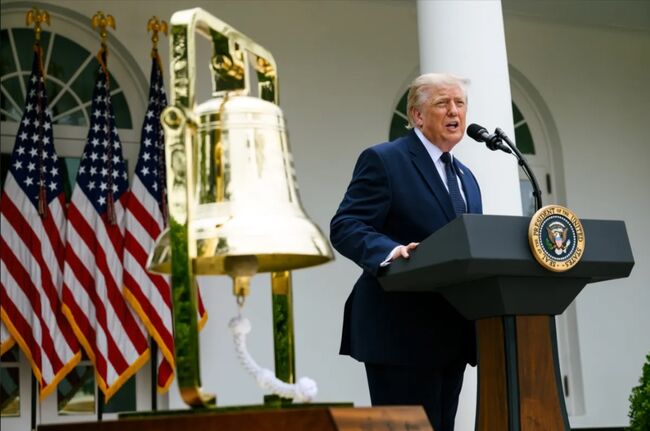 Trump pressures for rate cut again ahead of FOMC... "Should be the lowest in the world"
U.S. President Donald Trump. [Photo = The White House] U.S. President Donald Trump once again pressured the Federal Reserve, the U.S. central bank, to lower interest rates on the 27th (local time
Trump pressures for rate cut again ahead of FOMC... "Should be the lowest in the world"
U.S. President Donald Trump. [Photo = The White House] U.S. President Donald Trump once again pressured the Federal Reserve, the U.S. central bank, to lower interest rates on the 27th (local time
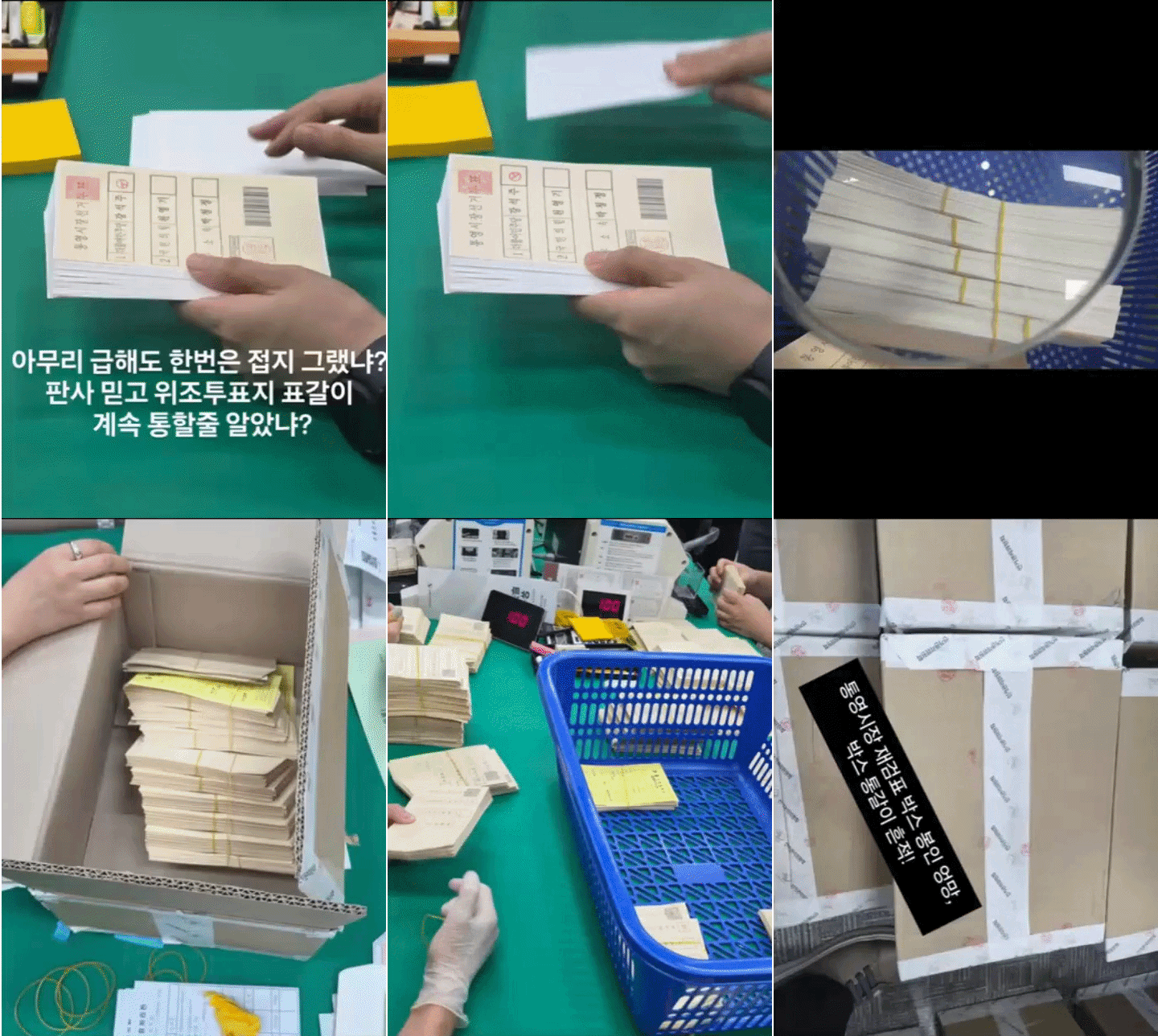 “Ignoring crisp ballots and damaged seals”… Tongyeong mayoral recount concludes with ‘no change in outcome,’ leaving suspicions and public outrage behind
Suspected counterfeit ballots discovered in Tongyeong [GIF from social media of Representative Hwang Kyo-ahn / Attorney Park Joo-hyun]During a recount of the Tongyeong mayoral election in South Gyeong
“Ignoring crisp ballots and damaged seals”… Tongyeong mayoral recount concludes with ‘no change in outcome,’ leaving suspicions and public outrage behind
Suspected counterfeit ballots discovered in Tongyeong [GIF from social media of Representative Hwang Kyo-ahn / Attorney Park Joo-hyun]During a recount of the Tongyeong mayoral election in South Gyeong
 President Yoon, regarding the first-instance ruling on the Public Official Election Act: “An excessive political verdict that distorts the facts… We will appeal immediately.”
The first-instance sentencing hearing for President Yoon Suk Yeol regarding violations of the Public Official Election Act is being broadcast live at Seoul Station on the 27th. [Photo=Yonhap News]Pres
President Yoon, regarding the first-instance ruling on the Public Official Election Act: “An excessive political verdict that distorts the facts… We will appeal immediately.”
The first-instance sentencing hearing for President Yoon Suk Yeol regarding violations of the Public Official Election Act is being broadcast live at Seoul Station on the 27th. [Photo=Yonhap News]Pres
 WSJ: "SK Hynix ADR Premium Is a Sign of AI Trading Overheat"
Advertisement for SK Hynix ADR listing in New York's Times Square [Reuters=Yonhap News file photo]The Wall Street Journal (WSJ) has pointed out that the price of SK Hynix’s American Depositary Recei
WSJ: "SK Hynix ADR Premium Is a Sign of AI Trading Overheat"
Advertisement for SK Hynix ADR listing in New York's Times Square [Reuters=Yonhap News file photo]The Wall Street Journal (WSJ) has pointed out that the price of SK Hynix’s American Depositary Recei
 'Godfather of Japanese Mystery Novels' Keigo Higashino Passes Away After Battle with Cancer at 68
Famous Japanese mystery novelist Keigo Higashino [AFP=Yonhap News]It has been belatedly reported that Keigo Higashino, the "godfather of Japanese mystery novels" and author of bestsellers such as "The
'Godfather of Japanese Mystery Novels' Keigo Higashino Passes Away After Battle with Cancer at 68
Famous Japanese mystery novelist Keigo Higashino [AFP=Yonhap News]It has been belatedly reported that Keigo Higashino, the "godfather of Japanese mystery novels" and author of bestsellers such as "The
 [Park Pil-kyu Security Column] To the Ignorant Trying to Clothe a Beast in Sheep's Clothing
Rep. Kim Byung-joo of the Democratic Party of Korea [Photo=Yonhap News]“The Air Force Academy doesn't teach you how to fly a plane!” “The Army, Navy, and Air Force academies are exactly the
[Park Pil-kyu Security Column] To the Ignorant Trying to Clothe a Beast in Sheep's Clothing
Rep. Kim Byung-joo of the Democratic Party of Korea [Photo=Yonhap News]“The Air Force Academy doesn't teach you how to fly a plane!” “The Army, Navy, and Air Force academies are exactly the
 [Issue Diagnosis] Two Effects of the Election Petition Review
 [Photo] Evidence of Election Fraud Flooding U.S. Media… Trump Had 2.7 Million Votes Stolen
 [Video] U.S. Semiquincentennial Air Show... 'Art in the Sky' streaks across New York
 [Editorial Cartoon] A Draconian Law That Undermines Freedom of Expression

 List
List