Exports and imports containers piled up at Busan Port's North Port [Yonhap News]
While the government is making all-out efforts to prevent the United States from increasing tariffs, it is facing multi-faceted pressure in trade negotiations with the U.S., including demands for a "progressed stance" in non-tariff barrier negotiations.
The government is explaining through various channels that it is faithfully implementing the Korea-U.S. tariff agreement reached last year. However, Japan is accelerating its investments in the U.S., and issues such as the so-called "Coupang incident" and the "Online Platform Act" are slowing down negotiation progress.
As the U.S. is reportedly pursuing administrative procedures to officially publish the tariff increase on South Korea, domestic companies, including Hyundai Motor, are concerned that if tariffs on South Korea are increased, they will be at a disadvantage in exports compared to competitors such as Japan and the European Union (EU).
◇ Fierce 'U.S. Pressure' in Non-Tariff Barrier Negotiations, Including Agricultural Products and Online Platform Law
According to trade authorities and others on the 8th, the Korea-U.S. Joint Committee for the Korea-U.S. Free Trade Agreement (FTA) was originally scheduled to be held in December last year to discuss non-tariff barrier issues, but the meeting date has not yet been confirmed.
In last year's tariff and U.S. investment negotiations, South Korea and the U.S. agreed that the U.S. would reduce tariffs on South Korea from 25% to 15%, in return for South Korea investing $350 billion in the U.S., and that non-tariff barrier issues would be resolved through the Korea-U.S. FTA Joint Committee.
Since then, the two countries have begun working-level consultations to discuss non-tariff barrier issues, but the consultations have been prolonged, delaying the convening of the Joint Committee for over a month without a confirmed schedule.
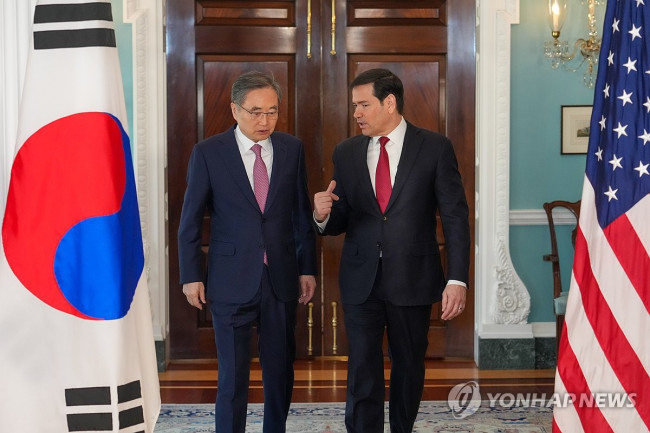 Foreign Minister Cho Hyun and U.S. Secretary of State Marco Rubio in conversation [Yonhap News]
In particular, Foreign Minister Cho Hyun, during a recent visit to the U.S., told reporters that Jamie Gorelick, Deputy U.S. Trade Representative, "emphasized the importance of South Korea quickly showing a progressed stance not only on strategic investments (to the U.S.) but also on issues related to non-tariff barriers," suggesting that South Korea is facing considerable pressure to make concessions in non-tariff barrier negotiations.
In non-tariff barrier negotiations, South Korea and the U.S. are engaged in a tug-of-war over issues such as trade of food and agricultural products, online platform regulations, and intellectual property rights.
The joint factsheet announced by both countries last year states, "South Korea cooperates with the United States to discuss non-tariff barriers affecting trade in food and agricultural products."
In this regard, the government maintains its position that "there will be no market opening," although adjustments in areas such as "quarantine procedures and risk assessments" may be possible. However, in diplomatic circles, there is speculation that the U.S. is pressuring South Korea to open its food and agricultural product markets based on the joint factsheet.
Furthermore, in the joint explanatory materials related to tariff negotiations, South Korea and the U.S. agreed to cooperate in streamlining the regulatory approval process for agricultural and biotechnology products, resolving delays in processing U.S. applications, establishing a 'U.S. Desk' dedicated to requests related to U.S. horticultural products, and maintaining market access for U.S. meat and cheese. It appears that the U.S. is pressuring South Korea for progressed measures in these areas as well.
In addition, the Korea-U.S. tariff negotiation factsheet includes provisions to ensure that U.S. companies are not discriminated against or face unnecessary barriers in laws and policies related to digital services, including network usage fees and online platform regulations. Concerns about South Korea's legislative movements regarding the Online Platform Fair Play Act (Onplbeop) have already emerged within the U.S.
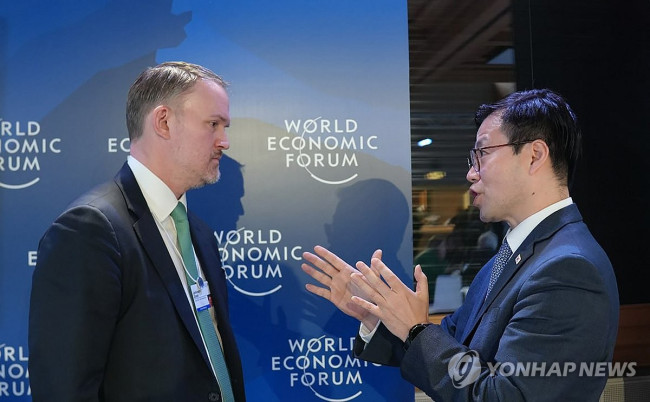 Yeo Han-koo, head of Korea's Trade Negotiation Headquarters, and U.S. Trade Representative [Yonhap News]
Beyond these issues, the two countries are also negotiating on pending matters in areas such as intellectual property rights, labor, environmental regulations, fisheries subsidies, and strengthening supply chain cooperation.
As such, non-tariff barrier negotiations involve more issues than the tariff negotiations last year, when a "big deal" was possible on major issues like tariffs and U.S. investment. In addition, it requires technical agreement on detailed aspects for each sector, making it difficult for trade authorities to coordinate and navigate under the U.S.'s multi-faceted pressure.
A trade authority official stated, "There are differing perceptions on the issues between the two countries, and it seems to take a little more time to adjust and finalize them. We are continuously consulting to reach an agreement at the working level."
◇ Business Community "Significant Impact if 25% Tariffs are Imposed"... Government and National Assembly Accelerate 'U.S. Investment'
Since U.S. President Donald Trump's remarks about increasing tariffs on South Korea last month, the South Korean government has mobilized its diplomatic, trade, and security channels to prevent the U.S. from increasing tariffs. However, it has not received any response from the U.S. side, such as a retraction or deferral of the tariff increase policy on South Korea.
The U.S. is reportedly proceeding with administrative procedures, including the publication in the Federal Register, to increase tariffs on South Korea from 15% to 25%, heightening tension in the industry.
The automotive industry, a major export sector to the U.S., has experienced losses, with Hyundai Motor and Kia bearing a total of 4.6 trillion won in costs in the second and third quarters of last year alone due to the U.S.'s 25% automobile tariff. If tariffs are increased again, they are concerned that they will face higher tariffs than Japan and the EU, dealing a significant blow to their export and profit structures.
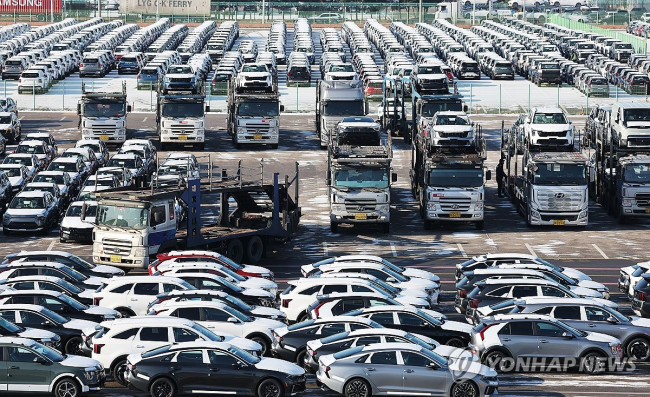 Cars awaiting export at Pyeongtaek Port, Gyeonggi Province [Yonhap News]
Previously, President Trump mentioned that the scope of the tariff increase would extend not only to South Korean automobiles but also to items such as lumber and pharmaceuticals, as well as other mutual tariffs, and stated he would raise tariffs back to 25%, the level before the trade agreement. This indicates that the entire domestic export industry could be affected by the tariff increase.
Although the National Assembly is responding rapidly to the legislative issue regarding the Special Act on U.S. Investment, which President Trump cited as the basis for the tariff increase, by agreeing to form a special committee for the passage of the special act, companies are anxious due to the uncertainty of when the U.S. administrative action will occur.
The six major economic organizations issued a joint statement on the 5th, stating, "If the U.S.'s announced 25% tariffs materialize, it could cause enormous damage to U.S. exports across industries, including automobiles and biotechnology," and urged swift action from the government and the National Assembly.
The government is concentrating its diplomatic efforts to secure a retraction of the tariff increase measure or at least a one- to two-month grace period by explaining the legislative situation in the National Assembly to the U.S. side.
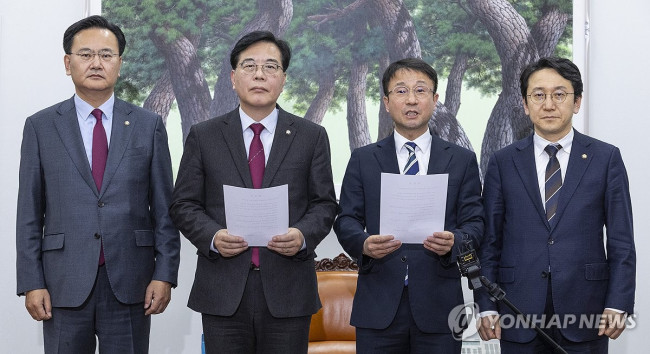 Ruling and opposition parties agree to form a special committee for the Special Act on U.S. Investment [Yonhap News]
Once the Special Act on U.S. Investment is passed by the National Assembly, working-level consultation channels for promoting U.S. investment between South Korea and the U.S. are being activated to facilitate the swift selection and implementation of specific investment projects.
A trade authority official said, "Regarding U.S. investment projects, various discussions are already underway through face-to-face and video contacts at the ministerial level. While specific details cannot be disclosed, we are also discussing the investment areas that each side envisions."

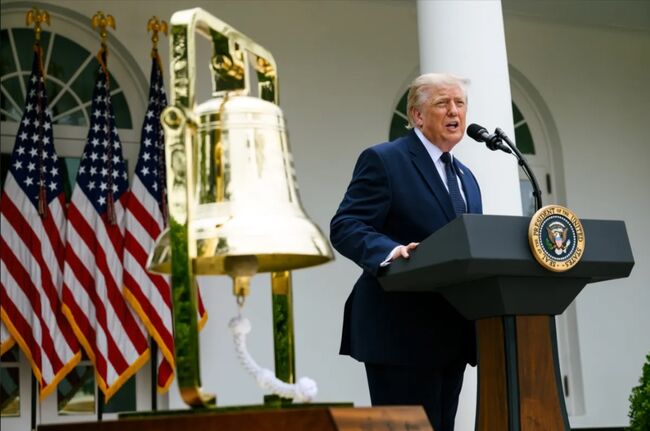 Trump pressures for rate cut again ahead of FOMC... "Should be the lowest in the world"
U.S. President Donald Trump. [Photo = The White House] U.S. President Donald Trump once again pressured the Federal Reserve, the U.S. central bank, to lower interest rates on the 27th (local time
Trump pressures for rate cut again ahead of FOMC... "Should be the lowest in the world"
U.S. President Donald Trump. [Photo = The White House] U.S. President Donald Trump once again pressured the Federal Reserve, the U.S. central bank, to lower interest rates on the 27th (local time
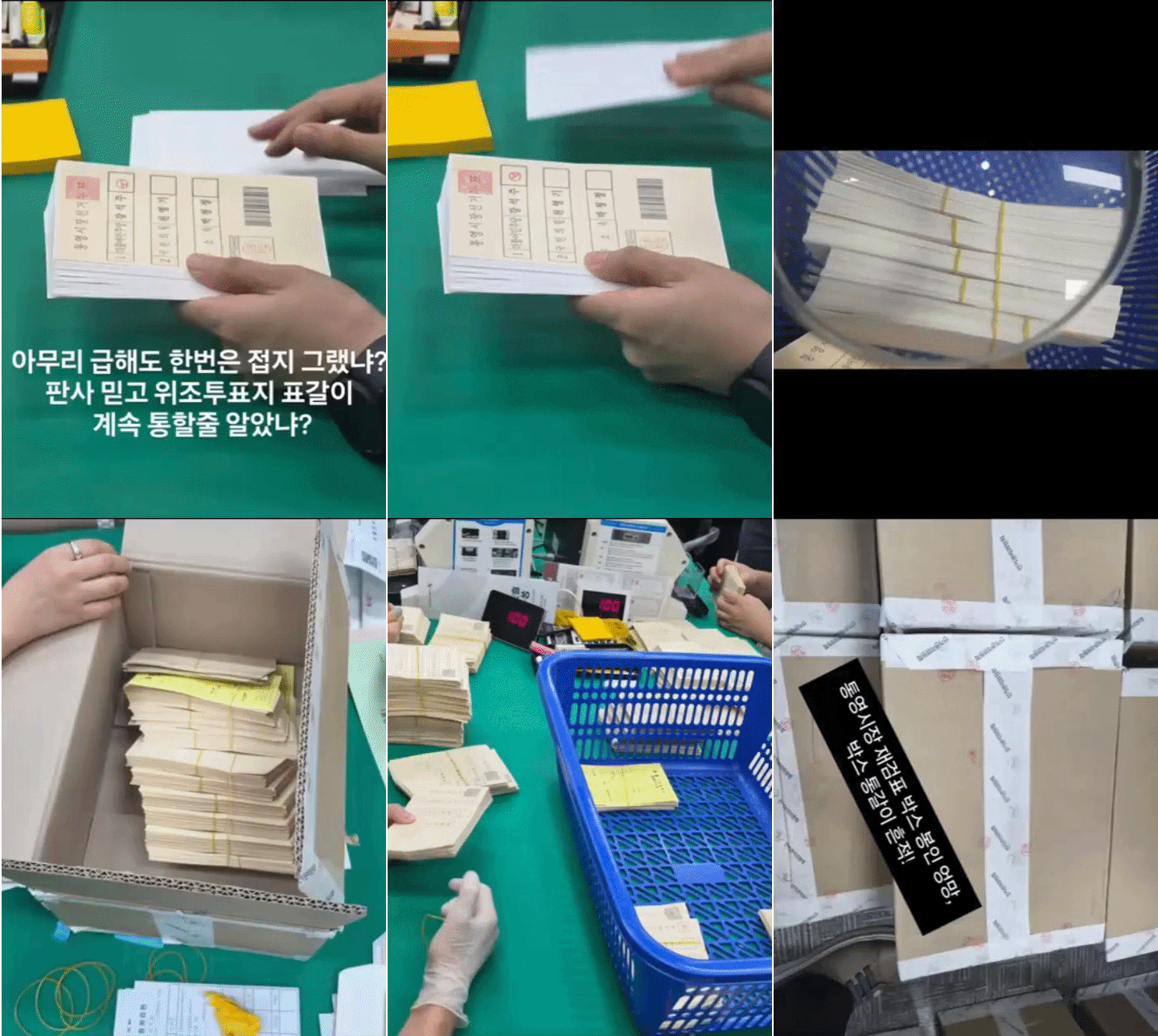 “Ignoring crisp ballots and damaged seals”… Tongyeong mayoral recount concludes with ‘no change in outcome,’ leaving suspicions and public outrage behind
Suspected counterfeit ballots discovered in Tongyeong [GIF from social media of Representative Hwang Kyo-ahn / Attorney Park Joo-hyun]During a recount of the Tongyeong mayoral election in South Gyeong
“Ignoring crisp ballots and damaged seals”… Tongyeong mayoral recount concludes with ‘no change in outcome,’ leaving suspicions and public outrage behind
Suspected counterfeit ballots discovered in Tongyeong [GIF from social media of Representative Hwang Kyo-ahn / Attorney Park Joo-hyun]During a recount of the Tongyeong mayoral election in South Gyeong
 President Yoon, regarding the first-instance ruling on the Public Official Election Act: “An excessive political verdict that distorts the facts… We will appeal immediately.”
The first-instance sentencing hearing for President Yoon Suk Yeol regarding violations of the Public Official Election Act is being broadcast live at Seoul Station on the 27th. [Photo=Yonhap News]Pres
President Yoon, regarding the first-instance ruling on the Public Official Election Act: “An excessive political verdict that distorts the facts… We will appeal immediately.”
The first-instance sentencing hearing for President Yoon Suk Yeol regarding violations of the Public Official Election Act is being broadcast live at Seoul Station on the 27th. [Photo=Yonhap News]Pres
 WSJ: "SK Hynix ADR Premium Is a Sign of AI Trading Overheat"
Advertisement for SK Hynix ADR listing in New York's Times Square [Reuters=Yonhap News file photo]The Wall Street Journal (WSJ) has pointed out that the price of SK Hynix’s American Depositary Recei
WSJ: "SK Hynix ADR Premium Is a Sign of AI Trading Overheat"
Advertisement for SK Hynix ADR listing in New York's Times Square [Reuters=Yonhap News file photo]The Wall Street Journal (WSJ) has pointed out that the price of SK Hynix’s American Depositary Recei
 'Godfather of Japanese Mystery Novels' Keigo Higashino Passes Away After Battle with Cancer at 68
Famous Japanese mystery novelist Keigo Higashino [AFP=Yonhap News]It has been belatedly reported that Keigo Higashino, the "godfather of Japanese mystery novels" and author of bestsellers such as "The
'Godfather of Japanese Mystery Novels' Keigo Higashino Passes Away After Battle with Cancer at 68
Famous Japanese mystery novelist Keigo Higashino [AFP=Yonhap News]It has been belatedly reported that Keigo Higashino, the "godfather of Japanese mystery novels" and author of bestsellers such as "The
 [Park Pil-kyu Security Column] To the Ignorant Trying to Clothe a Beast in Sheep's Clothing
Rep. Kim Byung-joo of the Democratic Party of Korea [Photo=Yonhap News]“The Air Force Academy doesn't teach you how to fly a plane!” “The Army, Navy, and Air Force academies are exactly the
[Park Pil-kyu Security Column] To the Ignorant Trying to Clothe a Beast in Sheep's Clothing
Rep. Kim Byung-joo of the Democratic Party of Korea [Photo=Yonhap News]“The Air Force Academy doesn't teach you how to fly a plane!” “The Army, Navy, and Air Force academies are exactly the
 [Issue Diagnosis] Two Effects of the Election Petition Review
 [Photo] Evidence of Election Fraud Flooding U.S. Media… Trump Had 2.7 Million Votes Stolen
 [Video] U.S. Semiquincentennial Air Show... 'Art in the Sky' streaks across New York
 [Editorial Cartoon] A Draconian Law That Undermines Freedom of Expression

 List
List