 Cho Kuk, leader of the Rebuilding Korea Party, is stating his position on the Democratic Party of Korea's proposal to form a preparatory committee for alliance and integration at a supreme council meeting held at the National Assembly. 2026.2.11 [Photo=Yonhap News]
As the Democratic Party of Korea and the Rebuilding Korea Party reach an agreement on forming a "Preparatory Committee for Alliance and Integration," the political landscape is set to undergo a significant reshuffling ahead of the local elections.
While the two parties have temporarily halted discussions on a merger before the elections, they have publicly announced their intention to pursue alliance and integration in stages. The political sphere interprets this not merely as the formation of a consultative body but as a signal that the timeline for political realignment, extending beyond the local elections, has begun.
Cho Kuk announced at an emergency press conference at the National Assembly on the 11th that he would accept the Democratic Party's proposal, stating that the scope of discussions regarding local election alliances and integration would be specified by the preparatory committee.
The Democratic Party, considering internal backlash, has also suspended merger talks before the elections but maintained a cooperative stance by deferring the integration discussions themselves until after the elections.
The political world views the three-stage scenario of "alliance → local elections → integration" as effectively revealed.
This development is also being assessed as more than just an election strategy, but as the starting point for a reshaping of the political landscape.
This is because if candidate unification or policy alliances materialize in the local elections, both parties can secure justification for integration talks based on the election results.
In particular, the Rebuilding Korea Party's emphasis on political reform agendas, such as the easing of criteria for parliamentary negotiation groups, is seen as a strategic move not just for candidate coordination but also with an eye toward future changes in party structure.
Conversely, the opposition bloc appears relatively quiet, showing no distinct movements toward alliance.
This has led to dual interpretations within the political sphere: both "lack of strategy" and "intentional observation."
Unlike presidential elections, local elections heavily rely on regional organizations and candidate competitiveness. Therefore, the analysis suggests that the opposition bloc has opted to observe the internal realignment within the ruling party and shifts in the political tide rather than rushing into nationwide alliance discussions.
Within the opposition bloc, the fact that the nomination structure and internal power dynamics have not yet been settled is also cited as a variable.
Considering the possibility of a realignment of party leadership after the local elections, it is likely that extensive alliances before the elections would have been judged as potentially exacerbating internal conflicts.
For this reason, many view the current silence not as a lack of strategy but as closer to "speed regulation."
Ultimately, these local elections are increasingly likely to serve as a testbed for gauging the direction of realignment for the entire political sphere, going beyond mere competition for regional power.
While the ruling party has publicly presented a roadmap for integration and is accelerating its pace, the opposition bloc appears to be weighing observation while concealing its calculations.
Prospects suggest that the balance of power in the political arena could be significantly shaken depending on how concrete the alliances become during the election process and whether they lead to actual integration discussions after the elections.

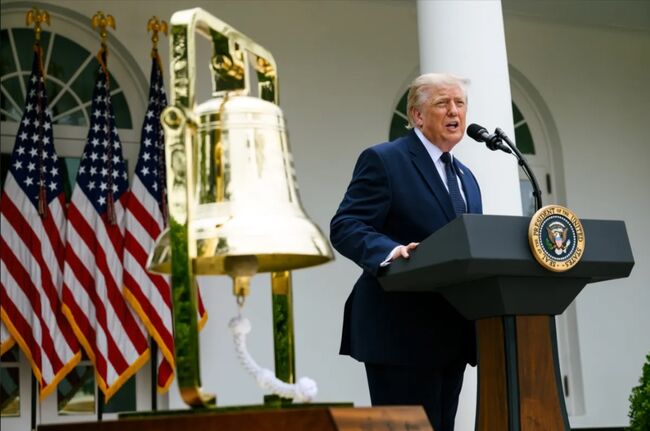 Trump pressures for rate cut again ahead of FOMC... "Should be the lowest in the world"
U.S. President Donald Trump. [Photo = The White House] U.S. President Donald Trump once again pressured the Federal Reserve, the U.S. central bank, to lower interest rates on the 27th (local time
Trump pressures for rate cut again ahead of FOMC... "Should be the lowest in the world"
U.S. President Donald Trump. [Photo = The White House] U.S. President Donald Trump once again pressured the Federal Reserve, the U.S. central bank, to lower interest rates on the 27th (local time
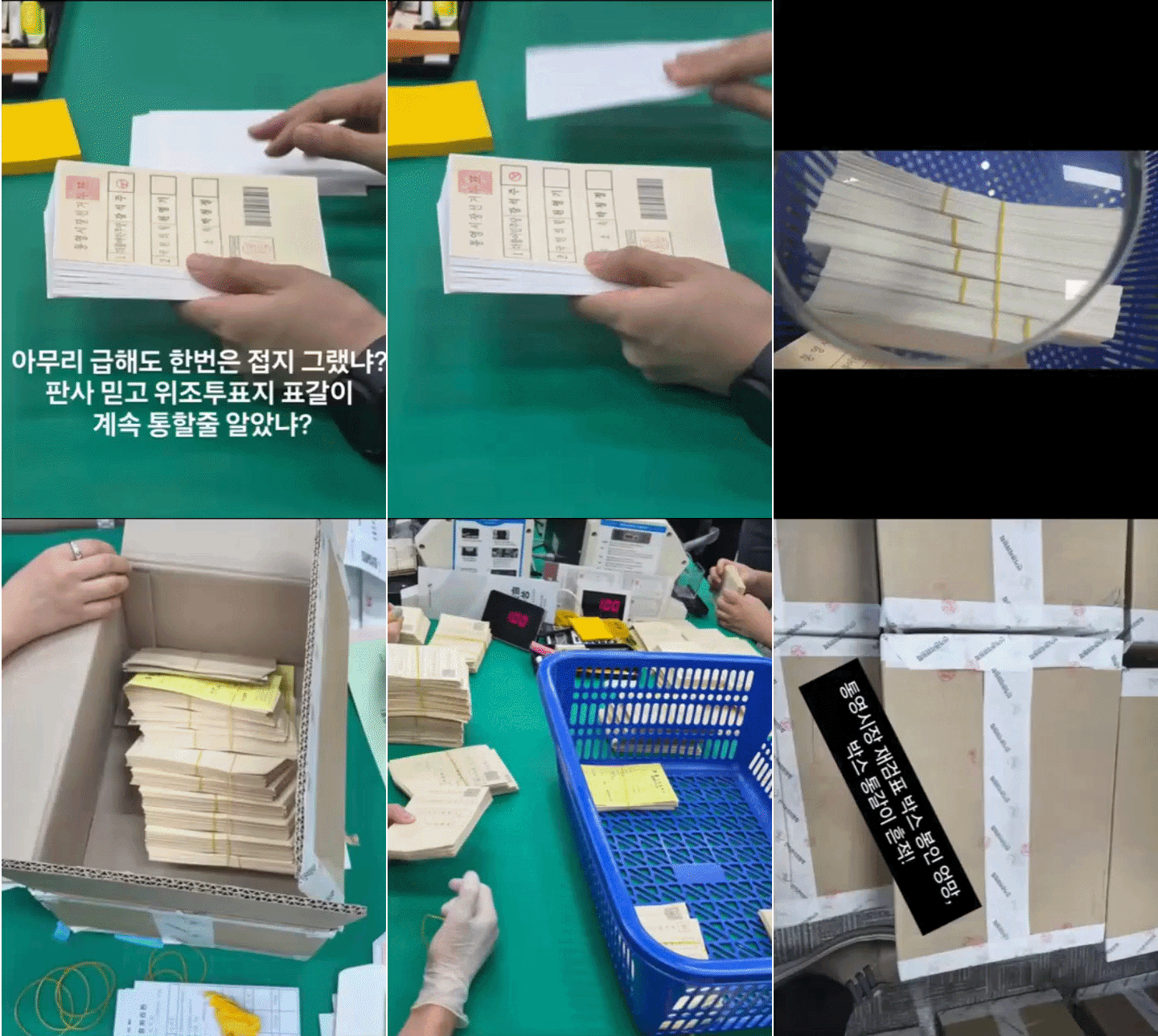 “Ignoring crisp ballots and damaged seals”… Tongyeong mayoral recount concludes with ‘no change in outcome,’ leaving suspicions and public outrage behind
Suspected counterfeit ballots discovered in Tongyeong [GIF from social media of Representative Hwang Kyo-ahn / Attorney Park Joo-hyun]During a recount of the Tongyeong mayoral election in South Gyeong
“Ignoring crisp ballots and damaged seals”… Tongyeong mayoral recount concludes with ‘no change in outcome,’ leaving suspicions and public outrage behind
Suspected counterfeit ballots discovered in Tongyeong [GIF from social media of Representative Hwang Kyo-ahn / Attorney Park Joo-hyun]During a recount of the Tongyeong mayoral election in South Gyeong
 President Yoon, regarding the first-instance ruling on the Public Official Election Act: “An excessive political verdict that distorts the facts… We will appeal immediately.”
The first-instance sentencing hearing for President Yoon Suk Yeol regarding violations of the Public Official Election Act is being broadcast live at Seoul Station on the 27th. [Photo=Yonhap News]Pres
President Yoon, regarding the first-instance ruling on the Public Official Election Act: “An excessive political verdict that distorts the facts… We will appeal immediately.”
The first-instance sentencing hearing for President Yoon Suk Yeol regarding violations of the Public Official Election Act is being broadcast live at Seoul Station on the 27th. [Photo=Yonhap News]Pres
 WSJ: "SK Hynix ADR Premium Is a Sign of AI Trading Overheat"
Advertisement for SK Hynix ADR listing in New York's Times Square [Reuters=Yonhap News file photo]The Wall Street Journal (WSJ) has pointed out that the price of SK Hynix’s American Depositary Recei
WSJ: "SK Hynix ADR Premium Is a Sign of AI Trading Overheat"
Advertisement for SK Hynix ADR listing in New York's Times Square [Reuters=Yonhap News file photo]The Wall Street Journal (WSJ) has pointed out that the price of SK Hynix’s American Depositary Recei
 'Godfather of Japanese Mystery Novels' Keigo Higashino Passes Away After Battle with Cancer at 68
Famous Japanese mystery novelist Keigo Higashino [AFP=Yonhap News]It has been belatedly reported that Keigo Higashino, the "godfather of Japanese mystery novels" and author of bestsellers such as "The
'Godfather of Japanese Mystery Novels' Keigo Higashino Passes Away After Battle with Cancer at 68
Famous Japanese mystery novelist Keigo Higashino [AFP=Yonhap News]It has been belatedly reported that Keigo Higashino, the "godfather of Japanese mystery novels" and author of bestsellers such as "The
 [Park Pil-kyu Security Column] To the Ignorant Trying to Clothe a Beast in Sheep's Clothing
Rep. Kim Byung-joo of the Democratic Party of Korea [Photo=Yonhap News]“The Air Force Academy doesn't teach you how to fly a plane!” “The Army, Navy, and Air Force academies are exactly the
[Park Pil-kyu Security Column] To the Ignorant Trying to Clothe a Beast in Sheep's Clothing
Rep. Kim Byung-joo of the Democratic Party of Korea [Photo=Yonhap News]“The Air Force Academy doesn't teach you how to fly a plane!” “The Army, Navy, and Air Force academies are exactly the
 [Issue Diagnosis] Two Effects of the Election Petition Review
 [Photo] Evidence of Election Fraud Flooding U.S. Media… Trump Had 2.7 Million Votes Stolen
 [Video] U.S. Semiquincentennial Air Show... 'Art in the Sky' streaks across New York
 [Editorial Cartoon] A Draconian Law That Undermines Freedom of Expression

 List
List









