Charles I
In her sentencing on the 19th, Judge Ji Gwi-yeon went to the lengths of summoning King Charles I of England from the Roman era to find evidence that a "president can be punished."
Placing a 21st-century president and a 17th-century monarch on the same pedestal? This is the first strategic error. Is the very act of comparing a president to a king not a pre-modern way of thinking?
Presidents are judged through elections
A king holds a lifelong position, but a president is judged by the people every five years. Since there is a definitive system of public judgment called an "election," how can the status of a president and a king be the same? A president governs, but does not reign.
On the other hand, a king reigns over his subjects, and the throne is hereditary. Once someone inherits it, they hold onto it until they die. Because it is incredibly difficult to force an incompetent leader from the throne, one often has to risk their life in a coup to replace them.
Without even going as far as Charles I, even in the Joseon Dynasty, there were examples like Gwanghaegun and Yeonsangun who were removed from power because they could not govern properly.
Of course, Judge Ji likely brought up the 17th-century English king to search for the crime of intimidating parliament. But was that even a proper parliament at the time?
Parliamentary democracy in the modern sense was born after the English Bill of Rights in 1689. Charles I (1600–1649) was a figure who wielded absolute power indiscriminately, claiming that the "divine right of kings" was heaven-sent, well before parliamentary democracy had taken root.
It was a different era. The people’s representatives sought to check the absolute superiority of the monarchy, while the king wanted to continue "acting like a king" as his ancestors had. In short, it was a period of power struggles.
Claiming that "the king is above the law," Charles I revived abolished taxes and engaged in abuses of power, such as providing various privileges to his close associates. Ultimately, a fight broke out between the Royalists and the Parliamentarians, and after Oliver Cromwell, the leader of the Parliamentarians, became the head of state, Charles I met his end on the guillotine in 1649.
Cromwell, who beheaded a king, was posthumously executed
After Charles I was executed, England was governed as a republic without a king, but it is not as if Cromwell governed well. He ignored the constitution, dissolved parliament, and reigned like a king, carrying out a strict military dictatorship for ten years. His title may have changed to "Lord Protector," but he was no different from a king.
Cromwell died of malaria in 1658, but as the monarchy was restored, his corpse was exhumed, beheaded, and his head was hung on a pole in a gruesome act of posthumous execution.
The British people, exhausted by Cromwell’s ruthless dictatorship, invited Charles II (the son of Charles I) back from exile, realizing the Restoration (Stuart Dynasty). He was followed by James II, who, being a Catholic, was deposed by his own daughter and her husband—both Protestants—and forced into exile in France.
After he left, Parliament adopted the Bill of Rights to limit royal power and laid the foundations for a parliamentary constitutional monarchy. This was to ensure that a king could never again wield power indiscriminately.
During the time of Charles I, before the Bill of Rights, parliament could not exercise proper power due to institutional inadequacies. Because the ousting of Charles I was achieved through a rebellion akin to treason, forcing it into the sentencing of President Yoon Suk Yeol is a stretch.
In the 17th century, when Charles I lived, only men who owned property (land) above a certain level could be voters. It is not an appropriate example for the 21st century, where all adult men and women exercise one vote each.
President Yoon Suk Yeol has already paid the price of impeachment for the failed martial law. Why go as far as to demand the death penalty, and what is this life sentence?
This life sentence is a pre-modern act of political retaliation that has deeply wounded the public. It has set a precedent that a deeper wound could one day be inflicted upon their own hearts. That is how history has unfolded.
Ji Gwi-yeon. It is a unique name. It was likely given with the hope that she would live a precious life, but her citation of Charles I and this ruling were shallow and hasty.
Reporter Lim Yo-hee

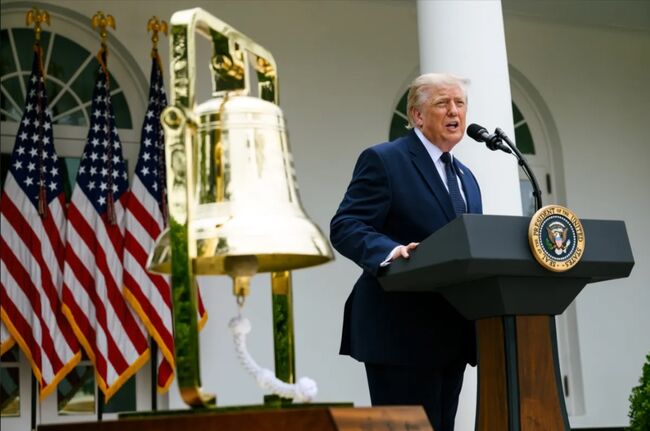 Trump pressures for rate cut again ahead of FOMC... "Should be the lowest in the world"
U.S. President Donald Trump. [Photo = The White House] U.S. President Donald Trump once again pressured the Federal Reserve, the U.S. central bank, to lower interest rates on the 27th (local time
Trump pressures for rate cut again ahead of FOMC... "Should be the lowest in the world"
U.S. President Donald Trump. [Photo = The White House] U.S. President Donald Trump once again pressured the Federal Reserve, the U.S. central bank, to lower interest rates on the 27th (local time
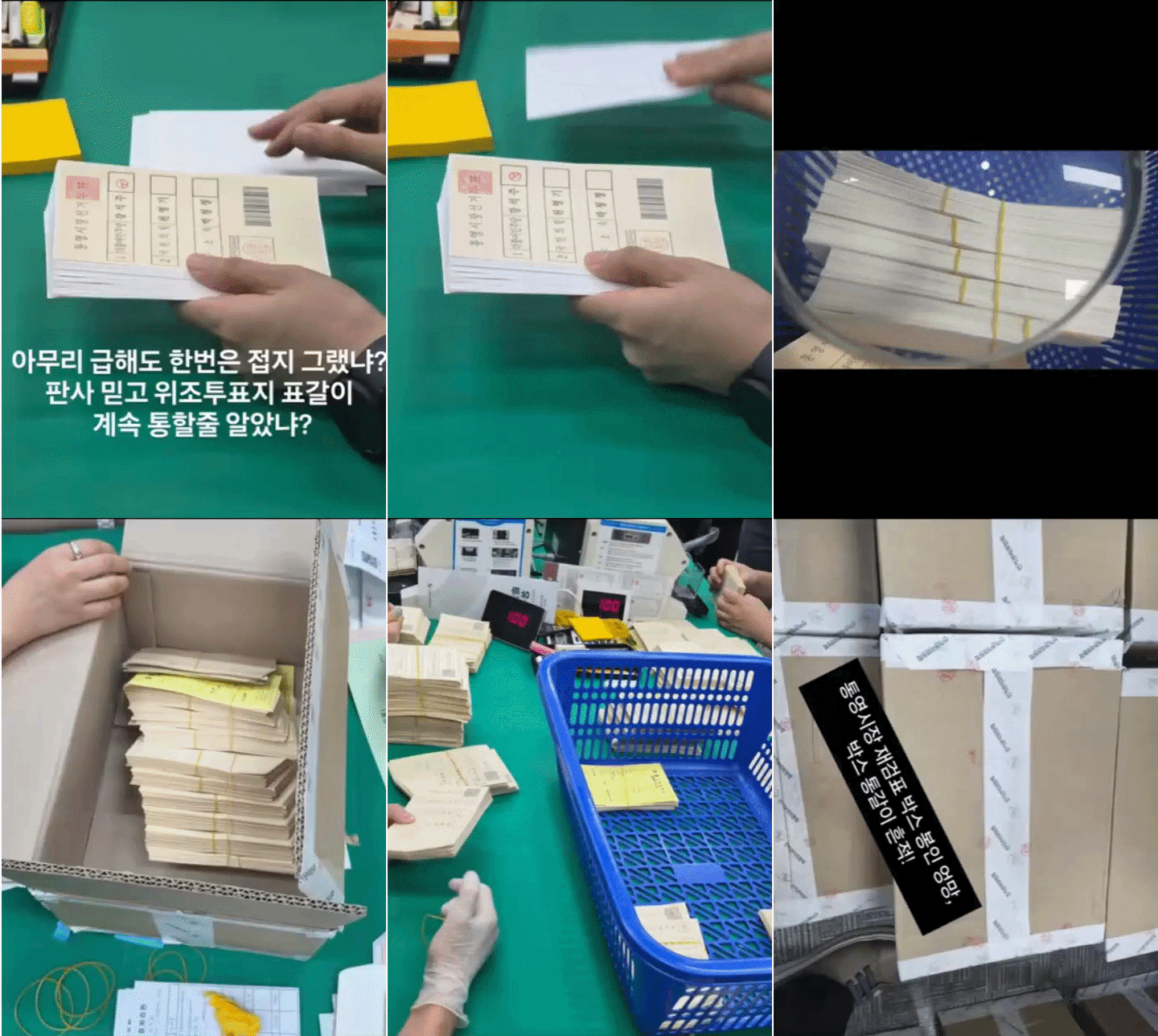 “Ignoring crisp ballots and damaged seals”… Tongyeong mayoral recount concludes with ‘no change in outcome,’ leaving suspicions and public outrage behind
Suspected counterfeit ballots discovered in Tongyeong [GIF from social media of Representative Hwang Kyo-ahn / Attorney Park Joo-hyun]During a recount of the Tongyeong mayoral election in South Gyeong
“Ignoring crisp ballots and damaged seals”… Tongyeong mayoral recount concludes with ‘no change in outcome,’ leaving suspicions and public outrage behind
Suspected counterfeit ballots discovered in Tongyeong [GIF from social media of Representative Hwang Kyo-ahn / Attorney Park Joo-hyun]During a recount of the Tongyeong mayoral election in South Gyeong
 President Yoon, regarding the first-instance ruling on the Public Official Election Act: “An excessive political verdict that distorts the facts… We will appeal immediately.”
The first-instance sentencing hearing for President Yoon Suk Yeol regarding violations of the Public Official Election Act is being broadcast live at Seoul Station on the 27th. [Photo=Yonhap News]Pres
President Yoon, regarding the first-instance ruling on the Public Official Election Act: “An excessive political verdict that distorts the facts… We will appeal immediately.”
The first-instance sentencing hearing for President Yoon Suk Yeol regarding violations of the Public Official Election Act is being broadcast live at Seoul Station on the 27th. [Photo=Yonhap News]Pres
 WSJ: "SK Hynix ADR Premium Is a Sign of AI Trading Overheat"
Advertisement for SK Hynix ADR listing in New York's Times Square [Reuters=Yonhap News file photo]The Wall Street Journal (WSJ) has pointed out that the price of SK Hynix’s American Depositary Recei
WSJ: "SK Hynix ADR Premium Is a Sign of AI Trading Overheat"
Advertisement for SK Hynix ADR listing in New York's Times Square [Reuters=Yonhap News file photo]The Wall Street Journal (WSJ) has pointed out that the price of SK Hynix’s American Depositary Recei
 'Godfather of Japanese Mystery Novels' Keigo Higashino Passes Away After Battle with Cancer at 68
Famous Japanese mystery novelist Keigo Higashino [AFP=Yonhap News]It has been belatedly reported that Keigo Higashino, the "godfather of Japanese mystery novels" and author of bestsellers such as "The
'Godfather of Japanese Mystery Novels' Keigo Higashino Passes Away After Battle with Cancer at 68
Famous Japanese mystery novelist Keigo Higashino [AFP=Yonhap News]It has been belatedly reported that Keigo Higashino, the "godfather of Japanese mystery novels" and author of bestsellers such as "The
 [Park Pil-kyu Security Column] To the Ignorant Trying to Clothe a Beast in Sheep's Clothing
Rep. Kim Byung-joo of the Democratic Party of Korea [Photo=Yonhap News]“The Air Force Academy doesn't teach you how to fly a plane!” “The Army, Navy, and Air Force academies are exactly the
[Park Pil-kyu Security Column] To the Ignorant Trying to Clothe a Beast in Sheep's Clothing
Rep. Kim Byung-joo of the Democratic Party of Korea [Photo=Yonhap News]“The Air Force Academy doesn't teach you how to fly a plane!” “The Army, Navy, and Air Force academies are exactly the
 [Issue Diagnosis] Two Effects of the Election Petition Review
 [Photo] Evidence of Election Fraud Flooding U.S. Media… Trump Had 2.7 Million Votes Stolen
 [Video] U.S. Semiquincentennial Air Show... 'Art in the Sky' streaks across New York
 [Editorial Cartoon] A Draconian Law That Undermines Freedom of Expression

 List
List