 Saenuri Party Representative Lee Jung-hyun, August 23, 2016 [Photo: Yonhap News]
The message recently shared by Lee Jung-hyun, Chairman of the People Power Party’s Nomination Management Committee, via his Facebook page is not merely a set of nomination principles; it is closer to a declaration of survival for conservative politics.
Phrases like “prepared to be vilified,” “recommendation against running for office,” and “bearing internal backlash” are not your typical political rhetoric. They are noteworthy precisely because they directly address the choices that conservatives have historically been most unable to make.
If these words are genuinely implemented during the actual nomination process, the People Power Party could potentially embark on a path of radical transformation—a true "shedding of skin"—that goes beyond simple election strategy.
The reason conservative politics has repeatedly collapsed is not solely due to external attacks. While leadership has changed after every election, the nomination structure has remained largely untouched.
Practices of selecting people based on who will survive rather than finding the candidate who can win, and prioritizing internal factions over the public, have been repeated time and again.
As a result, elections have been lost consecutively, and the word "innovation" has remained nothing more than a declaration.
The most striking part of Lee Jung-hyun’s statement is the point that "there will be no automatic pass for incumbents."
In South Korean politics, replacing incumbents has always been a topic of much discussion but, in reality, the most difficult hurdle to clear. This is because it often results in compromise due to the entanglement of regional bases, factional structures, and organizational interests.
If incumbents are boldly culled based on approval ratings and job performance, the baseline for nominations will shift significantly.
The question is whether conservative politics can overcome the wall of vested interests it built itself.
However, declarations alone are insufficient.
This is because nomination is not a task of replacing people, but of replacing structures.
If methods such as public audition-style primaries, policy presentations, and citizen jury evaluations are actually introduced, the very barriers to entering politics could change. This would be the moment when "merit-based politics," which conservatives have only ever paid lip service to, is finally integrated into the system.
Conversely, if this process ends up as just another method of lining up supporters or a mere promotional event, this declaration will likely vanish into memory just like the statements of previous innovation committees.
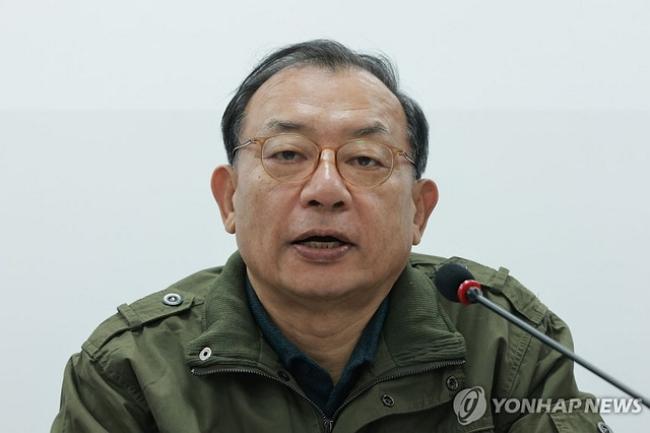 People Power Party Nomination Management Committee Chairman Lee Jung-hyun speaks at the first meeting of the Central Nomination Committee for the 9th Nationwide Simultaneous Local Elections, held at the party's headquarters in Yeouido, Seoul, on the 20th. [Photo: Yonhap News]
Here, a realistic question arises.
If incumbents are boldly replaced, who will fill their seats?
The coldest problem facing conservative politics is not factional conflict, but a "shortage of talent."
Local elections require practical figures with proven local track records rather than stars of central politics, yet the party's internal talent pool is becoming increasingly thin.
Ultimately, if nomination reform is real, there is only one answer: break the structure of cycling the same talent within the party and open channels for talent acquisition through alliances with smaller conservative parties.
An alliance with minor conservative parties is not a political event, but an expansion of the nomination structure. Coordinating candidates with regionally-rooted minor parties, policy-oriented civic groups, and fringe political forces is not just about carving up seats.
It is a realistic method to solve the "lack of substitutes" problem that one faces immediately when replacing incumbents.
The biggest reason why past nomination reforms ended as mere declarations was not because of backlash, but because of the absence of alternative candidates. Alliance-based nominations are the very tool to fill those empty spaces.
Local elections are different from presidential elections.
Trust in "everyday politics" matters more than the stature of the candidate. Therefore, the nomination is, in effect, the election result.
Until now, conservatives have failed by importing presidential-level frames into local elections. If, this time, a structure is built to field people who will actually work for the community, the language of conservative politics itself may change.
It means moving from the question of "Who is on our side?" to "Who can actually win?"
Of course, there are pitfalls to alliances.
One reason for the failure of conservative politics in the past was unification without principles.
Therefore, this alliance needs clear criteria.
First, the alliance must be about verifying competitiveness, not distributing seats.
Second, the same standards used for internal party nominations must be applied to the candidate selection process.
Third, the results of the alliance must be validated by the evaluation of local voters.
If these three requirements are not met, the alliance will degenerate into another method of lining up supporters rather than being an innovation.
Of course, internal backlash is inevitable. Replacing incumbents and excluding cronies always triggers the greatest conflict. Yet, paradoxically, without that conflict, there is no innovation.
The most dangerous moment in politics is a reform that doesn't offend anyone. If no one is uncomfortable, it means nothing has changed.
The crisis in conservative politics has been long-standing.
Amid the chaos following the impeachment, repeated election losses, and a vicious cycle of leadership changes, trust has dwindled rapidly.
This is why it is being said that this nomination process is not just election preparation, but a final surgery.
The public no longer believes promises of "reform." They only evaluate based on seeing actual changes occur.
Lee Jung-hyun's writing began with strong language. What remains now is execution.
If this nomination proceeds as declared, and if it advances to the point of broadening the talent pool through alliances, the conservatives may finally break free from the politics of self-replication they have repeated for so long.
And at that moment, the People Power Party may be rewriting the standards of politics, not just replacing candidates.
The future of conservatism is determined not by grandiose slogans, but by the names on the ballot.
When those names are filled not with "one's own people" but with "those who can win," and when that talent pool extends beyond the party via alliances, conservatives will finally step over the threshold of a true metamorphosis.

 Iranian Foreign Ministry: "Continuing Message Exchanges with the U.S. and Activities of Mediating Countries"
Esmaeil Baghaei, Spokesperson for the Iranian Ministry of Foreign Affairs [Xinhua, Yonhap News file photo]Esmaeil Baghaei, spokesperson for the Iranian Ministry of Foreign Affairs, stated on the 26th
Iranian Foreign Ministry: "Continuing Message Exchanges with the U.S. and Activities of Mediating Countries"
Esmaeil Baghaei, Spokesperson for the Iranian Ministry of Foreign Affairs [Xinhua, Yonhap News file photo]Esmaeil Baghaei, spokesperson for the Iranian Ministry of Foreign Affairs, stated on the 26th
 President Yoon: "Do You Think You Are Safe from the Special Counsel?"... Final Statement Video Released
President Yoon Suk Yeol rebuking the special prosecutor on the 24th. [Court video / @birds_justice X account subtitle GIF] A video of President Yoon Suk Yeol's closing statement at his trial rega
President Yoon: "Do You Think You Are Safe from the Special Counsel?"... Final Statement Video Released
President Yoon Suk Yeol rebuking the special prosecutor on the 24th. [Court video / @birds_justice X account subtitle GIF] A video of President Yoon Suk Yeol's closing statement at his trial rega
 President Yoon, regarding the first-instance ruling on the Public Official Election Act: “An excessive political verdict that distorts the facts… We will appeal immediately.”
The first-instance sentencing hearing for President Yoon Suk Yeol regarding violations of the Public Official Election Act is being broadcast live at Seoul Station on the 27th. [Photo=Yonhap News]Pres
President Yoon, regarding the first-instance ruling on the Public Official Election Act: “An excessive political verdict that distorts the facts… We will appeal immediately.”
The first-instance sentencing hearing for President Yoon Suk Yeol regarding violations of the Public Official Election Act is being broadcast live at Seoul Station on the 27th. [Photo=Yonhap News]Pres
 WSJ: "SK Hynix ADR Premium Is a Sign of AI Trading Overheat"
Advertisement for SK Hynix ADR listing in New York's Times Square [Reuters=Yonhap News file photo]The Wall Street Journal (WSJ) has pointed out that the price of SK Hynix’s American Depositary Recei
WSJ: "SK Hynix ADR Premium Is a Sign of AI Trading Overheat"
Advertisement for SK Hynix ADR listing in New York's Times Square [Reuters=Yonhap News file photo]The Wall Street Journal (WSJ) has pointed out that the price of SK Hynix’s American Depositary Recei
 'Godfather of Japanese Mystery Novels' Keigo Higashino Passes Away After Battle with Cancer at 68
Famous Japanese mystery novelist Keigo Higashino [AFP=Yonhap News]It has been belatedly reported that Keigo Higashino, the "godfather of Japanese mystery novels" and author of bestsellers such as "The
'Godfather of Japanese Mystery Novels' Keigo Higashino Passes Away After Battle with Cancer at 68
Famous Japanese mystery novelist Keigo Higashino [AFP=Yonhap News]It has been belatedly reported that Keigo Higashino, the "godfather of Japanese mystery novels" and author of bestsellers such as "The
 [Park Pil-kyu Security Column] To the Ignorant Trying to Clothe a Beast in Sheep's Clothing
Rep. Kim Byung-joo of the Democratic Party of Korea [Photo=Yonhap News]“The Air Force Academy doesn't teach you how to fly a plane!” “The Army, Navy, and Air Force academies are exactly the
[Park Pil-kyu Security Column] To the Ignorant Trying to Clothe a Beast in Sheep's Clothing
Rep. Kim Byung-joo of the Democratic Party of Korea [Photo=Yonhap News]“The Air Force Academy doesn't teach you how to fly a plane!” “The Army, Navy, and Air Force academies are exactly the
 [Issue Diagnosis] Two Effects of the Election Petition Review
 [Photo] Evidence of Election Fraud Flooding U.S. Media… Trump Had 2.7 Million Votes Stolen
 [Video] U.S. Semiquincentennial Air Show... 'Art in the Sky' streaks across New York
 [Editorial Cartoon] A Draconian Law That Undermines Freedom of Expression

 List
List










