On the first day of the ROK-US joint exercise 'Freedom Shield' (FS) on March 10, an RC-12X Guardrail reconnaissance aircraft takes off at Camp Humphreys in Pyeongtaek, Gyeonggi Province. 2025.3.10 [Photo=Yonhap News]
Late on the 24th, U.S. Forces Korea (USFK) issued an unusual statement.
This was in response to a perceived difference in understanding between the South Korean Ministry of National Defense and USFK regarding the issue of KADIZ (Korea Air Defense Identification Zone) access that arose during recent ROK-US and Japan joint exercises.
USFK stated, "We express our regret," but did not apologize, and regarding the protest, they said, "We understand," without admitting fault.
The very act of releasing a public document late at night, concerning an issue typically coordinated through diplomatic channels, was a scene that illustrated the tension within the alliance.
The origin of this controversy was a difference in airspace recognition.
While South Korea explained the exercise situation within the coordinated scope, USFK appeared to modify its wording through its statement.
Although the incident itself might seem like a technical issue, what was ultimately revealed was a strategic temperature difference within the alliance. This is why it has led to the interpretation of a potential crack in ROK-US cooperation, going beyond a simple clash of explanations.
The question we must ask now is simple.
Who benefits when the ROK-US alliance falters? North Korea is currently directing its recent messages not to Seoul, but to Washington.
Under the calculation that increasing tension enhances negotiating power, the strategy of 'talking to the US while ignoring South Korea' (통미봉남) is reappearing in reality. Gaps in the alliance are the most familiar opportunities for North Korea.
Looking broadly at the geopolitical landscape of Northeast Asia, China also secures strategic room within the cracks of cooperation.
As the ROK-US-Japan security axis loosens, South Korea might seem to have more options. However, in reality, it is more likely to lose its footing.
Cracks in the alliance provide space for external powers, but for South Korea, the party involved, it often translates into uncertainty.
The recent ROK-US and Japan-led military exercises are also to be understood in this context.
While it cannot be definitively stated that South Korea refused to participate, the impression left was that its presence appeared diminished.
It was a scene of subtle shifts in the weight of security cooperation. Even if the alliance is maintained, its center can shift at any time.
Furthermore, the discussion about restoring the inter-Korean Sept. 19 Military Agreement overlaps with this, making the temperature difference within the alliance even more apparent.
With North Korea having effectively nullified the agreement, any move to revert to past frameworks is bound to clash with the US's strategy.
The format of the statement, "regret without apology," symbolically exemplifies this gap.
The meaning of 'peace' as described by North Korea is also changing.
The recent messages revealed through the Korean Central News Agency are closer to conditional negotiations than proposals for de-escalation.
While stating that relations will be adjusted according to the US's attitude, Seoul is effectively excluded from negotiations.
It is a structure that demands a price for reduced tension after increased tension, rather than a method of declaring peace first.
The approach of simultaneously utilizing military tension and diplomatic messages to raise negotiation costs is no longer unfamiliar.
Ultimately, for North Korea, peace is not a goal but an option with a price tag, and the more its conditions are exploited on the basis of alliance cracks, the more South Korea's strategic space will inevitably shrink.
Alliances are maintained by strategy, not by emotion. The more we remain fixated on debates about wording, the narrower South Korea's position becomes.
When the ROK-US alliance is shaken, the first to smile are external forces, and Seoul is the first to lose its bearings. What is needed now is not strong words, but a clear direction.
Alliances do not collapse easily. However, their center can shift at any time.
We cannot help but ask again: who benefits from this conflict?
The moment we turn away from that answer, Seoul's marginalization will become not an exception, but a structural reality.

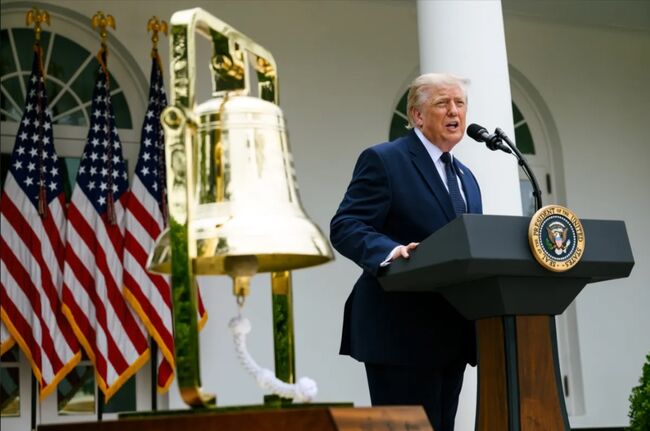 Trump pressures for rate cut again ahead of FOMC... "Should be the lowest in the world"
U.S. President Donald Trump. [Photo = The White House] U.S. President Donald Trump once again pressured the Federal Reserve, the U.S. central bank, to lower interest rates on the 27th (local time
Trump pressures for rate cut again ahead of FOMC... "Should be the lowest in the world"
U.S. President Donald Trump. [Photo = The White House] U.S. President Donald Trump once again pressured the Federal Reserve, the U.S. central bank, to lower interest rates on the 27th (local time
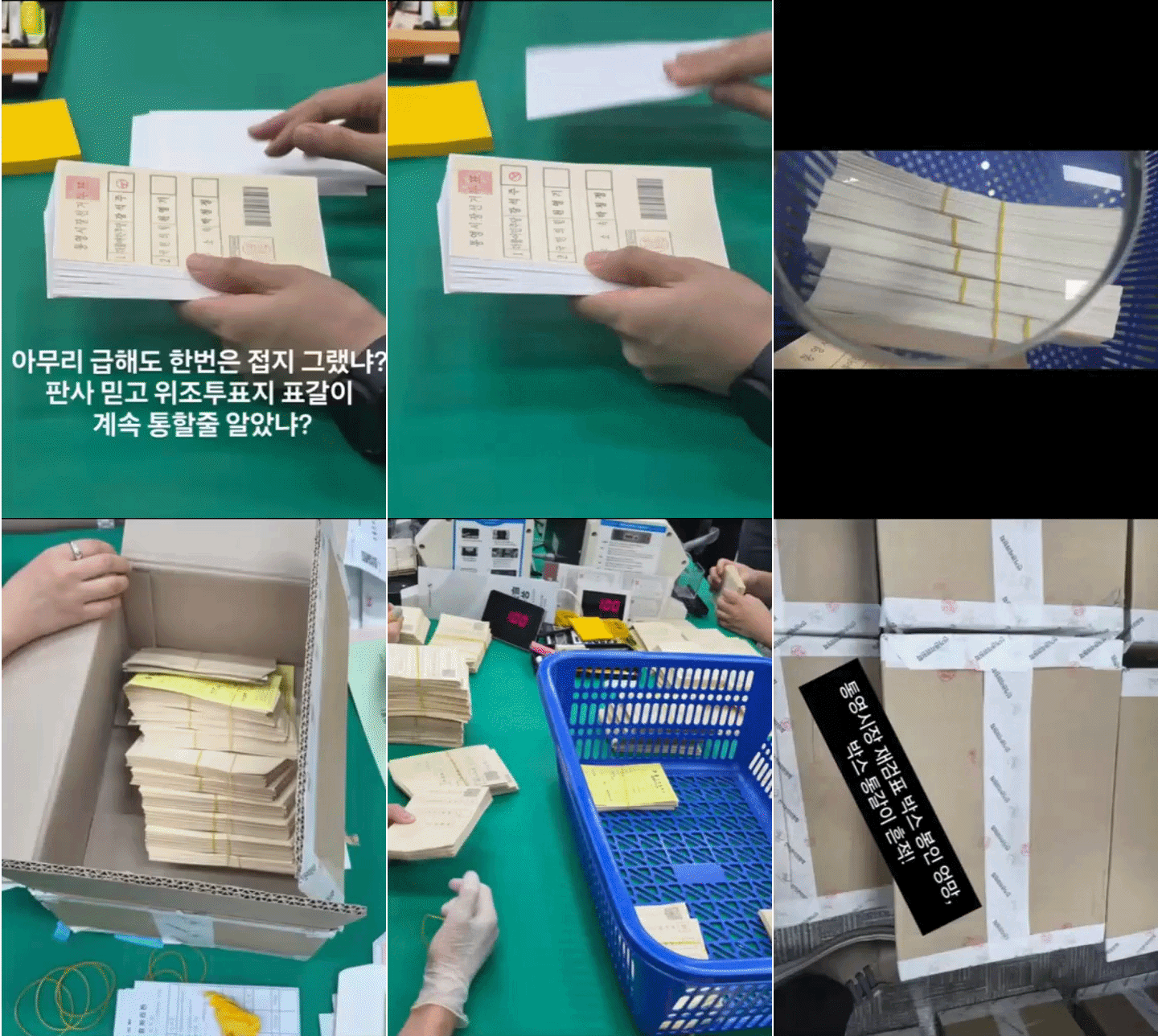 “Ignoring crisp ballots and damaged seals”… Tongyeong mayoral recount concludes with ‘no change in outcome,’ leaving suspicions and public outrage behind
Suspected counterfeit ballots discovered in Tongyeong [GIF from social media of Representative Hwang Kyo-ahn / Attorney Park Joo-hyun]During a recount of the Tongyeong mayoral election in South Gyeong
“Ignoring crisp ballots and damaged seals”… Tongyeong mayoral recount concludes with ‘no change in outcome,’ leaving suspicions and public outrage behind
Suspected counterfeit ballots discovered in Tongyeong [GIF from social media of Representative Hwang Kyo-ahn / Attorney Park Joo-hyun]During a recount of the Tongyeong mayoral election in South Gyeong
 President Yoon, regarding the first-instance ruling on the Public Official Election Act: “An excessive political verdict that distorts the facts… We will appeal immediately.”
The first-instance sentencing hearing for President Yoon Suk Yeol regarding violations of the Public Official Election Act is being broadcast live at Seoul Station on the 27th. [Photo=Yonhap News]Pres
President Yoon, regarding the first-instance ruling on the Public Official Election Act: “An excessive political verdict that distorts the facts… We will appeal immediately.”
The first-instance sentencing hearing for President Yoon Suk Yeol regarding violations of the Public Official Election Act is being broadcast live at Seoul Station on the 27th. [Photo=Yonhap News]Pres
 WSJ: "SK Hynix ADR Premium Is a Sign of AI Trading Overheat"
Advertisement for SK Hynix ADR listing in New York's Times Square [Reuters=Yonhap News file photo]The Wall Street Journal (WSJ) has pointed out that the price of SK Hynix’s American Depositary Recei
WSJ: "SK Hynix ADR Premium Is a Sign of AI Trading Overheat"
Advertisement for SK Hynix ADR listing in New York's Times Square [Reuters=Yonhap News file photo]The Wall Street Journal (WSJ) has pointed out that the price of SK Hynix’s American Depositary Recei
 'Godfather of Japanese Mystery Novels' Keigo Higashino Passes Away After Battle with Cancer at 68
Famous Japanese mystery novelist Keigo Higashino [AFP=Yonhap News]It has been belatedly reported that Keigo Higashino, the "godfather of Japanese mystery novels" and author of bestsellers such as "The
'Godfather of Japanese Mystery Novels' Keigo Higashino Passes Away After Battle with Cancer at 68
Famous Japanese mystery novelist Keigo Higashino [AFP=Yonhap News]It has been belatedly reported that Keigo Higashino, the "godfather of Japanese mystery novels" and author of bestsellers such as "The
 [Park Pil-kyu Security Column] To the Ignorant Trying to Clothe a Beast in Sheep's Clothing
Rep. Kim Byung-joo of the Democratic Party of Korea [Photo=Yonhap News]“The Air Force Academy doesn't teach you how to fly a plane!” “The Army, Navy, and Air Force academies are exactly the
[Park Pil-kyu Security Column] To the Ignorant Trying to Clothe a Beast in Sheep's Clothing
Rep. Kim Byung-joo of the Democratic Party of Korea [Photo=Yonhap News]“The Air Force Academy doesn't teach you how to fly a plane!” “The Army, Navy, and Air Force academies are exactly the
 [Issue Diagnosis] Two Effects of the Election Petition Review
 [Photo] Evidence of Election Fraud Flooding U.S. Media… Trump Had 2.7 Million Votes Stolen
 [Video] U.S. Semiquincentennial Air Show... 'Art in the Sky' streaks across New York
 [Editorial Cartoon] A Draconian Law That Undermines Freedom of Expression

 List
List