 The semiconductor project underway in Dholera, Gujarat, India, aims for its first production in December 2026. [Photo=THE TIMES OF INDIA]
Is India an Opportunity or a Testbed?
The semiconductor industry is the latest to arrive on the Indian landscape.
Automobiles, already integrating electronics, software, and AI, have established a presence in India. Batteries are beginning to find practical solutions, primarily focusing on the electric two-wheeler market. However, semiconductors remain in the 'questioning' phase.
Is India an opportunity for semiconductors, or will it prove to be another testbed?
Examining the structure of the Korean semiconductor industry reveals why this question is not easily answered.
The United States serves as the benchmark for technology and security. The most advanced processes, equipment, and design ecosystems revolve around the U.S.
The global semiconductor order, encompassing companies like TSMC, Intel, and NVIDIA, is structured around the U.S. as its axis.
China, on the other hand, has transformed into a market with significant revenue share but is characterized by export controls, restrictions on technology transfer, and constant geopolitical risks.
The issue is not whether one can "give up on China," but whether it's possible to design a structure that excludes China.
It is at this point that India emerges as a candidate.
India presents relatively lower political and security risks, with a low probability of strategic conflict with the United States. The widespread adoption of smartphones, data centers, automotive electronics, and AI edge devices signals a structural increase in mid- to long-term semiconductor demand.
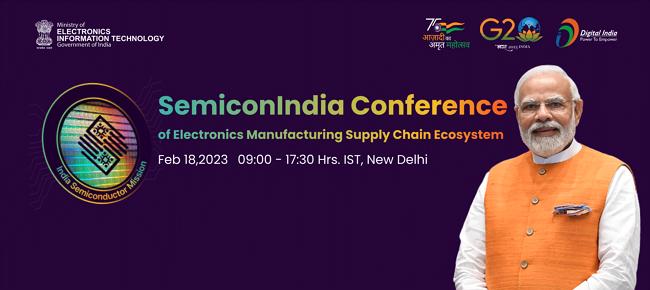
Through "Semicon India," the Indian government has established a national strategy to foster an ecosystem that includes foundries, outsourced semiconductor assembly and test (OSAT), and design.
However, the critical difference compared to the automotive and battery sectors becomes apparent here.
Semiconductors are not an industry that can be driven by the market alone. They involve massive initial investments, long payback periods, supply chain stability, and diplomatic/security considerations that all come into play simultaneously.
Individual companies may find it difficult to bear the risks of entering the Indian market based solely on their own judgment.
Comparison with China is also crucial.
China has pushed forward with semiconductors as a national priority industry, concentrating subsidies and protectionist policies. Instead of rapidly building an ecosystem, it quickly transitioned from reliance on foreign companies' technology to a self-centered structure.
India has chosen a different path. It advocates for co-establishment with foreign companies rather than absorbing technology and then excluding them. While this is an advantage, it also presents limitations in terms of speed. Semiconductors do not move forward on the slogan of "let's go together."
For the Korean semiconductor industry, India is therefore a delicate proposition.
The strategy of using the U.S. as a benchmark is already fixed. Samsung Electronics and SK Hynix also operate within the U.S. security and trade framework. Managing China-related risks is also unavoidable.
India represents a potential third axis positioned in between, but the market and policies have not yet fully aligned. Unlike the automotive and battery industries, where companies paved the way through their own initiatives, semiconductors require a national strategy to even begin moving.
The issue is not the industry itself, but the policy vacuum.
The Korean government's strategy for India appears in diplomatic and trade documents, but it has not materialized into specific industrial blueprints, including for semiconductors. There is no visible roadmap detailing which processes, at what stages, and in what forms cooperation is needed.
Companies are already moving with India as a target coordinate. However, semiconductors alone remain at the discretion of individual companies.
If semiconductors do not find answers in India, it is less a limitation of India and more a lack of strategic design.
For automotive and batteries, market conditions matured first, and companies recognized the signals.
For semiconductors, it is the opposite. The potential is clear, but there is a lack of policy connections to translate it into reality.
India is not yet the "answer" for semiconductors. However, the question has become clear.
In the process of designing for the post-China era, will the Korean semiconductor industry view India merely as a production base? Or will it be designed as a pillar for long-term domestic demand and supply chain?
This choice will not be solely a corporate decision. It requires the accompaniment of national-level strategic design.
The next installment will expand on this question further.
While companies have already moved, why is government strategy absent? We will examine the reality of the policy vacuum revealed in Korea's industrial strategy surrounding India.

 Iranian Foreign Ministry: "Continuing Message Exchanges with the U.S. and Activities of Mediating Countries"
Esmaeil Baghaei, Spokesperson for the Iranian Ministry of Foreign Affairs [Xinhua, Yonhap News file photo]Esmaeil Baghaei, spokesperson for the Iranian Ministry of Foreign Affairs, stated on the 26th
Iranian Foreign Ministry: "Continuing Message Exchanges with the U.S. and Activities of Mediating Countries"
Esmaeil Baghaei, Spokesperson for the Iranian Ministry of Foreign Affairs [Xinhua, Yonhap News file photo]Esmaeil Baghaei, spokesperson for the Iranian Ministry of Foreign Affairs, stated on the 26th
 President Yoon: "Do You Think You Are Safe from the Special Counsel?"... Final Statement Video Released
President Yoon Suk Yeol rebuking the special prosecutor on the 24th. [Court video / @birds_justice X account subtitle GIF] A video of President Yoon Suk Yeol's closing statement at his trial rega
President Yoon: "Do You Think You Are Safe from the Special Counsel?"... Final Statement Video Released
President Yoon Suk Yeol rebuking the special prosecutor on the 24th. [Court video / @birds_justice X account subtitle GIF] A video of President Yoon Suk Yeol's closing statement at his trial rega
 President Yoon, regarding the first-instance ruling on the Public Official Election Act: “An excessive political verdict that distorts the facts… We will appeal immediately.”
The first-instance sentencing hearing for President Yoon Suk Yeol regarding violations of the Public Official Election Act is being broadcast live at Seoul Station on the 27th. [Photo=Yonhap News]Pres
President Yoon, regarding the first-instance ruling on the Public Official Election Act: “An excessive political verdict that distorts the facts… We will appeal immediately.”
The first-instance sentencing hearing for President Yoon Suk Yeol regarding violations of the Public Official Election Act is being broadcast live at Seoul Station on the 27th. [Photo=Yonhap News]Pres
 WSJ: "SK Hynix ADR Premium Is a Sign of AI Trading Overheat"
Advertisement for SK Hynix ADR listing in New York's Times Square [Reuters=Yonhap News file photo]The Wall Street Journal (WSJ) has pointed out that the price of SK Hynix’s American Depositary Recei
WSJ: "SK Hynix ADR Premium Is a Sign of AI Trading Overheat"
Advertisement for SK Hynix ADR listing in New York's Times Square [Reuters=Yonhap News file photo]The Wall Street Journal (WSJ) has pointed out that the price of SK Hynix’s American Depositary Recei
 'Godfather of Japanese Mystery Novels' Keigo Higashino Passes Away After Battle with Cancer at 68
Famous Japanese mystery novelist Keigo Higashino [AFP=Yonhap News]It has been belatedly reported that Keigo Higashino, the "godfather of Japanese mystery novels" and author of bestsellers such as "The
'Godfather of Japanese Mystery Novels' Keigo Higashino Passes Away After Battle with Cancer at 68
Famous Japanese mystery novelist Keigo Higashino [AFP=Yonhap News]It has been belatedly reported that Keigo Higashino, the "godfather of Japanese mystery novels" and author of bestsellers such as "The
 [Park Pil-kyu Security Column] To the Ignorant Trying to Clothe a Beast in Sheep's Clothing
Rep. Kim Byung-joo of the Democratic Party of Korea [Photo=Yonhap News]“The Air Force Academy doesn't teach you how to fly a plane!” “The Army, Navy, and Air Force academies are exactly the
[Park Pil-kyu Security Column] To the Ignorant Trying to Clothe a Beast in Sheep's Clothing
Rep. Kim Byung-joo of the Democratic Party of Korea [Photo=Yonhap News]“The Air Force Academy doesn't teach you how to fly a plane!” “The Army, Navy, and Air Force academies are exactly the
 [Issue Diagnosis] Two Effects of the Election Petition Review
 [Photo] Evidence of Election Fraud Flooding U.S. Media… Trump Had 2.7 Million Votes Stolen
 [Video] U.S. Semiquincentennial Air Show... 'Art in the Sky' streaks across New York
 [Editorial Cartoon] A Draconian Law That Undermines Freedom of Expression

 List
List









