
Following massive airstrikes by the United States and Israel against Iran and the dramatic arrest of Venezuelan leader Nicolas Maduro, close associates of President Donald Trump have revealed that the administration is preparing to target Cuba as its next major foreign policy objective.
Senator Lindsey Graham (R-S.C.) declared last weekend that "Cuba is next," asserting that the communist government in Cuba is on the verge of collapse.
"The communist dictatorships in Cuba? Their days are numbered," he stated, praising President Trump's foreign policy as exceeding that of former President Ronald Reagan.
Within the administration, the situation is being framed as a historic opportunity not achieved by any of the 12 preceding presidents—the termination of a 67-year-old communist regime established by former Cuban leader Fidel Castro.
Trump himself has fanned the flames of speculation.
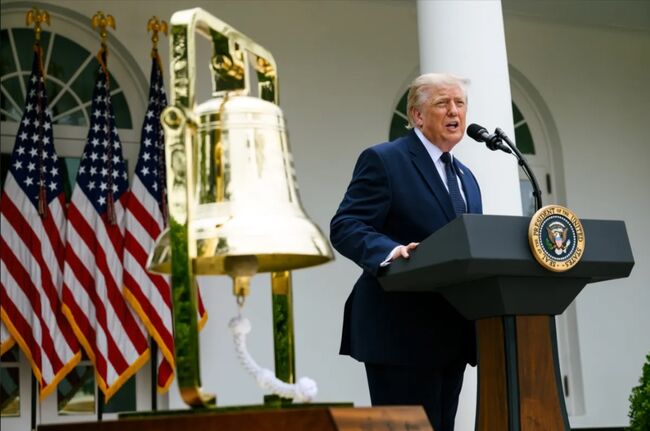
Speaking at the White House last week, President Trump stated that Secretary of State Marco Rubio is engaged in high-level talks with Cuban leadership and hinted at the possibility of a "friendly takeover" of Cuba.
"The Cuban government is talking to us," Trump said, "They have no money, they have nothing right now."
"But they're talking to us, and perhaps we can have a friendly takeover," he added.
Administration officials are describing a dual strategy: simultaneously intensifying economic pressure while opening the door to negotiations that could allow U.S. businesses to enter the Cuban market, contingent on political reforms.
Rubio has been engaged in discreet discussions with members of the Castro family, according to reports cited by Axios and an Atlantic column.
Instead of directly negotiating with Cuban President Miguel Díaz-Canel, Secretary Rubio is reportedly reaching out to associates of Raul Castro, particularly his grandson, Raul Guillermo Rodriguez Castro.
For Rubio, who was born to Cuban immigrant parents and rose to prominence in Florida politics by spearheading the anti-Castro movement, these negotiations carry significant personal weight.
One State Department official told Newsmax that Secretary Rubio is looking for figures like "Dexi Rodriguez," who is serving as the interim president of Venezuela and is cooperating with the United States to ensure the transition to democratic elections.
For now, the administration's strategy heavily relies on Cuba's dire economic situation.
Since the United States took control of Venezuela's oil industry in January, subsidized Venezuelan crude oil shipments to Cuba, long a lifeline for the island, have ceased.
Subsequent executive orders threatened tariffs on nations supplying oil to Havana, pressuring alternative sources.
The result has been a cascade of blackouts, factory closures, food shortages, and disruptions to hospital operations.
Canadian and Russian airlines have reportedly suspended flights due to a lack of jet fuel, further crippling Cuba's tourism industry, one of its few sources of foreign currency.
Trump recently characterized Cuba as an "unusual and extraordinary threat," though he offered no detailed explanation for the assertion.
Critics point out that Russia, China, and Iran are not currently deploying missiles in Havana, and Cuba's military equipment is largely Soviet-era.
However, administration officials maintain that economic collapse could trigger internal reforms or a negotiated transition of power.
When asked about the imminence of military action, President Trump stated, "I think it's going to collapse. I think it's going to completely collapse."
Uncertainty is mounting on the island.
Following U.S. airstrikes in Venezuela and against Iran, Cuban counterintelligence agents have reportedly visited areas near military facilities in Havana, collecting lists of residents and preparing evacuation plans.
In Havana, fears have intensified that the United States might pursue a regime change in the style of assassinating leaders, amplified by the recent killing of Iran's supreme leader.
Over the past five years, more than 2 million Cubans have left the island.
Those remaining face daily blackouts, gasoline shortages, and soaring food prices. "For the people there, hunger is all that's left," one Havana resident said of a nearby military installation.
However, public opinion appears divided.
Some religious and civic leaders are calling for a negotiated settlement to prevent civilian casualties, while others openly argue that U.S. intervention may be the only path to ending decades of repression.
With Venezuela destabilized and Iran reeling, the administration believes the geopolitical landscape has fundamentally shifted.
Cuban officials have expressed a willingness to engage in dialogue, but only "without pressure or preconditions."
Cuba, long a symbol of Cold War rivalries, has re-emerged at the center of Washington's ambitions, and the Trump administration appears determined to be at the forefront, Newsmax reports.
By United States NNP=Hong Seong-gu Chief Reporter / Special Correspondent NNP info@newsandpost.com

 Trump pressures for rate cut again ahead of FOMC... "Should be the lowest in the world"
U.S. President Donald Trump. [Photo = The White House] U.S. President Donald Trump once again pressured the Federal Reserve, the U.S. central bank, to lower interest rates on the 27th (local time
Trump pressures for rate cut again ahead of FOMC... "Should be the lowest in the world"
U.S. President Donald Trump. [Photo = The White House] U.S. President Donald Trump once again pressured the Federal Reserve, the U.S. central bank, to lower interest rates on the 27th (local time
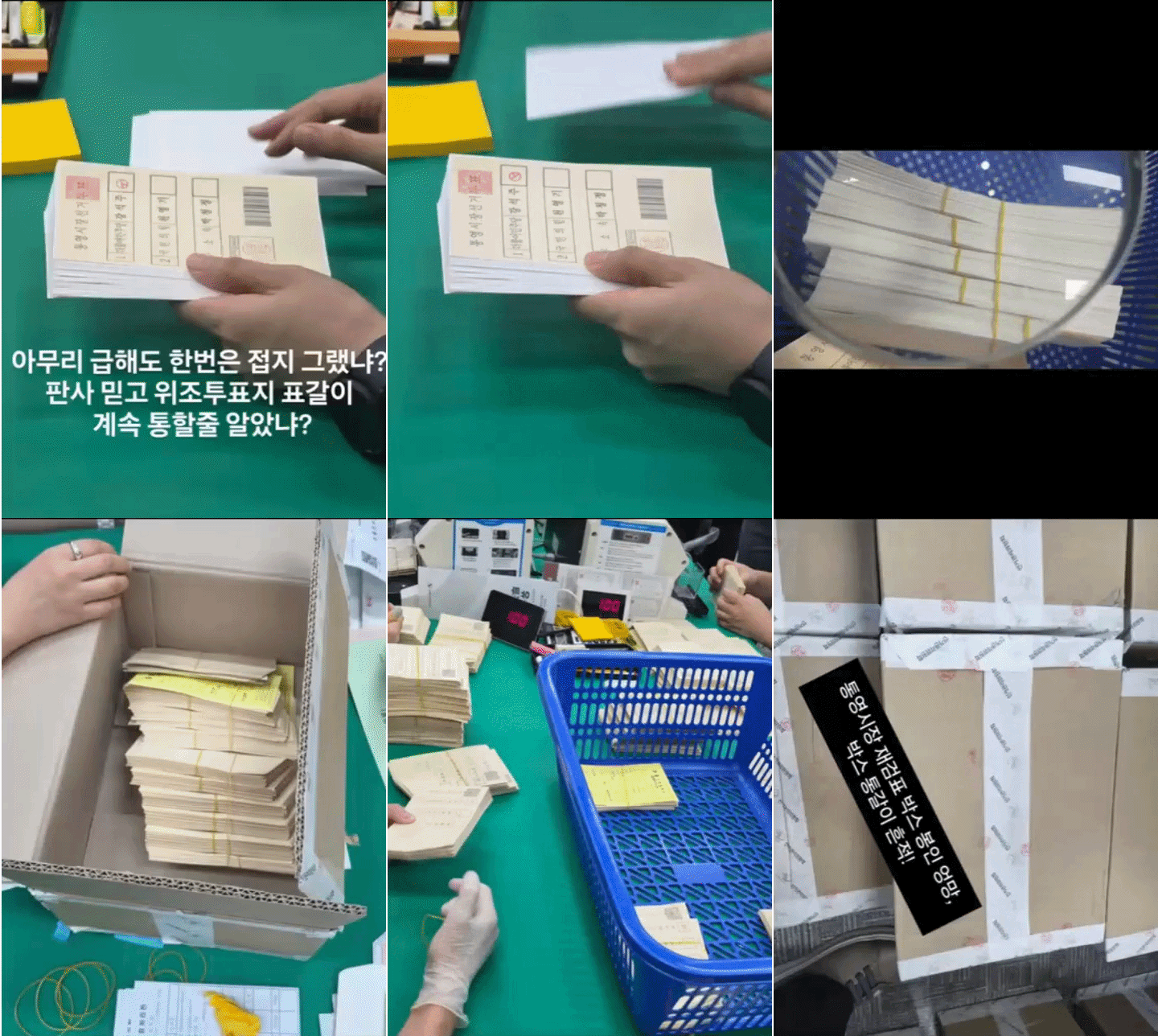 “Ignoring crisp ballots and damaged seals”… Tongyeong mayoral recount concludes with ‘no change in outcome,’ leaving suspicions and public outrage behind
Suspected counterfeit ballots discovered in Tongyeong [GIF from social media of Representative Hwang Kyo-ahn / Attorney Park Joo-hyun]During a recount of the Tongyeong mayoral election in South Gyeong
“Ignoring crisp ballots and damaged seals”… Tongyeong mayoral recount concludes with ‘no change in outcome,’ leaving suspicions and public outrage behind
Suspected counterfeit ballots discovered in Tongyeong [GIF from social media of Representative Hwang Kyo-ahn / Attorney Park Joo-hyun]During a recount of the Tongyeong mayoral election in South Gyeong
 President Yoon, regarding the first-instance ruling on the Public Official Election Act: “An excessive political verdict that distorts the facts… We will appeal immediately.”
The first-instance sentencing hearing for President Yoon Suk Yeol regarding violations of the Public Official Election Act is being broadcast live at Seoul Station on the 27th. [Photo=Yonhap News]Pres
President Yoon, regarding the first-instance ruling on the Public Official Election Act: “An excessive political verdict that distorts the facts… We will appeal immediately.”
The first-instance sentencing hearing for President Yoon Suk Yeol regarding violations of the Public Official Election Act is being broadcast live at Seoul Station on the 27th. [Photo=Yonhap News]Pres
 WSJ: "SK Hynix ADR Premium Is a Sign of AI Trading Overheat"
Advertisement for SK Hynix ADR listing in New York's Times Square [Reuters=Yonhap News file photo]The Wall Street Journal (WSJ) has pointed out that the price of SK Hynix’s American Depositary Recei
WSJ: "SK Hynix ADR Premium Is a Sign of AI Trading Overheat"
Advertisement for SK Hynix ADR listing in New York's Times Square [Reuters=Yonhap News file photo]The Wall Street Journal (WSJ) has pointed out that the price of SK Hynix’s American Depositary Recei
 'Godfather of Japanese Mystery Novels' Keigo Higashino Passes Away After Battle with Cancer at 68
Famous Japanese mystery novelist Keigo Higashino [AFP=Yonhap News]It has been belatedly reported that Keigo Higashino, the "godfather of Japanese mystery novels" and author of bestsellers such as "The
'Godfather of Japanese Mystery Novels' Keigo Higashino Passes Away After Battle with Cancer at 68
Famous Japanese mystery novelist Keigo Higashino [AFP=Yonhap News]It has been belatedly reported that Keigo Higashino, the "godfather of Japanese mystery novels" and author of bestsellers such as "The
 [Park Pil-kyu Security Column] To the Ignorant Trying to Clothe a Beast in Sheep's Clothing
Rep. Kim Byung-joo of the Democratic Party of Korea [Photo=Yonhap News]“The Air Force Academy doesn't teach you how to fly a plane!” “The Army, Navy, and Air Force academies are exactly the
[Park Pil-kyu Security Column] To the Ignorant Trying to Clothe a Beast in Sheep's Clothing
Rep. Kim Byung-joo of the Democratic Party of Korea [Photo=Yonhap News]“The Air Force Academy doesn't teach you how to fly a plane!” “The Army, Navy, and Air Force academies are exactly the
 [Issue Diagnosis] Two Effects of the Election Petition Review
 [Photo] Evidence of Election Fraud Flooding U.S. Media… Trump Had 2.7 Million Votes Stolen
 [Video] U.S. Semiquincentennial Air Show... 'Art in the Sky' streaks across New York
 [Editorial Cartoon] A Draconian Law That Undermines Freedom of Expression

 List
List









