 Rep. Jung Tae-ho (right) of the Democratic Party, the ruling party's floor leader, and Rep. Park Soo-young of the People Power Party, the opposition party's floor leader, are in discussion at the plenary session of the Special Committee for the Processing of the Special Act on U.S. Investment held at the National Assembly on February 24th. 2026.2.24 [Photo=Yonhap News]
Discussions on the so-called 'Special Act on U.S. Investment' are gaining momentum at the National Assembly.
The floor leadership of both the ruling and opposition parties are committed to swiftly concluding the review of the bill and pushing for its passage in a plenary session.
However, the most critical questions surrounding this bill remain unaddressed.
The core of the issue is simple.
How will the massive investment funds of 350 billion dollars be secured, and who will decide the direction of investment?
These are the two questions.
The fact sheet from the ROK-U.S. negotiations, which serves as the background for this bill, outlines the investment project selection process relatively clearly.
“Investment projects will be selected by the U.S. President upon recommendation from the Investment Committee, chaired by the U.S. Secretary of Commerce.”
Furthermore, the investment execution process is stipulated as follows:
“Once the U.S. selects and notifies the investment destinations, Korea will remit the investment funds after 45 business days.”
The meaning is not difficult to grasp when read literally.
Korea may propose or offer opinions on investment projects, but the final selection authority rests with the U.S. President.
However, a completely different picture emerges from the Special Act on U.S. Investment submitted to the National Assembly. Based solely on the bill, it appears to be designed in a structure where the investment fund or corporation selects investment targets, and the government manages them.
Formally, it seems as though Korea is making the investment decisions.
This is precisely where the problem arises.
There is a clear discrepancy between the negotiation documents and the domestic legislation.
The negotiation documents show that the investment project selection structure is designed around the U.S. administration. However, the legislation alone makes it appear as though Korea is autonomously making investment decisions.
The public typically understands policies by reading legislation. If it presents a different picture than the negotiation structure, it is not policy explanation but rather an act of obscuring the substance of the policy.
The investment scale of 350 billion dollars is also similar.
There is insufficient explanation as to whose money this vast sum actually is and how it will be raised.
While the explanation that it will be raised through corporate investment and policy financial support is repeatedly given, a clear answer is not provided regarding who will bear the burden if investment losses occur.
Ultimately, the essence of the Special Act on U.S. Investment debate becomes increasingly simple.
Where does the money come from, and who decides the investment direction?
However, the current National Assembly debate is sidestepping this core issue. The focus of the discussion remains on procedural matters such as whether prior parliamentary consent or ex-post reporting is required.
While procedures are important, the substance of the investment decision-making structure must be confirmed first.
What is even more serious is the attitude of the government and a significant portion of the old media. They are almost entirely neglecting to explain the investment decision-making structure specified in the negotiation documents, while emphasizing only the formal structure of the bill.
In such cases, the public comes to understand it as if Korea is making the investment decisions.
However, reading the negotiation documents together presents a completely different picture.
Failing to explain the discrepancy between the law and the negotiation documents to the public is not policy promotion but rather tantamount to deceiving the public.
The National Assembly is also ignoring this issue. The lack of visible action from the opposition party is particularly disappointing.
For overseas investment of this scale, it is the fundamental role of the National Assembly to directly question the funding structure and investment decision-making authority.
The core of the Special Act on U.S. Investment debate is by no means complex.
Whose money is the 350 billion dollars, and who decides the investment direction?
The government and the National Assembly must first answer these questions.
If the bill processing is rushed without those answers, the debate will never end.
What is needed now is not an explanation of the legal text, but a clear revelation of the truth of the negotiation structure to the public.

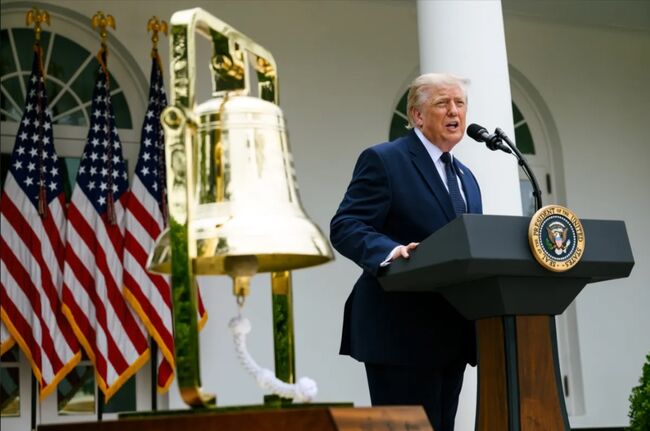 Trump pressures for rate cut again ahead of FOMC... "Should be the lowest in the world"
U.S. President Donald Trump. [Photo = The White House] U.S. President Donald Trump once again pressured the Federal Reserve, the U.S. central bank, to lower interest rates on the 27th (local time
Trump pressures for rate cut again ahead of FOMC... "Should be the lowest in the world"
U.S. President Donald Trump. [Photo = The White House] U.S. President Donald Trump once again pressured the Federal Reserve, the U.S. central bank, to lower interest rates on the 27th (local time
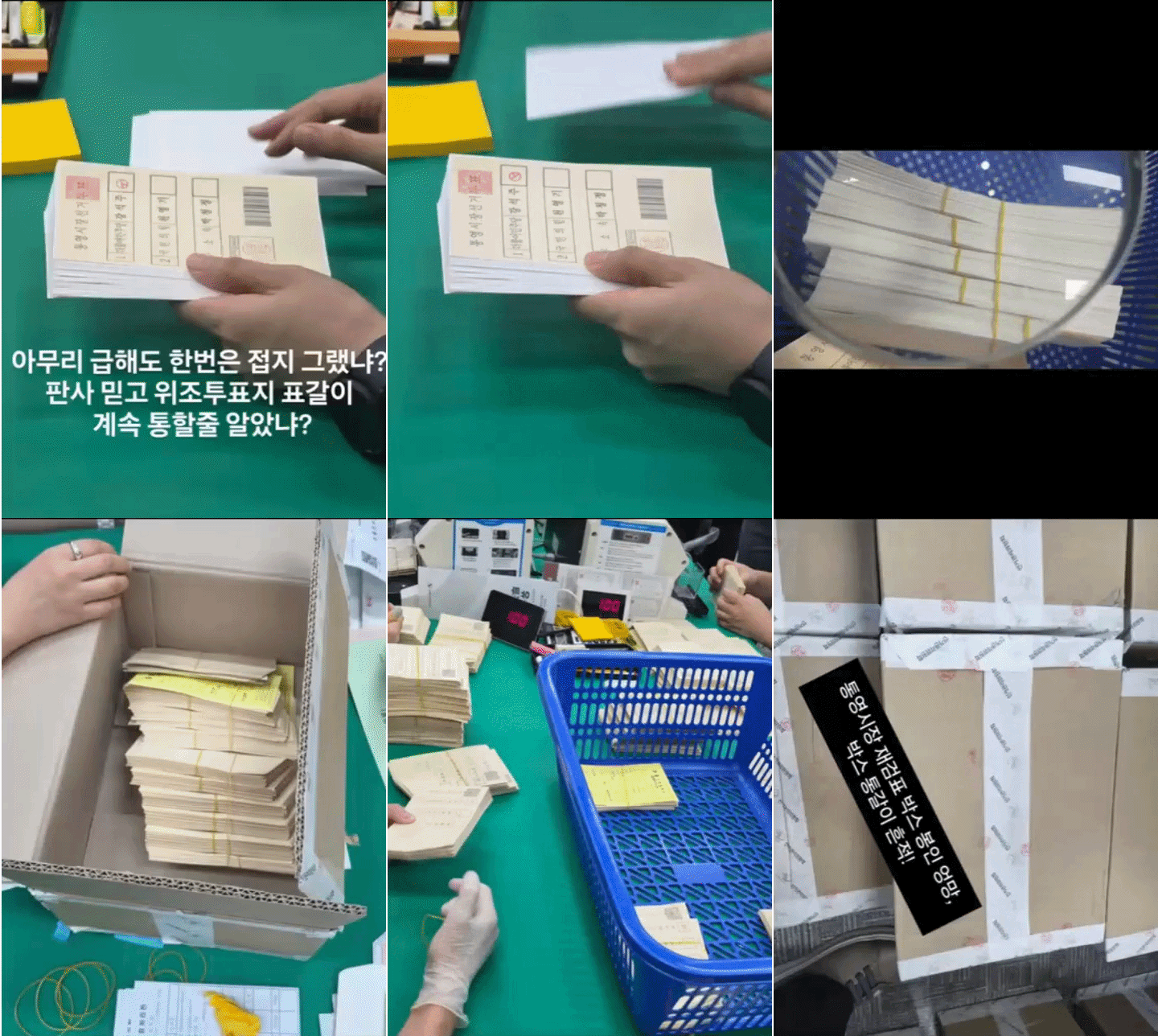 “Ignoring crisp ballots and damaged seals”… Tongyeong mayoral recount concludes with ‘no change in outcome,’ leaving suspicions and public outrage behind
Suspected counterfeit ballots discovered in Tongyeong [GIF from social media of Representative Hwang Kyo-ahn / Attorney Park Joo-hyun]During a recount of the Tongyeong mayoral election in South Gyeong
“Ignoring crisp ballots and damaged seals”… Tongyeong mayoral recount concludes with ‘no change in outcome,’ leaving suspicions and public outrage behind
Suspected counterfeit ballots discovered in Tongyeong [GIF from social media of Representative Hwang Kyo-ahn / Attorney Park Joo-hyun]During a recount of the Tongyeong mayoral election in South Gyeong
 President Yoon, regarding the first-instance ruling on the Public Official Election Act: “An excessive political verdict that distorts the facts… We will appeal immediately.”
The first-instance sentencing hearing for President Yoon Suk Yeol regarding violations of the Public Official Election Act is being broadcast live at Seoul Station on the 27th. [Photo=Yonhap News]Pres
President Yoon, regarding the first-instance ruling on the Public Official Election Act: “An excessive political verdict that distorts the facts… We will appeal immediately.”
The first-instance sentencing hearing for President Yoon Suk Yeol regarding violations of the Public Official Election Act is being broadcast live at Seoul Station on the 27th. [Photo=Yonhap News]Pres
 WSJ: "SK Hynix ADR Premium Is a Sign of AI Trading Overheat"
Advertisement for SK Hynix ADR listing in New York's Times Square [Reuters=Yonhap News file photo]The Wall Street Journal (WSJ) has pointed out that the price of SK Hynix’s American Depositary Recei
WSJ: "SK Hynix ADR Premium Is a Sign of AI Trading Overheat"
Advertisement for SK Hynix ADR listing in New York's Times Square [Reuters=Yonhap News file photo]The Wall Street Journal (WSJ) has pointed out that the price of SK Hynix’s American Depositary Recei
 'Godfather of Japanese Mystery Novels' Keigo Higashino Passes Away After Battle with Cancer at 68
Famous Japanese mystery novelist Keigo Higashino [AFP=Yonhap News]It has been belatedly reported that Keigo Higashino, the "godfather of Japanese mystery novels" and author of bestsellers such as "The
'Godfather of Japanese Mystery Novels' Keigo Higashino Passes Away After Battle with Cancer at 68
Famous Japanese mystery novelist Keigo Higashino [AFP=Yonhap News]It has been belatedly reported that Keigo Higashino, the "godfather of Japanese mystery novels" and author of bestsellers such as "The
 [Park Pil-kyu Security Column] To the Ignorant Trying to Clothe a Beast in Sheep's Clothing
Rep. Kim Byung-joo of the Democratic Party of Korea [Photo=Yonhap News]“The Air Force Academy doesn't teach you how to fly a plane!” “The Army, Navy, and Air Force academies are exactly the
[Park Pil-kyu Security Column] To the Ignorant Trying to Clothe a Beast in Sheep's Clothing
Rep. Kim Byung-joo of the Democratic Party of Korea [Photo=Yonhap News]“The Air Force Academy doesn't teach you how to fly a plane!” “The Army, Navy, and Air Force academies are exactly the
 [Issue Diagnosis] Two Effects of the Election Petition Review
 [Photo] Evidence of Election Fraud Flooding U.S. Media… Trump Had 2.7 Million Votes Stolen
 [Video] U.S. Semiquincentennial Air Show... 'Art in the Sky' streaks across New York
 [Editorial Cartoon] A Draconian Law That Undermines Freedom of Expression

 List
List









