Photo=Freepik.com
Following the U.S. 'Operation Epic Fury,' Iran disrupted operations at Saudi Aramco's oil refineries and Qatar's largest liquefied natural gas (LNG) facilities through drone attacks.
To disrupt maritime transport routes in the Strait of Hormuz, Iran also carried out drone attacks on oil tankers.
This news had an immediate impact on global markets and U.S. oil prices.
Iran's attacks were an act of retaliation against the U.S.'s Gulf Cooperation Council (GCC) allies, which account for nearly 30% of global oil exports.
Saudi Arabia's Ras Tanura refinery partially suspended operations on Monday following an Iranian drone attack, and QatarEnergy, the largest LNG producer in the Gulf, also halted operations.
The Fujairah oil industry complex in the United Arab Emirates experienced a fire on Tuesday due to an Iranian airstrike, delaying oil tanker refueling and further increasing uncertainty.
Additionally, according to maritime traffic alerts from the Joint Maritime Information Center, a series of civilian vessel attacks by Iran have led to maritime traffic in the Strait of Hormuz nearing zero since March 3.
If navigation in the Strait of Hormuz becomes difficult, prices could rise further, and ships may become stranded in ports due to the risk-averse sentiment of maritime insurers.
President Trump announced via Truth Social that the U.S. International Development Finance Corporation (DFC) would provide political risk insurance and U.S. Navy escorts for merchant vessels transiting the Strait of Hormuz.
Iran has attacked oil-related facilities in its Middle Eastern neighbors with the aim of paralyzing the global energy market, but the U.S. appears to be largely unaffected. This is because the U.S.'s reliance on foreign crude oil has decreased.
According to the American Petroleum Institute (API), U.S. domestic crude oil production has increased by 50%, net imports have decreased by 65%, and the share of U.S. crude oil imports from GCC countries has fallen to less than 8% since 2014.
Meanwhile, an animated map created by Reuters based on ship tracking data from the MarineTraffic platform clearly shows the near cessation of oil tanker traffic through the Strait of Hormuz after the U.S. and Israel launched airstrikes against Iran on February 28 (Saturday).
According to Reuters' estimates based on MarineTraffic data, at least 200 vessels, including oil tankers, LNG carriers, and cargo ships, were anchored in international waters off the coast of major Gulf oil-producing countries such as Iraq, Saudi Arabia, and Qatar.
Reuters reported that at least eight vessels have been hit in the region since the conflict with Iran began.
U.S. NNP=Hong Seong-gu Chief Reporter / Special Correspondent NNP info@newsandpost.com
What do you think of this article?

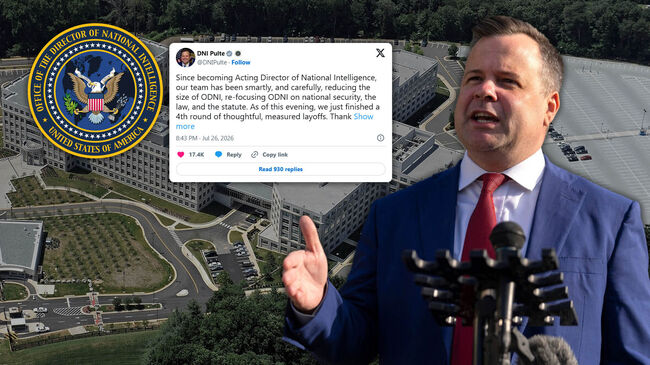 Bill Pulte to Restructure ‘Deep State’… Announces 4th Round of Layoffs at the Office of the Director of National Intelligence
Acting Director of National Intelligence Bill Pulte announced Sunday that he has carried out a fourth "deliberate and measured" reduction in personnel since taking office on June 19, as part of the Tr
Bill Pulte to Restructure ‘Deep State’… Announces 4th Round of Layoffs at the Office of the Director of National Intelligence
Acting Director of National Intelligence Bill Pulte announced Sunday that he has carried out a fourth "deliberate and measured" reduction in personnel since taking office on June 19, as part of the Tr
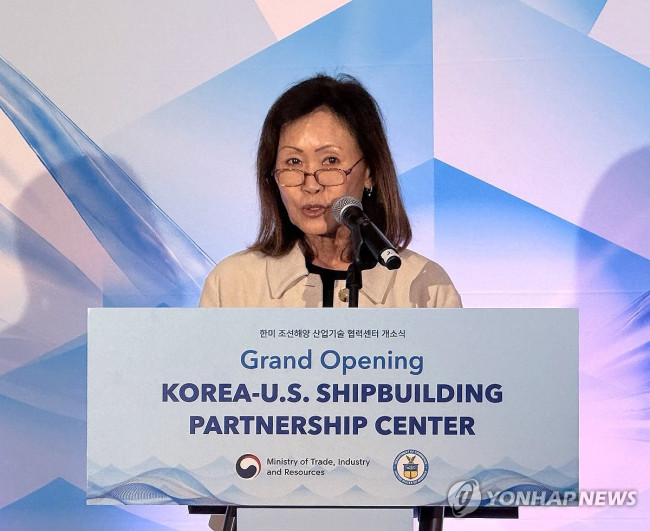 First U.S. Ambassador of Trump's Second Term to Arrive This Week… Will It Provide Momentum to Resolve Pending Issues?
U.S. Ambassador to South Korea Michelle Steel speaks at the opening ceremony of the Korea-U.S. Shipbuilding Cooperation Center held at the Mayflower Hotel in Washington, D.C., on the 23rd (local time)
First U.S. Ambassador of Trump's Second Term to Arrive This Week… Will It Provide Momentum to Resolve Pending Issues?
U.S. Ambassador to South Korea Michelle Steel speaks at the opening ceremony of the Korea-U.S. Shipbuilding Cooperation Center held at the Mayflower Hotel in Washington, D.C., on the 23rd (local time)
 President Yoon, regarding the first-instance ruling on the Public Official Election Act: “An excessive political verdict that distorts the facts… We will appeal immediately.”
The first-instance sentencing hearing for President Yoon Suk Yeol regarding violations of the Public Official Election Act is being broadcast live at Seoul Station on the 27th. [Photo=Yonhap News]Pres
President Yoon, regarding the first-instance ruling on the Public Official Election Act: “An excessive political verdict that distorts the facts… We will appeal immediately.”
The first-instance sentencing hearing for President Yoon Suk Yeol regarding violations of the Public Official Election Act is being broadcast live at Seoul Station on the 27th. [Photo=Yonhap News]Pres
 91% of Net Influx of MZ Generation Goes to Seoul Metropolitan Area… Population Migration Also Shows 'K-shaped Polarization' by Industry
[Provided by Leaders Index]Over the past four years, the MZ generation population has become increasingly concentrated in the Seoul metropolitan area and the Chungcheong region. While cities cen
91% of Net Influx of MZ Generation Goes to Seoul Metropolitan Area… Population Migration Also Shows 'K-shaped Polarization' by Industry
[Provided by Leaders Index]Over the past four years, the MZ generation population has become increasingly concentrated in the Seoul metropolitan area and the Chungcheong region. While cities cen
 'Godfather of Japanese Mystery Novels' Keigo Higashino Passes Away After Battle with Cancer at 68
Famous Japanese mystery novelist Keigo Higashino [AFP=Yonhap News]It has been belatedly reported that Keigo Higashino, the "godfather of Japanese mystery novels" and author of bestsellers such as "The
'Godfather of Japanese Mystery Novels' Keigo Higashino Passes Away After Battle with Cancer at 68
Famous Japanese mystery novelist Keigo Higashino [AFP=Yonhap News]It has been belatedly reported that Keigo Higashino, the "godfather of Japanese mystery novels" and author of bestsellers such as "The
 [Park Pil-kyu Security Column] To the Ignorant Trying to Clothe a Beast in Sheep's Clothing
Rep. Kim Byung-joo of the Democratic Party of Korea [Photo=Yonhap News]“The Air Force Academy doesn't teach you how to fly a plane!” “The Army, Navy, and Air Force academies are exactly the
[Park Pil-kyu Security Column] To the Ignorant Trying to Clothe a Beast in Sheep's Clothing
Rep. Kim Byung-joo of the Democratic Party of Korea [Photo=Yonhap News]“The Air Force Academy doesn't teach you how to fly a plane!” “The Army, Navy, and Air Force academies are exactly the
 [Issue Diagnosis] Two Effects of the Election Petition Review
 [Photo] Evidence of Election Fraud Flooding U.S. Media… Trump Had 2.7 Million Votes Stolen
 [Video] U.S. Semiquincentennial Air Show... 'Art in the Sky' streaks across New York
 [Editorial Cartoon] A Draconian Law That Undermines Freedom of Expression

 List
List