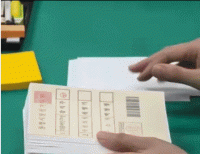
Ayatollah Seyyed Mojtaba Khamenei [Tasnim News]
The election of Mojtaba Khamenei, the second son of the deceased Ayatollah Ali Khamenei, as the new Supreme Leader (Rahbar) appears to be a desperate measure by Iran to navigate an emergency situation, facing a war that threatens the nation's existence.
This situation underscores the urgency Iran faces, as it must now tolerate the contradiction of "hereditary succession" in a religious system (Velayat-e Faqih, governance by Islamic jurists) that initially gained popular support through resistance against the Pahlavi hereditary monarchy.
Since the war began and Ayatollah Khamenei was killed in an explosion, the focal point for prosecuting the war has been the military, particularly the Islamic Revolutionary Guard Corps (IRGC).
Given Mojtaba's close ties with the IRGC over the past two decades, it is likely that the Assembly of Experts concluded he is more suitable for the position of Supreme Leader, who also holds the title of Commander-in-Chief, than an aging senior cleric.
Rumors have circulated that the IRGC secretly pressured the Assembly of Experts, the body that elects the Supreme Leader, to select Mojtaba.
The IRGC may have calculated that Mojtaba, with whom they have a long-standing relationship, becoming the supreme ruler would be "safer" not only during the war but also in the post-war period, compared to a Supreme Leader with no ties to the military.
It is anticipated that the "handicap" of hereditary succession will be overcome by framing Ayatollah Khamenei's death not as a natural death but as a "martyrdom" at the hands of "enemies," as defined within Iran.
This is because the symbolism of the son of a martyr leading the resistance against the United States as the Supreme Leader could serve as a driving force to maintain unity among the IRGC and the Basij militia, the core of Iran's conservative hardliners.
Kim Hyuk, a professor of Persian and Iranian Studies at Hankuk University of Foreign Studies, stated on the 9th, "Interpreting this election as a simple power inheritance is hasty." He added, "Khamenei's death is being highlighted not as a mere leadership change, but as 'martyrdom' due to airstrikes by the United States and Israel, and his son's succession is given the symbolism of inheriting the spirit of martyrdom."
He further explained, "It appears to be a 'political choice' to maximize internal cohesion during a period of extreme security crisis, rather than 'dynastic succession'."
U.S. President Donald Trump's rejection of Mojtaba as Iran's next Supreme Leader is also interpreted as a factor that expedited this decision.
On the 5th, President Trump disparaged Mojtaba, calling him "a lightweight," and stated, "We don't want Khamenei's son. We want someone who will bring harmony and peace to Iran."
This situation implies that Iran felt compelled to elect Mojtaba as Supreme Leader, appearing to yield to President Trump's pressure. It suggests they had no choice but to appoint someone whom the enemy dislikes as their supreme leader.
Consequently, Iran, with Mojtaba as its new Supreme Leader, is expected to continue its strong resistance against the United States and Israel, making it impossible to rule out the possibility of the current war becoming prolonged.
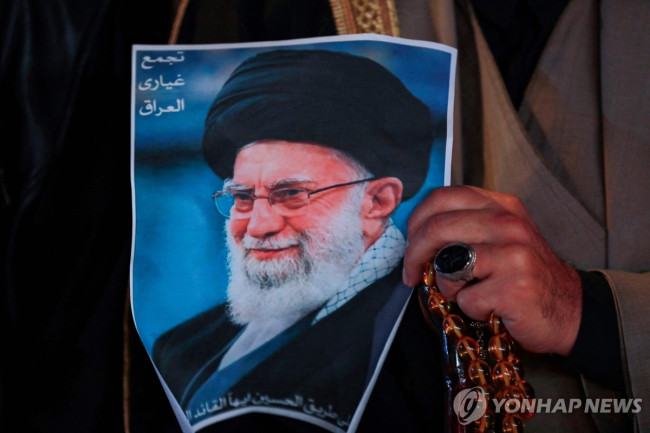 Supporters holding a photo of Ayatollah Ali Khamenei [AFP-Yonhap News]
Despite the emergency situation of war, the "stigma" of hereditary succession is likely to follow him like a label.
In Iran, which is engaged in war against the world's strongest power, the United States, there are discussions that echo the narrative of Imam Hussein, who bravely became a martyr resisting the Sunni hereditary monarchy in the 7th century.
Imam Hussein fought and died opposing Yazid I of the Umayyad Caliphate, who had transformed the selection of leaders from a communal right to private succession. During the 1979 Islamic Revolution, the revolutionary forces even boasted of fighting like Imam Hussein against the Pahlavis, who were likened to Yazid.
While Shia Muslims believe in the succession of religious leaders through bloodline, this signifies not the inheritance of political power but the sacred continuity of a spiritual lineage.
Therefore, in the Islamic Republic of Iran, which adopts the "pure blood" of Imam Hussein, the most revered figure in Shia Islam, as its founding spirit, this succession of the Supreme Leader could be criticized as a betrayal of Imam Hussein, who was killed by a hereditary monarchy.
The rule of the Khamenei family for two generations could also shake the ideology of a republic. After the death of the first Supreme Leader, Ayatollah Ruhollah Khomeini, in 1989, there were suggestions to nominate his son as his successor, but this was not accepted because hereditary succession was deemed to undermine the legitimacy of the regime.
Given that Iran's Islamic theocracy is based on the rule of Islamic jurists possessing high knowledge, piety, and integrity, Mojtaba's religious qualifications could lead to a legitimacy dispute. His father, Khamenei, was also not a Marja' al-taqlid (highest religious authority in Shia Islam), so the constitution was hastily amended, he was elevated to Ayatollah, and then elected Supreme Leader.
Although not officially disclosed, Mojtaba is known to be a Hojatoleslam, a mid-level cleric. Mojtaba may follow his father Khamenei's precedent of compensating for weaknesses in religious authority by closely collaborating with the Supreme Leader's office and the IRGC.
When reporting the election, Iranian state media referred to him as "Ayatollah Seyyed Mojtaba Khamenei."
Furthermore, given that Mojtaba's election is perceived as a decision influenced by the military rather than the deliberation of religious authorities within the Assembly of Experts, Iran is likely to see a deepening of military rule rather than a religious state in the future.

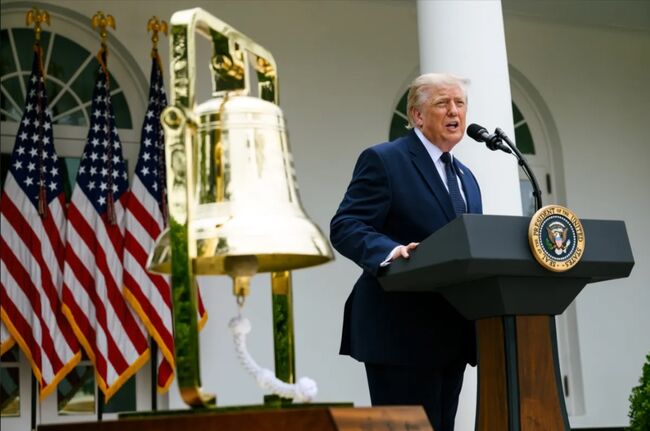 Trump pressures for rate cut again ahead of FOMC... "Should be the lowest in the world"
U.S. President Donald Trump. [Photo = The White House] U.S. President Donald Trump once again pressured the Federal Reserve, the U.S. central bank, to lower interest rates on the 27th (local time
Trump pressures for rate cut again ahead of FOMC... "Should be the lowest in the world"
U.S. President Donald Trump. [Photo = The White House] U.S. President Donald Trump once again pressured the Federal Reserve, the U.S. central bank, to lower interest rates on the 27th (local time
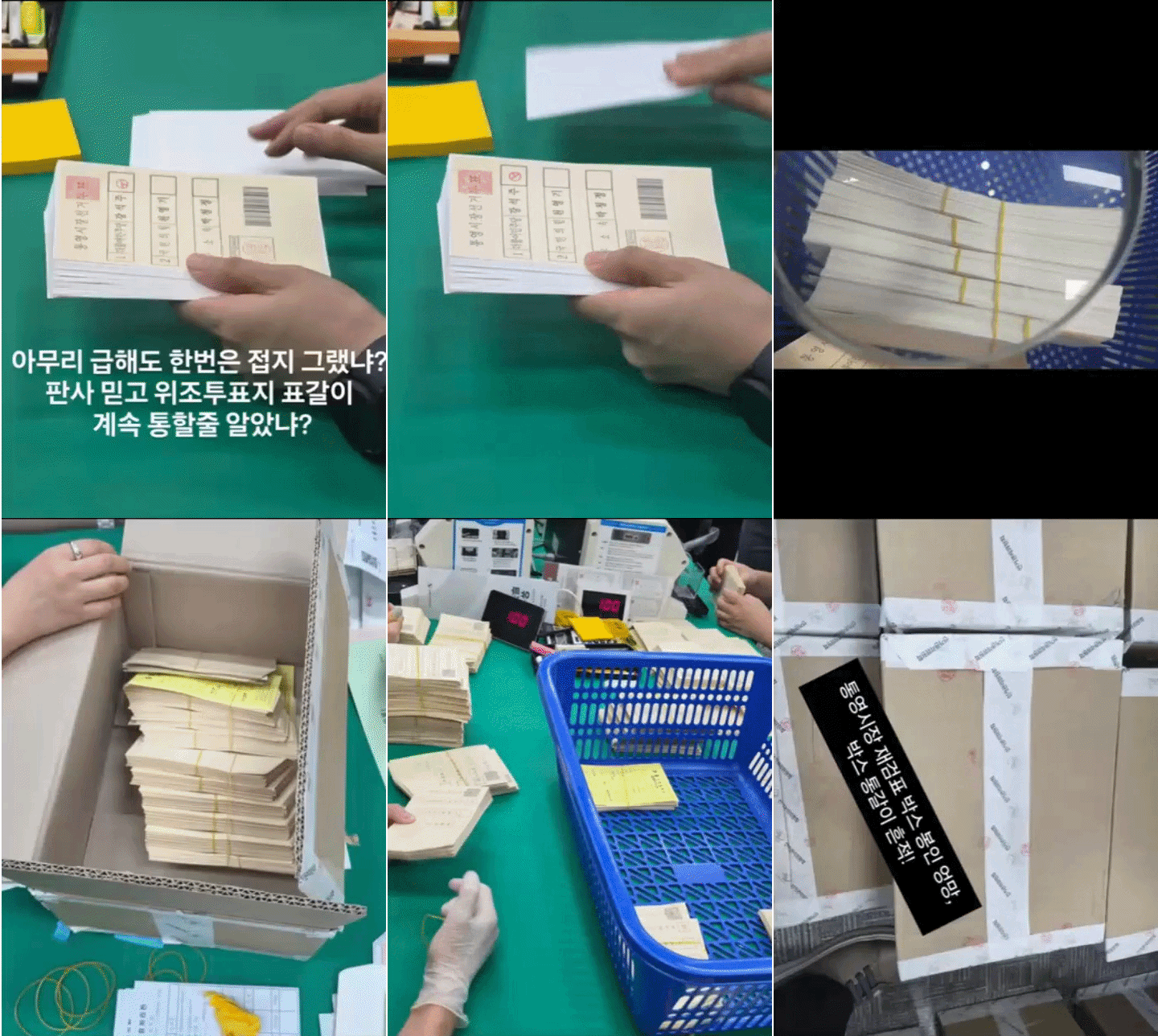 “Ignoring crisp ballots and damaged seals”… Tongyeong mayoral recount concludes with ‘no change in outcome,’ leaving suspicions and public outrage behind
Suspected counterfeit ballots discovered in Tongyeong [GIF from social media of Representative Hwang Kyo-ahn / Attorney Park Joo-hyun]During a recount of the Tongyeong mayoral election in South Gyeong
“Ignoring crisp ballots and damaged seals”… Tongyeong mayoral recount concludes with ‘no change in outcome,’ leaving suspicions and public outrage behind
Suspected counterfeit ballots discovered in Tongyeong [GIF from social media of Representative Hwang Kyo-ahn / Attorney Park Joo-hyun]During a recount of the Tongyeong mayoral election in South Gyeong
 President Yoon, regarding the first-instance ruling on the Public Official Election Act: “An excessive political verdict that distorts the facts… We will appeal immediately.”
The first-instance sentencing hearing for President Yoon Suk Yeol regarding violations of the Public Official Election Act is being broadcast live at Seoul Station on the 27th. [Photo=Yonhap News]Pres
President Yoon, regarding the first-instance ruling on the Public Official Election Act: “An excessive political verdict that distorts the facts… We will appeal immediately.”
The first-instance sentencing hearing for President Yoon Suk Yeol regarding violations of the Public Official Election Act is being broadcast live at Seoul Station on the 27th. [Photo=Yonhap News]Pres
 WSJ: "SK Hynix ADR Premium Is a Sign of AI Trading Overheat"
Advertisement for SK Hynix ADR listing in New York's Times Square [Reuters=Yonhap News file photo]The Wall Street Journal (WSJ) has pointed out that the price of SK Hynix’s American Depositary Recei
WSJ: "SK Hynix ADR Premium Is a Sign of AI Trading Overheat"
Advertisement for SK Hynix ADR listing in New York's Times Square [Reuters=Yonhap News file photo]The Wall Street Journal (WSJ) has pointed out that the price of SK Hynix’s American Depositary Recei
 'Godfather of Japanese Mystery Novels' Keigo Higashino Passes Away After Battle with Cancer at 68
Famous Japanese mystery novelist Keigo Higashino [AFP=Yonhap News]It has been belatedly reported that Keigo Higashino, the "godfather of Japanese mystery novels" and author of bestsellers such as "The
'Godfather of Japanese Mystery Novels' Keigo Higashino Passes Away After Battle with Cancer at 68
Famous Japanese mystery novelist Keigo Higashino [AFP=Yonhap News]It has been belatedly reported that Keigo Higashino, the "godfather of Japanese mystery novels" and author of bestsellers such as "The
 [Park Pil-kyu Security Column] To the Ignorant Trying to Clothe a Beast in Sheep's Clothing
Rep. Kim Byung-joo of the Democratic Party of Korea [Photo=Yonhap News]“The Air Force Academy doesn't teach you how to fly a plane!” “The Army, Navy, and Air Force academies are exactly the
[Park Pil-kyu Security Column] To the Ignorant Trying to Clothe a Beast in Sheep's Clothing
Rep. Kim Byung-joo of the Democratic Party of Korea [Photo=Yonhap News]“The Air Force Academy doesn't teach you how to fly a plane!” “The Army, Navy, and Air Force academies are exactly the
 [Issue Diagnosis] Two Effects of the Election Petition Review
 [Photo] Evidence of Election Fraud Flooding U.S. Media… Trump Had 2.7 Million Votes Stolen
 [Video] U.S. Semiquincentennial Air Show... 'Art in the Sky' streaks across New York
 [Editorial Cartoon] A Draconian Law That Undermines Freedom of Expression

 List
List