The public's interest in the Strait of Hormuz is increasing in connection with the US launching a large-scale bombing operation on Iran's oil export hub, Harg Island, on the 13th (local time).
Public interest in the Strait of Hormuz is increasing in connection with the US launching a large-scale bombing operation on Iran's oil export hub, Harg Island, on the 13th (local time).
In conjunction with this, political columnist Jean Cummings' mention of Hormuz is becoming a hot topic.
Jean Cummings stated on Facebook on the 13th that there is much distortion surrounding the Strait of Hormuz, saying, "The notion that the US is afraid and unable to approach due to Iran's mines and the strait's structure is baseless gossip. The US Navy has a dedicated 'mine countermeasures force'."
In other words, the reason President Donald Trump of the United States is not entering Hormuz immediately is not due to a lack of military capability, but because he is monitoring the situation in relation to strategic costs.
Indeed, the US, as if to show off, heavily bombed Harg Island in the Persian Gulf.
Harg Island, located about 32 km off the coast of mainland Iran, is equipped with large-scale oil storage facilities where approximately 90% of Iran's oil exports are shipped. Pipelines departing from this island are connected via sea to Iran's largest oil and gas fields.
Meanwhile, Hormuz, which connects the Persian Gulf and the Arabian Sea, is where about 20 million barrels of crude oil pass through daily. If a conflict were to start in this strait, a global surge in crude oil prices would be unavoidable.
Jean Cummings conveyed the war situation, stating, "The US is in the final stages of completely eliminating Iran's remaining missile and drone bases, and is focusing on eliminating the Revolutionary Guard and neutralizing forces like the Basij militia within Iran."
In other words, the US is strategically not entering Hormuz at this moment to reduce the impact on the global economy and damage to civilian oil tankers, not because it lacks the ability to fight.
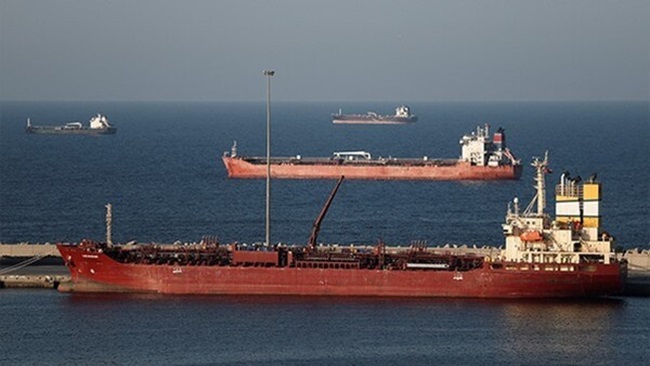 Oil tankers passing through the Strait of Hormuz. [Photo=KBS News Capture]
Jean Cummings stated that Korea is a bigger problem, saying, "Korea should be more concerned about the safety of Korean sailors trapped in the Strait of Hormuz and exposed to Iranian attacks, and the harsh reality of Korea's dwindling crude oil reserves."
He also criticized the Lee Jae-myung administration, saying, "The Lee Jae-myung administration is wielding its blade against the oil industry and refiners every day in the face of a national crisis," and added, "Pressuring businesses will not refill empty oil storage facilities."
Furthermore, he urged, "The government insists that there are no supply issues through indirect supply via the UAE, but 4 million barrels is only enough for Korea to last 1.5 days. The Lee Jae-myung administration should not conceal the truth about the oil crisis."
The following is the full text of Jean Cummings' Facebook post.
The Hormuz Situation and the Incompetent Korean Government
There is a lot of anxiety among people due to the overwhelming fake news and exaggerated analyses circulating on the internet and in the media regarding the Iranian attacks.
However, looking at the actual military situation, Iran's key military capabilities have already been significantly neutralized and are not at a level to pose a comprehensive threat to the US. Despite this, various misunderstandings and distortions are rampant surrounding the Strait of Hormuz.
Superficial and incorrect analyses are being disseminated, such as the US being afraid to approach due to Iran's mines and the strait's structure, or that even warships cannot enter due to shallow waters.
However, the actual military reality is completely different.
The US Navy has a dedicated 'mine countermeasures force' for this purpose.
Among these, there are specialized mine-clearing vessels like the 'Avenger-class mine countermeasures ship,' and the 'MH-53E Sea Dragon' mine-hunting helicopter is also operated to detect mines hidden in areas like the Strait of Hormuz.
Furthermore, they also possess 'MCM UUV (Mine Countermeasure Unmanned Underwater Vehicle).'
Considering these and various other undisclosed advanced capabilities, the US Navy's mine countermeasures capability is already fully prepared.
In other words, the US is not afraid or unable to enter the Strait of Hormuz at present; rather, it has a military system that has been prepared for this situation for decades and is merely coordinating the timing after preparation.
It is rather ignorance to think that the US would attack Iran without adequate preparation, to the extent of being unable to enter due to not knowing about the presence of mines.
The reason the US is not entering Hormuz right now is not due to a lack of military capability, but because it is monitoring the situation in relation to "strategic costs."
The issue is not the combat itself in the event of a full-scale engagement in Hormuz, but rather the cautious approach due to the economic ripple effects that would ensue.
This is a strategic strait through which about 20% of the world's oil passes daily, with approximately 20 million barrels of crude oil and an average of over 130 oil tankers and merchant ships passing through daily. This volume is enormous, enough for a country like Korea to use for nearly a week.
Therefore, if a conflict were to begin in this strait, civilian oil tankers would be hit more frequently, the insurance market would be thrown into chaos, crude oil prices would skyrocket, and the global financial markets would be impacted, leading to an economic war occurring simultaneously.
This is why the US is currently focusing on "completely eliminating Iran's military capabilities" rather than unconditionally launching a "strait control operation."
Moreover, the US Navy forces responsible for the Strait of Hormuz were already permanently stationed in the Middle East and were ready to be deployed for operations at any time.
This area is under the jurisdiction of the US Navy's 'Fifth Fleet,' and these forces have been permanently deployed in the Middle East waters, centered around Bahrain, preparing for such situations for a long time.
Bahrain is located only about 200-300 km from the Strait of Hormuz, placing US Navy forces in a position to be deployed for operations within hours if a situation arises.
Currently, the US military is already maintaining control from outside the strait.
The US is currently in the final stages of completely eliminating Iran's remaining missile and drone bases, and is focusing on eliminating the Revolutionary Guard and neutralizing forces like the Basij militia within Iran.
In other words, they are cleaning up the surroundings as much as possible before launching operations in Hormuz.
The US is strategically not entering Hormuz at this moment to minimize the impact on the global economy and damage to civilian oil tankers, not because it lacks the ability to fight there.
Of course, as some have said, it is true that this is not an easy battlefield. It is also true that the water is shallow and the shipping lanes are very narrow.
Mine-clearing operations are necessary, civilian oil tankers waiting must be protected, and preparations must be made for attacks by Iranian speedboats. It is certainly true that these factors make it a time-consuming and costly battlefield.
However, it must be understood that the assertion that the US will suffer heavy losses due to Iran's counterattack the moment it enters there is far from the truth.
The reason President Trump is currently approaching the Hormuz issue cautiously is not due to military apprehension, but because he is prioritizing economic and diplomatic adjustments to minimize the impact on the global economy should a clash occur there.
This is especially true because this strait is a key channel for crude oil supply to Asia, and international cooperation and economic responses must precede any potential long-term supply disruptions.
In other words, this is not simply a matter of military operations, but a strategic space where diplomacy and economy must work together. It is taking time, but it is by no means because the military power is insufficient to handle an Iranian attack.
In fact, the Trump administration is already taking measures to stabilize the global energy market, such as releasing strategic petroleum reserves and securing additional crude oil supplies.
In other words, the Hormuz issue is not a simple military conflict but a matter that requires consideration of the entire global energy supply chain, which is why economic and diplomatic coordination is being carried out first, leading to delays.
Korea is a Bigger Problem
More importantly, what Korea should be concerned about now is the lives and safety of Korean sailors trapped in the Strait of Hormuz and exposed to Iranian attacks, and the harsh reality of Korea's dwindling crude oil reserves.
Even more serious is the 'burying one's head in the sand' response shown by the Lee Jae-myung administration in the face of such a national crisis.
The Lee Jae-myung administration is wielding its blade against the oil industry and refiners every day.
They are promoting investigations into the distribution stages and price controls as if they were significant supply measures.
However, pressuring businesses will not refill empty oil storage facilities. The key to energy security is physical acquisition, not market oversight.
The more the government pressures businesses by suppressing prices, the more reluctant businesses will become to import crude oil due to concerns about declining profitability and risks.
This could, in turn, exacerbate the crude oil reserve problem and potentially lead to an oil crisis.
A Deception of 1.5 Days' Supply; The Lee Jae-myung Administration Must Not Conceal the Truth of the 'Oil Crisis'
The measures currently proposed by the Lee Jae-myung administration are being revealed as 'demonstration projects' designed to blind the public.
The government insists that there are no supply issues through indirect supply via the UAE, but a closer look at the detailed indicators reveals that the reality of Korea's energy security is dire.
The Trap of '4 Million Barrels': Enough for South Korea to Last Only 1.5 Days
The Lee Jae-myung administration recently promoted the import of 4 million barrels loaded from an alternative port in the UAE as a significant achievement. However, let's calculate coolly.
South Korea's daily crude oil consumption is about 2.8 million barrels. 4 million barrels is only enough for 1.5 days. Despite the fact that the Hormuz situation is not a two-day event, telling people "don't worry" by presenting a quantity that is merely a short-term remedy is the height of irresponsibility.
The remaining 2 million barrels is merely approval for the use of joint storage facilities within Korea, which is far from being a practical 'shield' in a prolonged blockade situation.
The Limitations and Attack Risks of the Alternative Route 'Fujairah'
The government suggests Fujairah port in Oman, which is unrelated to the Strait of Hormuz, as an alternative. However, the reality is not so simple.
The UAE's pipeline transportation capacity has already reached its limit.
According to the IEA and Kpler, there are reports that UAE's internal storage is already saturated after about 20 days, leading to reduced production.
Some shipping companies are already avoiding calls at Fujairah port, and the number of cargo cancellations is rapidly increasing.
Even some UAE-related oil tankers have been hit or isolated, so the government's claim that "there is an alternative route and it is safe" is merely armchair theorizing that hides the urgency of the situation from the public.
The UAE's state-owned oil company, ADNOC, has already officially announced 'adjustments to deliveries.' This is a strong warning that even the contracted volume for Korea may not arrive on time.
Murban Oil Exceeds $100 Per Barrel; Price Surge Not Attributable to Businesses
Furthermore, what is more frightening than the supply volume is the price.
The price of Murban oil on the global spot market has already surpassed $100 per barrel. This reflects the higher freight costs and war risk premiums on the alternative route.
Despite this situation, the Lee Jae-myung administration is pressuring businesses by focusing solely on regulations and crackdowns on the oil industry.
If the cost of importing oil itself has skyrocketed, can prices be controlled by raiding gas stations?
This is a cowardly political ploy to preemptively block an escape route, aiming to shift the blame for any future 'oil crisis' and price surges onto businesses for 'hoarding' or 'unjust profits.'
While the strategic reserve is reported to be for 200 days on paper, considering actual consumption and import delays, South Korea's economy is currently standing on the brink and could 'stop' at any moment.
If the international oil price and import costs skyrocket while retail prices are suppressed, it becomes a structure where the more one sells, the more one loses. In this case, gas station operators will have no choice but to stop operations and put up 'no inventory' signs, not to avoid crackdowns, but to avoid going out of business.
Furthermore, with the issuance of Section 301 of the Customs Act due to the Coupang incident, a large-scale investigation into the Korean government's policies has begun, and industries such as automobiles, semiconductors, and steel are facing the threat of tariff bombs.
The Lee Jae-myung Administration Scans Books While Warehouses Are Empty of Oil
Do not deceive the public to cover up incompetence.
South Korea is currently facing an unprecedented energy isolation crisis. However, instead of admitting its policy failures in failing to prepare for the obvious crisis, the Lee Jae-myung government is already looking for cowardly ways to shift the blame to the private sector.
What is the real intention behind the government treating the oil industry as criminals and wielding the blade of regulation?
If an oil crisis actually occurs, leading to skyrocketing prices and factory shutdowns, is it not an attempt to shift the blame by saying, "We tried our best with crackdowns, but it was ruined by the greedy companies' hoarding"?
This is a characteristic repetitive behavior of the Lee Jae-myung administration, which has consistently used even national crises as tools for political survival.
Energy crises cannot be solved through regulation.
If factories are stopped because there is no oil in the warehouse, the government's primary responsibility is to procure oil and get them running. If the warehouse is empty, where will the oil magically appear by inspecting books and squeezing businesses?
Furthermore, South Korea is a country that does not produce a single drop of oil.
Both its economy and security are destined to be unsustainable without cooperation from the United States. Yet, what path has the Lee Jae-myung administration chosen?
By constantly provoking anti-American sentiment on every issue, it has incurred the wrath of the United States, resulting in a self-inflicted consequence of 'retaliatory tariff bombs' on top of an already declining economy.
Crude oil supply and demand, and exports – these two pillars of the Korean economy are both based on trust with the United States.
When the US attacked Iran, the government sided with Iran rather than its ally the US and, in the midst of this, remains fixated on a declaration of peace with North Korea. Why should the US patiently help such a government?
The reason the US no longer finds a reason to help Korea stems from the hypocritical behavior and diplomatic incompetence of the Korean government itself.
Lee Jae-myung posted on X (formerly Twitter), as if there were no problem with fuel prices, "Is it stabilizing a lot? Report price gouging!"
This is the height of incompetence.
Instead of receiving 'price gouging reports' via Twitter, Lee Jae-myung should be focused on restoring relations with the United States to resolve the retaliatory tariff issue and secure safe oil transportation routes.
Politics is about taking responsibility, not about shifting it.
The incompetence of the Lee Jae-myung administration, which has handled politics and diplomacy with shallow emotions rather than meticulous calculations of national interest, has now reached its limit.
Deception that deceives the public and attempts to escape crises through internal infighting will never last long.
If oil storage tanks run dry, factories stop, and the government faces regulations under the cold gaze of a turned-away United States, the Lee Jae-myung administration will surely face the day of stern judgment from the people.
A nation is not run by shows.
It is crucial to remember that national governance is sustained by competence, responsibility, and trust.
Jean Cummings
Political Columnist/ Former Publisher, The Asia Post
March 13, 2026

 Iranian Foreign Ministry: "Continuing Message Exchanges with the U.S. and Activities of Mediating Countries"
Esmaeil Baghaei, Spokesperson for the Iranian Ministry of Foreign Affairs [Xinhua, Yonhap News file photo]Esmaeil Baghaei, spokesperson for the Iranian Ministry of Foreign Affairs, stated on the 26th
Iranian Foreign Ministry: "Continuing Message Exchanges with the U.S. and Activities of Mediating Countries"
Esmaeil Baghaei, Spokesperson for the Iranian Ministry of Foreign Affairs [Xinhua, Yonhap News file photo]Esmaeil Baghaei, spokesperson for the Iranian Ministry of Foreign Affairs, stated on the 26th
 President Yoon: "Do You Think You Are Safe from the Special Counsel?"... Final Statement Video Released
President Yoon Suk Yeol rebuking the special prosecutor on the 24th. [Court video / @birds_justice X account subtitle GIF] A video of President Yoon Suk Yeol's closing statement at his trial rega
President Yoon: "Do You Think You Are Safe from the Special Counsel?"... Final Statement Video Released
President Yoon Suk Yeol rebuking the special prosecutor on the 24th. [Court video / @birds_justice X account subtitle GIF] A video of President Yoon Suk Yeol's closing statement at his trial rega
 President Yoon, regarding the first-instance ruling on the Public Official Election Act: “An excessive political verdict that distorts the facts… We will appeal immediately.”
The first-instance sentencing hearing for President Yoon Suk Yeol regarding violations of the Public Official Election Act is being broadcast live at Seoul Station on the 27th. [Photo=Yonhap News]Pres
President Yoon, regarding the first-instance ruling on the Public Official Election Act: “An excessive political verdict that distorts the facts… We will appeal immediately.”
The first-instance sentencing hearing for President Yoon Suk Yeol regarding violations of the Public Official Election Act is being broadcast live at Seoul Station on the 27th. [Photo=Yonhap News]Pres
 WSJ: "SK Hynix ADR Premium Is a Sign of AI Trading Overheat"
Advertisement for SK Hynix ADR listing in New York's Times Square [Reuters=Yonhap News file photo]The Wall Street Journal (WSJ) has pointed out that the price of SK Hynix’s American Depositary Recei
WSJ: "SK Hynix ADR Premium Is a Sign of AI Trading Overheat"
Advertisement for SK Hynix ADR listing in New York's Times Square [Reuters=Yonhap News file photo]The Wall Street Journal (WSJ) has pointed out that the price of SK Hynix’s American Depositary Recei
 'Godfather of Japanese Mystery Novels' Keigo Higashino Passes Away After Battle with Cancer at 68
Famous Japanese mystery novelist Keigo Higashino [AFP=Yonhap News]It has been belatedly reported that Keigo Higashino, the "godfather of Japanese mystery novels" and author of bestsellers such as "The
'Godfather of Japanese Mystery Novels' Keigo Higashino Passes Away After Battle with Cancer at 68
Famous Japanese mystery novelist Keigo Higashino [AFP=Yonhap News]It has been belatedly reported that Keigo Higashino, the "godfather of Japanese mystery novels" and author of bestsellers such as "The
 [Park Pil-kyu Security Column] To the Ignorant Trying to Clothe a Beast in Sheep's Clothing
Rep. Kim Byung-joo of the Democratic Party of Korea [Photo=Yonhap News]“The Air Force Academy doesn't teach you how to fly a plane!” “The Army, Navy, and Air Force academies are exactly the
[Park Pil-kyu Security Column] To the Ignorant Trying to Clothe a Beast in Sheep's Clothing
Rep. Kim Byung-joo of the Democratic Party of Korea [Photo=Yonhap News]“The Air Force Academy doesn't teach you how to fly a plane!” “The Army, Navy, and Air Force academies are exactly the
 [Issue Diagnosis] Two Effects of the Election Petition Review
 [Photo] Evidence of Election Fraud Flooding U.S. Media… Trump Had 2.7 Million Votes Stolen
 [Video] U.S. Semiquincentennial Air Show... 'Art in the Sky' streaks across New York
 [Editorial Cartoon] A Draconian Law That Undermines Freedom of Expression

 List
List