 Election fraud robs the people of their political space.
Justice and freedom exist only in imagination, hypothesis, and hope today. Reality is ugly and terrible. When can the people regain sovereignty? What meaning does 'popular sovereignty' hold now?
The People Are the Masters of the Nation! The People Must Decide Everything
In 'Leviathan' (1651), Thomas Hobbes spoke of state power with absolute sovereignty.
Humans in the 'state of nature' suffered from the 'war of all against all' (bellum omnium contra omnes). Humans were "solitary, poor, nasty, brutish, and short." To escape catastrophe, humans entered into a contract. They sought peace by delegating their rights to a single power. This is known as the social contract theory.
The author does not believe this as is. The state is not a contract but a 'monster' formed over a long period. It was a tool for struggle, a method for peace, and a system to defend against external threats.
Those who hold this state power are called sovereigns. In the past, monarchs and aristocrats were sovereigns. Now, the people are and should be the sovereigns. This is what is called 'popular sovereignty.' The people are the masters of the state, and the people must decide everything. It is a 'nation-state' of 'popular sovereignty.'
It is the 21st century. This nation-state is no longer 'independent.' Negri and Hardt's 'Empire' (2000) states that after globalization, the world has transformed into an 'empire' system.
It is not an empire like the Roman Empire. Nor is it like Lenin's 'Imperialism' (Imperialism, the Highest Stage of Capitalism). 'Imperialism' was an era of competition for colonies among modern sovereign states, a process of dividing the world. The world today is an 'empire' in itself. There is no 'outside' to this empire.
Within this 'empire' system, there are various competing 'sovereign blocs (alliances).' These are 'sovereign blocs' centered around the United States, Europe, Russia, and China. Countries belonging to these sovereign blocs rely on and support each other.
Countries belonging to the bloc-based empire are intertwined in international organizations, financial networks, military alliances, and multinational corporations. While there is a hierarchy, it is not the domination and exploitation of the past imperialist era.
Of course, this also depends on the bloc. Within this empire system, the principle of popular sovereignty of individual nation-states is weakened and limited. The mechanisms for forming and maintaining blocs within the empire restrict the sovereignty of each country. Even the United States cannot do as it pleases with South Korea.
The sovereignty of South Korea and the United States relies on and supports each other. State institutions, political parties, and social organizations are linked to the mechanisms of the bloc-based system, and the people have limited means within this system to protect, express, and demand their rights.
Elections Are Fundamental to the Principle of Popular Sovereignty
In this situation, elections are the most important mechanism and means to express the principle of popular sovereignty. They are an occasion and a platform for public discourse to converge.
Even within the imperial power structure, the people can exert influence on state policies, which are often constrained, and affect the direction of the bloc to which the state belongs through elections.
The erosion of elections means the reduction, distortion, contamination, and perversion of the space for political expression for the people. The will of the people, social demands, and collective aspirations lose their transparency. Those who lack representativeness engage in destructive acts for their own interests. This is precisely the reality we are witnessing now.
South Korean politics, based on fraudulent elections, is far from the true demands of the people. Opinion polls are the 'build-up' to fraudulent elections, and the media serves to foster public resignation.
Most importantly, the erosion of elections in the 'empire' era leads the nation to access and be subsumed into a 'bloc system' that the people do not want. The powers that have come to power through fraudulent elections are rapidly trying to detach South Korea from the US-centric bloc system and bind it to an entirely different system. This is a direct consequence of eroded, fraudulent elections.
Furthermore, how many laws have been passed through the 'automatic passage machine' of the National Assembly over the past nine months? While the people listen to or block out the sounds of speakers distributing a few hundred thousand won each, the nation's budget is spent and disappears without anyone knowing how or where.
Isn't it outrageous to hear that soldiers are not receiving their retirement pay or that it has been delayed? I used to wonder what 'plundering the people' meant when the person currently imprisoned spoke of it during a speech. Now, that statement feels profoundly true. The people are being 'plundered.' The state has truly become an instrument of 'plunder.'
"If the Election Commission Corrupts, Democracy Falls"
In the final phase of the last presidential election, on March 8, 2023, at the final campaign rally in Uijeongbu, the imprisoned individual said the following:
"Is our nation's National Election Commission still a normal election commission? Even if a country is rotting and bruised, the extent of this is too severe, everyone. No matter how corrupt other institutions become, shouldn't the judiciary, the media, and the election commission remain neutral and survive? If other places rot, but the election commission rots, democracy perishes."
In this country, the power of certain forces has become deeply entrenched. The media in this country does not report what needs to be known.
His cry and warning were buried and forgotten amidst countless criticisms, attacks, and distorted propaganda against him. Righteous words cannot be broadcast, and people of justice lose their place. The painful groans of those who see reality clearly and suffer can be heard.
I believe things will change. For them, it is an 'impending catastrophe.' I believe in the 'truth' that dawn is near when the darkness is deepest. After Venezuela, then Iran, and after Iran? The media asks and answers itself: North Korea, Cuba.
As always, they avoid the core issue here. The next step should be to set this country right. In the 'empire' bloc system, the United States is 'urgently' focused on South Korea. What the United States needs most urgently is this country. I believe so.
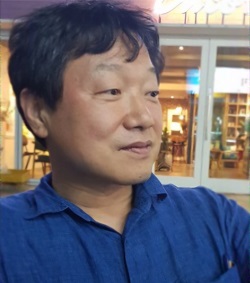
◆ Professor Bang Min-ho
Ph.D. in Literature, Professor of Korean Language and Literature at Seoul National University. He has been actively engaged as the editor-in-chief of the quarterly literary magazine 'Maek' (since 2022), as well as a poet, novelist, and literary critic. His works include 'Lover Simcheong' (2015), 'Language of Pain' (2019), 'Revisiting Korean Criticism' (2021), and 'Seoul Literary Travels' (2024).

 Iranian Foreign Ministry: "Continuing Message Exchanges with the U.S. and Activities of Mediating Countries"
Esmaeil Baghaei, Spokesperson for the Iranian Ministry of Foreign Affairs [Xinhua, Yonhap News file photo]Esmaeil Baghaei, spokesperson for the Iranian Ministry of Foreign Affairs, stated on the 26th
Iranian Foreign Ministry: "Continuing Message Exchanges with the U.S. and Activities of Mediating Countries"
Esmaeil Baghaei, Spokesperson for the Iranian Ministry of Foreign Affairs [Xinhua, Yonhap News file photo]Esmaeil Baghaei, spokesperson for the Iranian Ministry of Foreign Affairs, stated on the 26th
 President Yoon: "Do You Think You Are Safe from the Special Counsel?"... Final Statement Video Released
President Yoon Suk Yeol rebuking the special prosecutor on the 24th. [Court video / @birds_justice X account subtitle GIF] A video of President Yoon Suk Yeol's closing statement at his trial rega
President Yoon: "Do You Think You Are Safe from the Special Counsel?"... Final Statement Video Released
President Yoon Suk Yeol rebuking the special prosecutor on the 24th. [Court video / @birds_justice X account subtitle GIF] A video of President Yoon Suk Yeol's closing statement at his trial rega
 President Yoon, regarding the first-instance ruling on the Public Official Election Act: “An excessive political verdict that distorts the facts… We will appeal immediately.”
The first-instance sentencing hearing for President Yoon Suk Yeol regarding violations of the Public Official Election Act is being broadcast live at Seoul Station on the 27th. [Photo=Yonhap News]Pres
President Yoon, regarding the first-instance ruling on the Public Official Election Act: “An excessive political verdict that distorts the facts… We will appeal immediately.”
The first-instance sentencing hearing for President Yoon Suk Yeol regarding violations of the Public Official Election Act is being broadcast live at Seoul Station on the 27th. [Photo=Yonhap News]Pres
 WSJ: "SK Hynix ADR Premium Is a Sign of AI Trading Overheat"
Advertisement for SK Hynix ADR listing in New York's Times Square [Reuters=Yonhap News file photo]The Wall Street Journal (WSJ) has pointed out that the price of SK Hynix’s American Depositary Recei
WSJ: "SK Hynix ADR Premium Is a Sign of AI Trading Overheat"
Advertisement for SK Hynix ADR listing in New York's Times Square [Reuters=Yonhap News file photo]The Wall Street Journal (WSJ) has pointed out that the price of SK Hynix’s American Depositary Recei
 'Godfather of Japanese Mystery Novels' Keigo Higashino Passes Away After Battle with Cancer at 68
Famous Japanese mystery novelist Keigo Higashino [AFP=Yonhap News]It has been belatedly reported that Keigo Higashino, the "godfather of Japanese mystery novels" and author of bestsellers such as "The
'Godfather of Japanese Mystery Novels' Keigo Higashino Passes Away After Battle with Cancer at 68
Famous Japanese mystery novelist Keigo Higashino [AFP=Yonhap News]It has been belatedly reported that Keigo Higashino, the "godfather of Japanese mystery novels" and author of bestsellers such as "The
 [Park Pil-kyu Security Column] To the Ignorant Trying to Clothe a Beast in Sheep's Clothing
Rep. Kim Byung-joo of the Democratic Party of Korea [Photo=Yonhap News]“The Air Force Academy doesn't teach you how to fly a plane!” “The Army, Navy, and Air Force academies are exactly the
[Park Pil-kyu Security Column] To the Ignorant Trying to Clothe a Beast in Sheep's Clothing
Rep. Kim Byung-joo of the Democratic Party of Korea [Photo=Yonhap News]“The Air Force Academy doesn't teach you how to fly a plane!” “The Army, Navy, and Air Force academies are exactly the
 [Issue Diagnosis] Two Effects of the Election Petition Review
 [Photo] Evidence of Election Fraud Flooding U.S. Media… Trump Had 2.7 Million Votes Stolen
 [Video] U.S. Semiquincentennial Air Show... 'Art in the Sky' streaks across New York
 [Editorial Cartoon] A Draconian Law That Undermines Freedom of Expression

 List
List









