 U.S. Treasury Secretary Mnuchin and Chinese Vice Premier He Lifeng [EPA Yonhap News]
The United States and China held high-level consultations in Paris, France, on March 15 (local time) ahead of a summit between the leaders of the two countries.
The meeting was held to coordinate the agenda for the summit between U.S. President Donald Trump, who is visiting China at the end of this month, and Chinese President Xi Jinping. The delegations from both sides have agreed to continue their consultations on March 16.
Reuters and Bloomberg reported that the U.S. delegation, including Treasury Secretary Steven Mnuchin, and the Chinese delegation, including Chinese Vice Premier He Lifeng, met at the headquarters of the Organization for Economic Cooperation and Development (OECD) in Paris and held talks for over six hours.
This marked the conclusion of the first day of a two-day meeting that had been scheduled.
A spokesperson for the U.S. Treasury Department declined to comment on the atmosphere or specific details of the discussions, and Chinese officials also left the meeting without making any statements to reporters.
However, two sources familiar with the consultations told Reuters that the meeting was "remarkably calm" and conducted in a "frank and constructive" atmosphere.
The sources also stated that the discussions covered potential areas of agreement in agriculture, critical minerals, and trade management that could be reviewed at the U.S.-China summit between President Trump and President Xi.
One source indicated that China was open to additional purchases of U.S. agricultural products beyond poultry, beef, and soybeans, including its existing commitment to purchase 25 million tons of U.S. soybeans annually for the next three years.
Specifically, the two sides discussed the establishment of new formal mechanisms, such as a "Board of Trade" and a "Board of Investment," to manage trade and investment between the U.S. and China. These could be reviewed at the U.S.-China summit in Beijing, and working-level negotiations are expected to continue on March 16.
Among these, the "Board of Trade" is a more advanced proposal, with one source explaining that its purpose is to identify products and sectors where trade can be expanded in a balanced manner without undermining each country's national security or critical supply chains.
The source added that the "Board of Investment," while not establishing broad investment policies, would address specific investment issues that may arise between the two countries.
In addition, the U.S. side discussed the supply of critical minerals from China to American companies and raised concerns about the shortage of Chinese-sourced yttrium, a critical mineral used in jet engine turbines for the U.S. aerospace industry.
The U.S. side also expressed hope that China would increase its purchases of Boeing aircraft and U.S. coal, oil, and natural gas, with further discussions potentially taking place on March 16, according to sources.
This consultation is the first face-to-face meeting between the two sides since the U.S. Supreme Court ruled on February 20 that President Trump did not have the authority to impose tariffs under the International Emergency Economic Powers Act (IEEPA).
The Trump administration has since restructured its tariff policy by utilizing other legal authorities, including the introduction of a 10% global tariff and the initiation of a Section 301 investigation.
The ongoing war in Iran, now in its second week, and particularly the de facto blockade of the Strait of Hormuz and the resulting surge in oil prices, are also likely to have been discussed in these negotiations.
China imports 45% of its crude oil through this strait.
President Trump stated on his Truth Social platform the previous day that "many countries, especially those affected by Iran's attempt to blockade the Strait of Hormuz, will send warships to keep the strait open and safe," requesting warships from five countries, including South Korea, China, and Japan.
Jamie Jameson Grier, U.S. Trade Representative (USTR), along with Liao Min, China's Vice Minister of Finance, and Li Chenggang, Vice Minister of Commerce, also attended the meeting.
The leaders of the U.S. and China last met on October 30 of the previous year at Gimhae Air Base in Busan. During that meeting, China agreed to a one-year moratorium on rare earth export controls, and the U.S. agreed to reduce its "fentanyl tariffs" (tariffs imposed for not cooperating in preventing the flow of the drug fentanyl into the U.S.) from 20% to 10%.
China agreed to resume its purchases of U.S. soybeans, which it had suspended, and the U.S. agreed to postpone the expansion of its blacklist of Chinese companies that are prohibited from purchasing advanced technology products such as semiconductor manufacturing equipment.

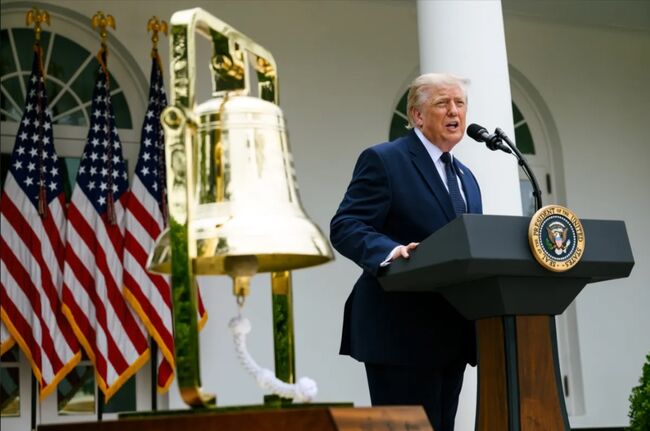 Trump pressures for rate cut again ahead of FOMC... "Should be the lowest in the world"
U.S. President Donald Trump. [Photo = The White House] U.S. President Donald Trump once again pressured the Federal Reserve, the U.S. central bank, to lower interest rates on the 27th (local time
Trump pressures for rate cut again ahead of FOMC... "Should be the lowest in the world"
U.S. President Donald Trump. [Photo = The White House] U.S. President Donald Trump once again pressured the Federal Reserve, the U.S. central bank, to lower interest rates on the 27th (local time
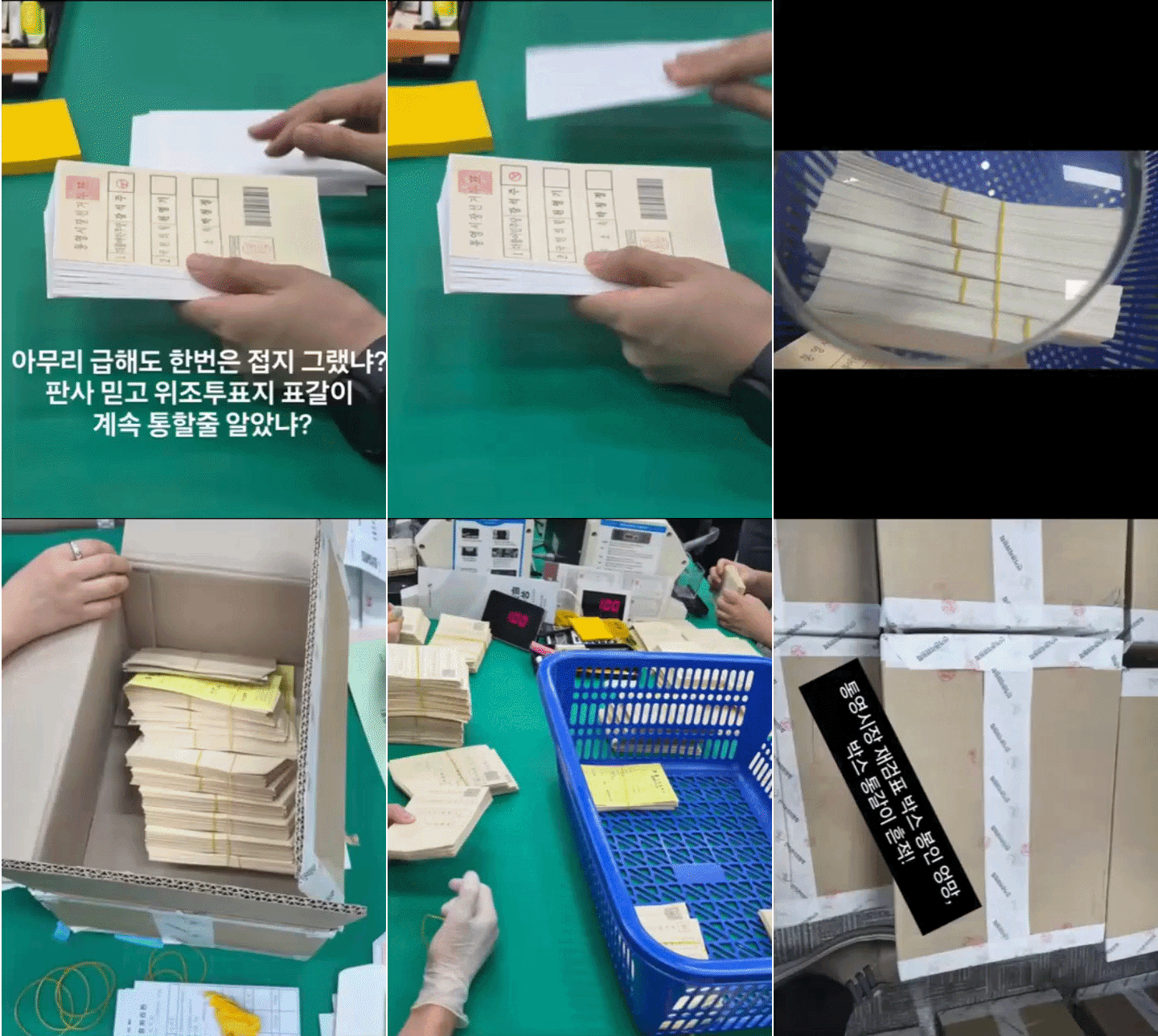 “Ignoring crisp ballots and damaged seals”… Tongyeong mayoral recount concludes with ‘no change in outcome,’ leaving suspicions and public outrage behind
Suspected counterfeit ballots discovered in Tongyeong [GIF from social media of Representative Hwang Kyo-ahn / Attorney Park Joo-hyun]During a recount of the Tongyeong mayoral election in South Gyeong
“Ignoring crisp ballots and damaged seals”… Tongyeong mayoral recount concludes with ‘no change in outcome,’ leaving suspicions and public outrage behind
Suspected counterfeit ballots discovered in Tongyeong [GIF from social media of Representative Hwang Kyo-ahn / Attorney Park Joo-hyun]During a recount of the Tongyeong mayoral election in South Gyeong
 President Yoon, regarding the first-instance ruling on the Public Official Election Act: “An excessive political verdict that distorts the facts… We will appeal immediately.”
The first-instance sentencing hearing for President Yoon Suk Yeol regarding violations of the Public Official Election Act is being broadcast live at Seoul Station on the 27th. [Photo=Yonhap News]Pres
President Yoon, regarding the first-instance ruling on the Public Official Election Act: “An excessive political verdict that distorts the facts… We will appeal immediately.”
The first-instance sentencing hearing for President Yoon Suk Yeol regarding violations of the Public Official Election Act is being broadcast live at Seoul Station on the 27th. [Photo=Yonhap News]Pres
 WSJ: "SK Hynix ADR Premium Is a Sign of AI Trading Overheat"
Advertisement for SK Hynix ADR listing in New York's Times Square [Reuters=Yonhap News file photo]The Wall Street Journal (WSJ) has pointed out that the price of SK Hynix’s American Depositary Recei
WSJ: "SK Hynix ADR Premium Is a Sign of AI Trading Overheat"
Advertisement for SK Hynix ADR listing in New York's Times Square [Reuters=Yonhap News file photo]The Wall Street Journal (WSJ) has pointed out that the price of SK Hynix’s American Depositary Recei
 'Godfather of Japanese Mystery Novels' Keigo Higashino Passes Away After Battle with Cancer at 68
Famous Japanese mystery novelist Keigo Higashino [AFP=Yonhap News]It has been belatedly reported that Keigo Higashino, the "godfather of Japanese mystery novels" and author of bestsellers such as "The
'Godfather of Japanese Mystery Novels' Keigo Higashino Passes Away After Battle with Cancer at 68
Famous Japanese mystery novelist Keigo Higashino [AFP=Yonhap News]It has been belatedly reported that Keigo Higashino, the "godfather of Japanese mystery novels" and author of bestsellers such as "The
 [Park Pil-kyu Security Column] To the Ignorant Trying to Clothe a Beast in Sheep's Clothing
Rep. Kim Byung-joo of the Democratic Party of Korea [Photo=Yonhap News]“The Air Force Academy doesn't teach you how to fly a plane!” “The Army, Navy, and Air Force academies are exactly the
[Park Pil-kyu Security Column] To the Ignorant Trying to Clothe a Beast in Sheep's Clothing
Rep. Kim Byung-joo of the Democratic Party of Korea [Photo=Yonhap News]“The Air Force Academy doesn't teach you how to fly a plane!” “The Army, Navy, and Air Force academies are exactly the
 [Issue Diagnosis] Two Effects of the Election Petition Review
 [Photo] Evidence of Election Fraud Flooding U.S. Media… Trump Had 2.7 Million Votes Stolen
 [Video] U.S. Semiquincentennial Air Show... 'Art in the Sky' streaks across New York
 [Editorial Cartoon] A Draconian Law That Undermines Freedom of Expression

 List
List









