 The stock prices are displayed at the dealing room of Hana Bank headquarters in Jung-gu, Seoul, on the 17th. On this day, the KOSPI closed at 5,640.48, up 90.63 points (1.63%) from the previous trading day. The index opened at 5,711.80, up 161.95 points (2.92%) from the previous day, and rose to 5,717.13 during the day, but it did not gain further upward momentum and its gains slowed down. [Yonhap News]
The trading value in the stock market, which had soared after the Middle East situation, has decreased by more than half compared to the first week of the Iran war outbreak.
This is interpreted as investors adopting a wait-and-see attitude ahead of major events, with the KOSPI having partially absorbed the war shock.
According to the Korea Exchange's information data system on the 18th, the average daily trading value in the stock market during the first week of March (March 3-6), immediately after the outbreak of the war, was 48.0987 trillion won.
However, this week, the trading value has plummeted to the 21 trillion won range. On the previous day, the KOSPI's trading value was 21.8174 trillion won, a decrease of approximately 55% compared to the first week of the Middle East situation outbreak.
Since the beginning of the year, the KOSPI's trading value had been hovering around 30 trillion won.
Notably, on the 4th, when the KOSPI plunged 12%, marking the largest single-day decline in history, the trading value surpassed 60 trillion won, setting an all-time record.
However, it gradually decreased thereafter, falling below 30 trillion won for the first time in 11 trading days on the 10th.
With the Iran war entering its third week, analyses suggest that trading has decreased as the risks of Iran-related geopolitical events have already been factored into the domestic stock market.
Han Ji-young and Lee Sung-hoon, researchers at Kiwoom Securities, analyzed, "The utility of additional bearish bets on the US-Iran war, which has already been factored into US stock prices, is not significant."
Furthermore, investors are shifting their attention to significant stock market-related schedules that could influence stock price movements, creating a wait-and-see atmosphere.
This week, a series of announcements are scheduled, including the Federal Open Market Committee's (FOMC) dot plot, Micron's earnings, and the US February Producer Price Index (PPI).
Kim Ho-jung, a researcher at Yuanta Securities [003470], stated, "The Federal Reserve (Fed) is expected to freeze the benchmark interest rate at 3.50-3.75% at the FOMC meeting." He added, "The key is not the interest rate decision itself, but how the Fed interprets the recent oil price shock."
He further pointed out, "Whether the rise in oil prices is evaluated as a 'transitory' factor, the extent of the upward revision in inflation outlook, and the number of rate cuts within the year will be key variables determining the future market direction."
Nvidia's annual developer conference, 'GTC 2026,' held in California, USA, could also influence stock prices.

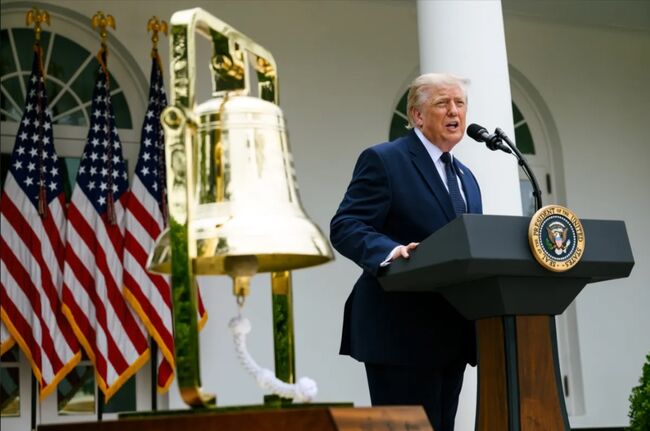 Trump pressures for rate cut again ahead of FOMC... "Should be the lowest in the world"
U.S. President Donald Trump. [Photo = The White House] U.S. President Donald Trump once again pressured the Federal Reserve, the U.S. central bank, to lower interest rates on the 27th (local time
Trump pressures for rate cut again ahead of FOMC... "Should be the lowest in the world"
U.S. President Donald Trump. [Photo = The White House] U.S. President Donald Trump once again pressured the Federal Reserve, the U.S. central bank, to lower interest rates on the 27th (local time
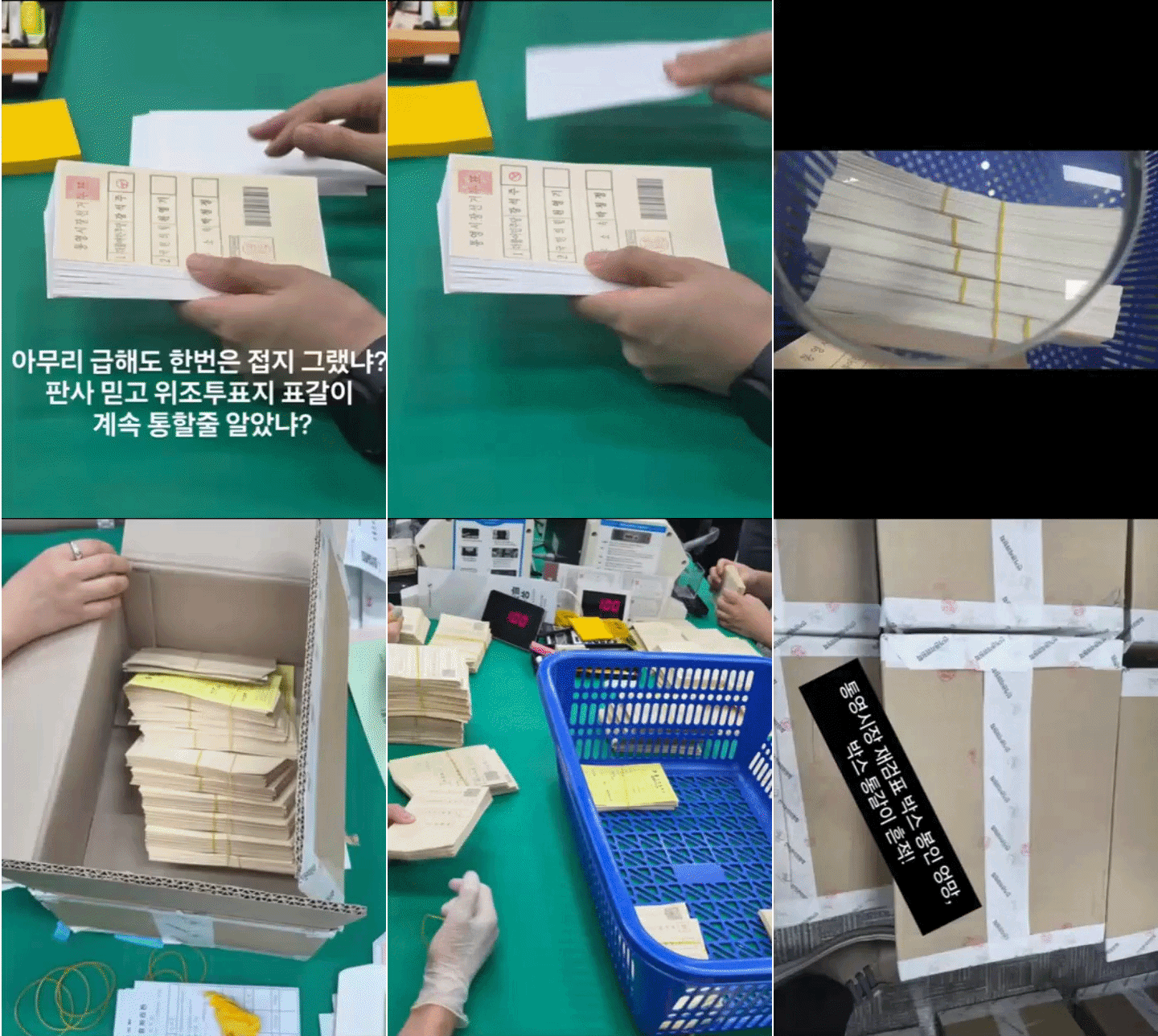 “Ignoring crisp ballots and damaged seals”… Tongyeong mayoral recount concludes with ‘no change in outcome,’ leaving suspicions and public outrage behind
Suspected counterfeit ballots discovered in Tongyeong [GIF from social media of Representative Hwang Kyo-ahn / Attorney Park Joo-hyun]During a recount of the Tongyeong mayoral election in South Gyeong
“Ignoring crisp ballots and damaged seals”… Tongyeong mayoral recount concludes with ‘no change in outcome,’ leaving suspicions and public outrage behind
Suspected counterfeit ballots discovered in Tongyeong [GIF from social media of Representative Hwang Kyo-ahn / Attorney Park Joo-hyun]During a recount of the Tongyeong mayoral election in South Gyeong
 President Yoon, regarding the first-instance ruling on the Public Official Election Act: “An excessive political verdict that distorts the facts… We will appeal immediately.”
The first-instance sentencing hearing for President Yoon Suk Yeol regarding violations of the Public Official Election Act is being broadcast live at Seoul Station on the 27th. [Photo=Yonhap News]Pres
President Yoon, regarding the first-instance ruling on the Public Official Election Act: “An excessive political verdict that distorts the facts… We will appeal immediately.”
The first-instance sentencing hearing for President Yoon Suk Yeol regarding violations of the Public Official Election Act is being broadcast live at Seoul Station on the 27th. [Photo=Yonhap News]Pres
 WSJ: "SK Hynix ADR Premium Is a Sign of AI Trading Overheat"
Advertisement for SK Hynix ADR listing in New York's Times Square [Reuters=Yonhap News file photo]The Wall Street Journal (WSJ) has pointed out that the price of SK Hynix’s American Depositary Recei
WSJ: "SK Hynix ADR Premium Is a Sign of AI Trading Overheat"
Advertisement for SK Hynix ADR listing in New York's Times Square [Reuters=Yonhap News file photo]The Wall Street Journal (WSJ) has pointed out that the price of SK Hynix’s American Depositary Recei
 'Godfather of Japanese Mystery Novels' Keigo Higashino Passes Away After Battle with Cancer at 68
Famous Japanese mystery novelist Keigo Higashino [AFP=Yonhap News]It has been belatedly reported that Keigo Higashino, the "godfather of Japanese mystery novels" and author of bestsellers such as "The
'Godfather of Japanese Mystery Novels' Keigo Higashino Passes Away After Battle with Cancer at 68
Famous Japanese mystery novelist Keigo Higashino [AFP=Yonhap News]It has been belatedly reported that Keigo Higashino, the "godfather of Japanese mystery novels" and author of bestsellers such as "The
 [Park Pil-kyu Security Column] To the Ignorant Trying to Clothe a Beast in Sheep's Clothing
Rep. Kim Byung-joo of the Democratic Party of Korea [Photo=Yonhap News]“The Air Force Academy doesn't teach you how to fly a plane!” “The Army, Navy, and Air Force academies are exactly the
[Park Pil-kyu Security Column] To the Ignorant Trying to Clothe a Beast in Sheep's Clothing
Rep. Kim Byung-joo of the Democratic Party of Korea [Photo=Yonhap News]“The Air Force Academy doesn't teach you how to fly a plane!” “The Army, Navy, and Air Force academies are exactly the
 [Issue Diagnosis] Two Effects of the Election Petition Review
 [Photo] Evidence of Election Fraud Flooding U.S. Media… Trump Had 2.7 Million Votes Stolen
 [Video] U.S. Semiquincentennial Air Show... 'Art in the Sky' streaks across New York
 [Editorial Cartoon] A Draconian Law That Undermines Freedom of Expression

 List
List









