이재명 정부 출범 이후, 보수 성향의 기독교 단체와 종교 활동이 ‘정치적 선동’이라는 이름으로 강한 규제를 받고 있다. 표현의 자유와 종교의 자유의 경계가 무너지는 가운데, 설교는 ‘극우 발언’으로, 예배는 ‘정치 집회’로 치환된다. 이번 기획은 그 침묵당한 광장의 목소리를 기록한다. <편집자 주>
 Gwanghwamun Rally. Yonhap NewsTable of Contents: The Record of Frame Manipulation and Political Exclusion
1. How 'Far-Right' Was Created
― The Origin of Frame Politics and the Complicity of Centrist Hypocrisy
2. Christianity and the Public Square
― Why is Faith Suppressed?
3. The Silence of Laws and Institutions
― The Completion of Democratic Party Control Politics and 'Legitimate Censorship'
4. Those Who Annihilated Conservatism
― The Hypocrisy of the Anti-Far-Right Alliance
5. Did the Media Betray the Truth?
― The Complicity of Parasitic Media and Legacy Media
In the summer of 2025, the public squares of South Korea became even quieter. Rallies were not banned, nor was religious activity legally prohibited. However, a silent mechanism was systematically in operation, defining faith as politics and labeling worship as sedition.
In June 2025, with the launch of the Democratic Party administration, the new government proposed an amendment to the Act on Promotion of Information and Communications Network Utilization and Information Protection (commonly known as the Information and Communications Network Act), stating its intention to prevent the spread of hate speech and false information. Some voiced concerns that this bill, referred to as the 'so-called Hate Speech Prohibition Act' or the 'Far-Right Hate Speech Prevention Act,' would serve as a 'tool for censorship of expression' targeting conservative Christian organizations and YouTube channels.
Indeed, since 2023, major conservative YouTube channels have repeatedly faced sanctions from the Korea Communications Standards Commission and exclusion from search engine results, leading to their de facto expulsion from platforms. However, the claim of a censorship rate of "over 30%" for conservative Christian content has not been confirmed by official statistics, with some users merely asserting that "AI-based filtering seems to automatically block or limit the exposure of words like 'far-right,' 'prayer meeting,' and 'vote counting'."
According to official platform policies, such blocking criteria are not specified, and the assertion that automatic filtering technology excessively censors faith-based content is an area requiring technical and policy review.
More tangible pressure was exerted in physical spaces. Since June 2025, conservative churches in Seoul, Gyeonggi, and Daejeon have been subject to concentrated searches and seizures on grounds such as 'tax evasion,' 'election law violations,' and 'facility law violations.' Some of these churches had their pulpits searched during services, and their member lists, donation records, and broadcasting equipment were seized.
Given that churches critical of the administration's sermons or mobilization activities were specifically targeted, suspicions of "'religious retaliation' using the judicial system" have been raised both within and outside religious circles.
The government maintains its stance as "legitimate law enforcement against religious organizations that do not maintain political neutrality." However, the criteria for application were selective. This is because progressive religious organizations and religious gatherings linked to civil society that were favorable to the government and the ruling party were not investigated under the same scrutiny.
In essence, while prohibiting political participation, religion that sided with the administration was exempted.
However, the conservative Christian camp was not simply a single axis of political opposition. For them, faith was a spiritual practice for liberal democracy, and the worship held in the public square was a prayer for the Republic of Korea. Questioning the fairness of elections and continuing with fasting and all-night prayer meetings for the nation were expressions of their conscience and beliefs.
However, power perceived this as an uncomfortable truth and ultimately proceeded to eliminate it by attaching the political label of 'far-right.'
As a result, religious content became invisible on platforms, churches were raided offline, and the language of faith was gradually eradicated. Worship was interpreted as 'political sedition,' sermons as 'fake news,' and prayers as 'false information,' increasingly narrowing the scope of religious freedom.
We ask in this era.
Was it truly far-right? Or was it faith?
Was it a rally? Or was it worship?
The answer has yet to be spoken. But one thing is clear.
Truth does not remain silent.
When the one attempting to silence that truth is power, faith has no choice but to advance further into the public square.
#ConservativePurgeChronicles #ChristianCivilSociety #DistortionOfSeparationOfChurchAndState #AICensorship #FreedomOfExpression #FreedomOfReligion #WorshipOrProtest #ChurchRaids #DoubleStandardsInPoliticalParticipation #Hanmiilbo

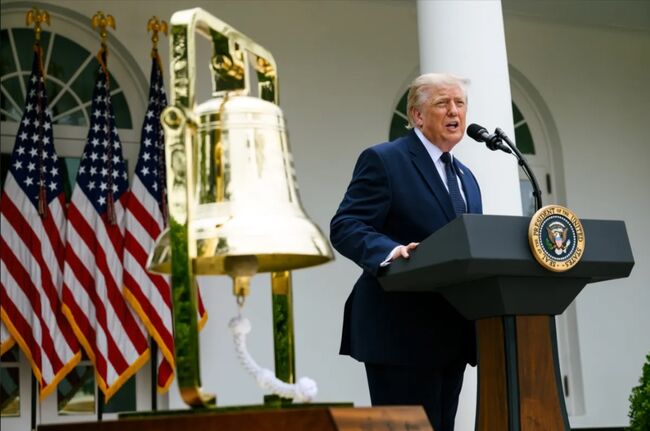 Trump pressures for rate cut again ahead of FOMC... "Should be the lowest in the world"
U.S. President Donald Trump. [Photo = The White House] U.S. President Donald Trump once again pressured the Federal Reserve, the U.S. central bank, to lower interest rates on the 27th (local time
Trump pressures for rate cut again ahead of FOMC... "Should be the lowest in the world"
U.S. President Donald Trump. [Photo = The White House] U.S. President Donald Trump once again pressured the Federal Reserve, the U.S. central bank, to lower interest rates on the 27th (local time
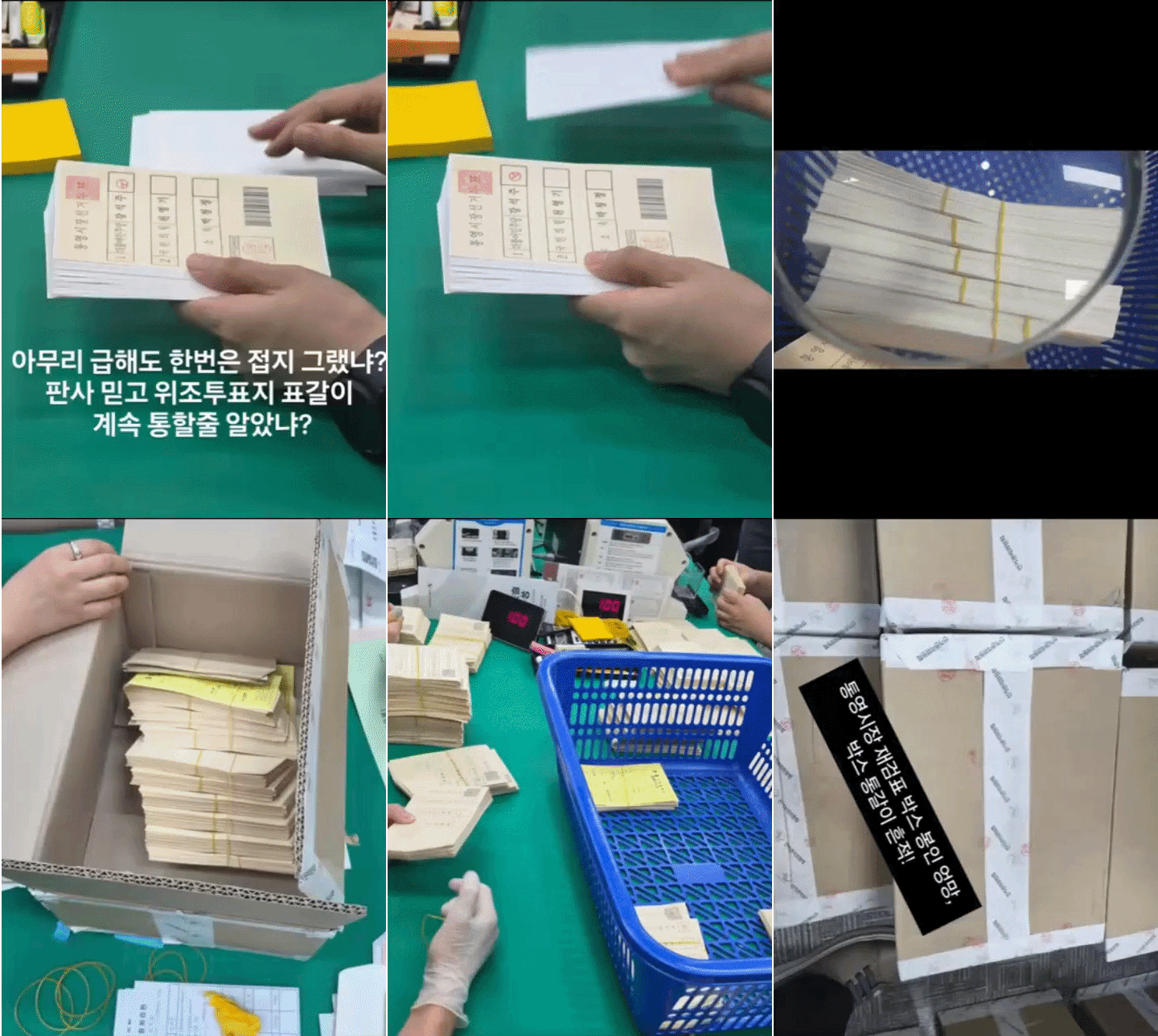 “Ignoring crisp ballots and damaged seals”… Tongyeong mayoral recount concludes with ‘no change in outcome,’ leaving suspicions and public outrage behind
Suspected counterfeit ballots discovered in Tongyeong [GIF from social media of Representative Hwang Kyo-ahn / Attorney Park Joo-hyun]During a recount of the Tongyeong mayoral election in South Gyeong
“Ignoring crisp ballots and damaged seals”… Tongyeong mayoral recount concludes with ‘no change in outcome,’ leaving suspicions and public outrage behind
Suspected counterfeit ballots discovered in Tongyeong [GIF from social media of Representative Hwang Kyo-ahn / Attorney Park Joo-hyun]During a recount of the Tongyeong mayoral election in South Gyeong
 President Yoon, regarding the first-instance ruling on the Public Official Election Act: “An excessive political verdict that distorts the facts… We will appeal immediately.”
The first-instance sentencing hearing for President Yoon Suk Yeol regarding violations of the Public Official Election Act is being broadcast live at Seoul Station on the 27th. [Photo=Yonhap News]Pres
President Yoon, regarding the first-instance ruling on the Public Official Election Act: “An excessive political verdict that distorts the facts… We will appeal immediately.”
The first-instance sentencing hearing for President Yoon Suk Yeol regarding violations of the Public Official Election Act is being broadcast live at Seoul Station on the 27th. [Photo=Yonhap News]Pres
 WSJ: "SK Hynix ADR Premium Is a Sign of AI Trading Overheat"
Advertisement for SK Hynix ADR listing in New York's Times Square [Reuters=Yonhap News file photo]The Wall Street Journal (WSJ) has pointed out that the price of SK Hynix’s American Depositary Recei
WSJ: "SK Hynix ADR Premium Is a Sign of AI Trading Overheat"
Advertisement for SK Hynix ADR listing in New York's Times Square [Reuters=Yonhap News file photo]The Wall Street Journal (WSJ) has pointed out that the price of SK Hynix’s American Depositary Recei
 'Godfather of Japanese Mystery Novels' Keigo Higashino Passes Away After Battle with Cancer at 68
Famous Japanese mystery novelist Keigo Higashino [AFP=Yonhap News]It has been belatedly reported that Keigo Higashino, the "godfather of Japanese mystery novels" and author of bestsellers such as "The
'Godfather of Japanese Mystery Novels' Keigo Higashino Passes Away After Battle with Cancer at 68
Famous Japanese mystery novelist Keigo Higashino [AFP=Yonhap News]It has been belatedly reported that Keigo Higashino, the "godfather of Japanese mystery novels" and author of bestsellers such as "The
 [Park Pil-kyu Security Column] To the Ignorant Trying to Clothe a Beast in Sheep's Clothing
Rep. Kim Byung-joo of the Democratic Party of Korea [Photo=Yonhap News]“The Air Force Academy doesn't teach you how to fly a plane!” “The Army, Navy, and Air Force academies are exactly the
[Park Pil-kyu Security Column] To the Ignorant Trying to Clothe a Beast in Sheep's Clothing
Rep. Kim Byung-joo of the Democratic Party of Korea [Photo=Yonhap News]“The Air Force Academy doesn't teach you how to fly a plane!” “The Army, Navy, and Air Force academies are exactly the
 [Issue Diagnosis] Two Effects of the Election Petition Review
 [Photo] Evidence of Election Fraud Flooding U.S. Media… Trump Had 2.7 Million Votes Stolen
 [Video] U.S. Semiquincentennial Air Show... 'Art in the Sky' streaks across New York
 [Editorial Cartoon] A Draconian Law That Undermines Freedom of Expression

 List
List