 Kim Byung-heon, representative of the National Action to Abolish the Comfort Women Law, arrested on charges of denying the forced mobilization of Japanese military comfort women and vandalizing the statue of a comfort woman victim. [Photo=Yonhap News]
On the 20th, Kim Byung-heon, representative of the 'National Action to Abolish the Comfort Women Law,' was arrested by the Seoul Central District Court on charges of insulting and defaming victims of Japanese military comfort women.
Kim has been at the center of social controversy for his ongoing rallies and statements regarding the comfort women issue and the installation of the comfort women statues. The court issued an arrest warrant citing the risk of flight.
The debate surrounding this case extends beyond the validity of his statements. The core issue lies in whether the basic principles of criminal justice have been consistently applied in this matter.
Kim Byung-heon's Arrest and the Principle of Presumption of Innocence... Is the Judiciary Consistent?
In criminal proceedings, arrest is understood as an exceptional measure. It should be carried out cautiously only when the possibility of flight or the risk of evidence tampering is specifically recognized, and the investigation should proceed without detention unless there are special circumstances. Furthermore, the presumption of innocence for everyone until a judgment is finalized is a fundamental premise of criminal justice.
From this perspective, it is pointed out that sufficient review is needed regarding whether detention was unavoidable in this case.
Especially given that the alleged acts were in the form of public statements and demonstrations, various viewpoints may exist regarding the necessity and proportionality of detention. This is also why even those who disagree with Kim Byung-heon's claims are raising concerns about this aspect.
Detention not only restricts physical freedom but can also affect the defendant's ability to exercise their right to a defense. This is because limitations can arise in preparing evidence, receiving assistance from legal counsel, and responding to the trial.
Therefore, criminal proceedings should focus on enabling individuals to fully present their positions under as equal conditions as possible. As is often said, the conditions for a fair contest on the same playing field must be guaranteed.
Another variable is also mentioned in this case: strong criticism of the matter has been publicly raised by politicians.
While it cannot be definitively stated that such remarks directly influenced the judicial decision, the more public attention an incident garners, the more strictly the independence and neutrality of judicial proceedings need to be maintained.
A Trial Without Guarantee of Defense Rights Cannot Be Fair
Meanwhile, this case also touches upon freedom of expression. The more controversial the assertion, the more desirable it is for it to be verified and refuted in public spaces. If an assertion is inaccurate, it can be sufficiently corrected with data and evidence, and the process itself becomes the foundation for forming social consensus.
Conversely, if the verification process is not sufficiently guaranteed, the controversy may not be resolved but rather lead to long-term distrust.
Ultimately, this case should be seen as an opportunity to examine how fundamental principles such as freedom of expression, the presumption of innocence, and investigation without detention are applied, beyond the statements of a specific individual. It is particularly significant in that these principles must be more strictly upheld in cases that attract significant public attention.
In this regard, some argue that Kim Byung-heon should, in principle, be investigated without detention. This is because confidence in fairness can only be secured when the trial proceeds with sufficient guarantee of defense rights. Furthermore, it is pointed out that the trial process should also proceed as transparently as possible, and its outcome should be presented in a socially acceptable manner.
Ultimately, what is important is not the direction of the conclusion but the legitimacy of the process. Adhering to the principles of presumption of innocence and investigation without detention, ensuring sufficient verification and discussion within freedom of expression, and reaching a conclusion that everyone can accept through a prompt and fair trial—this is the image that a society governed by law should strive for.
※ This article was written based on a statement posted by reporter Lee Han-woo to the Federation of Free Youth.

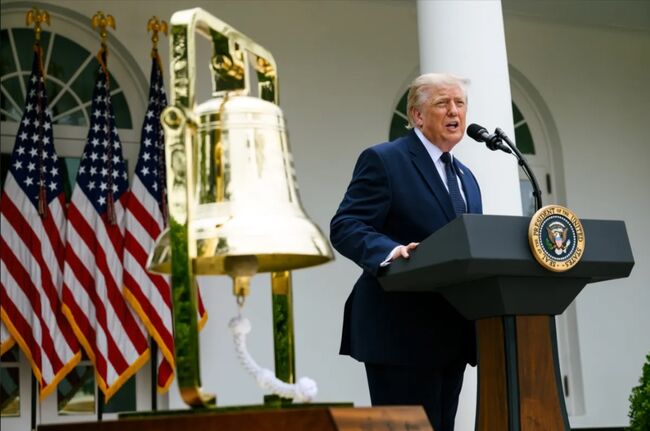 Trump pressures for rate cut again ahead of FOMC... "Should be the lowest in the world"
U.S. President Donald Trump. [Photo = The White House] U.S. President Donald Trump once again pressured the Federal Reserve, the U.S. central bank, to lower interest rates on the 27th (local time
Trump pressures for rate cut again ahead of FOMC... "Should be the lowest in the world"
U.S. President Donald Trump. [Photo = The White House] U.S. President Donald Trump once again pressured the Federal Reserve, the U.S. central bank, to lower interest rates on the 27th (local time
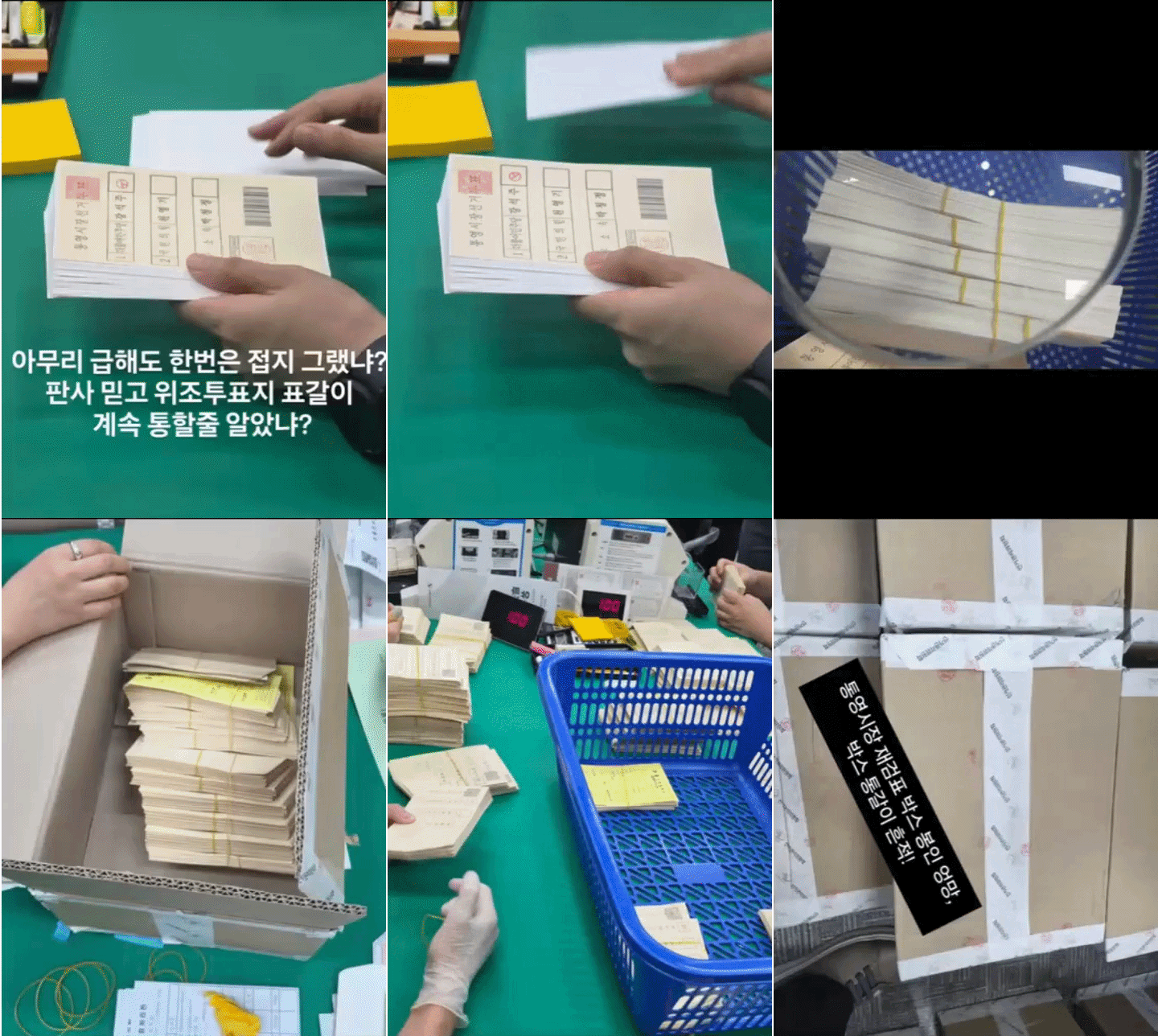 “Ignoring crisp ballots and damaged seals”… Tongyeong mayoral recount concludes with ‘no change in outcome,’ leaving suspicions and public outrage behind
Suspected counterfeit ballots discovered in Tongyeong [GIF from social media of Representative Hwang Kyo-ahn / Attorney Park Joo-hyun]During a recount of the Tongyeong mayoral election in South Gyeong
“Ignoring crisp ballots and damaged seals”… Tongyeong mayoral recount concludes with ‘no change in outcome,’ leaving suspicions and public outrage behind
Suspected counterfeit ballots discovered in Tongyeong [GIF from social media of Representative Hwang Kyo-ahn / Attorney Park Joo-hyun]During a recount of the Tongyeong mayoral election in South Gyeong
 President Yoon, regarding the first-instance ruling on the Public Official Election Act: “An excessive political verdict that distorts the facts… We will appeal immediately.”
The first-instance sentencing hearing for President Yoon Suk Yeol regarding violations of the Public Official Election Act is being broadcast live at Seoul Station on the 27th. [Photo=Yonhap News]Pres
President Yoon, regarding the first-instance ruling on the Public Official Election Act: “An excessive political verdict that distorts the facts… We will appeal immediately.”
The first-instance sentencing hearing for President Yoon Suk Yeol regarding violations of the Public Official Election Act is being broadcast live at Seoul Station on the 27th. [Photo=Yonhap News]Pres
 WSJ: "SK Hynix ADR Premium Is a Sign of AI Trading Overheat"
Advertisement for SK Hynix ADR listing in New York's Times Square [Reuters=Yonhap News file photo]The Wall Street Journal (WSJ) has pointed out that the price of SK Hynix’s American Depositary Recei
WSJ: "SK Hynix ADR Premium Is a Sign of AI Trading Overheat"
Advertisement for SK Hynix ADR listing in New York's Times Square [Reuters=Yonhap News file photo]The Wall Street Journal (WSJ) has pointed out that the price of SK Hynix’s American Depositary Recei
 'Godfather of Japanese Mystery Novels' Keigo Higashino Passes Away After Battle with Cancer at 68
Famous Japanese mystery novelist Keigo Higashino [AFP=Yonhap News]It has been belatedly reported that Keigo Higashino, the "godfather of Japanese mystery novels" and author of bestsellers such as "The
'Godfather of Japanese Mystery Novels' Keigo Higashino Passes Away After Battle with Cancer at 68
Famous Japanese mystery novelist Keigo Higashino [AFP=Yonhap News]It has been belatedly reported that Keigo Higashino, the "godfather of Japanese mystery novels" and author of bestsellers such as "The
 [Park Pil-kyu Security Column] To the Ignorant Trying to Clothe a Beast in Sheep's Clothing
Rep. Kim Byung-joo of the Democratic Party of Korea [Photo=Yonhap News]“The Air Force Academy doesn't teach you how to fly a plane!” “The Army, Navy, and Air Force academies are exactly the
[Park Pil-kyu Security Column] To the Ignorant Trying to Clothe a Beast in Sheep's Clothing
Rep. Kim Byung-joo of the Democratic Party of Korea [Photo=Yonhap News]“The Air Force Academy doesn't teach you how to fly a plane!” “The Army, Navy, and Air Force academies are exactly the
 [Issue Diagnosis] Two Effects of the Election Petition Review
 [Photo] Evidence of Election Fraud Flooding U.S. Media… Trump Had 2.7 Million Votes Stolen
 [Video] U.S. Semiquincentennial Air Show... 'Art in the Sky' streaks across New York
 [Editorial Cartoon] A Draconian Law That Undermines Freedom of Expression

 List
List










