The most essential right for a writer is freedom of expression.
We are writers. And for writers, the most essential right is freedom of expression.
Freedom of expression is not a right that is granted. It is a prerequisite for the existence of a writer. Translating thoughts into sentences, interpreting reality, and sometimes exposing uncomfortable issues are the unique roles of a writer.
Where this right is shaken, literature shrinks, and the thinking of society as a whole also narrows. Freedom of expression is not a mechanism for a specific group or a specific stance, but the minimum foundation for society to examine and maintain itself.
The situation surrounding writer Kim Gyuna is not merely a personal issue. The very process of one person's writing becoming the subject of legal judgment poses important questions.
How far can we speak? By what standards is expression limited? And to whom, and how are those standards applied? The answer to these questions does not remain with Kim Gyuna alone. It extends equally to all writers and all citizens.
Some writings may be uncomfortable. We may disagree. We may strongly refute them. However, discomfort and restriction are not in the same category. Opposition to an opinion should be made with another opinion. Criticism should be made with more words. The point at which legal sanctions intervene must be approached with caution. Otherwise, the entire realm of expression shrinks. If one writer's words are deemed problematic today, another writer's words may be treated in the same way tomorrow.
The law should not become a tool for creating silence. The law is a mechanism for protecting the space where different thoughts collide. Freedom of expression is the condition that enables that collision. Conflict is unavoidable in a society where people with different ideas exist.
What is important is not to eliminate conflict, but to maintain an environment where it can be handled through words. The moment expression is restricted, conflict does not disappear. It is merely pushed to unseen places.
Writers are not entities that maintain social comfort. Rather, they take on the role of revealing discomfort. It is the writer's job to question what is taken for granted and to shake up familiar perspectives.
The emergence of debate in that process is natural. The problem is not the debate itself, but the way it is handled. If a debate is moved to the realm of law, writing can no longer function as writing.
We do not view this issue based on whether we agree with writer Kim Gyuna's specific claims. That is because the criteria can change at any time. What is important is not the criteria, but the principle. The principle that freedom of expression must be guaranteed, and that this principle must be applied without exception. Freedom that only protects a particular stance is not freedom. It is merely a permitted scope.
Freedom of expression is discussed along with responsibility. However, that responsibility cannot be defined solely by punishment. Responsibility includes enduring criticism, accepting counterarguments, and being evaluated in public spaces. This process is how society balances itself. When the law begins to excessively take over this area, the autonomous adjustment function weakens.
What is needed now is to reaffirm freedom of expression as a principle. That principle is not a mechanism that only protects comfortable words. It only gains meaning when it includes even uncomfortable words. Freedom truly exists when we can tolerate expressions we do not like.
We demand.
Guarantee writer Kim Gyuna's freedom of expression.
This demand is not for one individual. It is a minimal request to maintain the existence of writers and a society where we can speak. Where one person's expression is stifled, another person's expression is also not safe. Freedom of expression is not a right that can be shared. It is a condition that can only be maintained if we protect it together.
Jeong Gwang-je, Secretary-General of the Liberal Writers' Association

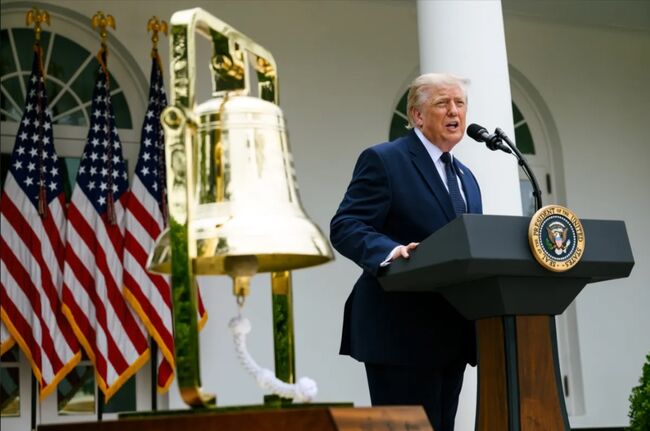 Trump pressures for rate cut again ahead of FOMC... "Should be the lowest in the world"
U.S. President Donald Trump. [Photo = The White House] U.S. President Donald Trump once again pressured the Federal Reserve, the U.S. central bank, to lower interest rates on the 27th (local time
Trump pressures for rate cut again ahead of FOMC... "Should be the lowest in the world"
U.S. President Donald Trump. [Photo = The White House] U.S. President Donald Trump once again pressured the Federal Reserve, the U.S. central bank, to lower interest rates on the 27th (local time
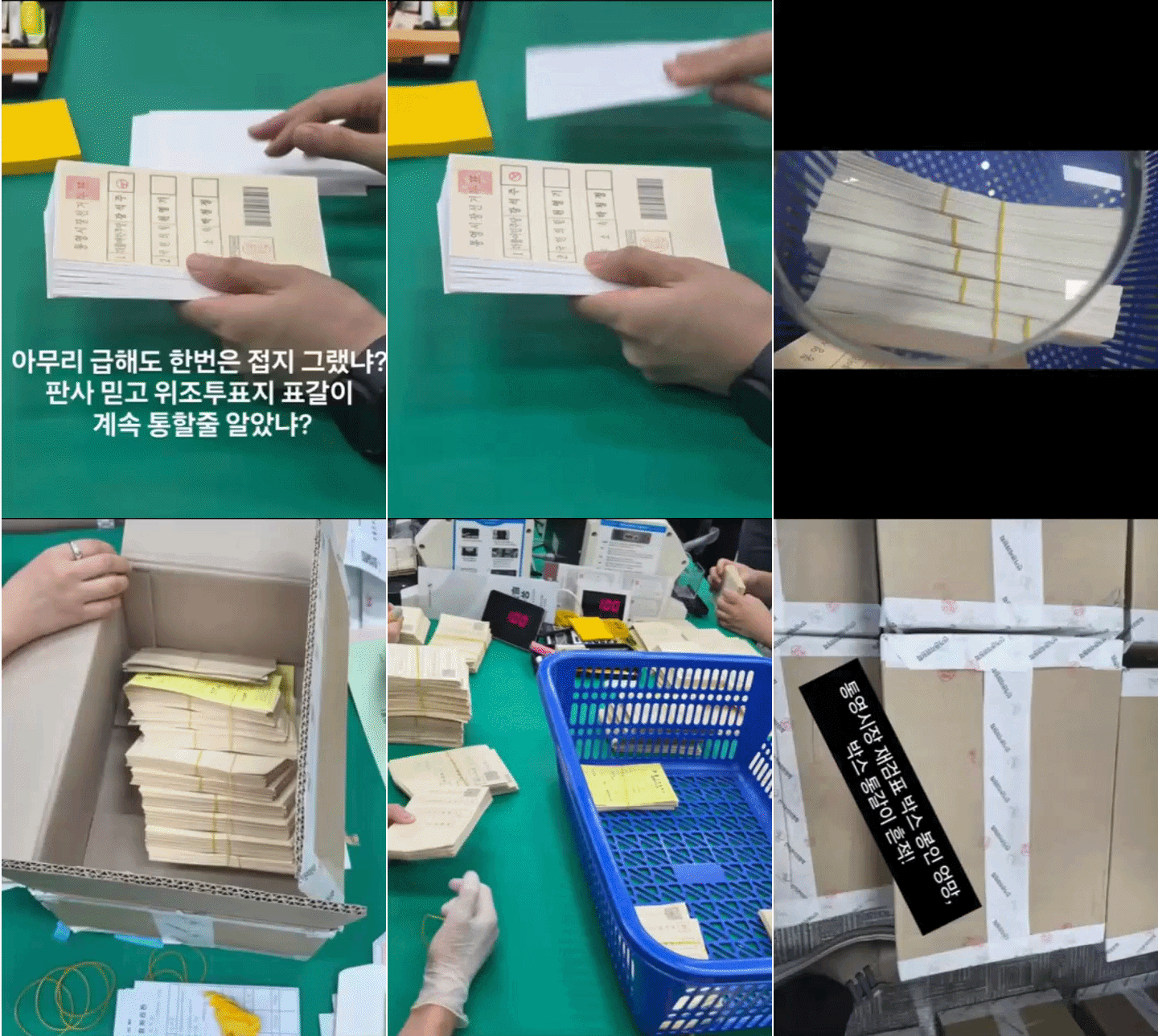 “Ignoring crisp ballots and damaged seals”… Tongyeong mayoral recount concludes with ‘no change in outcome,’ leaving suspicions and public outrage behind
Suspected counterfeit ballots discovered in Tongyeong [GIF from social media of Representative Hwang Kyo-ahn / Attorney Park Joo-hyun]During a recount of the Tongyeong mayoral election in South Gyeong
“Ignoring crisp ballots and damaged seals”… Tongyeong mayoral recount concludes with ‘no change in outcome,’ leaving suspicions and public outrage behind
Suspected counterfeit ballots discovered in Tongyeong [GIF from social media of Representative Hwang Kyo-ahn / Attorney Park Joo-hyun]During a recount of the Tongyeong mayoral election in South Gyeong
 President Yoon, regarding the first-instance ruling on the Public Official Election Act: “An excessive political verdict that distorts the facts… We will appeal immediately.”
The first-instance sentencing hearing for President Yoon Suk Yeol regarding violations of the Public Official Election Act is being broadcast live at Seoul Station on the 27th. [Photo=Yonhap News]Pres
President Yoon, regarding the first-instance ruling on the Public Official Election Act: “An excessive political verdict that distorts the facts… We will appeal immediately.”
The first-instance sentencing hearing for President Yoon Suk Yeol regarding violations of the Public Official Election Act is being broadcast live at Seoul Station on the 27th. [Photo=Yonhap News]Pres
 WSJ: "SK Hynix ADR Premium Is a Sign of AI Trading Overheat"
Advertisement for SK Hynix ADR listing in New York's Times Square [Reuters=Yonhap News file photo]The Wall Street Journal (WSJ) has pointed out that the price of SK Hynix’s American Depositary Recei
WSJ: "SK Hynix ADR Premium Is a Sign of AI Trading Overheat"
Advertisement for SK Hynix ADR listing in New York's Times Square [Reuters=Yonhap News file photo]The Wall Street Journal (WSJ) has pointed out that the price of SK Hynix’s American Depositary Recei
 'Godfather of Japanese Mystery Novels' Keigo Higashino Passes Away After Battle with Cancer at 68
Famous Japanese mystery novelist Keigo Higashino [AFP=Yonhap News]It has been belatedly reported that Keigo Higashino, the "godfather of Japanese mystery novels" and author of bestsellers such as "The
'Godfather of Japanese Mystery Novels' Keigo Higashino Passes Away After Battle with Cancer at 68
Famous Japanese mystery novelist Keigo Higashino [AFP=Yonhap News]It has been belatedly reported that Keigo Higashino, the "godfather of Japanese mystery novels" and author of bestsellers such as "The
 [Park Pil-kyu Security Column] To the Ignorant Trying to Clothe a Beast in Sheep's Clothing
Rep. Kim Byung-joo of the Democratic Party of Korea [Photo=Yonhap News]“The Air Force Academy doesn't teach you how to fly a plane!” “The Army, Navy, and Air Force academies are exactly the
[Park Pil-kyu Security Column] To the Ignorant Trying to Clothe a Beast in Sheep's Clothing
Rep. Kim Byung-joo of the Democratic Party of Korea [Photo=Yonhap News]“The Air Force Academy doesn't teach you how to fly a plane!” “The Army, Navy, and Air Force academies are exactly the
 [Issue Diagnosis] Two Effects of the Election Petition Review
 [Photo] Evidence of Election Fraud Flooding U.S. Media… Trump Had 2.7 Million Votes Stolen
 [Video] U.S. Semiquincentennial Air Show... 'Art in the Sky' streaks across New York
 [Editorial Cartoon] A Draconian Law That Undermines Freedom of Expression

 List
List