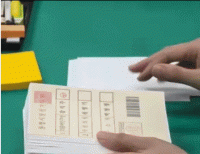
Trump Returns to the White House [AP Yonhap News]
U.S. President Donald Trump's warning of "catastrophic strikes" against Iran on the 30th (local time) is interpreted as an attempt to intensify pressure a week before his self-imposed deadline of April 6th.
In a post on his social media platform Truth Social that day, Trump stated that if a deal with Iran is not reached quickly, he could "bomb and completely obliterate" all of Iran's power plants, oil wells, the oil export route of Kharg Island, and desalination facilities.
This is a declaration of destroying everything, by cutting off electricity and drinking water essential for human survival, and destroying oil production and export facilities that are the regime's lifeline.
The initial attack targets mentioned when he first presented a "48-hour" deadline on the 25th were power plants, but this time the targets have been expanded to almost all critical civilian facilities. If actual attacks are carried out, diplomatic and moral condemnation will be inevitable.
Therefore, it is possible to analyze that President Trump has sent a message of high-intensity pressure. This may be aimed at achieving the maximum possible concessions from the U.S. in the ongoing negotiations, which are reportedly being mediated through a third party.
President Trump told reporters on his plane the previous day, "We have demanded 15 things from (Iran), and we will demand a few other things."
On the surface, President Trump seems to see a higher possibility of reaching an agreement. Despite criticisms that its substance is unclear, he assessed that "significant progress" has been made through "serious discussions" with the other side, and stated, "We will probably reach (an agreement)."
However, he also issued a threat, saying that "if we don't reach an agreement soon for any reason," and if the "Strait of Hormuz, which is effectively blockaded by Iran, is not immediately 'opened for commercial use'," he will carry out the devastating strikes he warned of.
This means that the abandonment of nuclear materials, President Trump's top priority among demands to Iran, and the normal passage through the Strait of Hormuz must be fulfilled within the remaining week.
The key will be Iran's reaction. It appears Iran will be contemplating whether to submit to President Trump's pressure and seek a compromise, or to adhere to a hard-line military response while bearing the risk of catastrophic damage.
Another noteworthy aspect of President Trump's message that day is the implication of a unilateral withdrawal, or the possibility of ending the war. He said he would "end the stay in Iran" after carrying out the devastating operation. In a situation where U.S. ground troops have not yet been deployed to Iran, ending the "stay in Iran" seems to imply concluding the airstrikes against Iran that began on the 28th of last month.
President Trump had initially announced that he had set the duration of the war with Iran at a minimum of four weeks and a maximum of six weeks. The war has already passed four weeks and entered its fifth week. It is inevitable that extending the war further would incur significant political, military, and economic burdens.
Although approximately 7,000 ground troops have been deployed to secure key islands in the Persian Gulf, including Kharg Island, and Iran's nuclear facilities, deploying ground troops at the cost of considerable American casualties would be a significant burden for President Trump.
Ultimately, if an agreement is deemed unlikely by the final deadline, it can be seen that he has now indicated the possibility of declaring victory and ending the operation against Iran by destroying the facilities he designated through large-scale airstrikes, causing irreparable damage.
The fact that President Trump recently claims the Iranian regime has effectively changed could also be a preparation for criticism that the war ended without any gains other than "destruction."
He cites the successive elimination of Supreme Leader Ali Khamenei and military leaders after the start of the war, and the inability of his son Mojtaba, who was slated to inherit the position of Supreme Leader, to effectively perform his duties, as grounds for regime change.
The previous day, President Trump stated, "We have achieved regime change," referring to the current regime as a "completely different group," and on this day, he described it as a "new and more rational regime."
Of course, there is no guarantee that the war will end immediately even if U.S. forces terminate their operations against Iran after the devastating operation. The war could continue in various ways, such as exchanges of attacks between Israel and Gulf countries, or the prolonged blockade of the Strait of Hormuz. There are also concerns that if U.S. forces cease their offensive, Iran could exert control over the Strait of Hormuz, seize the initiative in the Middle East, and lead to more severe chaos.
Furthermore, there are observations both inside and outside Iran that President Trump's rhetoric could be a tactic to buy time for the deployment of ground troops or a smokescreen. This is because, prior to the surprise raids by U.S. and Israeli forces last month, both sides were engaged in nuclear negotiations.
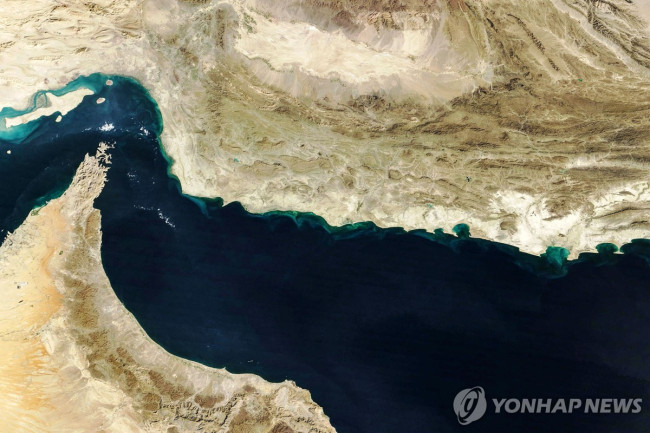 Strait of Hormuz [AFP Yonhap News]

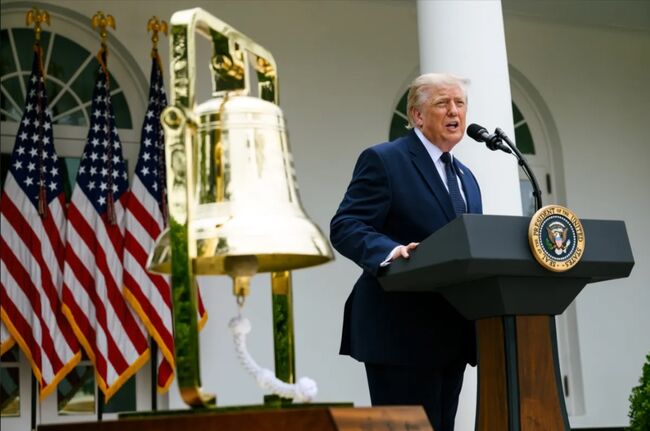 Trump pressures for rate cut again ahead of FOMC... "Should be the lowest in the world"
U.S. President Donald Trump. [Photo = The White House] U.S. President Donald Trump once again pressured the Federal Reserve, the U.S. central bank, to lower interest rates on the 27th (local time
Trump pressures for rate cut again ahead of FOMC... "Should be the lowest in the world"
U.S. President Donald Trump. [Photo = The White House] U.S. President Donald Trump once again pressured the Federal Reserve, the U.S. central bank, to lower interest rates on the 27th (local time
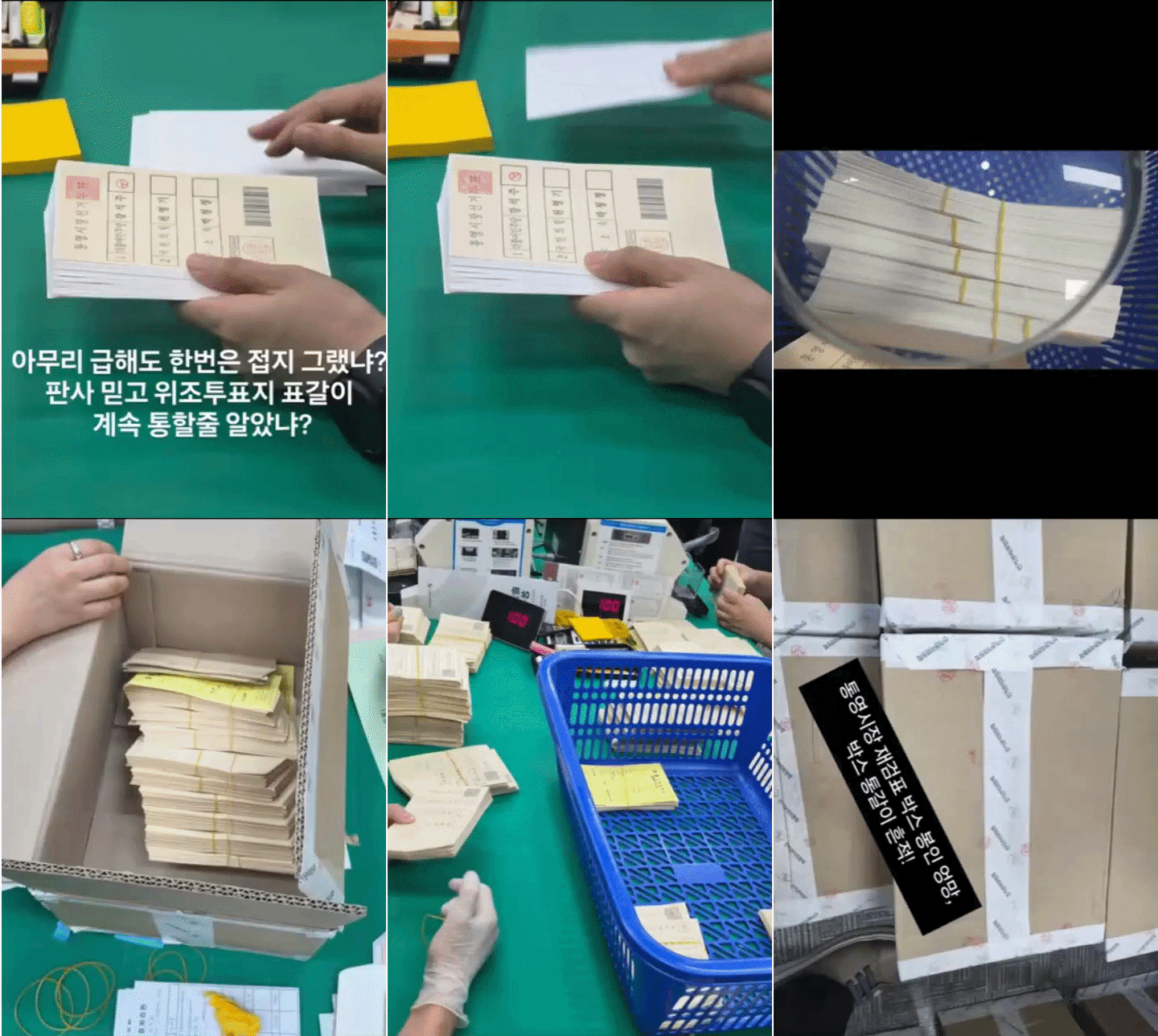 “Ignoring crisp ballots and damaged seals”… Tongyeong mayoral recount concludes with ‘no change in outcome,’ leaving suspicions and public outrage behind
Suspected counterfeit ballots discovered in Tongyeong [GIF from social media of Representative Hwang Kyo-ahn / Attorney Park Joo-hyun]During a recount of the Tongyeong mayoral election in South Gyeong
“Ignoring crisp ballots and damaged seals”… Tongyeong mayoral recount concludes with ‘no change in outcome,’ leaving suspicions and public outrage behind
Suspected counterfeit ballots discovered in Tongyeong [GIF from social media of Representative Hwang Kyo-ahn / Attorney Park Joo-hyun]During a recount of the Tongyeong mayoral election in South Gyeong
 President Yoon, regarding the first-instance ruling on the Public Official Election Act: “An excessive political verdict that distorts the facts… We will appeal immediately.”
The first-instance sentencing hearing for President Yoon Suk Yeol regarding violations of the Public Official Election Act is being broadcast live at Seoul Station on the 27th. [Photo=Yonhap News]Pres
President Yoon, regarding the first-instance ruling on the Public Official Election Act: “An excessive political verdict that distorts the facts… We will appeal immediately.”
The first-instance sentencing hearing for President Yoon Suk Yeol regarding violations of the Public Official Election Act is being broadcast live at Seoul Station on the 27th. [Photo=Yonhap News]Pres
 WSJ: "SK Hynix ADR Premium Is a Sign of AI Trading Overheat"
Advertisement for SK Hynix ADR listing in New York's Times Square [Reuters=Yonhap News file photo]The Wall Street Journal (WSJ) has pointed out that the price of SK Hynix’s American Depositary Recei
WSJ: "SK Hynix ADR Premium Is a Sign of AI Trading Overheat"
Advertisement for SK Hynix ADR listing in New York's Times Square [Reuters=Yonhap News file photo]The Wall Street Journal (WSJ) has pointed out that the price of SK Hynix’s American Depositary Recei
 'Godfather of Japanese Mystery Novels' Keigo Higashino Passes Away After Battle with Cancer at 68
Famous Japanese mystery novelist Keigo Higashino [AFP=Yonhap News]It has been belatedly reported that Keigo Higashino, the "godfather of Japanese mystery novels" and author of bestsellers such as "The
'Godfather of Japanese Mystery Novels' Keigo Higashino Passes Away After Battle with Cancer at 68
Famous Japanese mystery novelist Keigo Higashino [AFP=Yonhap News]It has been belatedly reported that Keigo Higashino, the "godfather of Japanese mystery novels" and author of bestsellers such as "The
 [Park Pil-kyu Security Column] To the Ignorant Trying to Clothe a Beast in Sheep's Clothing
Rep. Kim Byung-joo of the Democratic Party of Korea [Photo=Yonhap News]“The Air Force Academy doesn't teach you how to fly a plane!” “The Army, Navy, and Air Force academies are exactly the
[Park Pil-kyu Security Column] To the Ignorant Trying to Clothe a Beast in Sheep's Clothing
Rep. Kim Byung-joo of the Democratic Party of Korea [Photo=Yonhap News]“The Air Force Academy doesn't teach you how to fly a plane!” “The Army, Navy, and Air Force academies are exactly the
 [Issue Diagnosis] Two Effects of the Election Petition Review
 [Photo] Evidence of Election Fraud Flooding U.S. Media… Trump Had 2.7 Million Votes Stolen
 [Video] U.S. Semiquincentennial Air Show... 'Art in the Sky' streaks across New York
 [Editorial Cartoon] A Draconian Law That Undermines Freedom of Expression

 List
List