Korea Exchange. [Photo = Yonhap News]
A Week Where Exchange Rates and Supply/Demand Priced in Before Strong Earnings
In the first week of April 2026, the Korean stock market did not falter due to weak fundamentals. In fact, real economic indicators were strong. Nevertheless, the market priced in exchange rates and foreign investor flows before earnings. The key this week was not the direction of the rise or fall, but what emerged as the priority variable for the Korean stock market.
On the surface, Middle East war news was the most prominent. However, what truly shook the Korean market was not the war itself, but the structure where the war stimulated oil prices and exchange rates, which in turn, affected foreign investor trading.
This week, the Korean stock market reacted more sensitively to the transmission channels of events than to the events themselves.
The weekly trend was clear.
On March 31st, the KOSPI closed sharply down 4.26% at 5052.46, and the Korean won weakened to 1530.1 against the dollar. Foreign net selling in March also reached a record high of 35.7 trillion won. What shook the market at the end of the month was not the fear itself, but the shock of simultaneous foreign outflows and a weak won.
However, the atmosphere changed dramatically on April 1st.
As expectations of an end to the conflict coincided with the March export figures release, the KOSPI surged 8.44% in a single day to 5478.70. While the sharp rebound in Samsung Electronics and SK Hynix pushed up the index, the market moved to recoup the worst prices rather than confidently betting on a trend reversal. The fact that institutional investors net bought over 4 trillion won, while foreigners and retail investors were net sellers, further illustrates the nature of this rebound.
That rebound also did not last long. As hawkish remarks related to the war resurfaced, the market quickly leaned towards caution.
This week, the Korean market did not experience a cross between optimism and pessimism, but rather a market where the direction of exchange rates and supply/demand had to be recalculated with every change in headlines. The issue was not the volume of news, but the speed at which that news translated into Korean asset prices.
The first variable that shook the stock market this week was the exchange rate.
Korea is a net oil importer with high dependence on the Middle East. Therefore, Middle East-related variables translate directly into Korea's energy prices and exchange rate burdens, bypassing U.S. news. Indeed, as the Middle East-induced shock grew, the government responded by preparing supplementary budget allocations. This week, the Korean market paid more sensitive attention to Seoul's exchange rates than to New York's optimism.
The second variable was foreign investor flows.
On April 3rd, foreign investors turned to net buying for the first time in 12 trading days, and the KOSPI also rebounded. Even with the same news, the market's interpretation differed entirely depending on whether foreign investors were selling or buying.
Ultimately, what changed the direction of the index this week was not the abundance or scarcity of positive news, but whether foreign capital would return. This week, foreign investor flows were synonymous with market sentiment, and market sentiment, in turn, translated into the index's rebound momentum.
The third variable was the nature of exports.
March exports increased by 48.3% year-on-year, marking the strongest growth rate since August 1988, with semiconductor exports surging by 151.4%. These figures indicated that the fundamental strength of Korean companies had not collapsed.
However, the market this week did not immediately link this performance to a trend reversal. Exports served as a buffer, but ultimately, the market's priorities lay with exchange rates and supply/demand.
Simply interpreting this week as a market driven solely by war news would be seeing only half the picture.
A more accurate interpretation is as follows:
The war stimulated oil prices and exchange rates, exchange rate volatility affected foreign investor flows, and foreign investor flows amplified the index's decline and rebound. On top of this, strong export performance acted as a buffer supporting the Korean stock market's floor.
Ultimately, this week's market reflected the channels through which U.S. news translated into Korean asset prices, rather than the U.S. news itself.
Next week's checkpoints are also clear.
First, whether the won/dollar exchange rate will become unstable again around the 1500 won level.
Second, whether foreign net buying will remain a temporary reversal or lead to renewed inflows centered on semiconductors.
Third, whether the strong March export performance can be linked to expectations of earnings that will underpin a stock market rebound.
If these three factors align in the same direction, the Korean stock market can move beyond a mere technical rebound and embark on restoring its weekly trend. Conversely, if the exchange rate becomes volatile again and foreign investor flows falter, this week's rebound is likely to be a relief rally only.
In summary, this week, exports were the buffer for the Korean stock market, the exchange rate was the warning sign, and foreign investor flows were the ultimate decision-maker for direction. The three variables that shook the market did not move independently.
This week's financial market was a process of re-inscribing that interconnected structure onto Korean asset prices.

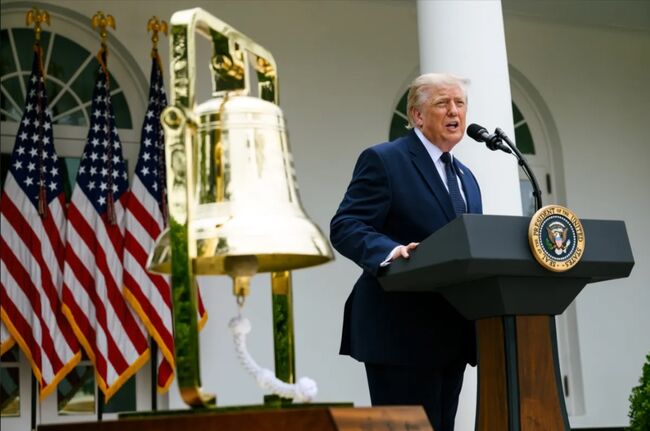 Trump pressures for rate cut again ahead of FOMC... "Should be the lowest in the world"
U.S. President Donald Trump. [Photo = The White House] U.S. President Donald Trump once again pressured the Federal Reserve, the U.S. central bank, to lower interest rates on the 27th (local time
Trump pressures for rate cut again ahead of FOMC... "Should be the lowest in the world"
U.S. President Donald Trump. [Photo = The White House] U.S. President Donald Trump once again pressured the Federal Reserve, the U.S. central bank, to lower interest rates on the 27th (local time
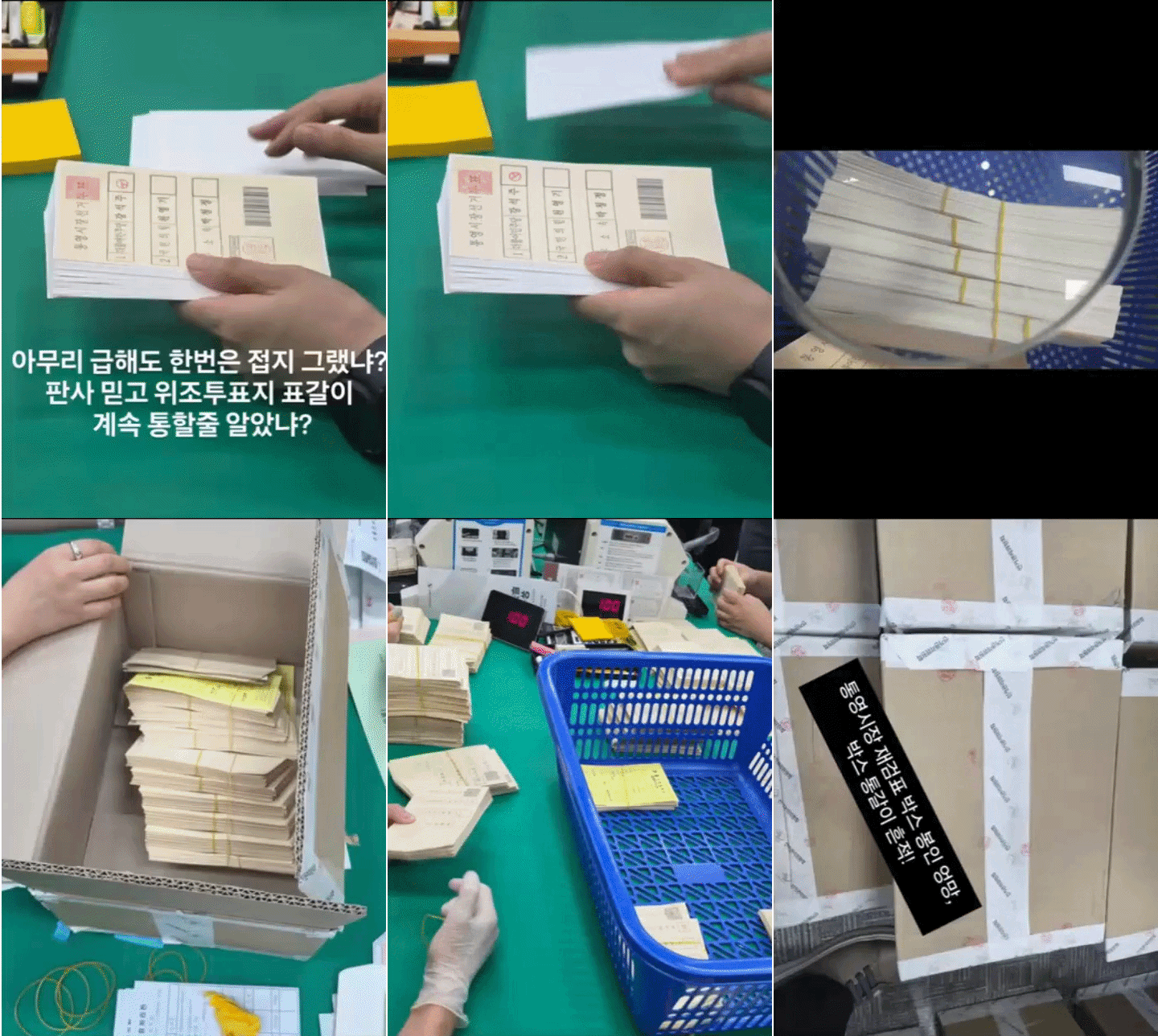 “Ignoring crisp ballots and damaged seals”… Tongyeong mayoral recount concludes with ‘no change in outcome,’ leaving suspicions and public outrage behind
Suspected counterfeit ballots discovered in Tongyeong [GIF from social media of Representative Hwang Kyo-ahn / Attorney Park Joo-hyun]During a recount of the Tongyeong mayoral election in South Gyeong
“Ignoring crisp ballots and damaged seals”… Tongyeong mayoral recount concludes with ‘no change in outcome,’ leaving suspicions and public outrage behind
Suspected counterfeit ballots discovered in Tongyeong [GIF from social media of Representative Hwang Kyo-ahn / Attorney Park Joo-hyun]During a recount of the Tongyeong mayoral election in South Gyeong
 President Yoon, regarding the first-instance ruling on the Public Official Election Act: “An excessive political verdict that distorts the facts… We will appeal immediately.”
The first-instance sentencing hearing for President Yoon Suk Yeol regarding violations of the Public Official Election Act is being broadcast live at Seoul Station on the 27th. [Photo=Yonhap News]Pres
President Yoon, regarding the first-instance ruling on the Public Official Election Act: “An excessive political verdict that distorts the facts… We will appeal immediately.”
The first-instance sentencing hearing for President Yoon Suk Yeol regarding violations of the Public Official Election Act is being broadcast live at Seoul Station on the 27th. [Photo=Yonhap News]Pres
 WSJ: "SK Hynix ADR Premium Is a Sign of AI Trading Overheat"
Advertisement for SK Hynix ADR listing in New York's Times Square [Reuters=Yonhap News file photo]The Wall Street Journal (WSJ) has pointed out that the price of SK Hynix’s American Depositary Recei
WSJ: "SK Hynix ADR Premium Is a Sign of AI Trading Overheat"
Advertisement for SK Hynix ADR listing in New York's Times Square [Reuters=Yonhap News file photo]The Wall Street Journal (WSJ) has pointed out that the price of SK Hynix’s American Depositary Recei
 'Godfather of Japanese Mystery Novels' Keigo Higashino Passes Away After Battle with Cancer at 68
Famous Japanese mystery novelist Keigo Higashino [AFP=Yonhap News]It has been belatedly reported that Keigo Higashino, the "godfather of Japanese mystery novels" and author of bestsellers such as "The
'Godfather of Japanese Mystery Novels' Keigo Higashino Passes Away After Battle with Cancer at 68
Famous Japanese mystery novelist Keigo Higashino [AFP=Yonhap News]It has been belatedly reported that Keigo Higashino, the "godfather of Japanese mystery novels" and author of bestsellers such as "The
 [Park Pil-kyu Security Column] To the Ignorant Trying to Clothe a Beast in Sheep's Clothing
Rep. Kim Byung-joo of the Democratic Party of Korea [Photo=Yonhap News]“The Air Force Academy doesn't teach you how to fly a plane!” “The Army, Navy, and Air Force academies are exactly the
[Park Pil-kyu Security Column] To the Ignorant Trying to Clothe a Beast in Sheep's Clothing
Rep. Kim Byung-joo of the Democratic Party of Korea [Photo=Yonhap News]“The Air Force Academy doesn't teach you how to fly a plane!” “The Army, Navy, and Air Force academies are exactly the
 [Issue Diagnosis] Two Effects of the Election Petition Review
 [Photo] Evidence of Election Fraud Flooding U.S. Media… Trump Had 2.7 Million Votes Stolen
 [Video] U.S. Semiquincentennial Air Show... 'Art in the Sky' streaks across New York
 [Editorial Cartoon] A Draconian Law That Undermines Freedom of Expression

 List
List